




Regency Satinwood Box
A regency satinwood box brings golden timber and precise cabinet work into a room, offering both beauty and practical storage.
Regency Satinwood Box
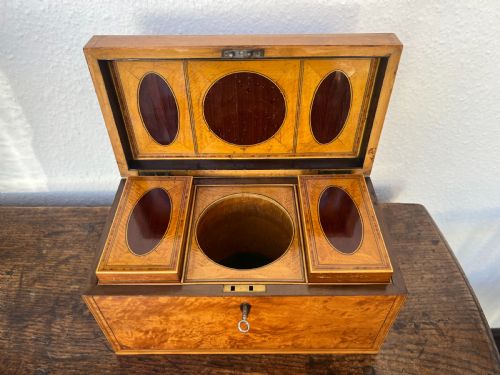
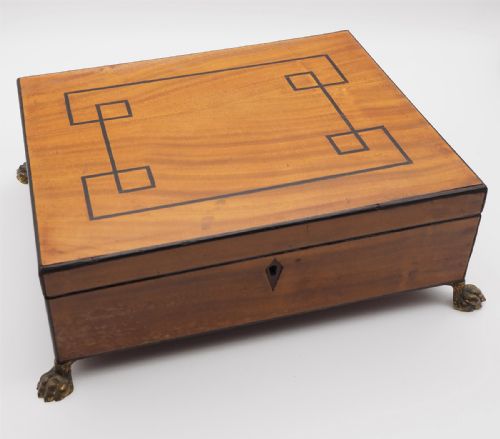
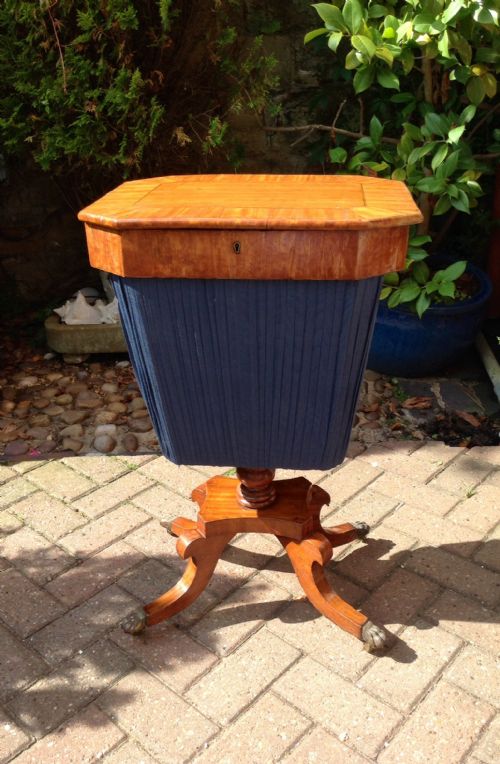
When you search for a regency satinwood box, you are looking at small storage pieces made from a pale, lustrous exotic timber during the late Georgian and Regency periods. The forms appearing most often here include tea caddies, writing boxes, work tables, and sewing caskets, alongside stationery boxes and desktop collector cases.
Many of these containers date from the Regency era and the wider nineteenth century, though some examples reach back into the eighteenth century. They range from simple tabletop caddies to larger pedestal work tables and writing desks, reflecting the domestic habits of the period.
How they were made
Cabinet makers built these pieces using a foundation of solid timber or sturdy carcases overlaid with fine satinwood veneers. They frequently added contrasting stringing, crossbanding, and inlay using dark woods such as ebony, rosewood, and mahogany to frame the golden surfaces.
Decoration often extended beyond timber work to include brass fittings, cut steel ornamentation, and interior silk or fabric linings with fitted glass bowls. Sarcophagus forms and curved lids required expert joining of angled sections to maintain clean exterior lines.
Listings feature items spanning the eighteenth century, the Regency period, and the Victorian era, utilising satinwood alongside mahogany, rosewood, and ebony.
What varies in quality
The distinction between ordinary and superior pieces rests on the choice of timber figure and the precision of the contrasting inlay. Richly flamed satinwood paired with crisp ebony stringing marks out the work of a master workshop.
Interior fittings also dictate the standard of the piece, with original glass mixing bowls, intact fabric linings, and working locks carrying more weight than altered or stripped interiors.
The Regency Satinwood Box Glossary
- Satinwood
- A pale, dense tropical timber with a characteristic chatoyant sheen that reflects light across the grain. It forms the primary visible surface on these boxes.
- Crossbanding
- A narrow strip of veneer applied across the grain around the border of a lid or panel. This technique creates a neat framing effect on flat surfaces.
- Stringing
- Very thin lines of contrasting timber inlaid into grooves on the box exterior. Ebony and boxwood frequently supply the dark or light contrast for these fine lines.
- Sarcophagus form
- A box shape featuring a domed or sloping hinged lid with stepped or flared sides resembling a classical stone chest. This silhouette appeared frequently on Regency tea caddies and sewing boxes.
- Teapoy
- A small pedestal table designed specifically to hold tea caddies and mixing bowls. These pieces often contain interior compartments for storing different tea leaves.
Regency Satinwood Box: Frequently Asked Questions
What is a regency satinwood box used for?
These boxes served specific domestic tasks in Georgian and Regency homes, holding dried tea leaves, writing materials, sewing threads, or valuable jewellery. Tea caddies typically included internal compartments and mixing bowls, while writing boxes provided a slanted surface and inkwell spaces.
Today, they function as decorative objects on side tables or desks while continuing to store small personal items. Their compartments and small drawers make them practical for keeping modern trinkets organised.
How do I date a satinwood box?
Dating relies on examining the construction methods, hardware, and timber combinations rather than a single feature. Pieces from the Regency period often display sarcophagus shapes, brass lion paw feet, and ebony stringing, while eighteenth-century examples lean towards simpler rectilinear forms.
Interior components like handmade brass hinges, old cut screws, and original paper or fabric linings also help establish the age of the piece. Comparing the overall silhouette with dated examples in the archive confirms the likely decade of manufacture.
Are these boxes made of solid satinwood?
Most pieces utilise satinwood as a veneer applied over a secondary timber carcase such as mahogany or pine. This technique prevented warping on large flat surfaces while displaying the most heavily figured parts of the golden timber on the exterior.
Solid satinwood appears more commonly in smaller structural elements or stringing rather than entire box bodies. Examining the edges and underside reveals the underlying construction timbers beneath the decorative surface layer.
How do I care for antique satinwood?
Protect antique satinwood surfaces by keeping them away from direct sunlight, which can bleach the pale timber and dull the polish. Maintain a stable room temperature and humidity to prevent the underlying wood and veneer from shrinking or cracking.
Apply a microcrystalline wax sparingly when the finish appears dry, and buff gently with a soft cloth. Avoid using modern liquid polishes or silicone sprays that can penetrate old finishes and attract dust.