


Victorian Pewter Jug
A victorian pewter jug brings heavy metal craft to the table, offering sturdy form and utilitarian charm that collectors prize for everyday display.
Victorian Pewter Jug
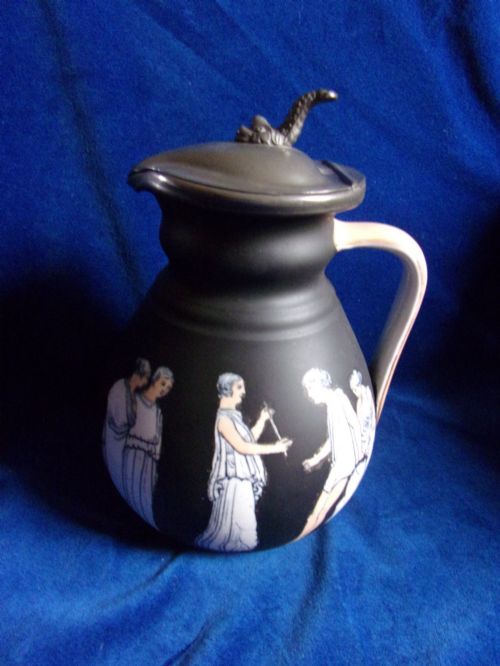
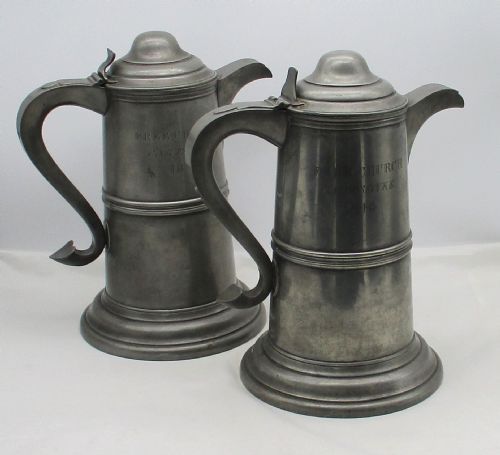
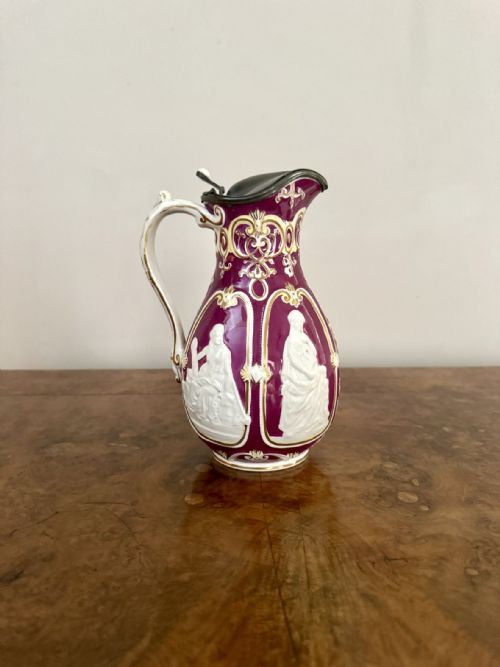
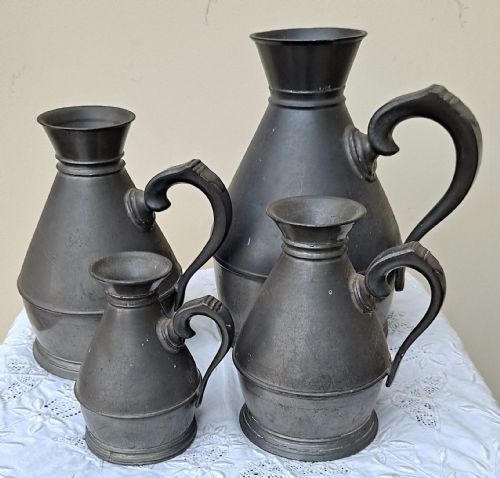
When you search for a victorian pewter jug, you encounter solid metal vessels designed for practical service in domestic and public houses during the nineteenth century. These items range from plain tavern measures and lidded water jugs to distinctive Irish haystack sets.
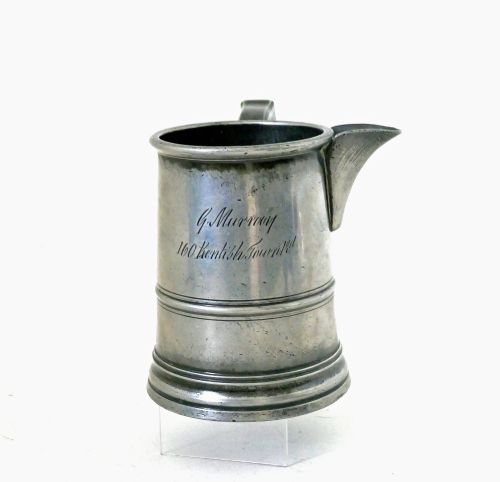
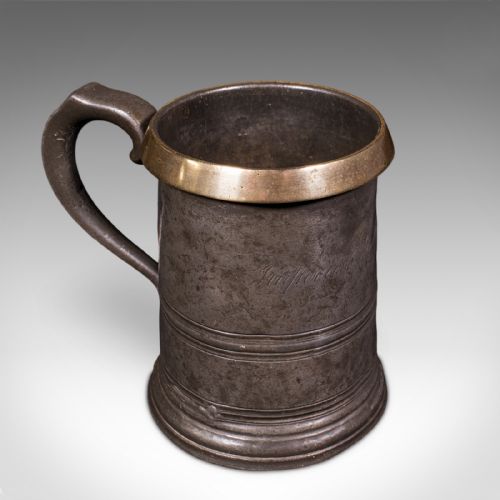
The version you are most likely to meet on this page is an English public house tankard or measure bearing marks of capacity and reign. They reflect the heavy daily use of 19th-century alehouses and parlours, carrying the dents and scratches of real service.
How they were made
Pewter forms the primary material of these vessels, shaped through casting and hammering to create durable bodies with reinforced rims and bases. Makers often soldered components together, attaching sturdy handles suited for lifting heavy measures of ale or water.
Engraving and touchmarks add identification to the metal, recording makers, capacity standards, and tavern names such as the Green Dragon or Elephant and Castle. Lidded variants employ tightly fitted hinges that secure the contents during tavern transport.
Some tavern jugs carry the names of old coaching inns like the Green Dragon, whispering of dusty roads and foaming pints.
What varies in quality
The weight and thickness of the pewter determine the baseline substance of the vessel, with heavier metal resisting distortion over decades of tavern use. Thicker walls maintain crisper lines around handles and rims, whereas thin castings suffer more from wear.
Legibility of touchmarks and capacity stamps elevates a piece, distinguishing standard utilitarian stock from items bearing specific provenance or named public houses. Engraved detail such as floral motifs or names adds distinction to the surface.
Charles Meigh·Royal Doulton·G.Murrouy
The Victorian Pewter Jug Glossary
- Pewter
- A malleable metal alloy composed chiefly of tin, combined with copper, antimony, or lead to provide rigidity for vessels.
- Measure
- A standardised container used in public houses to dispense exact volumes of ale or spirits.
- Haystack
- A distinct Irish style of pewter measure featuring a bulbous body tapering toward the neck, resembling a stacked rick.
- Tankard
- A large drinking vessel, usually featuring a single handle and sometimes fitted with a hinged lid.
- Touchmark
- An official stamp impressed into the metal by a maker or guild to guarantee the quality and alloy standard.
Victorian Pewter Jug: Frequently Asked Questions
What is a haystack measure?
A haystack measure is an Irish pewter jug shaped with a wide, rounded base that tapers upward toward the rim. These vessels were utilised in public houses for measuring and serving ales.
They appear in sets within the evidence, prized for their distinct regional silhouette that separates them from standard English cylinders.
How were public house jugs used?
Public house jugs served to carry and pour beer, ale, and spirits from larger casks to tavern tables. Their sturdy metal construction withstood the constant clatter of busy Victorian drinking establishments.
Lids helped keep dust and insects out of the contents while patrons enjoyed their drinks in bustling taprooms.
What do VR stamps mean?
Stamps marked VR stand for Victoria Regina, indicating the reign of Queen Victoria during the nineteenth century. Inspectors applied these royal cyphers to verify that a vessel met legal capacity standards.
Finding these marks confirms the official tavern use and dating of the metalwork.
How do I clean antique pewter?
Antique pewter requires gentle washing with mild soap and warm water to remove surface dust without stripping its historic patina. Avoid harsh chemical polishes that can erase subtle touchmarks and engraving.
Dry the metal thoroughly with a soft cloth to prevent water spotting and maintain the dull grey lustre.