



Grey Metal Pitcher
A grey metal pitcher brings sturdy utility and centuries of metalworking history straight to a modern interior.
Grey Metal Pitcher
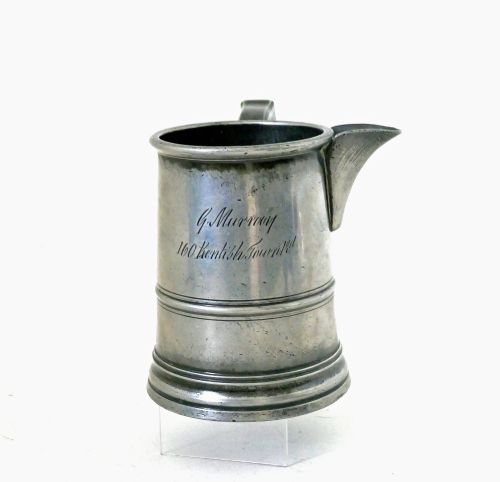
When buyers search for a grey metal pitcher, they are looking at utilitarian vessels fashioned from pewter across the eighteenth and nineteenth centuries. These pieces encompass various forms including flagons, ale jugs, coffee pots, and measures originating from England, Ireland, Scotland, and the Channel Islands. The material carries a subdued grey patina developed through age and regular use.
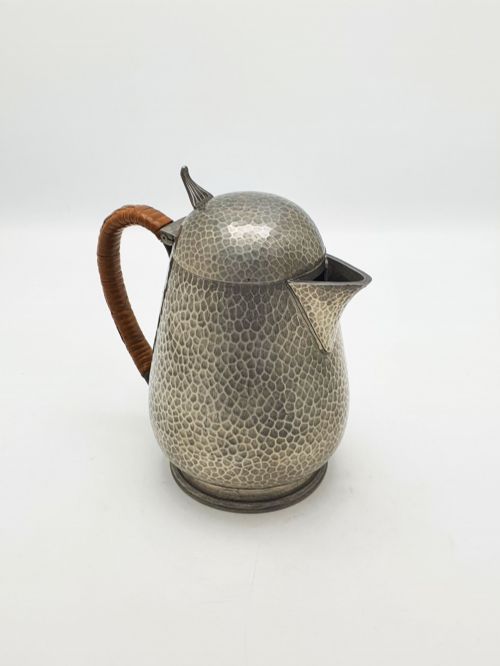
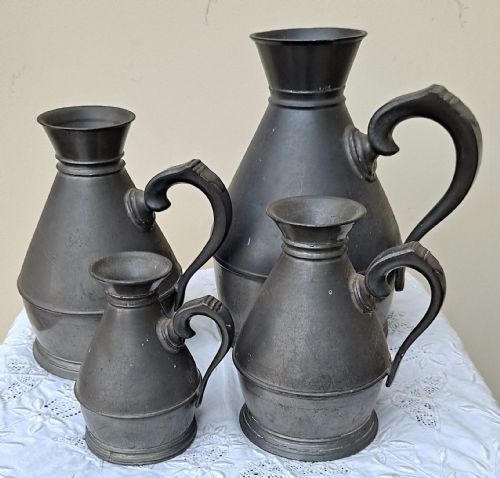
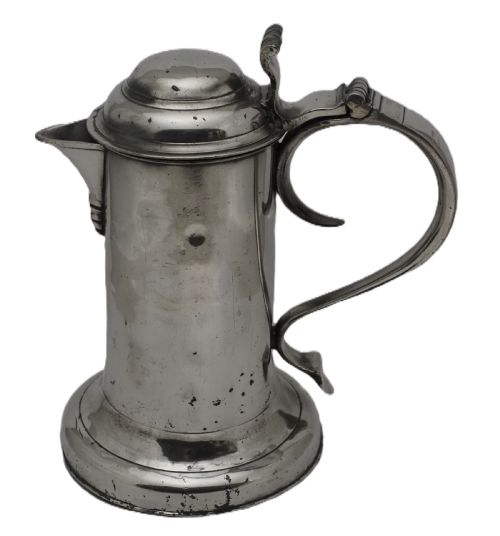
The most common forms on this page are pewter flagons, measures, and jugs spanning the Georgian, Victorian, Arts and Crafts, and Art Nouveau periods. Examples range from small noggin capacity lidless measures to large gallon ale jugs and church flagons. Distinct regional styles such as Irish haystack measures and Scottish tappit hens appear alongside English flat-lid and spire flagons.
How They Were Made
These items are constructed primarily from pewter, a durable alloy of tin combined with lead, copper, or antimony to give it strength. Artisans shaped the metal through casting and hammering, often soldering separate components like handles, spouts, and lids to the main body. Some twentieth-century pieces incorporate alternative materials, such as cane wrapped around a handle for insulation.
Surface finishing involved hand engraving, as seen in dedicated inscriptions, or decorative embossing featuring motifs like hops. Makers utilised simple tools to form spouts and secure lids with thumbpieces, ensuring each vessel remained watertight for holding liquids like ale, coffee, or church wine.
Listings feature pieces spanning the eighteenth and nineteenth centuries alongside early twentieth-century Arts and Crafts and Art Nouveau designs.
What Varies in Quality
Quality rests upon the crispness of the original cast form and the survival of makers' touchmarks or ownership engravings. Pieces that retain their original lids, thumbpieces, and balanced proportions command greater appreciation among collectors. Thicker gauge metal provides structural integrity that prevents warping over centuries of handling.
The sophistication of decorative details also dictates distinction, ranging from plain utilitarian measures to elaborate German Art Nouveau beer flagons with detailed hops decoration. Condition plays a role, particularly where repairs or excessive polishing have worn away the original grey surface character.
John Heaney·Robert Iles·John De St Croix
The Grey Metal Pitcher Glossary
- Pewter
- A malleable metal alloy consisting mostly of tin, used historically for tableware and drinking vessels. It develops a dull grey patina over time.
- Flagon
- A large drinking vessel with a handle and often a lid, used for serving liquids. Many examples in the collection serve ecclesiastical or tavern purposes.
- Measure
- A standardised vessel designed to hold a precise volume of liquid, such as a noggin or pint. Measures often feature cylindrical or bulbous bodies.
- Tappit hen
- A traditional Scottish form of pewter measure characterised by a lid with a knob and a bulbous body shape. These hold specific volumetric capacities like the Scots pint.
- Thumbpiece
- The small lever attached to the lid of a flagon or jug that allows the user to lift the lid with a thumb. Its design often helps date the piece.
Grey Metal Pitcher: Frequently Asked Questions
What are these grey metal pitchers made of?
These vessels are constructed from pewter, which is a traditional metal alloy composed primarily of tin mixed with small amounts of other metals for durability. The material yields a characteristic muted grey finish that matures gracefully.
Some later pieces incorporate supplementary materials like cane on the handles, yet pewter remains the defining substance of the selection.
How do I identify a church flagon?
Church flagons generally present as larger, taller vessels with secure lids and substantial handles designed for sacramental use. They often bear specific ecclesiastical proportions and capacity marks.
Maker attributions or ownership inscriptions sometimes appear stamped near the handle or rim, pointing towards their religious origins.
What is a haystack measure?
A haystack measure is a distinct nineteenth-century Irish style of pewter vessel with a tapered body resembling a stack of hay. These sets typically include graduated sizes for measuring liquids.
Their heavy construction and characteristic profile make them easily recognisable among standard cylindrical jugs.
How should I clean pewter?
Pewter requires gentle washing with warm water and mild soap, followed by thorough drying with a soft cloth. Avoid harsh chemical polishes that strip away the historic grey patina.
Preserving the natural surface texture maintains the visual character and historical integrity of the metal.