
Victorian Paraffin Table Lamp
These Victorian paraffin table lamps bring period weight and warmth to a room through heavy cast metals and tinted glass fonts.
Victorian Paraffin Table Lamp
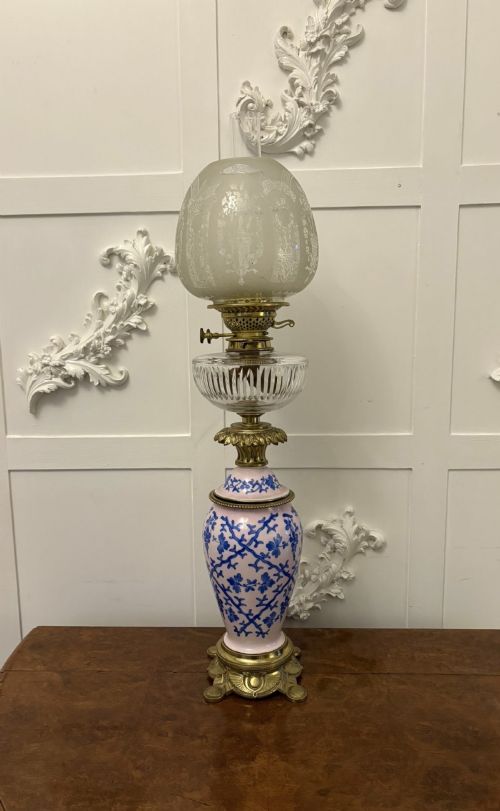
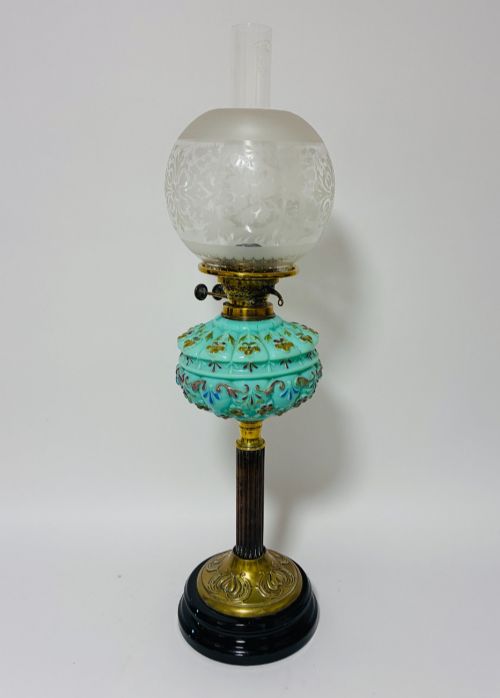
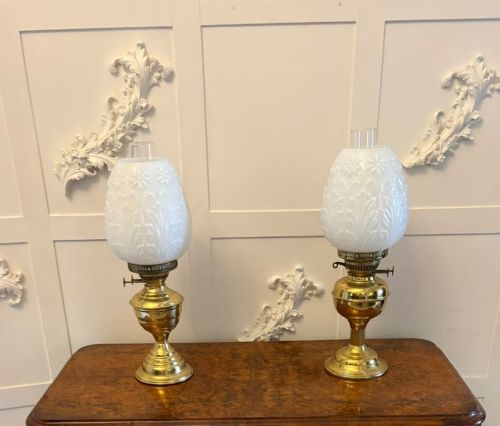
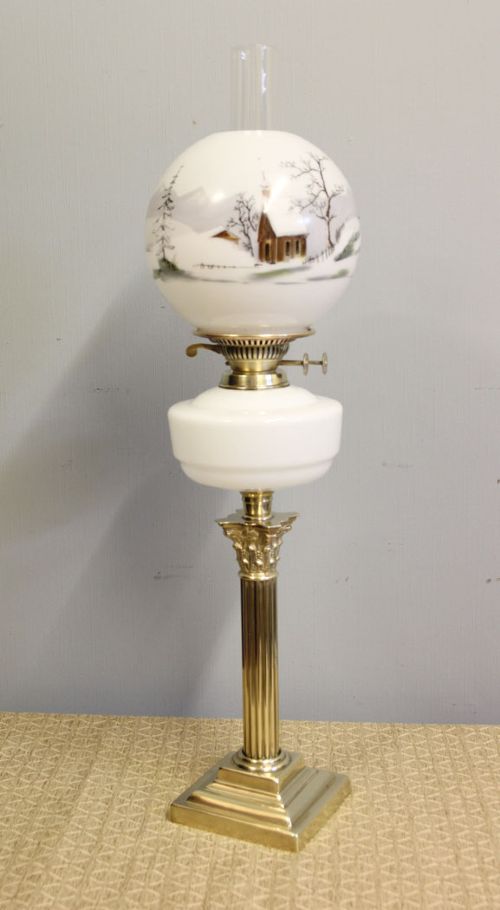
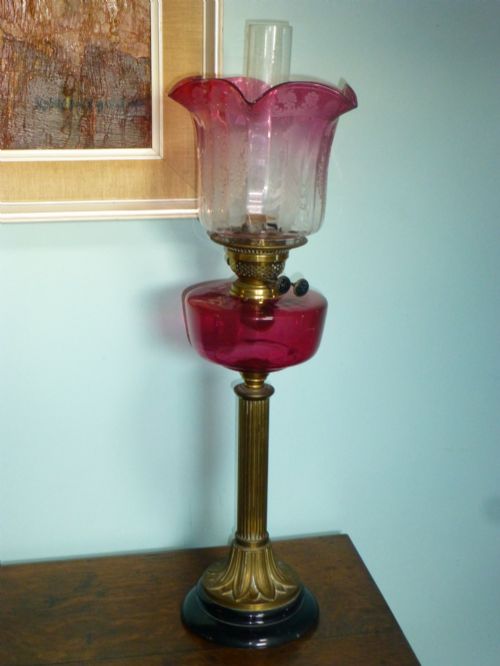
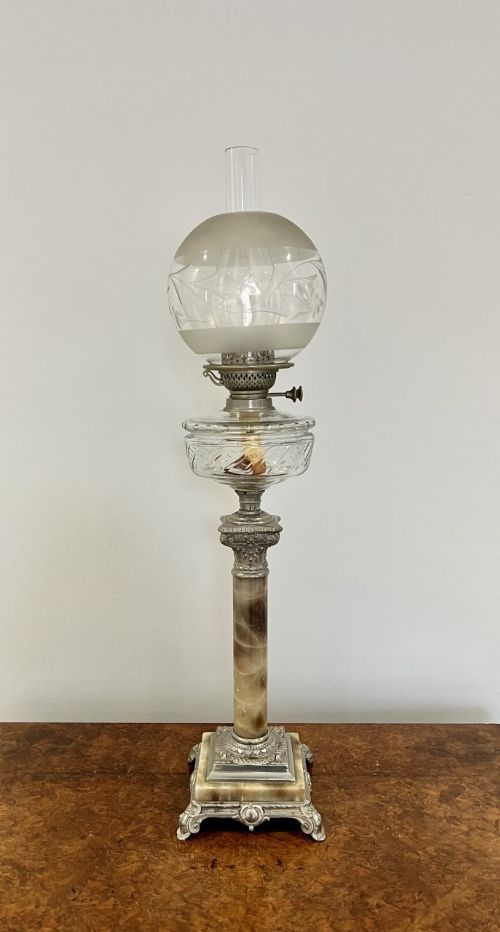
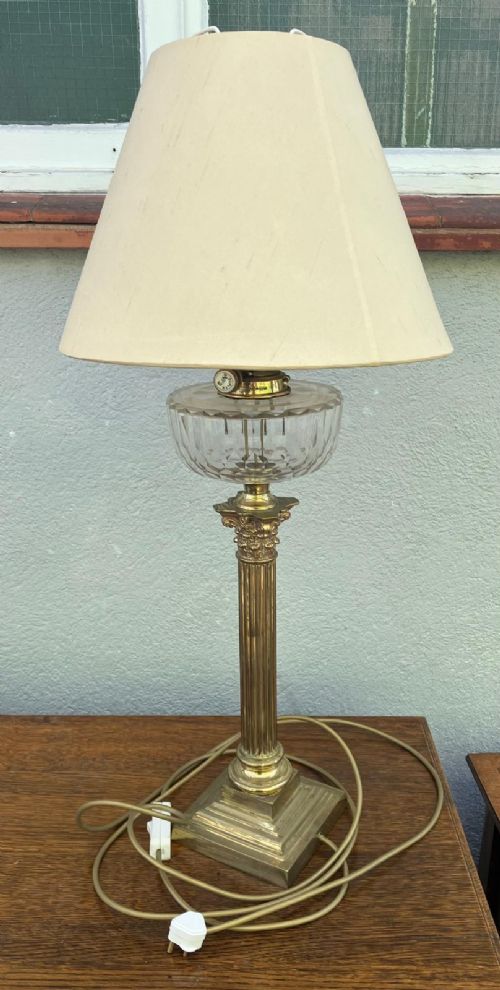
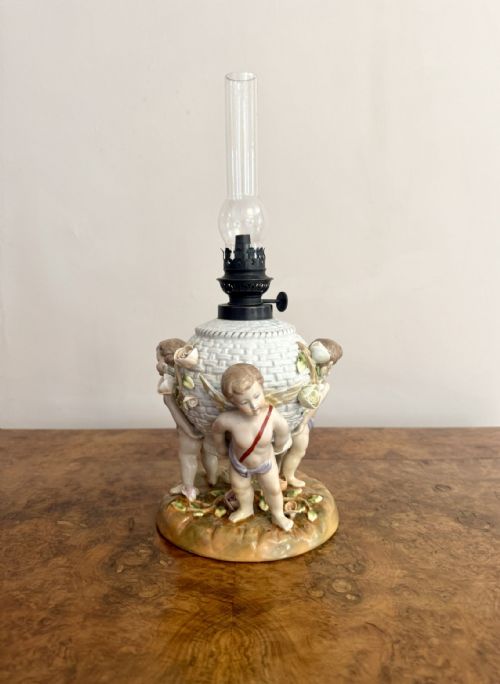
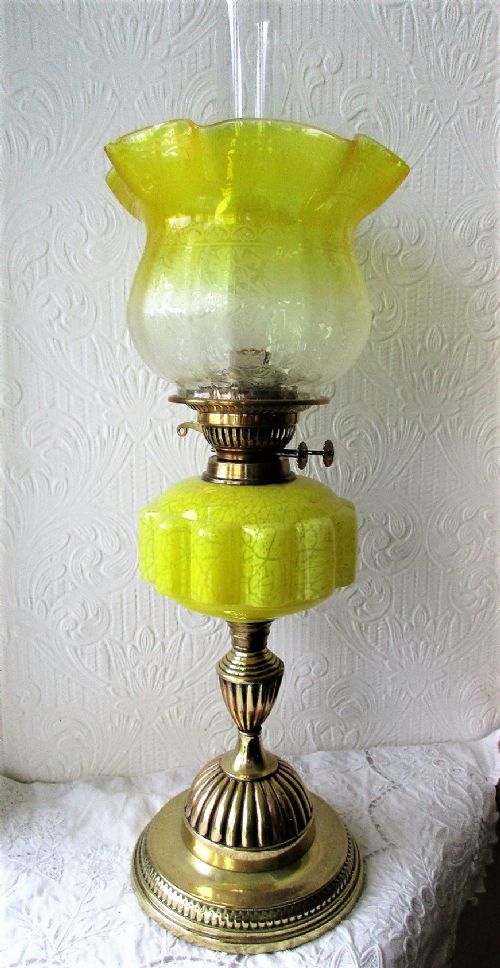
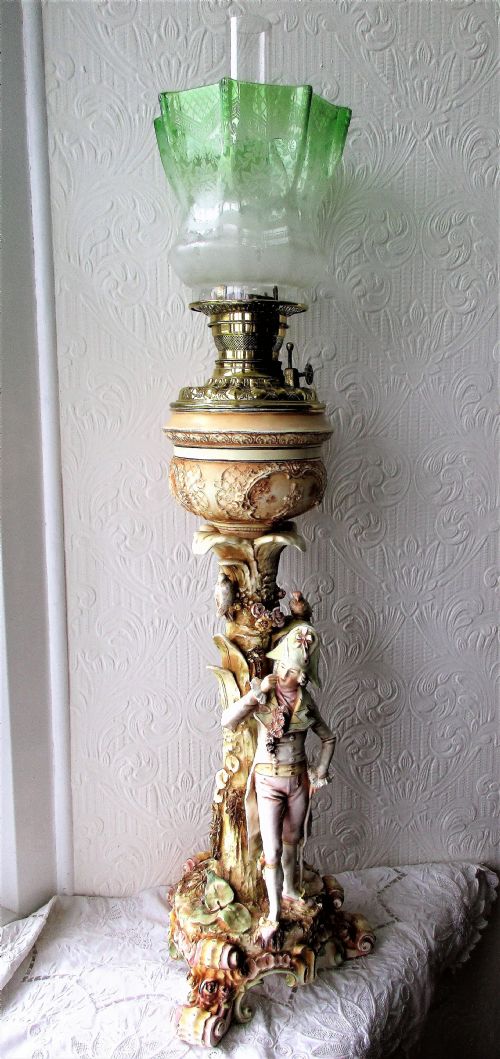
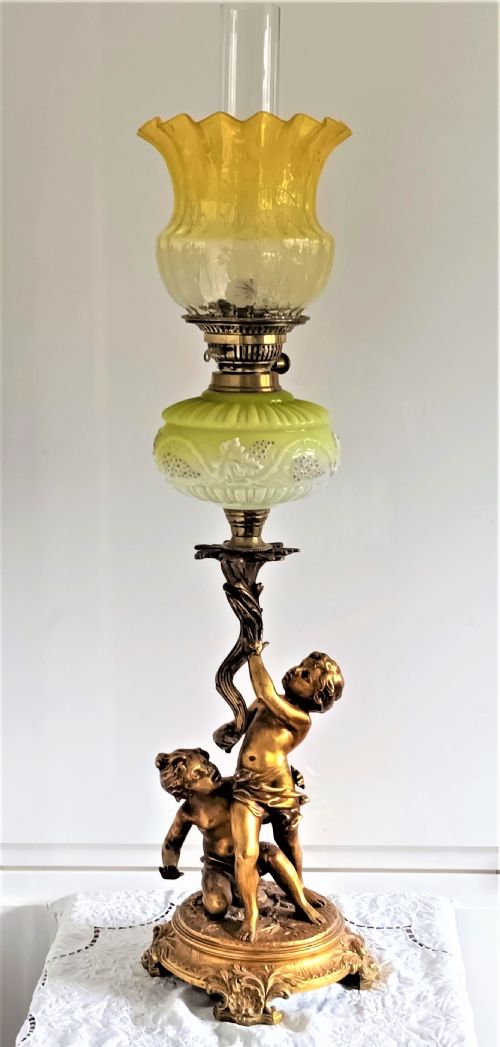
A victorian paraffin table lamp combines a metal or ceramic base with a glass font designed to burn fuel for domestic illumination. Buyers searching for a victorian paraffin table lamp encounter heavy column forms, figural ceramic bodies, and elaborate coloured shades.
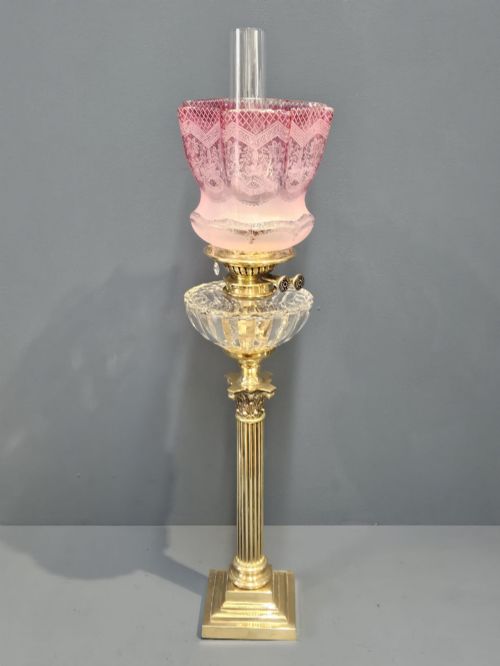
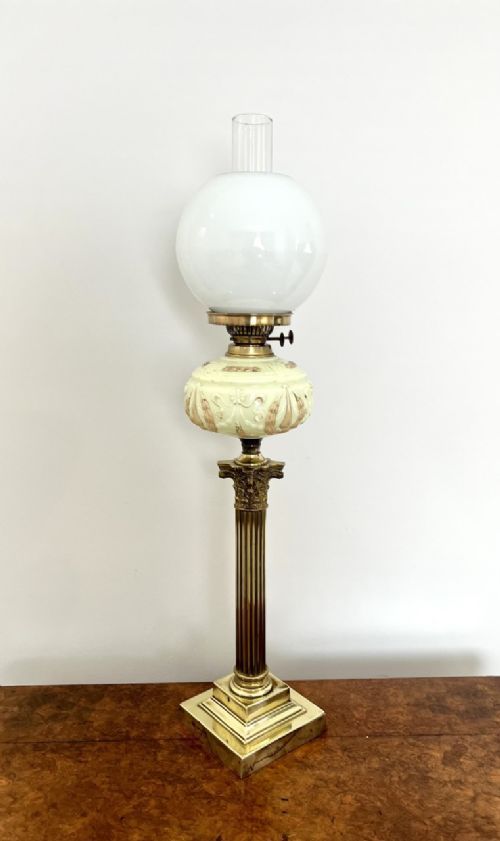
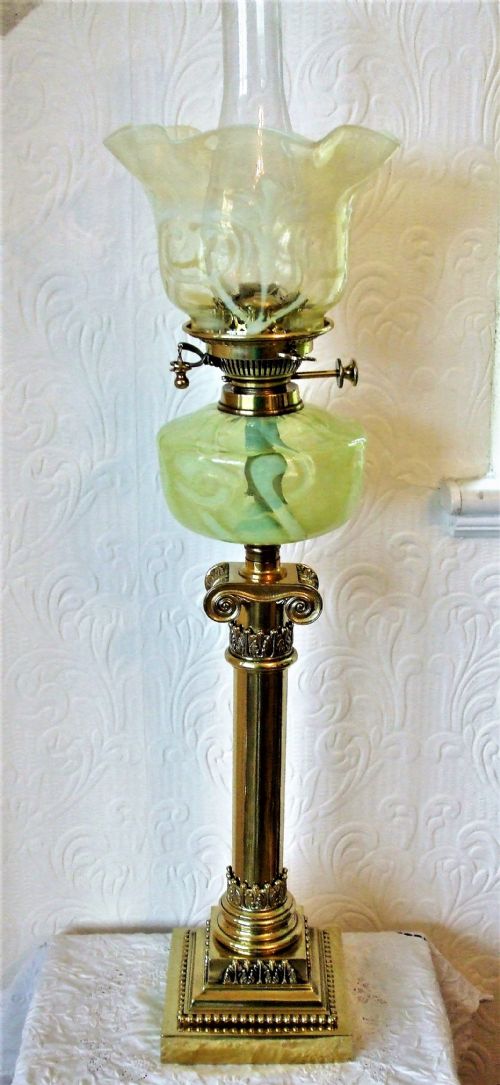
The surviving pieces span the nineteenth century into the early twentieth century, incorporating Edwardian and late Victorian variations alongside Neoclassical Revival and Art Nouveau styling. Corinthian and Ionic column designs appear frequently among the brass examples.
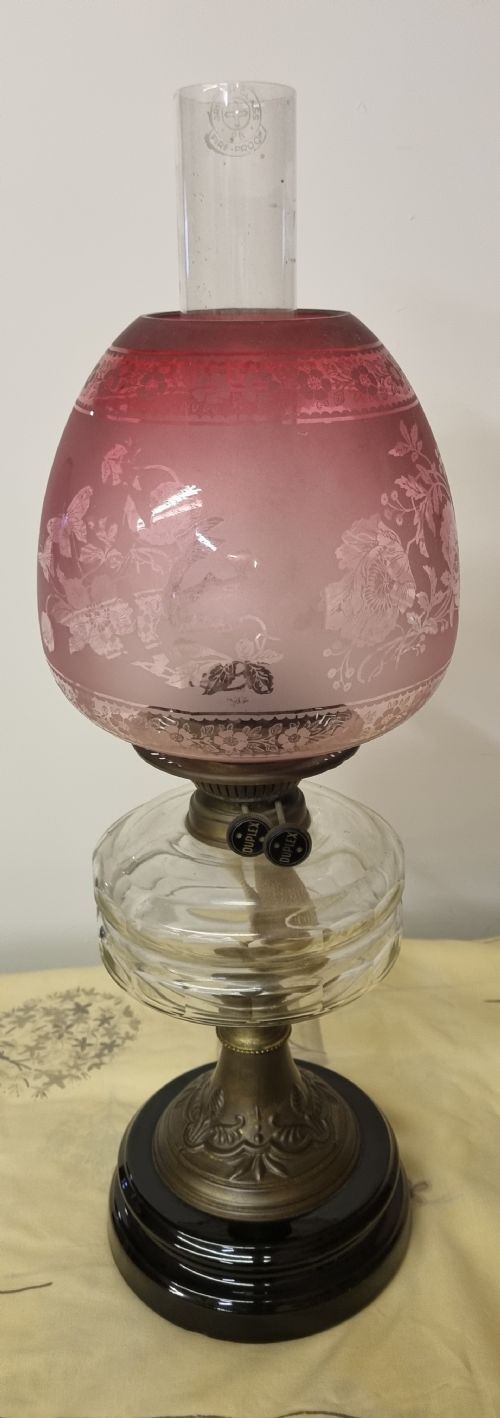
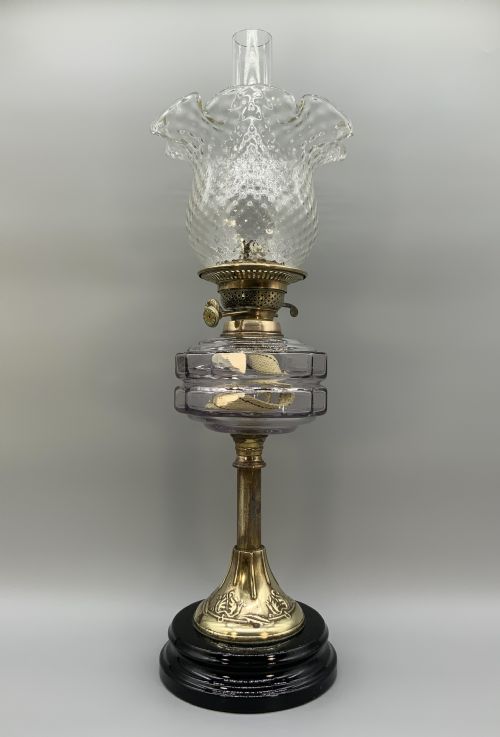
Fonts and shades display considerable diversity, utilising cranberry glass, opaline glass, and hand-painted porcelain. Many retain their original tulip or spherical shades featuring etched patterns or hand-painted botanical motifs.
Evaluating quality and proportion
Quality rests upon the crispness of metal casting in architectural details like column capitals and the weight of the brass components. Substantial height and well-balanced proportions separate ordinary domestic lighting from superior examples intended for formal reception rooms.
The artistry of the glass shade dictates overall desirability, particularly when hand-blown elements, cased colours, and detailed etching match the font. Maker-stamped brass burners and matched components demonstrate higher manufacturing ambition.
Hinks·Taylor Tunnicliff·Sitzendorf·Wild and Wessel
The Victorian Paraffin Table Lamp Glossary
- Duplex burner
- A double-wick mechanism that produced a brighter flame than single-wick predecessors. This twin-burning system required wider galleries to hold the matching chimney.
- Font
- The oil reservoir positioned above the base and beneath the burner. These containers appear in brass, ceramic, and coloured glass.
- Opaline glass
- A pale, translucent white glass that diffuses light softly. It frequently forms the globe shades on late nineteenth-century lighting.
- Corinthian column
- An architectural column style featuring ornate acanthus leaves on the capital. Lamp makers frequently adopted this classical order for brass pedestals.
- Cranberry glass
- A rich red-pink glass coloured with gold chloride during manufacture. This vibrant material is characteristic of high-end Victorian shade and font production.
Victorian Paraffin Table Lamp: Frequently Asked Questions
How do I identify a Victorian paraffin table lamp?
Examine the weight of the metal base and look for structural elements like brass Corinthian columns or figural porcelain bodies. The presence of a twin-burner mechanism and a hand-blown glass shade further points to nineteenth-century production.
Check the construction methods and materials, noting whether the font utilises coloured glass or hand-painted ceramic. Maker marks stamped onto the brass burner gallery provide definitive confirmation of origin.
Were these lamps converted from oil to electricity?
Many surviving examples have undergone electrical conversion to function safely in modern interiors. This process typically routes wiring through the original central column without altering the exterior appearance.
Unconverted pieces retain their original internal wick mechanisms and fuel reservoirs. Collectors often weigh the untouched historical state against the practical convenience of a professional wiring conversion.
What is a duplex burner?
A duplex burner is a double-wick mechanism developed in the nineteenth century to increase the illumination output of paraffin lighting. It burns two flat wicks side by side beneath a wide gallery.
This system required a larger chimney and provided a steadier, brighter flame than earlier single-wick designs. The presence of a marked duplex thumbwheel often indicates a quality maker.
How do I match a shade to a base?
Matching relies on period consistency, colour harmony, and the correct fitter size for the burner gallery. Cranberry glass shades should complement matching cranberry fonts or contrast purposefully against brass columns.
Proportion is equally critical, as the diameter of the shade must balance the height and width of the base. Etched floral or winter scenes on the shade should harmonise with the decorative style of the pedestal.