
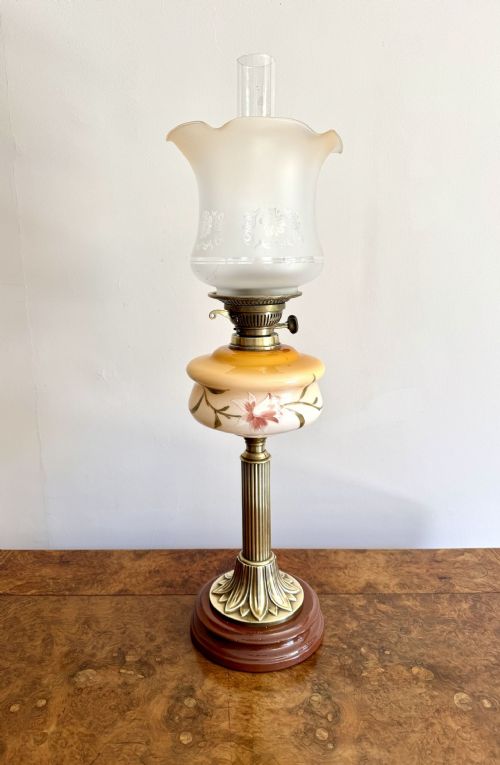
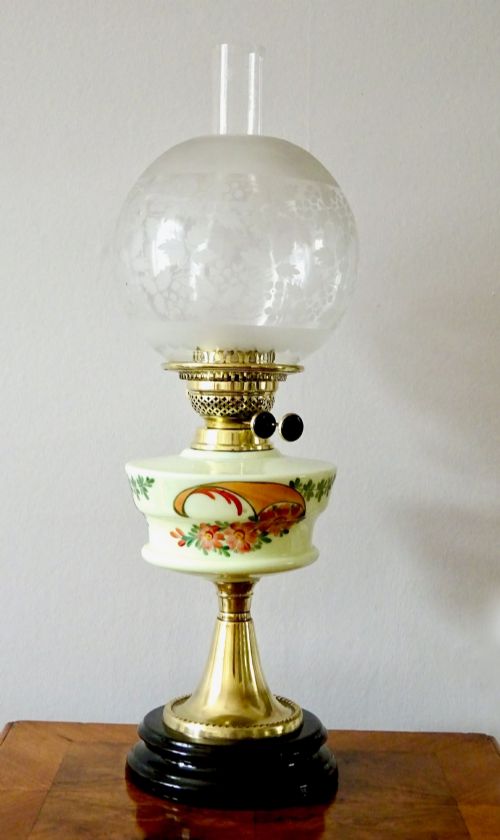


Victorian Floral Oil Lamp
These Victorian floral oil lamp designs bring warmth to a room, combining brass, glass, and hand-painted porcelain into striking domestic lighting.
Victorian Floral Oil Lamp
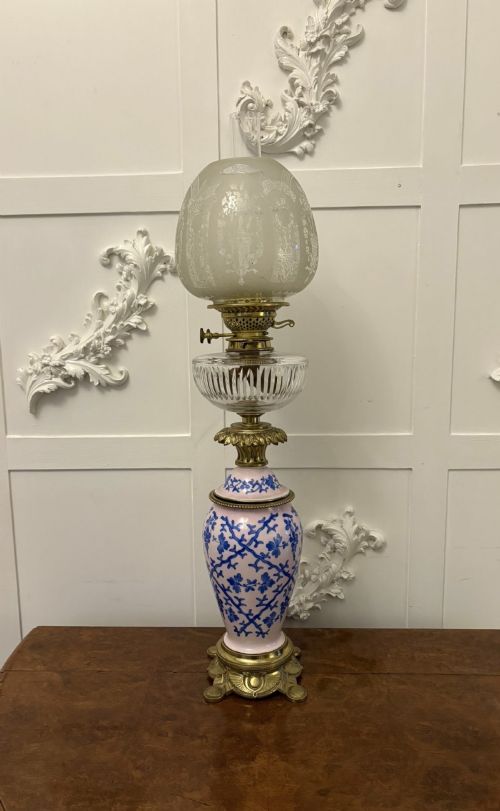
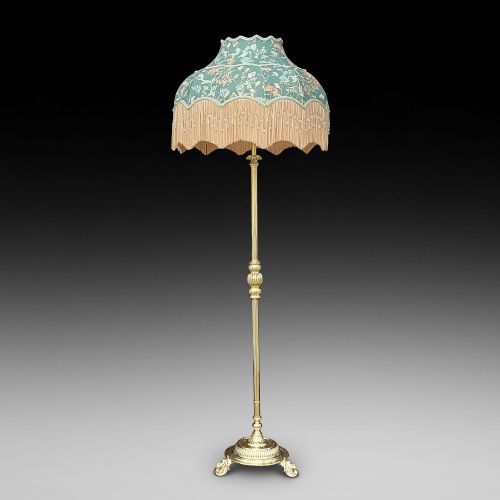
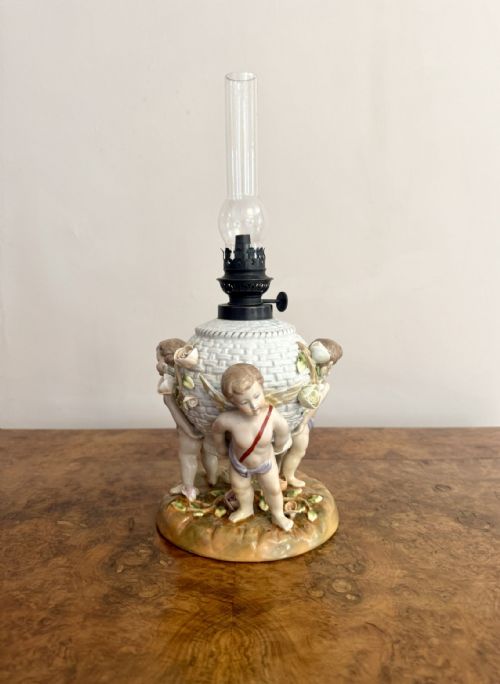
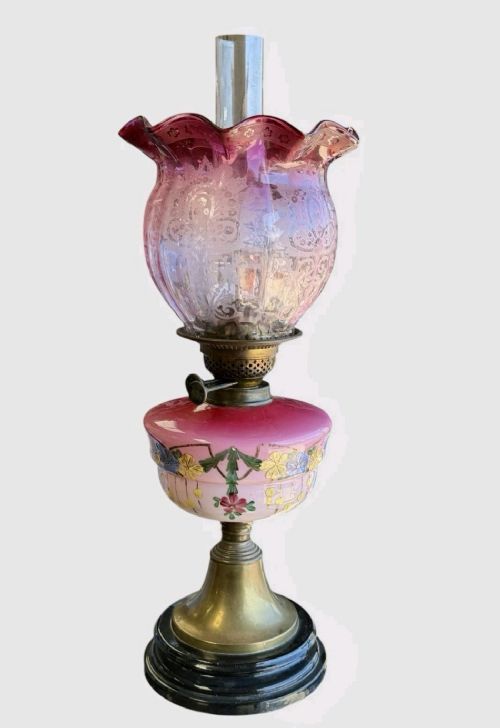
A victorian floral oil lamp combines domestic illumination with decorative artistry, originating predominantly from the nineteenth century. These objects function as table lamps, floor standards, and hanging fixtures, often featuring hand-painted floral motifs on ceramic or glass fonts.
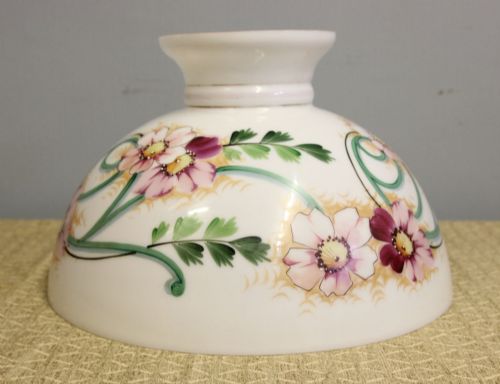
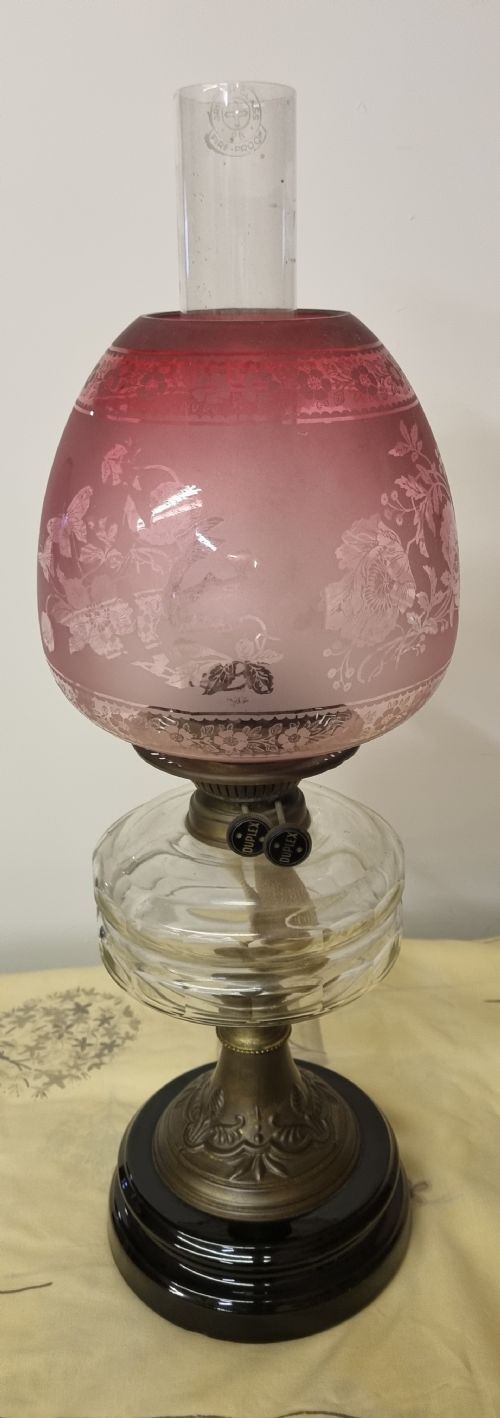
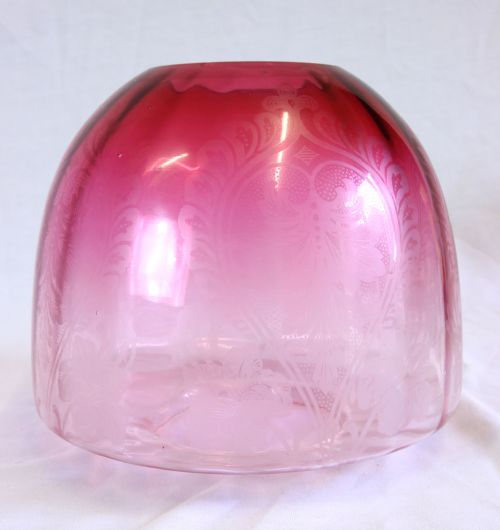
Most examples encountered here date from the Victorian and Edwardian eras, spanning the late nineteenth to early twentieth centuries. The selection includes complete oil lamps with matching shades alongside individual opaline, green, and cranberry glass replacement shades.
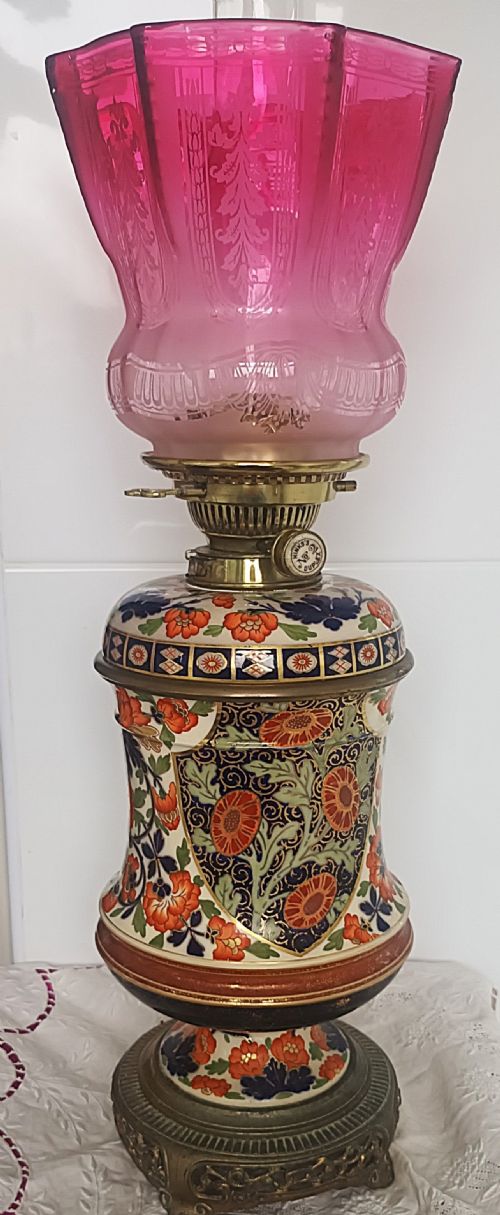
Design styles range from straightforward Victorian and Rococo Revival to Chinoiserie and Art Nouveau. Makers and factories such as Sitzendorf, Hinks, and Taylor Tunnicliff produced notable ceramic and porcelain bodies for these lamps.
How they were made
Brass provides the sturdy structural standards and metal fonts for many pieces, frequently paired with cast bases. Glass components include pressed, etched, and blown elements, notably in cranberry, pink, and opaline variations.
Porcelain and ceramic bodies serve as the canvas for hand-painted floral decoration, often enhanced with gilt detailing. Specialised shades utilise frilled, etched, and tulip-shaped glass techniques to diffuse light.
Listings feature brass, glass, and porcelain materials spanning the Victorian and Edwardian periods.
What varies in quality
Quality depends heavily on the fineness of the hand-painted decoration and the crispness of the porcelain or ceramic moulding. Superior examples display detailed floral artistry and harmonious proportions between font and base.
The choice of materials also dictates standing, with heavy brass standards, complex cranberry or opaline glass shades, and recognised factory pottery marking the upper tier of production.
Sitzendorf·Hinks·Taylor Tunnicliff
The Victorian Floral Oil Lamp Glossary
- Font
- The oil reservoir of the lamp, frequently decorated with hand-painted floral designs. It sits atop the metal or ceramic base.
- Duplex burner
- A specific double-wick burner mechanism commonly found on period oil lamps. It allows for a brighter flame than single-wick variants.
- Opaline glass
- An opaque or translucent pale glass used widely for Victorian lamp shades and bodies. It often takes on soft green, pink, or white hues.
- Faience
- Tin-glazed earthenware used in decorative pottery bodies. It provides a smooth surface suitable for intricate enamel painting.
- Chinoiserie
- A decorative style reflecting European interpretations of Chinese art. It appears on enamel and porcelain lamp bodies within this period.
Victorian Floral Oil Lamp: Frequently Asked Questions
How do I clean my oil lamp glass?
Wash glass shades gently in warm soapy water using a soft cloth, avoiding abrasive pads that might scratch the surface. Ensure the glass is completely dry before handling or reassembling.
Take extra care around hand-painted or gilt areas, as harsh chemicals can damage historic decoration.
Can I convert an oil lamp to electricity?
Many collectors choose to professionally convert period oil lamps for modern electric use to display them safely in living spaces. This involves running a cord through the existing burner without altering the structural integrity.
Consult a qualified electrician to ensure the conversion preserves the original brass and ceramic components.
How do I date an oil lamp?
Examine the materials, burner mechanics, and style markers, such as Rococo Revival or Art Nouveau influences, to narrow down the decade. Hallmarks on brass fittings and factory stamps on porcelain fonts also provide clear chronological clues.
Comparing the painting style and glass colour to documented Victorian and Edwardian examples helps confirm the age.
Were these lamps used every day?
In the nineteenth century, these lamps served as primary household lighting before widespread electricity adoption. Wealthier homes placed porcelain and brass standards in parlours and dining rooms for ambient illumination.
Their decorative floral designs meant they remained attractive household objects even when unlit during daylight hours.