
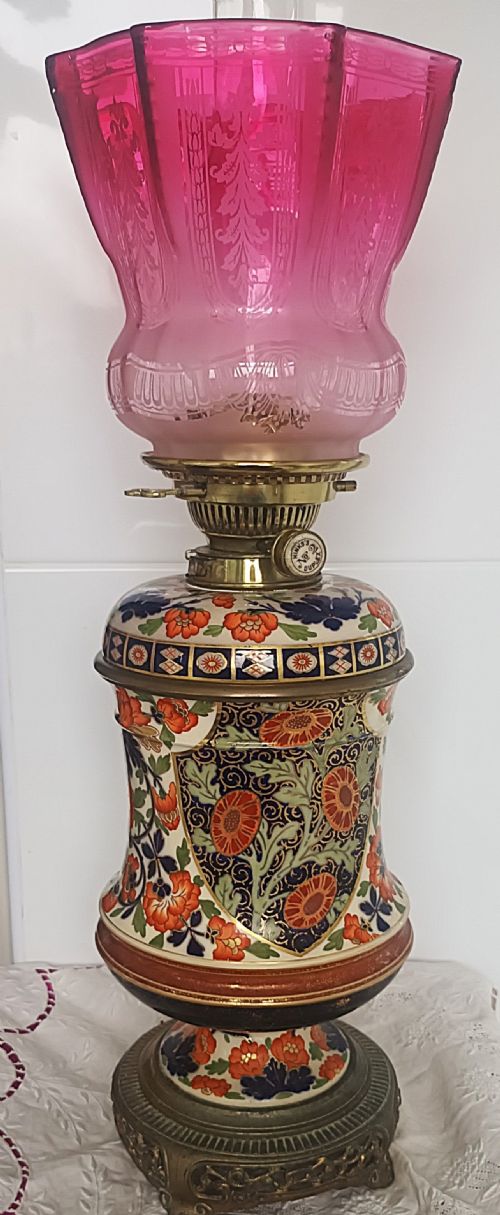
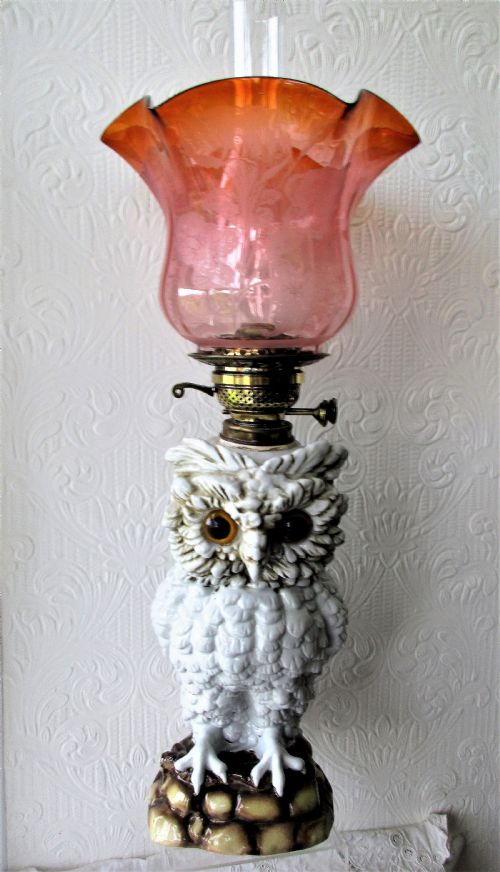


Etched Cranberry Paraffin Lamp
These etched cranberry paraffin lamp pieces bring rich ruby colour and brass polish to a room, offering warm light and period presence.
Etched Cranberry Paraffin Lamp
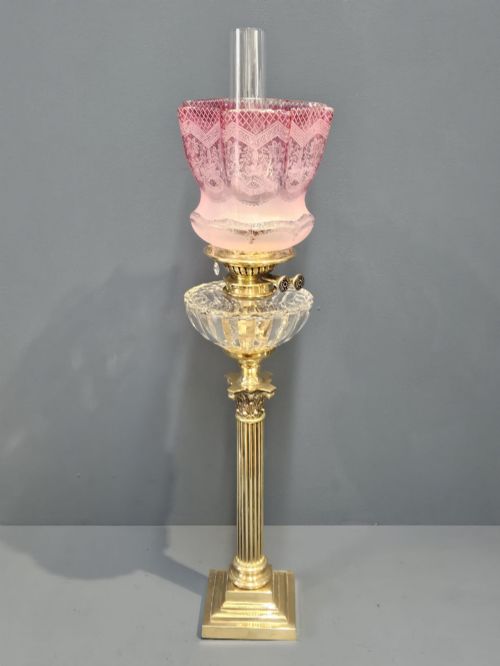
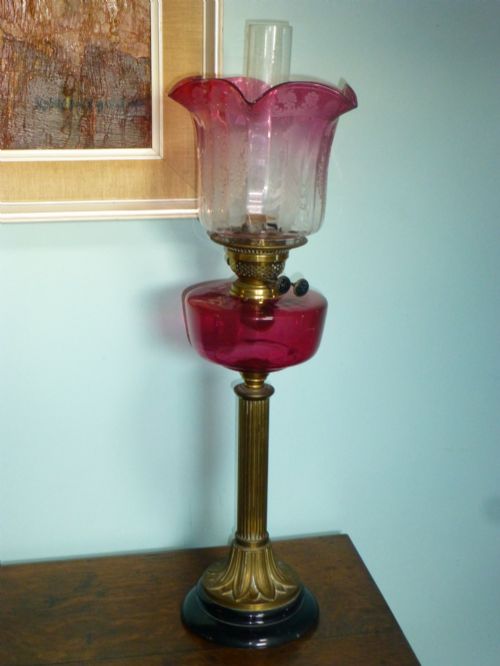
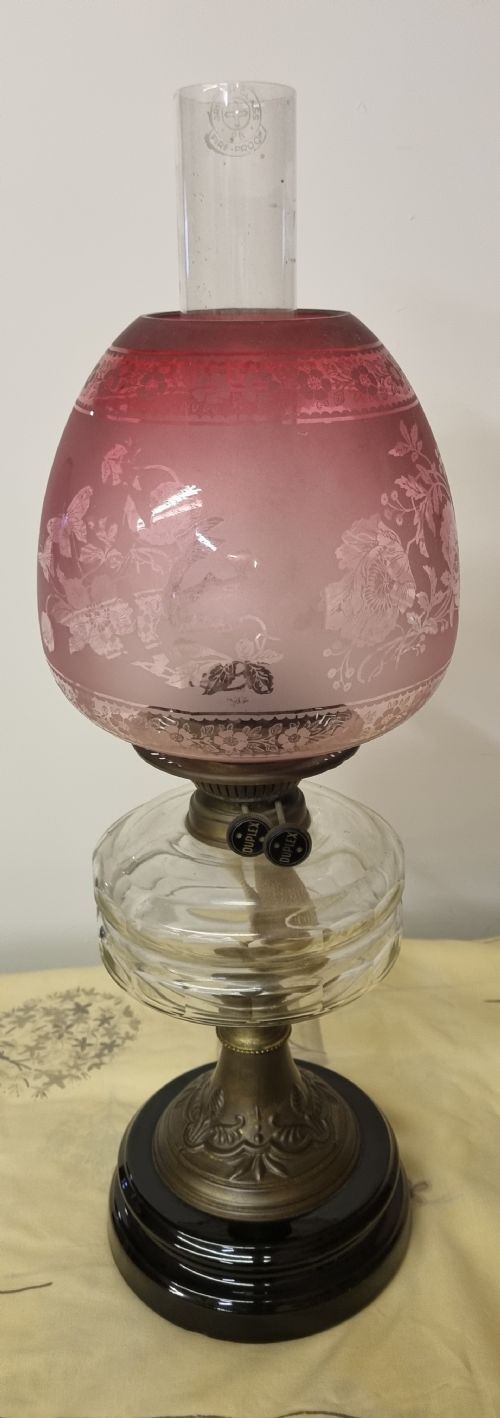
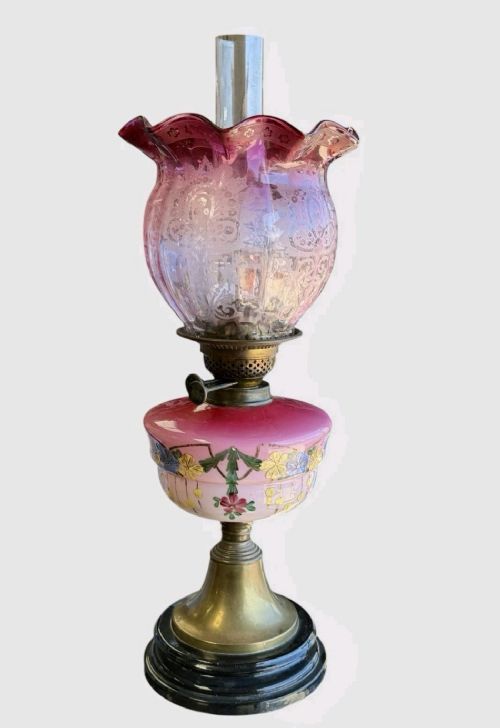
An etched cranberry paraffin lamp combines a vibrant red glass shade or font with structural materials like brass and porcelain, forming a distinct Victorian lighting type.
You will most frequently meet nineteenth-century examples on this page, often featuring Corinthian columns, brass bases, and hand-painted glass components.
These oil lamps reflect the domestic lighting technology of the Victorian and Edwardian eras, bridging the gap between utilitarian objects and decorative parlour centerpieces.
How they were made
Maker workshops combined blown cranberry glass with brass casting and ceramic elements, utilising metallic salts to achieve the characteristic deep red hue.
Surface decoration involved wheel-cutting or etching patterns into the glass shade, alongside hand-painted botanical or figurative motifs on the font or body.
Some Victorian lamps feature hand-painted owls keeping silent vigil over the parlour.
What varies in quality
The refinement of the brass casting and the crispness of the glass etching distinguish higher-grade examples from standard production pieces.
Proportion and scale dictate the visual impact, where taller column designs and matching original components demonstrate superior workshop design.
Hinks·Taylor Tunnicliff·Sitzendorf
The Etched Cranberry Paraffin Lamp Glossary
- Cranberry Glass
- A type of transparent red glass produced by adding gold chloride to the molten batch. It gained popularity during the Victorian era for tableware and lighting.
- Paraffin Lamp
- A domestic lighting device that burns paraffin oil through a cotton wick. These lamps often feature a glass chimney and an adjustable burner mechanism.
- Corinthian Column
- An architectural column style featuring an ornate capital decorated with acanthus leaves. Many nineteenth-century metal lamp standards adopt this classical form.
- Duplex Burner
- A double-wick burner mechanism designed to produce a brighter flame than single-wick versions. It became standard on larger nineteenth-century table lamps.
Etched Cranberry Paraffin Lamp: Frequently Asked Questions
How do I use a paraffin lamp?
Fill the reservoir with clean paraffin oil and allow the cotton wick to absorb the liquid thoroughly before lighting. Adjust the wick height using the thumbwheel to maintain a steady, smoke-free flame.
Keep the glass chimney clean and dry to ensure proper airflow and maximum light output during use.
How do I clean cranberry glass?
Wash the glass gently in warm water using a mild, non-abrasive detergent and a soft cloth. Avoid harsh scrubbing or soaking metal mounts in water to protect the finish.
Dry thoroughly with a lint-free cloth to prevent water spots on the surface.
How do I date a Victorian oil lamp?
Examine the burner mechanism, maker stamps, and construction methods for clues to the manufacturing decade. Patent dates stamped on the brass thumbwheels often provide a reliable starting point for chronology.
Stylistic markers such as Corinthian columns and hand-painted motifs point toward the latter half of the nineteenth century.