


Vintage Pink Kerosene Lamp
A vintage pink kerosene lamp brings a warm, glowing warmth to a room, cast through coloured glass and brass mountings.
Vintage Pink Kerosene Lamp
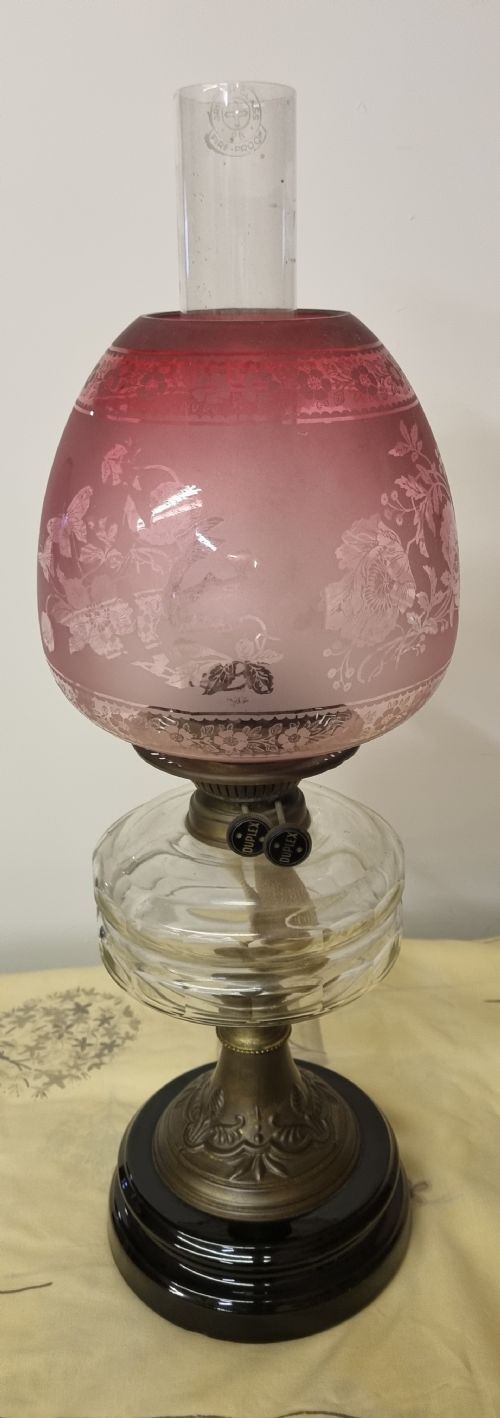
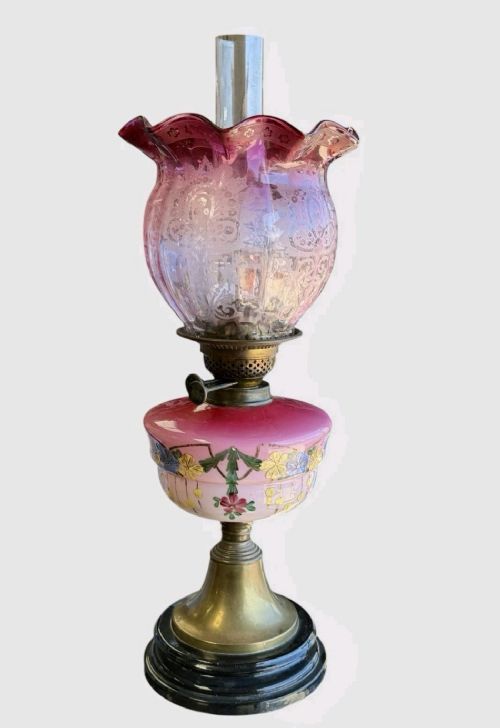
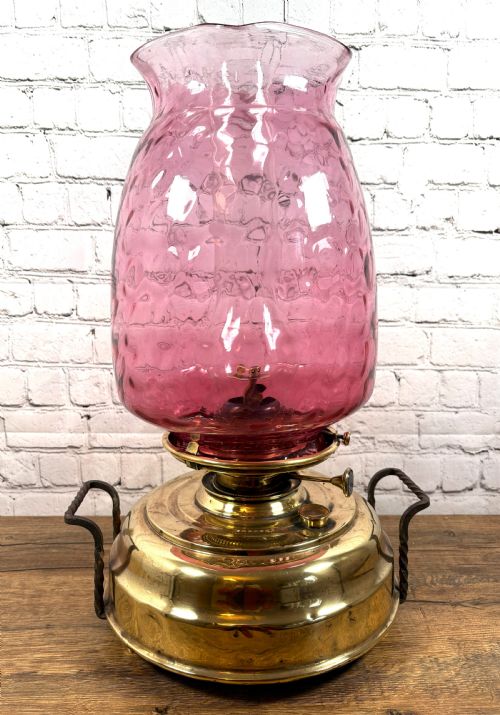
A vintage pink kerosene lamp is fundamentally an oil lamp from the nineteenth or early twentieth century, utilising glass fonts, vessels, or shades in pink and cranberry tones. These domestic lighting pieces mostly date from the Victorian and Edwardian eras, spanning periods from the mid-nineteenth century up to the early twentieth century.
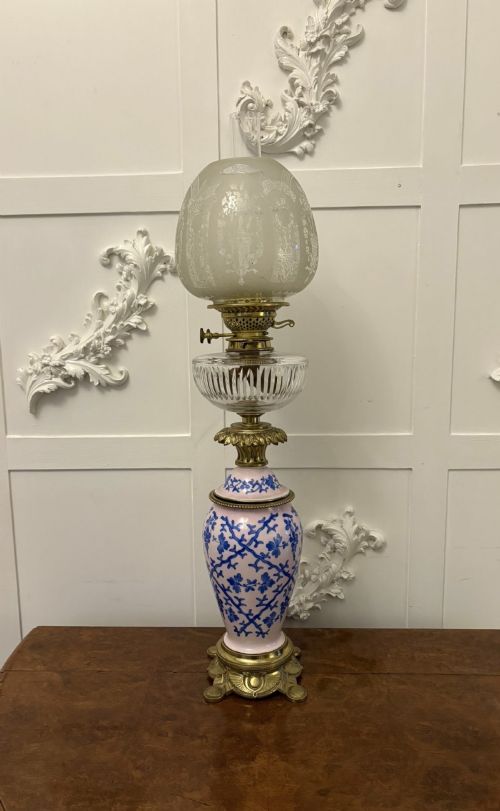
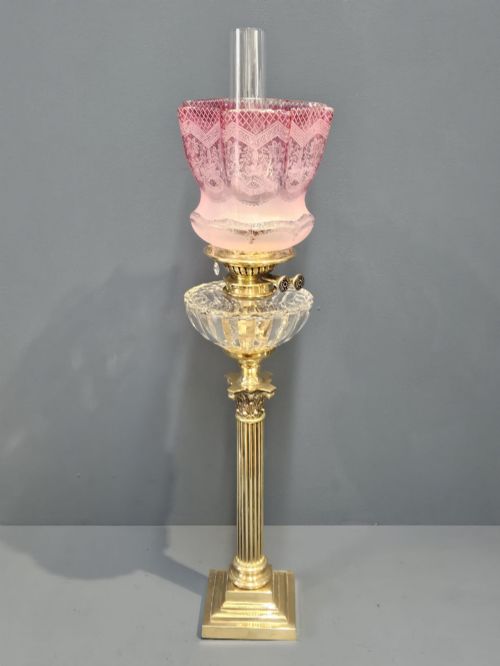
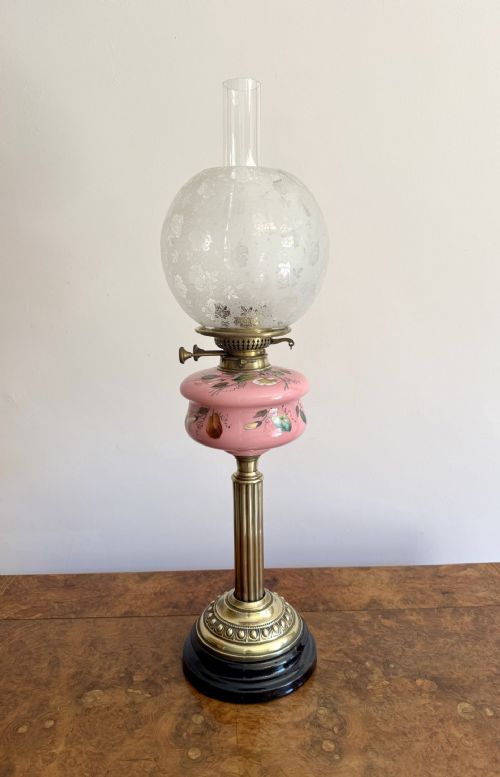
The commonest examples encountered on this page combine brass columns or ceramic bases with tinted glass reservoirs and matching shades. Forms range from simple glass vessels to elaborate Corinthian column designs and pulpit oil lamps, frequently paired with hand-painted decoration or gilt details.
Methods of manufacture
These lamps rely on a combination of cast brass fittings, turned columns, and blown or moulded glass components. Metals provide a sturdy structural base, whilst glass is shaped into fonts and shades, sometimes through hand-painting or etching after initial manufacture.
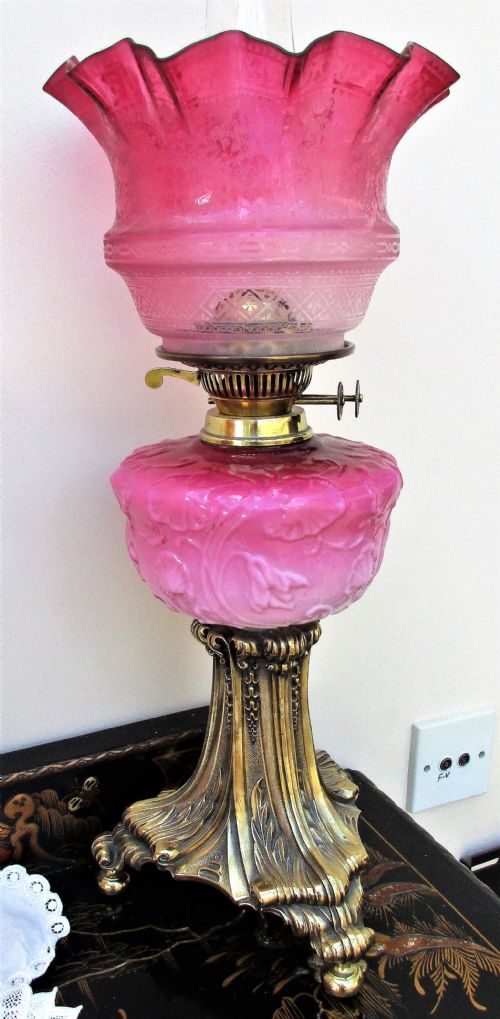
Makers utilised porcelain and ceramic bodies for the main body or base, often integrating detailed mouldings such as columns or figural elements. Cranberry glass and pink opaque glass achieve their distinctive coloration through specialised mineral additions during the glassmaking process.
Some Victorian geese managed to inspire German ceramicists to craft glowing porcelain owl lamps that peer out from the mantelpiece.
Distinctions in quality
Quality rests primarily on the substance of the materials and the crispness of the casting or glass formation. Heavy brass mountings and thick, resonant cut glass demonstrate superior standard compared to lighter pressed alternatives.
Artistic execution further separates the ranges, seen in the precision of hand-painted floral motifs on porcelain or glass fonts and the integration of matching shades. The complexity of the design, such as Corinthian capitals or figural porcelain work, marks out the more ambitious pieces.
The Vintage Pink Kerosene Lamp Glossary
- Cranberry glass
- A rich, deep pinkish-red glass produced by adding gold chloride to the molten glass batch during the nineteenth century.
- Corinthian column
- An architectural column design frequently utilised for the brass stems of Victorian lamps, featuring ornate acanthus leaf capitals.
- Opaque glass
- A dense, non-translucent glass variety often utilised for Victorian lamp vessels to conceal the fuel level within.
- Pulpit oil lamp
- A specialised taller lamp form, sometimes engineered to serve a dual purpose as a heater.
Vintage Pink Kerosene Lamp: Frequently Asked Questions
What is a vintage pink kerosene lamp?
A vintage pink kerosene lamp is a period lighting device from the Victorian or Edwardian eras, designed to burn oil with a wick beneath a glass chimney and shade. These pieces utilise pink, cranberry, or opaque glass combined with brass or porcelain bases.
They were essential household items before widespread electrical lighting, serving both practical illumination and decorative purposes in nineteenth-century homes.
How do I date a pink glass oil lamp?
Dating relies on observing the materials, manufacturing techniques, and stylistic markers present in the brass, porcelain, and glass components. Victorian pieces often display classical revival motifs like Corinthian columns, whilst later examples edge into Edwardian simplicity.
Changes in glass coloration methods and burner technology also help narrow the decade of production between the mid-nineteenth and early twentieth centuries.
Were these lamps used for daily lighting?
Yes, before electricity reached most homes, kerosene or oil lamps provided the primary indoor illumination for parlours, dining rooms, and bedchambers. Their decorative glass vessels and painted shades also acted as focal points for interior decoration.
Wealthier households utilised elaborate brass and porcelain column designs in reception rooms, whilst simpler glass fonts served general domestic use.
How do I display an oil lamp safely?
Place the lamp on a stable, flat surface away from drafts, high-traffic areas, and flammable materials. Many collectors choose to display them on side tables or mantelpieces where their coloured glass and brass work catch the ambient light.
Ensure the burner and collar components are secure if moving the piece, and handle shades with care as antique glass is delicate.