
Victorian Paraffin Lighting
Victorian paraffin lighting brings nineteenth-century illumination into the home with tall brass columns, colourful glass fonts, and matching shades.
Victorian Paraffin Lighting
Victorian paraffin lighting comprises oil lamps and hanging ceiling lights designed to burn paraffin during the nineteenth century and the Edwardian era. When you search for victorian paraffin lighting, you encounter tall table lamps alongside hanging fixtures equipped with burners and shades.
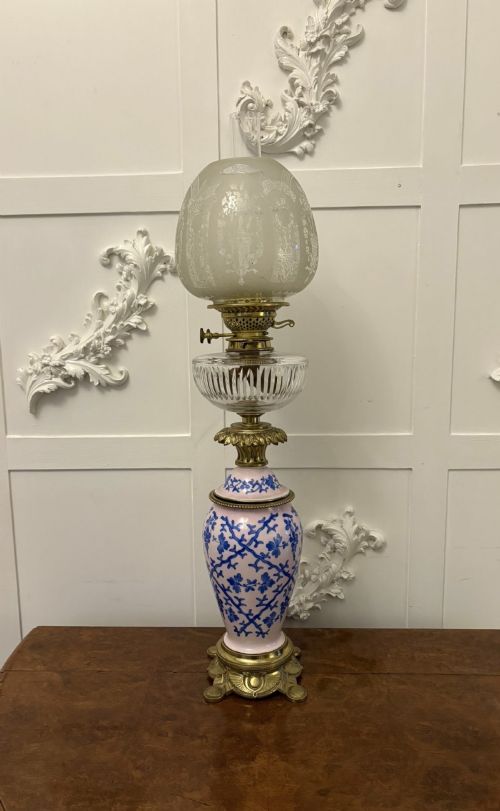
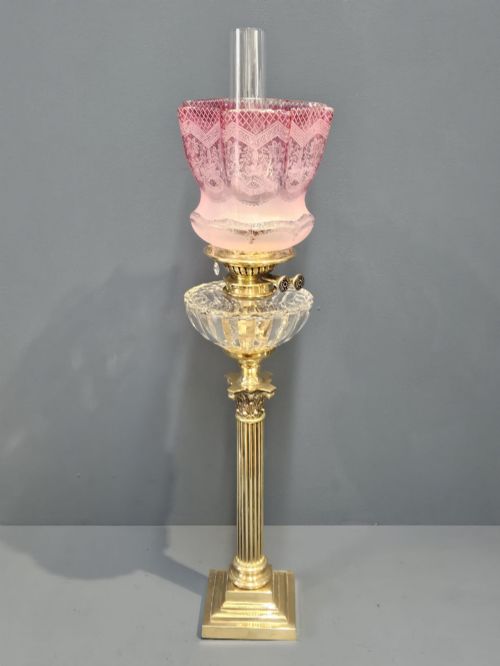
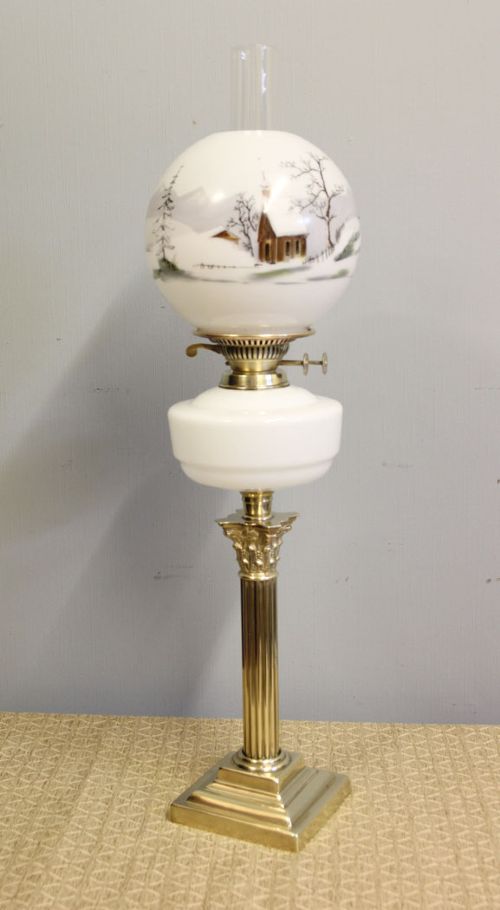
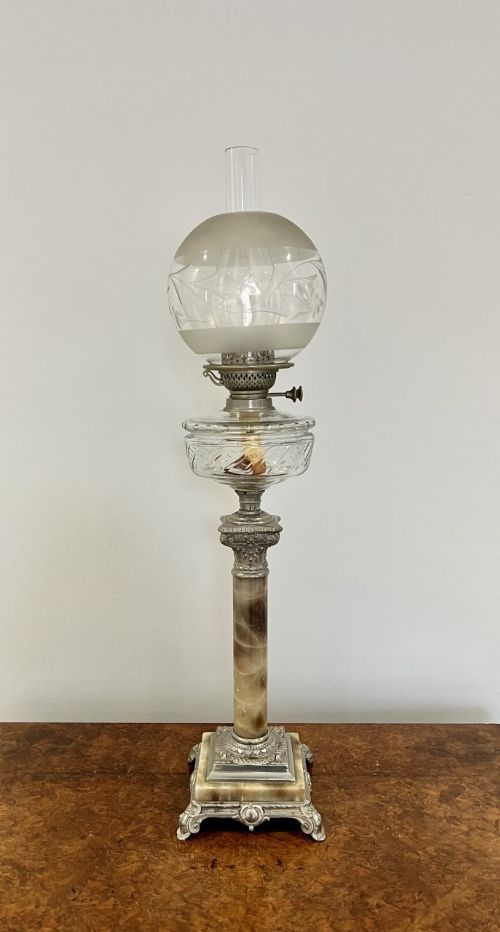
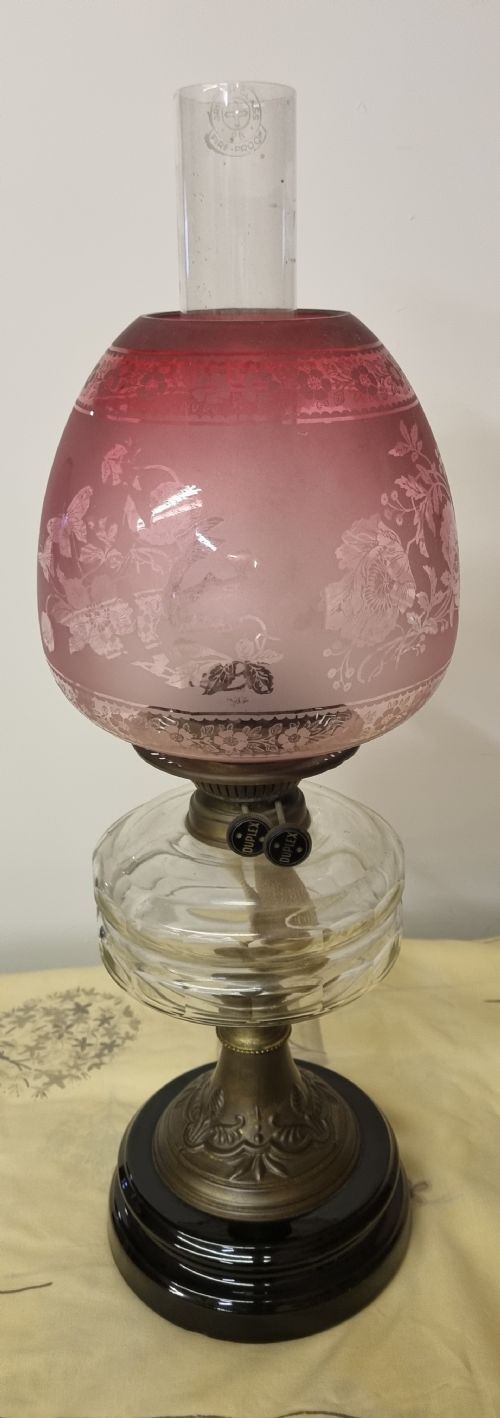
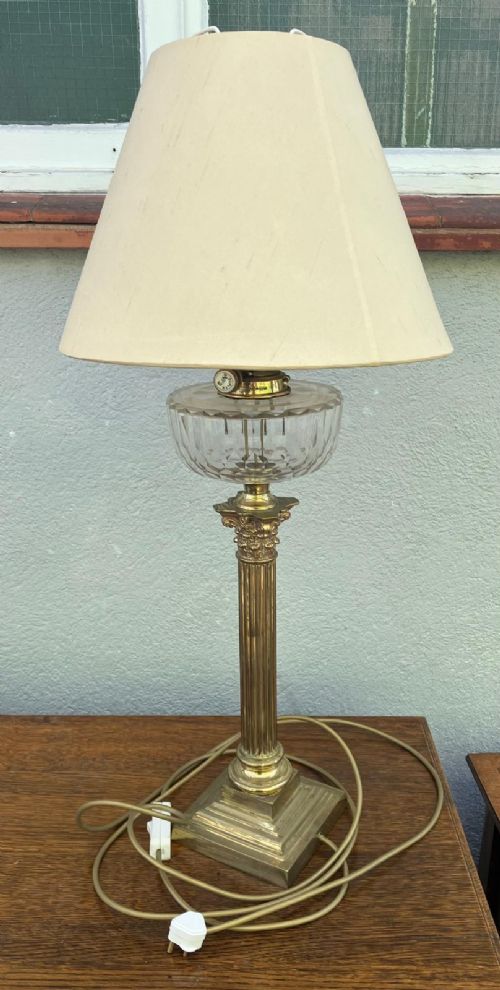
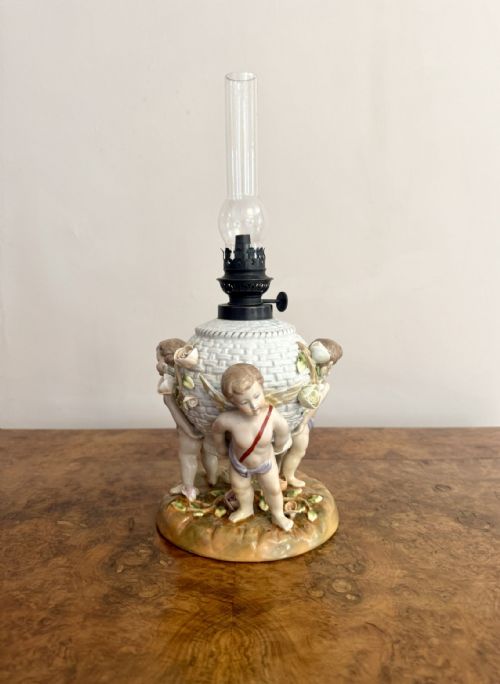
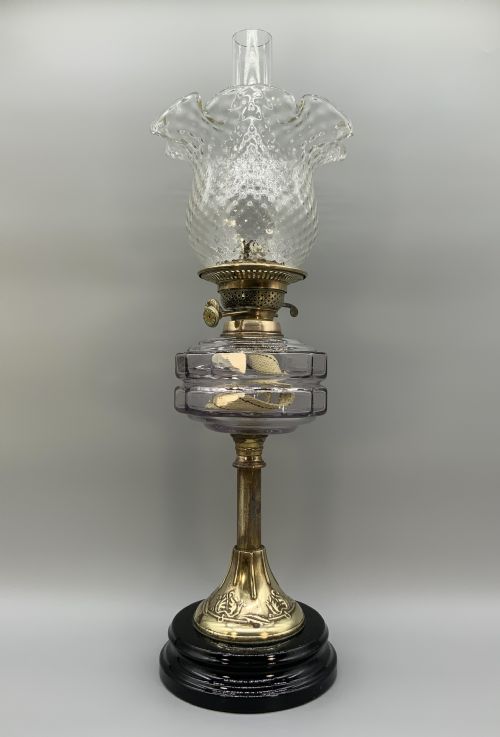
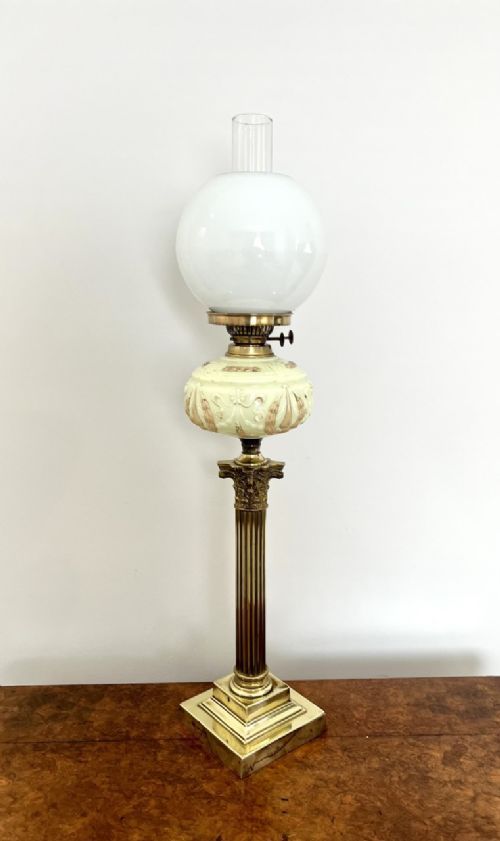
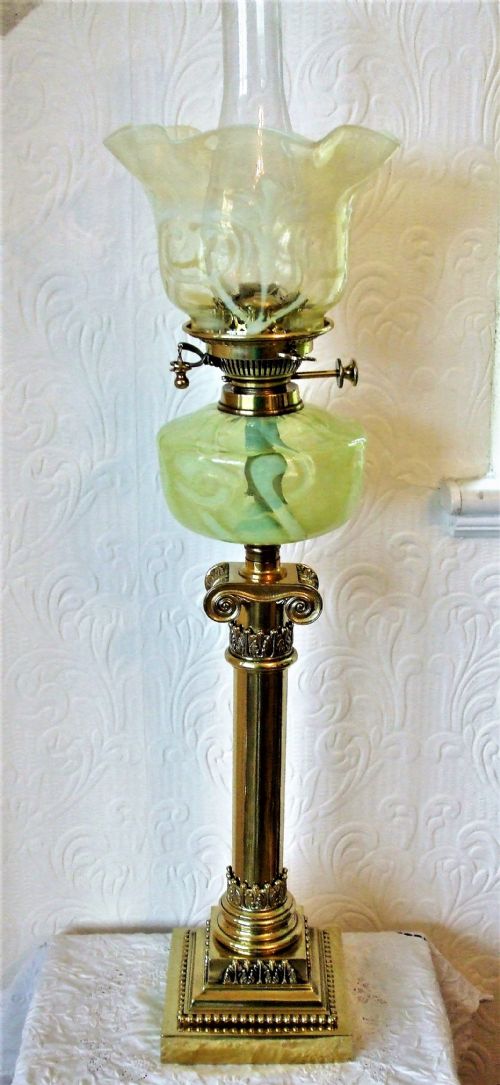
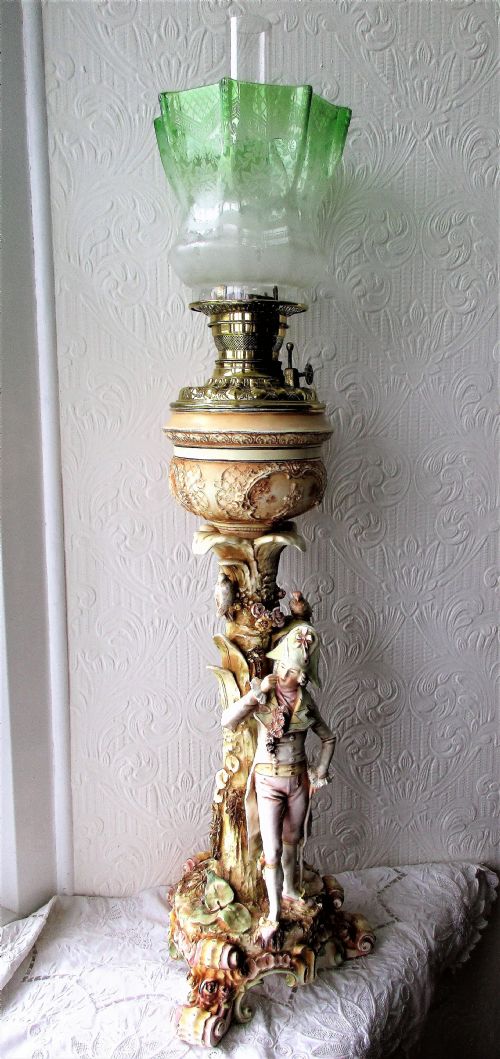
The most common examples on this page feature sturdy brass columns, including Corinthian and Ionic forms, paired with glass or ceramic fonts. These sit alongside figural pieces, twin-burning models, and pulpit styles spanning the eighteen-sixties to the early twentieth century.
Makers such as Hinks appear alongside German and English factories, demonstrating how domestic lighting evolved from simple functional objects into ornamental centrepieces. Collectors find table lamps and lamp shades in varied colours that preserve the original domestic atmosphere of the period.
How they were made
Makers constructed these lamps using heavy brass for structural columns and bases, often combining them with ceramic or porcelain bodies. Metal components were cast, turned, and sometimes gilded to create robust supports for the fuel reservoir.
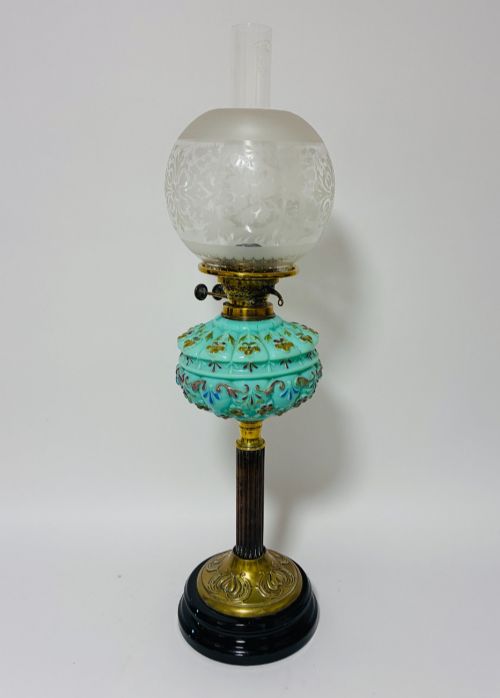
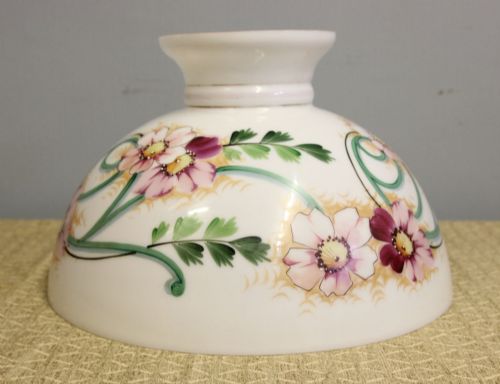
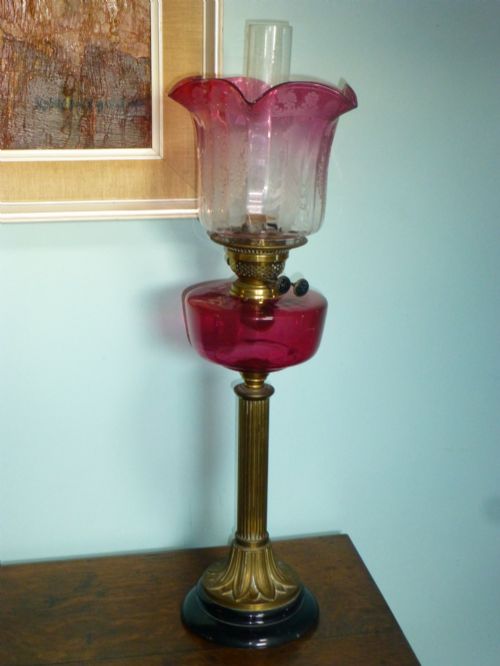
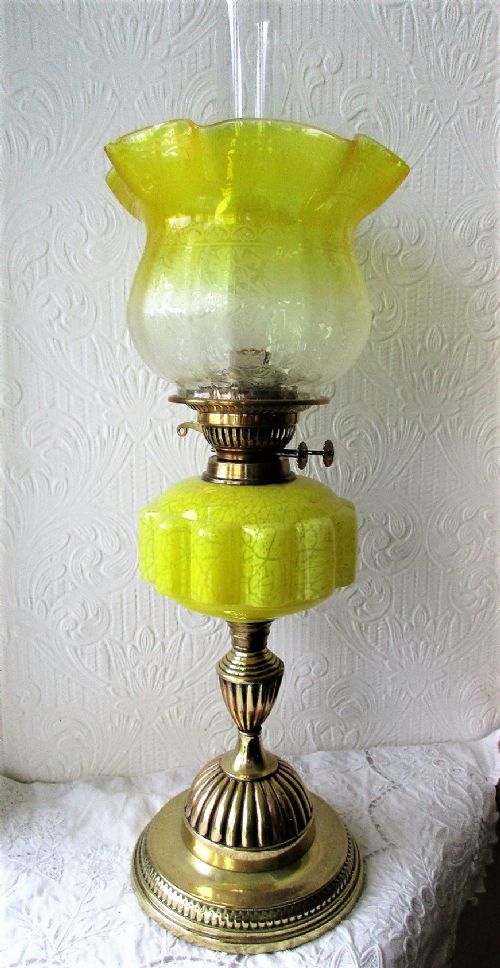
Fonts and shades utilised specialised glass techniques, including hand-blown cranberry glass, opaline glass, and cut glass with etched or painted decoration. Factories produced complex burners, such as duplex systems, to regulate the flame and maximise light output from paraffin fuel.
Some Victorian households relied on an owl-shaped porcelain lamp to watch over the parlour after dark.
What varies in quality
Quality in these lighting pieces depends upon the weight and definition of the brass casting, particularly in architectural columns like the Corinthian order. Superior examples display crisp detailing in the metalwork and robust construction that supports heavy glass reservoirs securely.
The artistry of the glass font and matching shade distinguishes finer pieces, with hand-painted botanical motifs or rich cranberry hues indicating higher craftsmanship. Maker attribution to established firms like Hinks also elevates a piece above standard utilitarian production.
Hinks·Taylor Tunnicliff·Sitzendorf·Wild and Wessel
The Victorian Paraffin Lighting Glossary
- Duplex burner
- A double-wick burner mechanism that produces a brighter light than single-wick versions. It became standard on many high-end lamps of the period.
- Font
- The oil reservoir of the lamp, typically made of glass, ceramic, or metal. It sits atop the column and feeds paraffin to the burner.
- Corinthian column
- An architectural column style featuring ornate, leaf-carved capitals adapted for lamp stands. It reflects the neoclassical revival taste of the era.
- Opaline glass
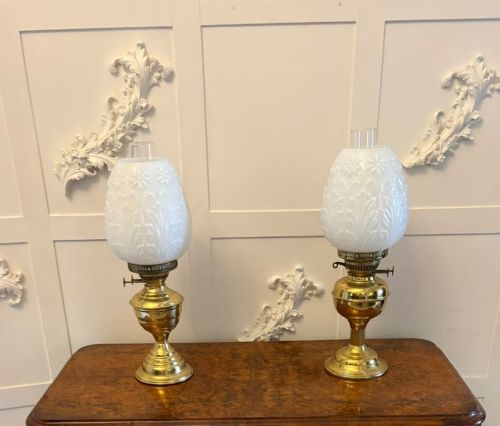
- An opaque, milky glass often tinted in soft shades and used for lamp shades to diffuse light evenly. It was widely utilised across late nineteenth-century lighting.
- Cranberry glass
- A rich red-pink glass created by adding gold chloride to the molten batch. It is frequently seen in Victorian lamp fonts and shades.
Victorian Paraffin Lighting: Frequently Asked Questions
How do I clean a fragile glass lamp shade?
Wash glass shades in lukewarm water with mild soap, avoiding harsh abrasives that might damage hand-painted or etched surface decoration. Dry them carefully with a soft cloth before replacing them on the burner.
Keep brass components polished with appropriate metal cleaners, taking care not to let cleaning residues touch painted or delicate glass sections.
How can I tell a Victorian lamp from an Edwardian one?
Victorian lamps often lean towards heavy brass Corinthian columns and rich cranberry or gilt glass, reflecting mid to late nineteenth-century taste. Edwardian pieces, emerging around nineteen hundred, frequently introduce lighter forms, opaline glass, and distinct Art Nouveau influences.
Examination of the burner stamps and registry marks provides further clues to the exact manufacturing decade.
What is a duplex burner?
A duplex burner uses two parallel flat wicks to generate a wider, brighter flame than traditional single-wick lamps. This mechanical innovation allowed nineteenth-century households to read and work by lamplight much more effectively.
Lamps featuring this system often bear the name of prominent makers like Hinks on the thumbwheels.