




Vintage Yellow Glass Lighting
Vintage yellow glass lighting brings warm colour and period character to a room, spanning oil lamps, art deco pendants and Victorian table fittings.
Vintage Yellow Glass Lighting
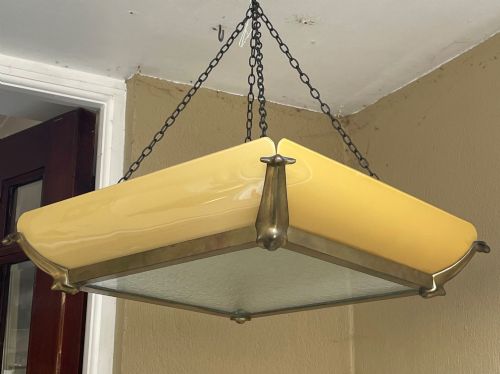
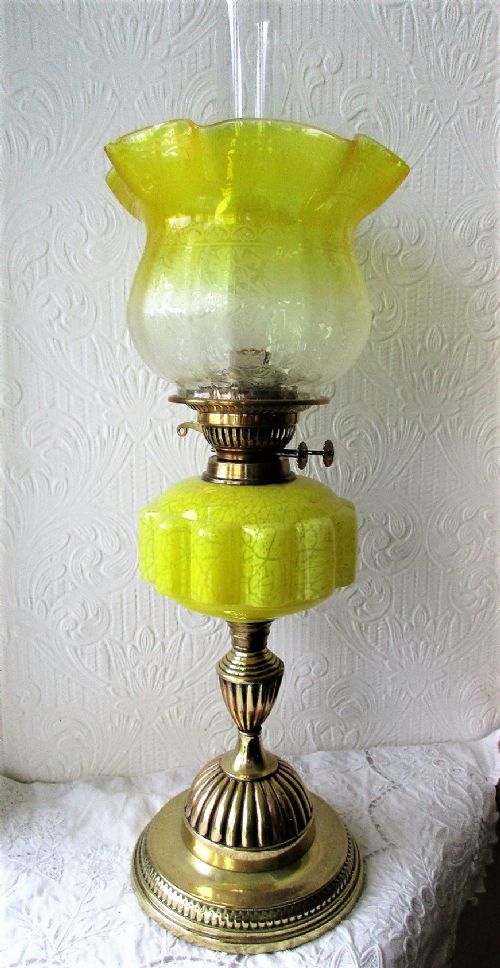
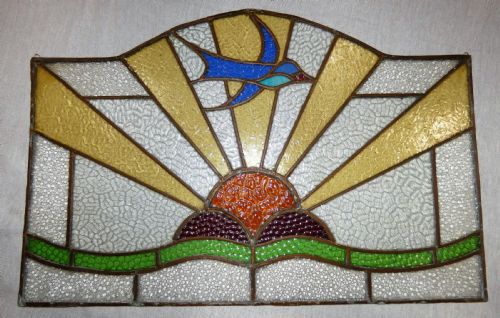
Vintage yellow glass lighting encompasses a range of domestic illumination forms, drawing together oil lamps, hanging lights, table lamps, and stained glass windows. These pieces appear across several distinct historical periods, notably the Victorian era, the Art Nouveau movement, and the Art Deco years of the early twentieth century.
How they were made
Construction relies upon combinations of glass, brass, wrought iron, and polished metal, often pairing moulded or blown yellow glass with heavy metal bases. Artisans shaped glass through techniques including pate de verre, while mounting components in brass, ormolu, silver plating, and ceramic.
Support structures integrate materials such as lead, wrought iron, and fabric shades in silk to complement the coloured glass reservoirs and shades. Metalwork elements provide structural stability for substantial glass oil fonts and hanging chandeliers.
Listings feature items spanning the nineteenth century up to 1930, incorporating brass, wrought iron, amber glass, and silk.
What varies in quality
Quality differences emerge in the weight and complexity of the glass work, the precision of the metal mounts, and the integration of maker-attributed designs. Examples incorporating signed glass or detailed wrought iron frameworks stand apart from standard production pieces.
The refinement of the materials dictates the distinction between standard items and exceptional examples, particularly where ormolu, silver plating, or fine pate de verre are employed.
Karl Palda·Degue·Muller Freres·Hinks
The Vintage Yellow Glass Lighting Glossary
- Pate de verre
- A glass-making technique involving crushed glass packed into a mould and fused in a kiln. This method produces rich colour gradations and textured surfaces.
- Ormolu
- Gilded bronze or brass applied as a decorative mount on lighting fixtures. It provides a bright metallic contrast to coloured glass components.
- Peg lamp
- A small oil lamp featuring a protruding base designed to drop directly into a candlestick or receiver. These units were frequently adapted for later electrical use.
- Ionic column
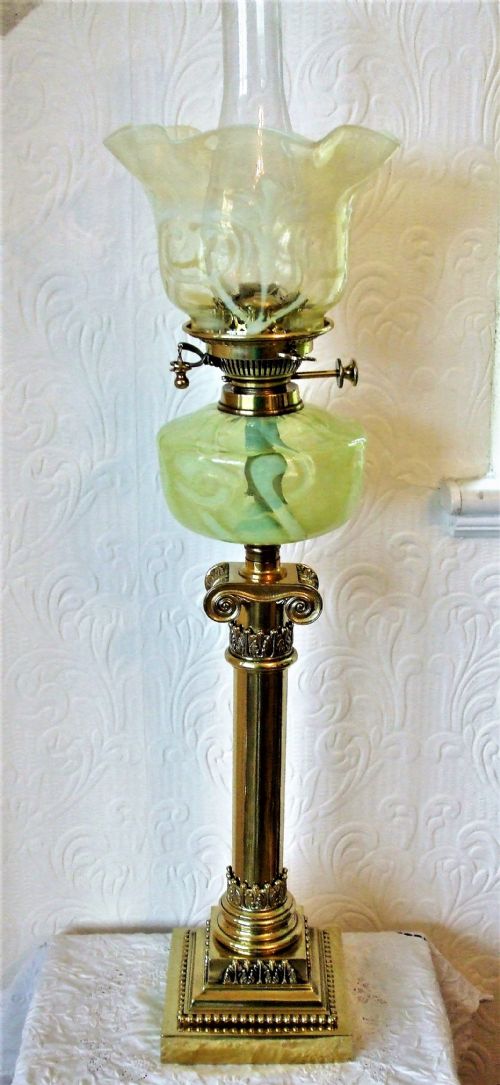
- A classical architectural column form utilised for the stems of nineteenth-century oil lamps. The style incorporates characteristic scroll capitals.
Vintage Yellow Glass Lighting: Frequently Asked Questions
How do I wire an old oil lamp?
Converting an oil lamp for modern electricity generally involves passing a cord through the existing burner mechanism or mounting a lampholder to the top collar without damaging the original metalwork.
Professional electricians can perform this conversion safely while preserving the structural integrity of the brass, ceramic, or glass body.
What periods do these lights come from?
The available lighting spans from the Victorian era through the Art Nouveau period and into the Art Deco years of the 1920s and 1930s.
Earlier nineteenth-century pieces often take the form of brass and ceramic oil lamps, while later twentieth-century examples lean towards geometric glass shades and wrought iron fixtures.
Are silk shades original to these lamps?
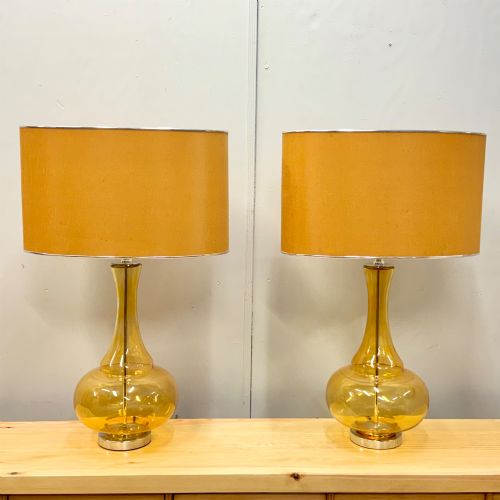
Fabric elements such as silk shades on older table lamps are frequently replacements due to the perishable nature of textiles over decades of use.
Original glass components and metal bases remain the primary focus for dating and identifying the period of the lighting fixture.