


Antique Yellow Oil Lamp
These antique yellow oil lamp pieces bring warm, coloured light and period character into a room.
Antique Yellow Oil Lamp
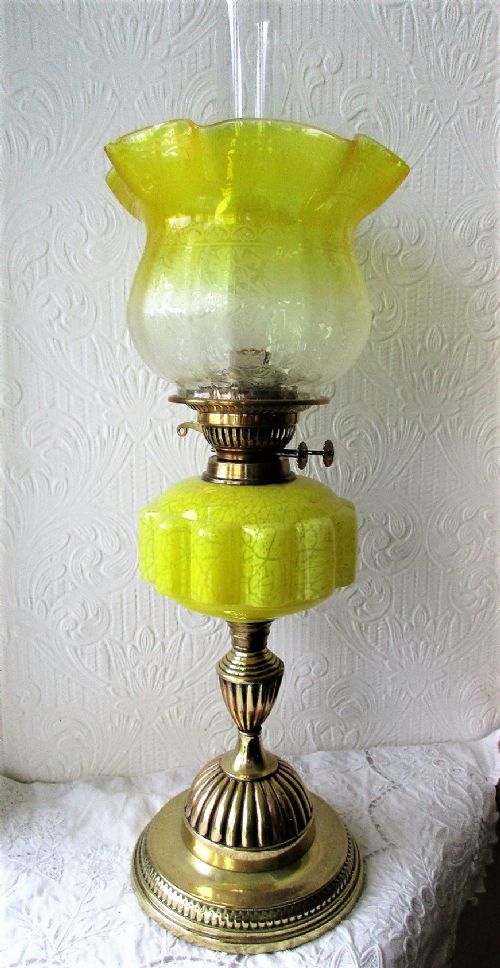
An antique yellow oil lamp is a functional domestic lighting piece designed to burn liquid fuel through a cotton wick, housed within a glass, porcelain, or ceramic reservoir. When people search for an antique yellow oil lamp, they generally encounter nineteenth-century examples produced during the Victorian and Edwardian eras, spanning table lamps, peg lamps, and standard floor models.
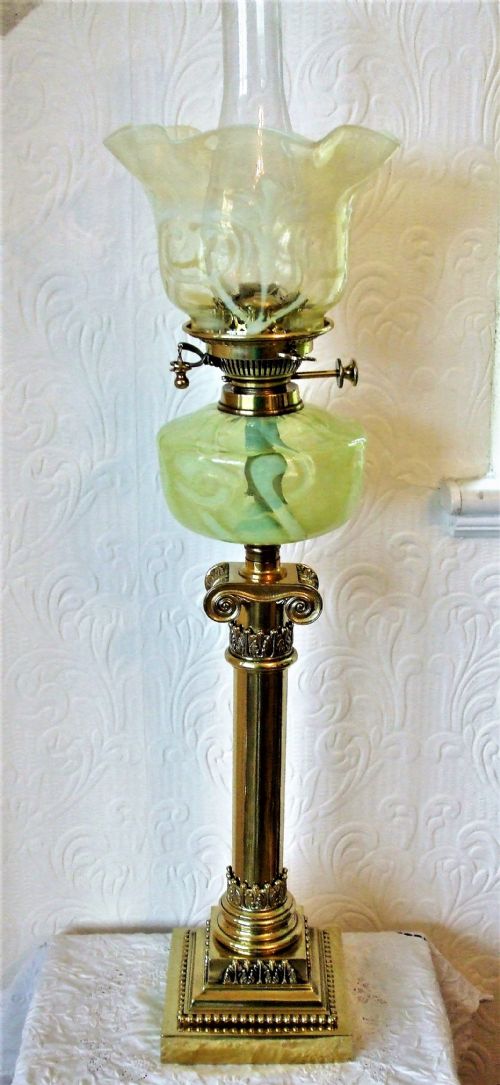
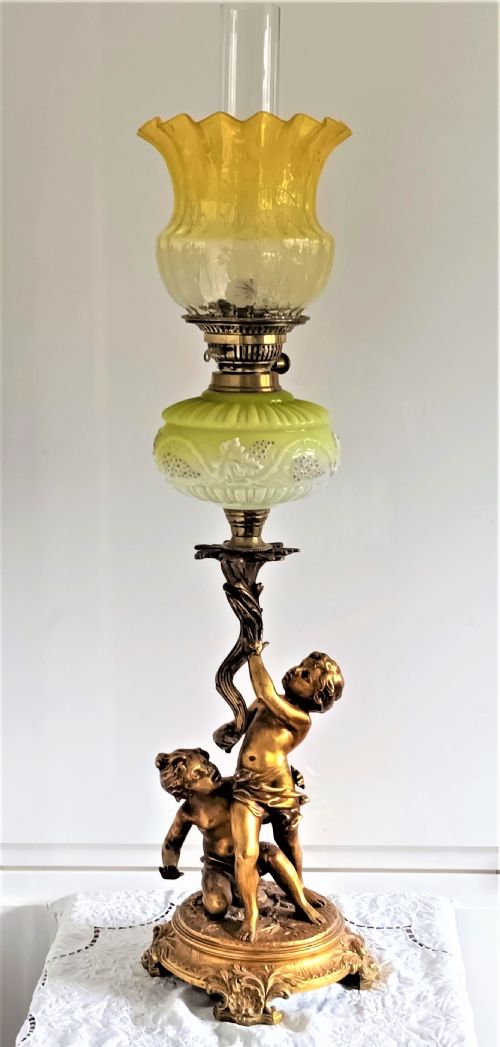
The pieces appearing on this page showcase a distinct palette of yellow shades, from translucent canary glass to rich satin finishes and painted porcelain bodies. Alongside the glass reservoirs, many incorporate brass, silver plate, or gilt metal mounts, while others feature decorative ceramic or Meissen porcelain columns.
Makers and designers of the period combined utility with aesthetic appeal, resulting in forms that range from simple domestic lighting to elaborate decorative showpieces. Buyers find that these lamps bridge the gap between historical artefact and functional interior ornament.
Materials and construction
Makers utilised mouth-blown and pressed glass for the distinctive yellow reservoirs and shades, often employing satin glass techniques to create a soft, diffusing surface texture. Porcelain and ceramic bodies provided a stable base for hand-painted or gilt ornamentation.
Metal components such as brass, silver plate, and gilt metal formed the burners, collars, and decorative columns, providing structural weight and stability to the lamp. These metal parts were cast, spun, and assembled with threaded fittings to secure the glass and ceramic sections safely.
Judgements of quality
Quality in these lighting pieces rests upon the crispness of the casting in the brass or gilt metal mounts and the depth of colour in the yellow glass. Finer examples display meticulous hand-painting on porcelain and well-balanced proportions between the reservoir and the supporting column.
The integrity of the original components, such as matching burners and undamaged glass shades, distinguishes superior items from assembled or altered pieces. Weight, material density, and the refinement of decorative detailing separate standard domestic lighting from exceptional parlour pieces.
Eli Griffiths & Sons Birmingham·Meissen
The Antique Yellow Oil Lamp Glossary
- Peg lamp
- A small oil lamp fitted with a metal peg at the base designed to drop directly into the candle socket of a larger candlestick or candelabrum.
- Satin glass
- Glass treated with hydrofluoric acid vapour to produce a velvety, matte surface texture that diffuses light softly.
- Ionic column
- A classical architectural column style featuring scroll-shaped capitals, frequently replicated in brass or porcelain for nineteenth-century lamp standards.
- Reservoir
- The enclosed container holding the paraffin or oil fuel beneath the burner assembly.
Antique Yellow Oil Lamp: Frequently Asked Questions
How do I date an oil lamp?
Dating relies upon stylistic markers, material combinations, and burner patents stamped into the metalwork during manufacture. Nineteenth-century pieces often display specific aesthetic movements like Rococo Revival or Arts and Crafts.
Examining the manufacturing techniques of the glass reservoir and the composition of the base provides further chronological clues for the collector.
Were these lamps converted to electricity?
Many surviving examples have been adapted for modern electrical wiring to allow safe domestic use in contemporary rooms. Some retain their original oil burners and reservoirs intact.
Buyers often choose between lamps retaining their original functional mechanics and those modified for modern lighting.
What fuels did they burn?
Victorian and Edwardian domestic lamps primarily burned paraffin or kerosene once those fuels became widely available in the nineteenth century. Earlier variants utilised various vegetable or animal oils.
The development of the duplex burner improved combustion efficiency and brightness.
How do I clean yellow glass?
Cleaning requires warm water and mild soap applied with a soft cloth to protect the delicate surfaces and any gilt highlights. Abrasive materials should be avoided entirely to preserve the finish.
Metal mounts benefit from gentle dusting rather than harsh chemical polishes.