
Brass Glass Paraffin Lamp
These brass glass paraffin lamp examples span the Victorian and Edwardian eras, offering functional illumination paired with decorative glass and metalwork.
Brass Glass Paraffin Lamp
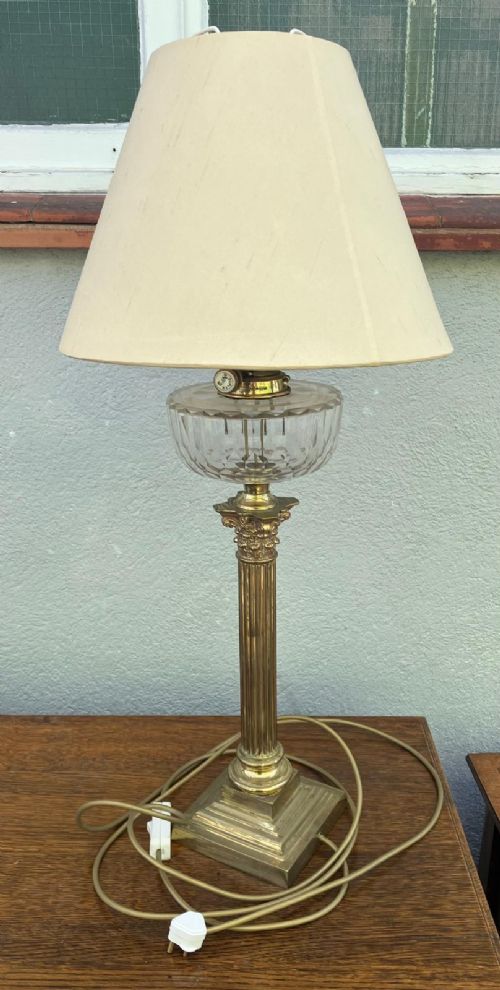
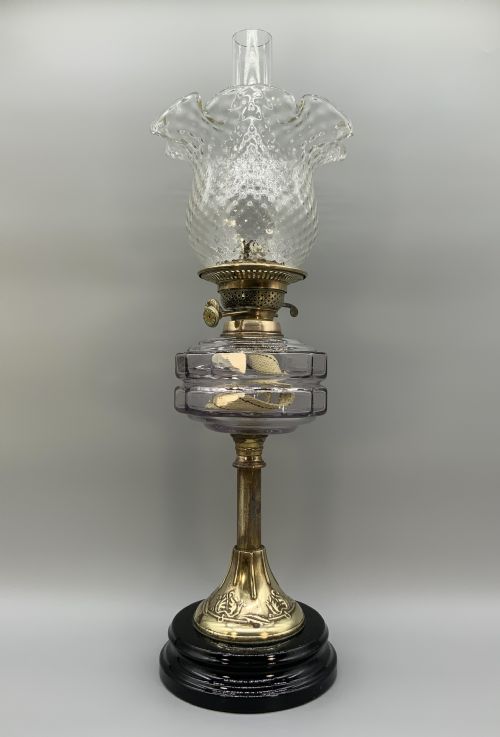
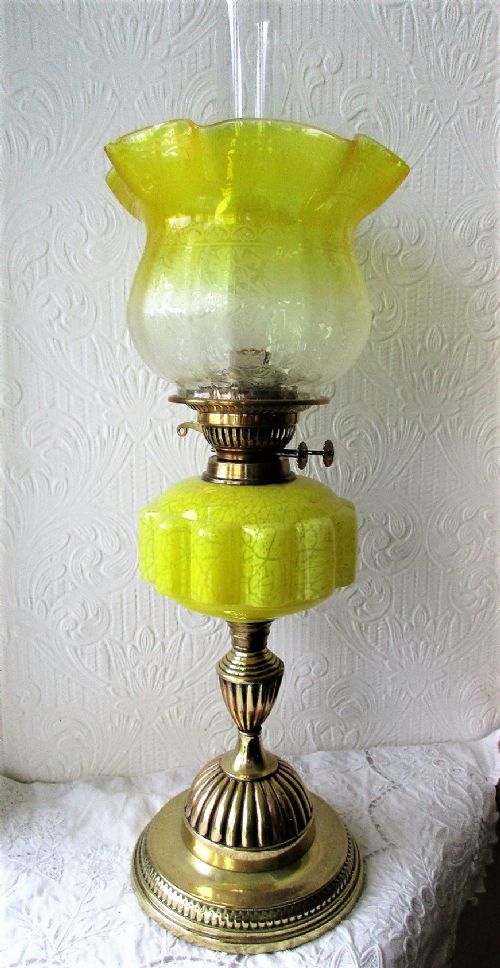
A brass glass paraffin lamp combines a metallic base with a glass font or shade, originating mostly from the Victorian and Edwardian periods. Buyers searching for a brass glass paraffin lamp encounter various table lamps, hanging lights, and column forms utilising brass and glass components.
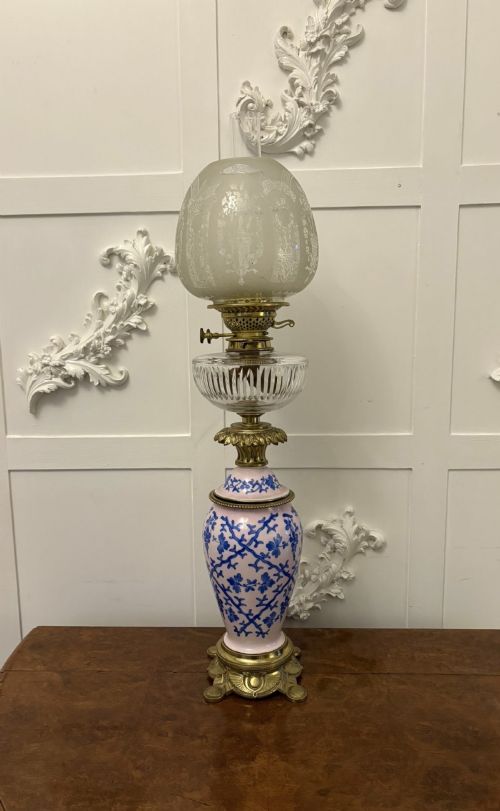
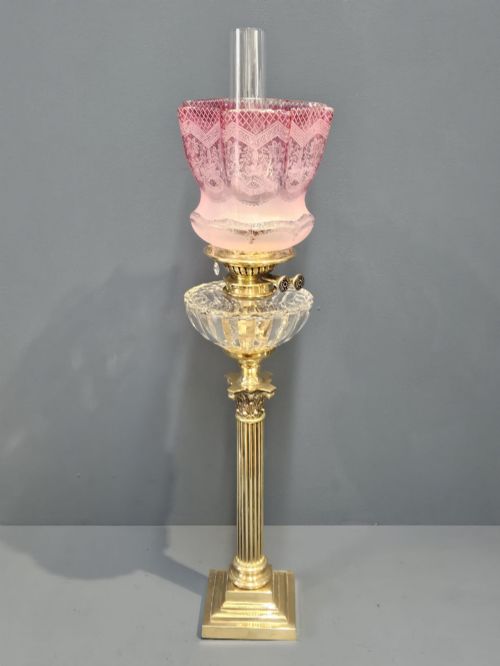
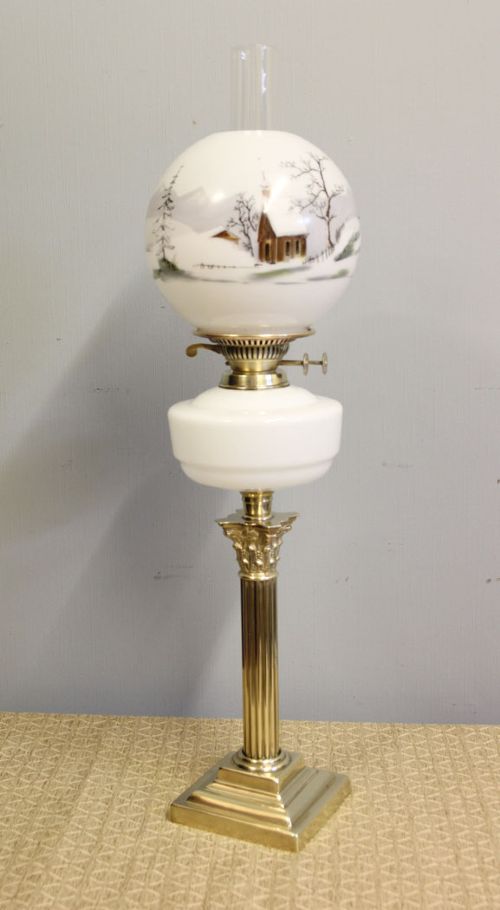
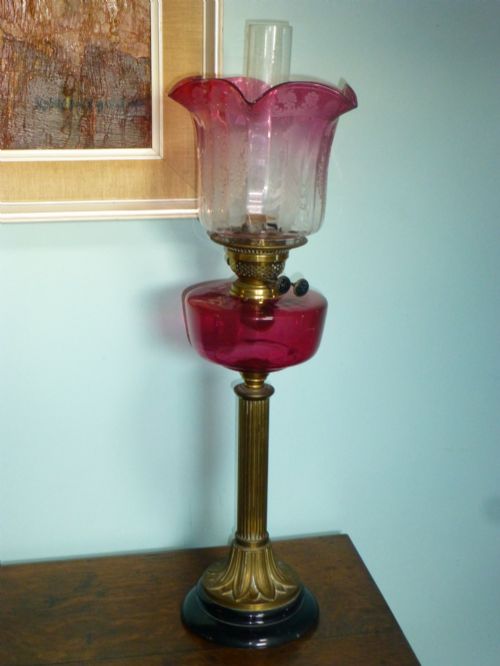
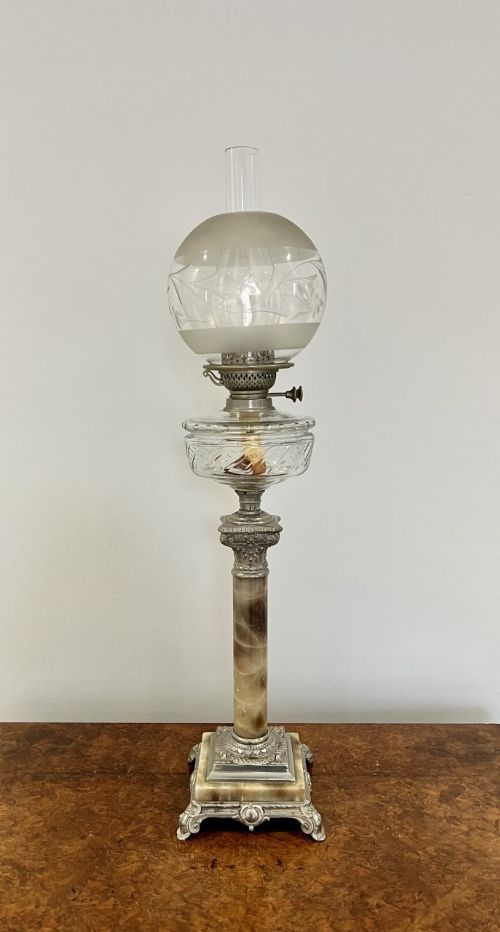
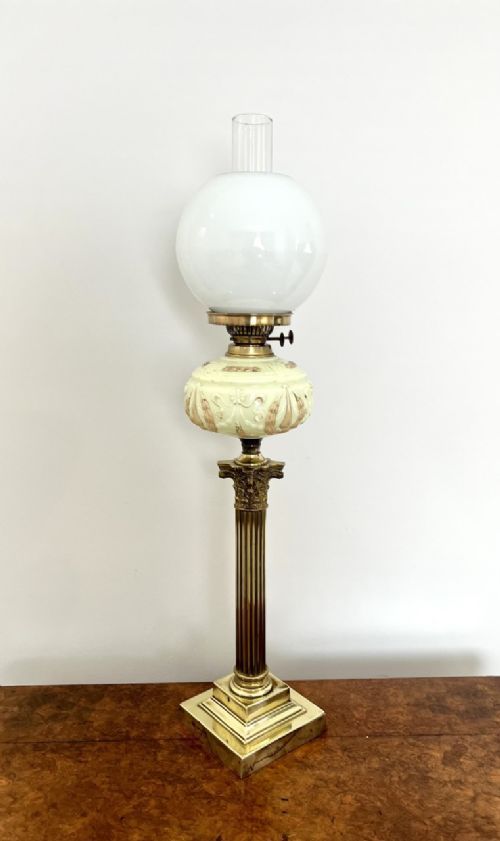
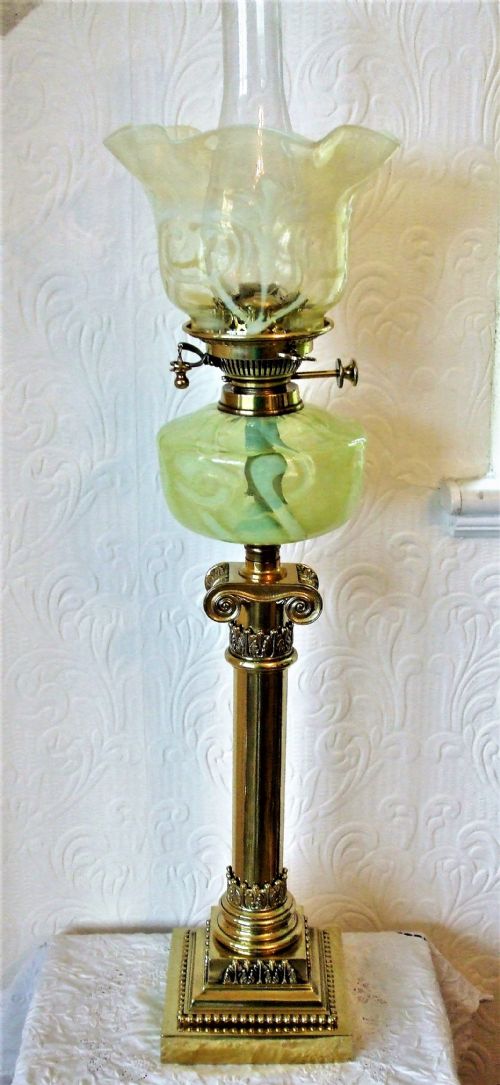
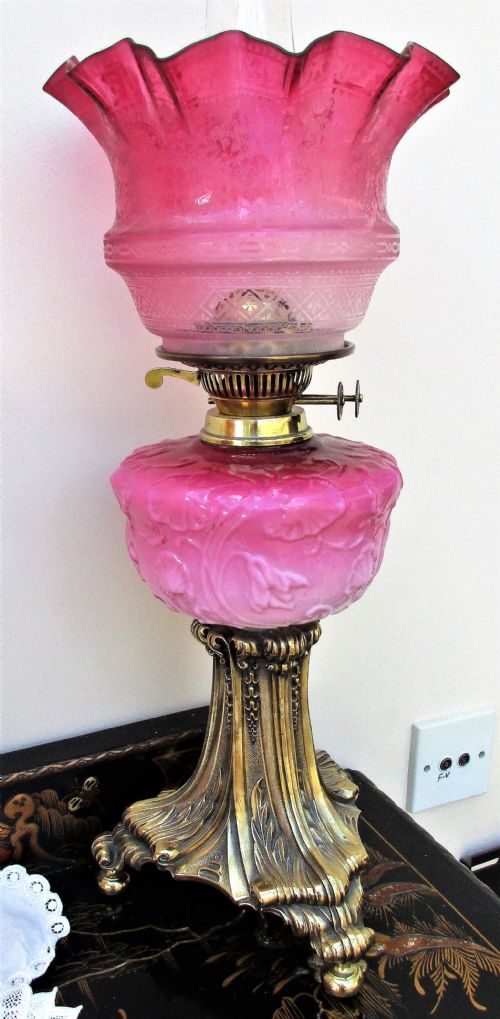
The most common version met on this page is the Corinthian or Ionic column table lamp, frequently paired with a cranberry or opaline glass shade. These pieces utilise structured metal supports alongside coloured or etched glass reservoirs.
Materials and construction
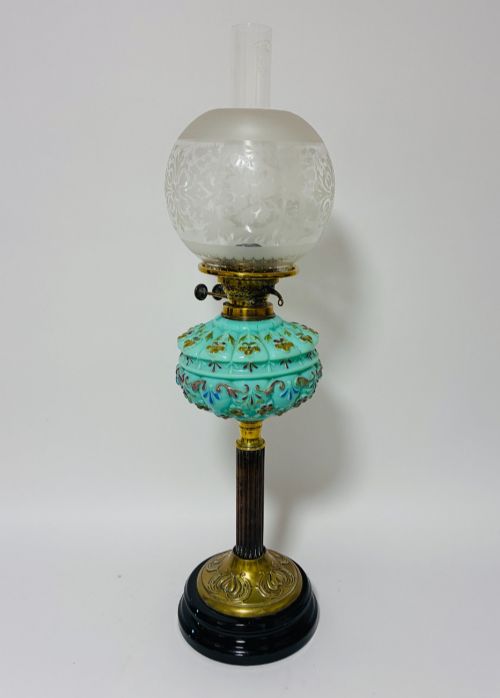
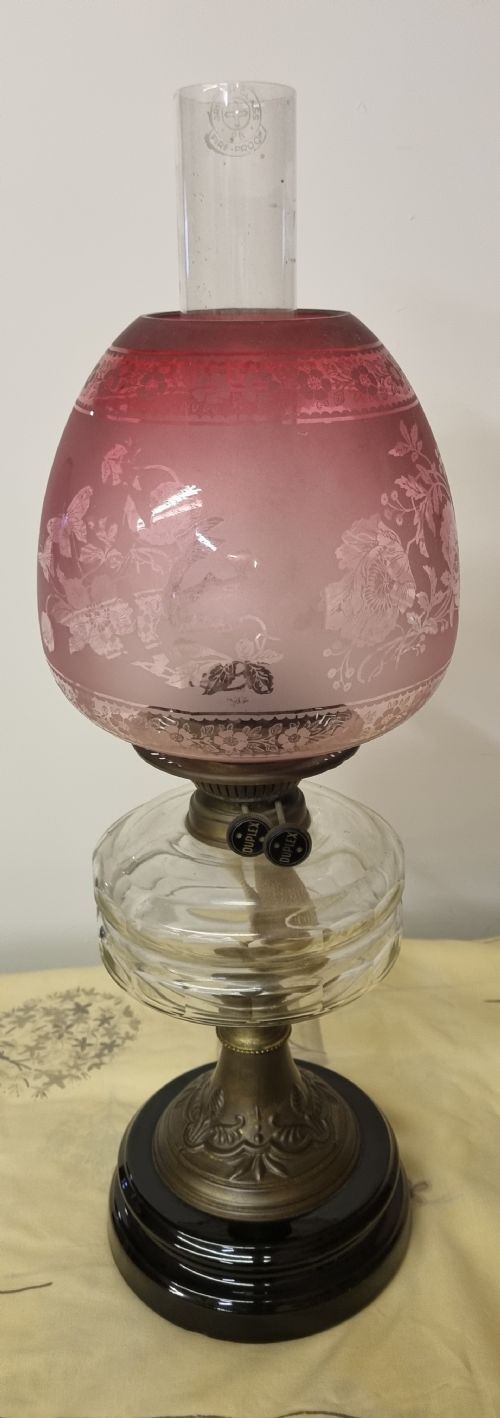
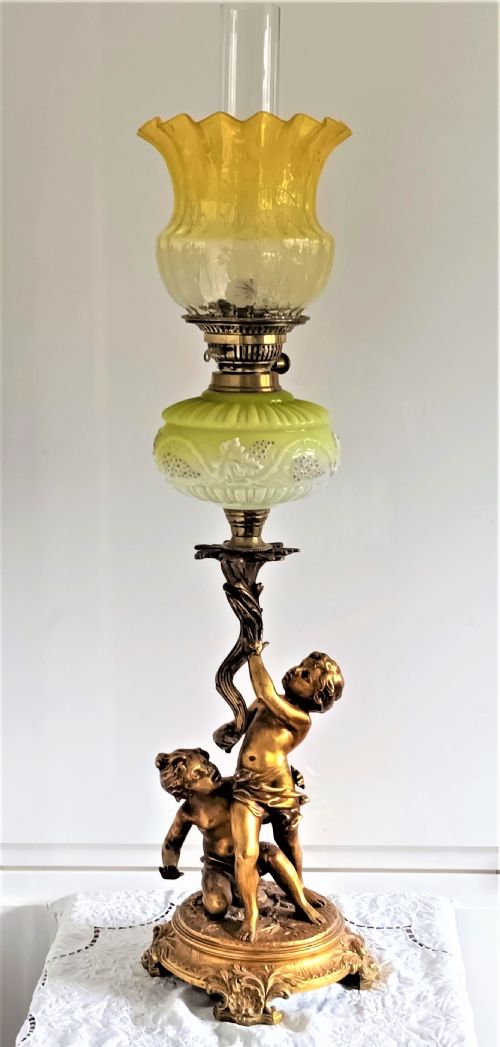
Makers constructed these lamps by combining cast brass for columns and bases with hand-blown or moulded glass for fonts and shades. Cranberry glass, opaline glass, and clear glass are integrated directly with metal mounts.
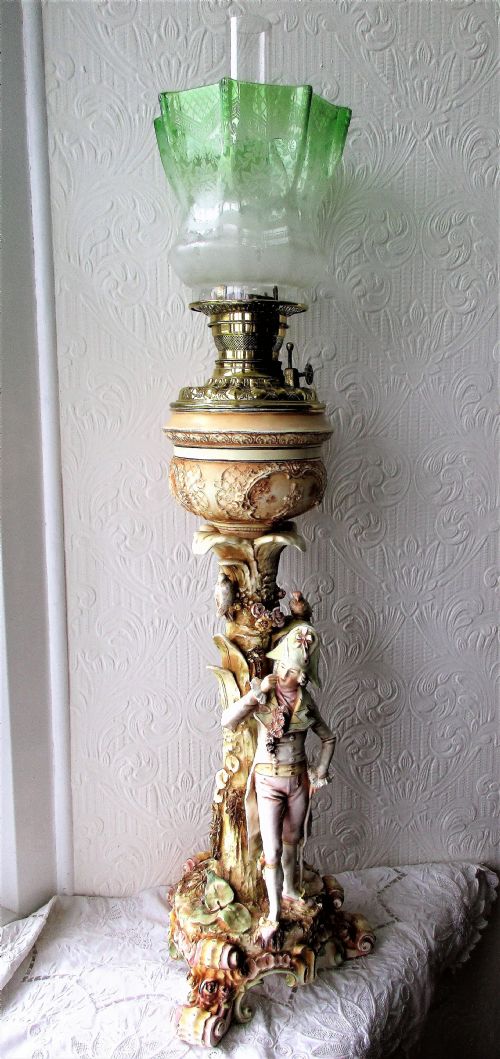
Workshops utilised ceramic and porcelain elements alongside brass, while burners such as duplex systems were fitted to regulate the flame. Etched and hand-painted details frequently appear on the glass shades and fonts.
Some models doubled as heaters, proving that Victorians liked their illumination with a side of toast.
Assessing quality
Quality rests in the weight of the brass casting, the clarity and depth of the glass colour, and the presence of specialised burners by makers like Hinks. Superior examples feature crisp architectural detailing on columns and finely etched or hand-blown glass shades.
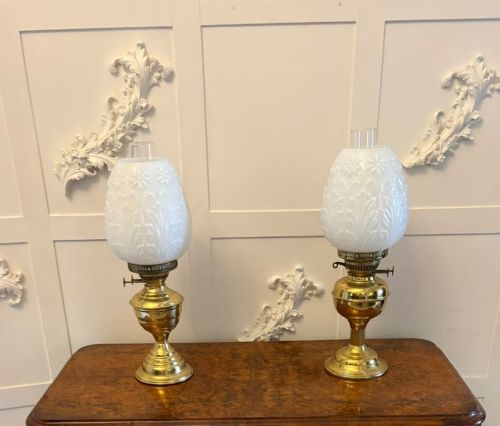
Simpler configurations with plain brass fonts sit at the base of the range, whereas figural porcelain bases, combined ceramic elements, and matched glass fonts distinguish finer pieces.
Hinks of Birmingham·Taylor Tunnicliff·Gustave Serrurier Bovy
The Brass Glass Paraffin Lamp Glossary
- Duplex burner
- A double-wick burner system designed to produce a brighter flame. It allowed paraffin lamps to emit greater illumination than single-wick variants.
- Corinthian column
- An architectural column style featuring ornate acanthus leaf capitals. It was frequently cast in brass for Victorian table lamps.
- Opaline glass
- An opaque, pale glass type used for lamp shades and fonts. It softly diffuses the light emitted by the burning paraffin.
- Cranberry glass
- A rich red transparent glass coloured with gold chloride. It appears frequently in Victorian lamp shades and fonts.
- Font
- The reservoir container that holds the paraffin oil beneath the burner. It is commonly formed from glass, ceramic, or brass.
Brass Glass Paraffin Lamp: Frequently Asked Questions
How do I operate a paraffin lamp?
Fill the glass or metal font with paraffin oil and allow the wick to saturate thoroughly before lighting. Adjust the burner mechanism to control the flame height and smoke output.
Keep the chimney clean and trim the wick regularly to maintain a steady and bright light. Extinguish the flame by turning the dial down or using a snuffer.
Were these lamps used for main lighting?
Victorian and Edwardian households relied on these lamps for primary illumination in living spaces and hallways before electricity became widespread. They were placed on tables or mounted as ceiling lights to illuminate specific rooms.
Their dual function as decorative objects and light sources made them popular additions to middle and upper-class homes.
How do I date a brass paraffin lamp?
Examine the style of the metal column, burner type, and glass manufacturing techniques to determine the period. Classical revival styles like Corinthian columns and specific burner patents point towards the Victorian and Edwardian eras.
Markings on the metal burners often reveal the manufacturing firm and registration dates.
Can I use modern paraffin oil?
Standard refined paraffin or lamp oil can be safely utilised in these vintage burners. Ensure the oil is clean and free from impurities to prevent soot accumulation on the glass shade.
Avoid heavier fuels that are not designed for indoor wick lamps.