


Brass Pedestal Paraffin Lamp
These brass pedestal paraffin lamp examples bring warm Victorian and Edwardian light to a room, offering both decorative presence and period utility.
Brass Pedestal Paraffin Lamp
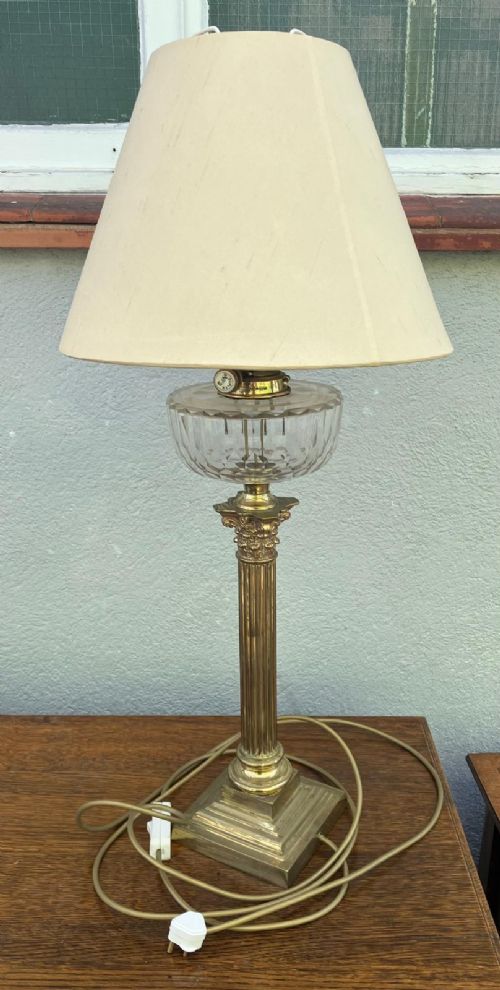
A brass pedestal paraffin lamp is a standing lighting fixture designed to burn lamp oil safely on tables or floors. The examples found here span the Victorian era, the year 1900, 1880, the nineteenth century, and 1860.
The versions most commonly met on this page combine a metal pedestal base with oil reservoirs made from clear, cut, cranberry, opaline, or yellow glass, alongside ceramic and porcelain bodies. Styles range from simple Victorian designs to Neoclassical Revival, Arts and Crafts, and Anglo-Burmese forms.
Makers and creators adapted these lamps into table lamps, floor lamps, and standard oil lamps. Many feature decorative shades made from fabric or contrasting coloured glass.
Materials and construction methods
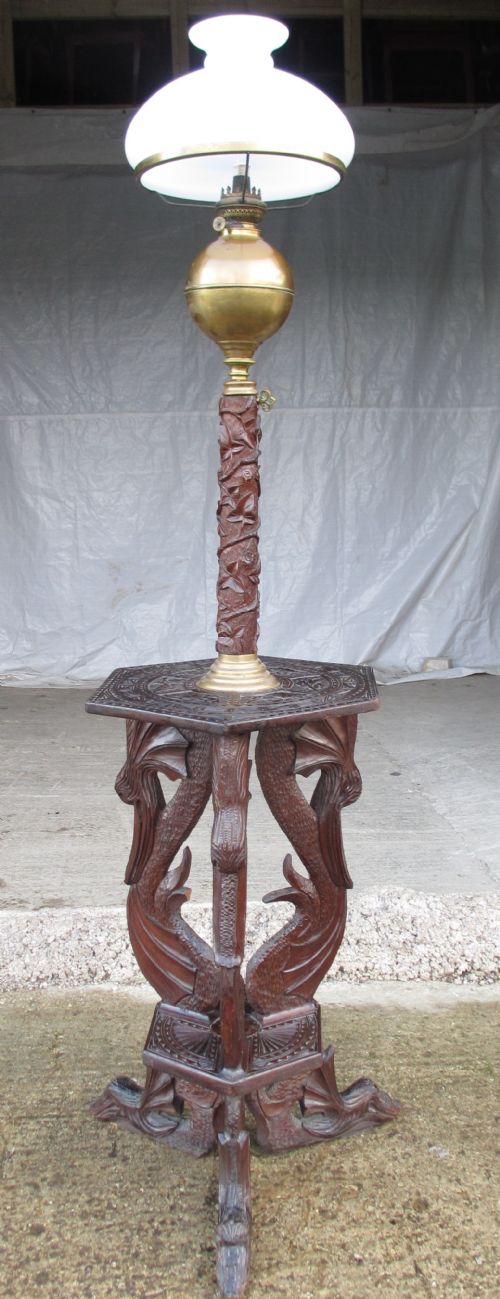
Makers constructed these lamps primarily using brass for the structural pedestals and columns, often pairing the metal with blown or pressed glass reservoirs. Some pieces incorporate carved wood such as padouk and teak, alongside ceramic and porcelain components.
Techniques included hand painting on glass and porcelain bodies, alongside structural metalwork such as Corinthian column details and adjustable stands. Coloured glass components like cranberry and opaline variants required specialised glass-blowing skills during production.
Some Victorian models sneaked a bit of teak and padouk into the brasswork, proving even utility lighting enjoyed a holiday abroad.
Distinctions in quality and finish
The distinction between standard examples and the finest pieces lies in the complexity of the materials and the crispness of the casting. Cast brass Corinthian capitals and substantial cut glass fonts indicate higher ambition than plain turned metal.
Hand-painted ceramic details and unusual combinations of materials, such as integrated teak or copper elements within an Arts and Crafts framework, elevate individual pieces. The inclusion of original matching shades in coloured or opaline glass also marks out superior examples.
The Brass Pedestal Paraffin Lamp Glossary
- Paraffin lamp
- A lighting device that burns paraffin oil for illumination. It uses a wick drawn through a burner to control the flame.
- Font
- The reservoir that holds the oil in a lamp. These are frequently formed from glass, ceramic, or porcelain.
- Corinthian column
- An architectural column style featuring ornate carved capitals adorned with acanthus leaves. This motif appears frequently on nineteenth-century metal lamp standards.
- Opaline glass
- An opaque or translucent pale glass popular in Victorian lighting. It diffuses light softly through its milky appearance.
- Anglo-Burmese
- A nineteenth-century design style blending British structural forms with Burmese decorative carving and woodwork. It appears on select adjustable lamps.
Brass Pedestal Paraffin Lamp: Frequently Asked Questions
How do I operate a paraffin lamp safely?
Fill the glass or ceramic reservoir with clean paraffin oil, ensuring the wick is saturated before lighting. Adjust the flame height carefully using the burner thumbwheel to prevent smoke and soot accumulation.
Keep the lamp away from draughts and flammable materials while lit. Extinguish the flame by turning the wick down completely or using an appropriate snuffer.
Can these lamps still be used for lighting?
Many of these pieces retain their original working burners and remain fully functional for burning oil. Collectors often use them with modern lamp oil for ambiance during evenings.
Ensure the burner mechanisms and glass components are thoroughly checked and cleaned before attempting to burn fuel. Alternatively, many buyers display them purely as decorative antiques.
How do I date a brass oil lamp?
Examine the materials, style characteristics, and manufacturing techniques present in the base and font. Pieces from 1860 often feature heavy cut glass, whilst 1900 Edwardian examples frequently incorporate opaline or coloured glass shades.
Stylistic cues such as Neoclassical Corinthian columns point to Victorian manufacture, whereas copper combinations often suggest Arts and Crafts influences. Compare these details against the documented periods of the listings.
What is the difference between table and floor lamps?
Table lamps feature shorter pedestals designed to sit upon furniture surfaces such as sideboards or tables. Floor lamps, also termed standard lamps, possess tall shafts meant to stand directly on the floor.
Both types utilise similar brass pedestals and oil reservoirs, differing primarily in height and overall scale.