
Victorian Paraffin Light
These Victorian paraffin light fixtures bring the warm glow of nineteenth-century domestic illumination into modern rooms through substantial brass columns and colourful glass shades.

Victorian Paraffin Light
When you search for a Victorian paraffin light, you encounter tall table lamps, hanging ceiling lights, and column designs produced across the nineteenth and early twentieth centuries. These domestic objects combined metal reservoirs with glass chimneys and decorative shades to burn fuel safely inside the home.
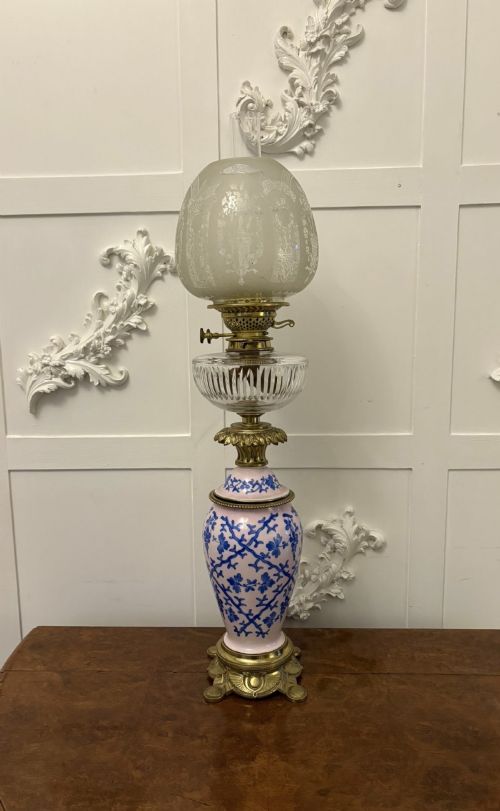
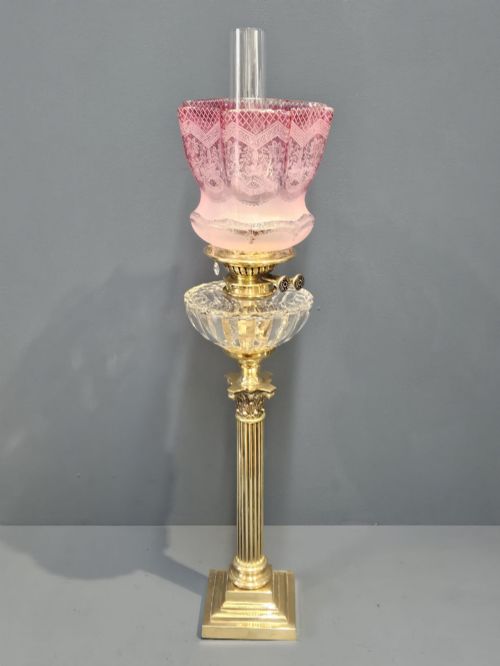
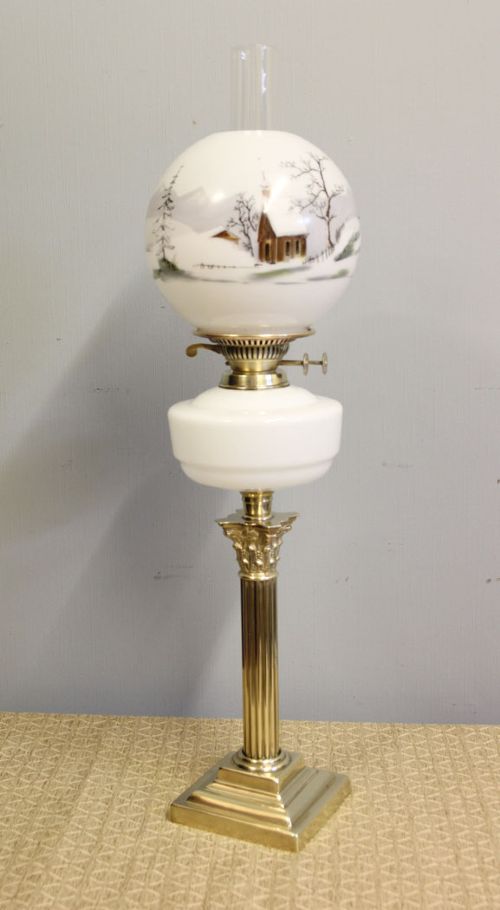
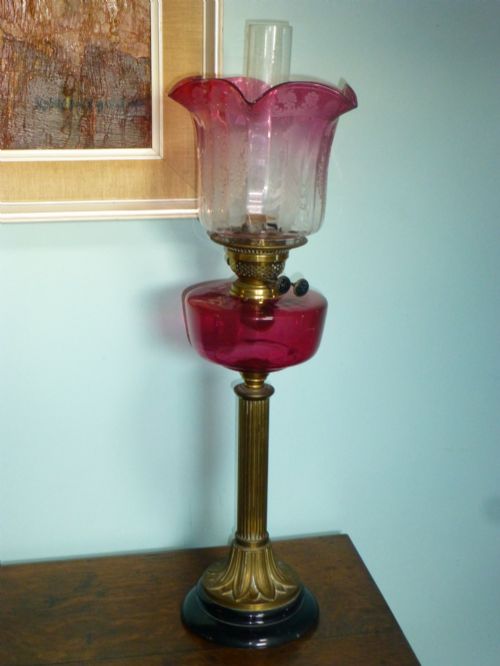
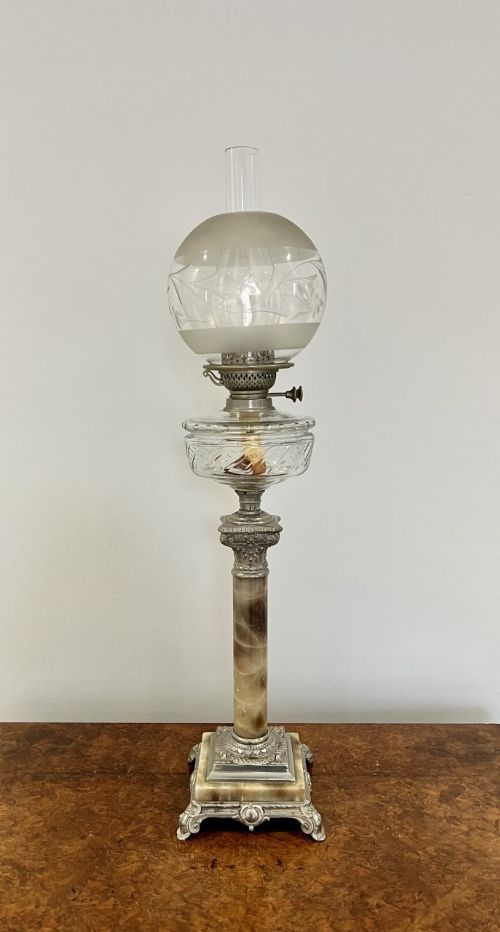
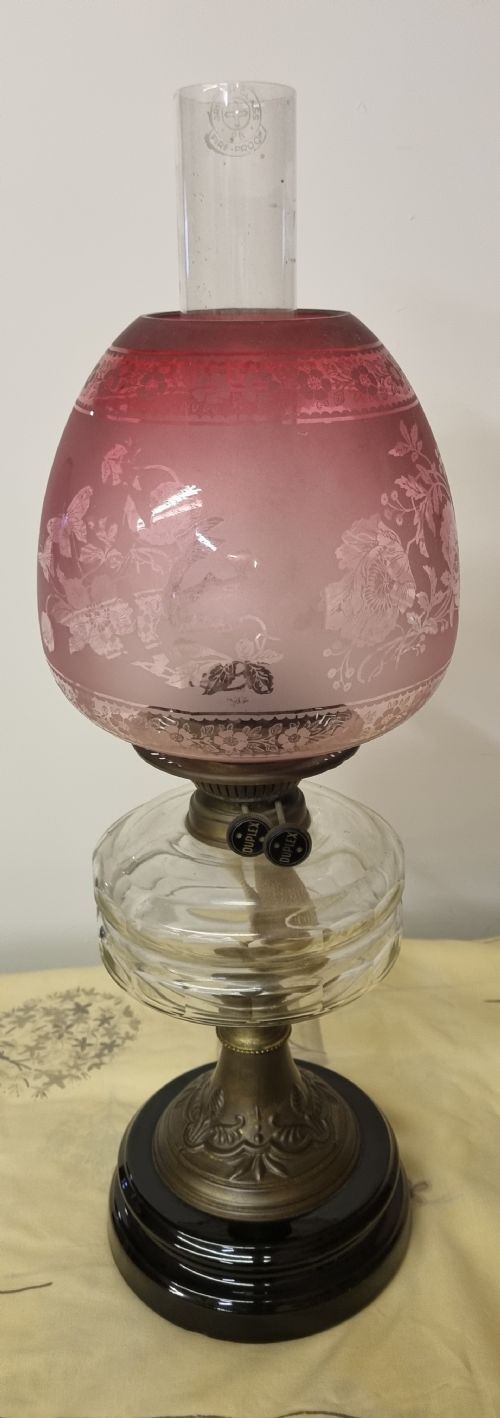
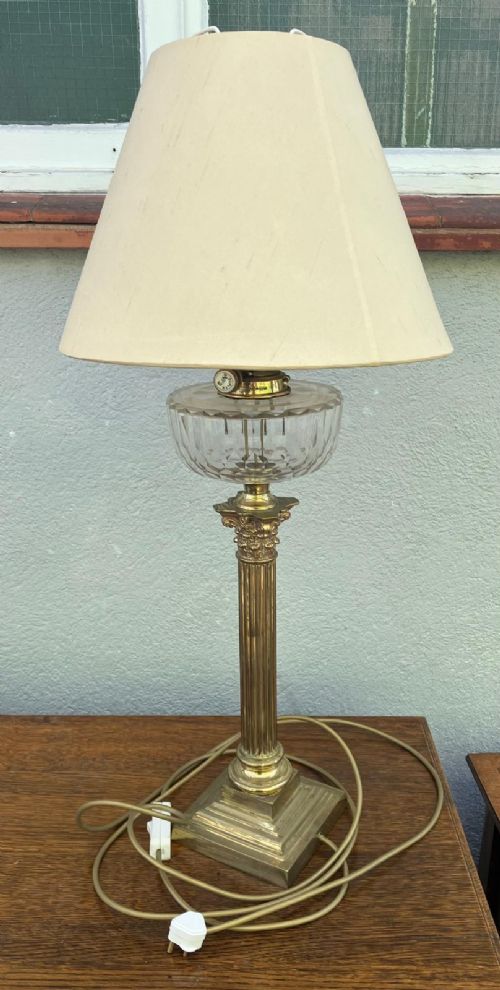
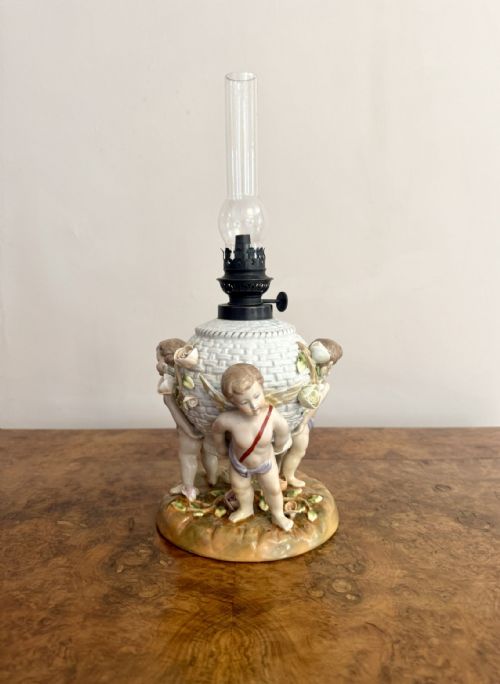
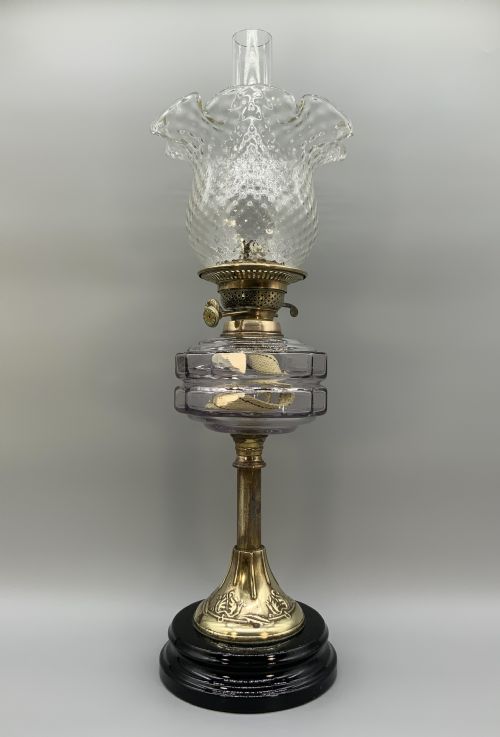
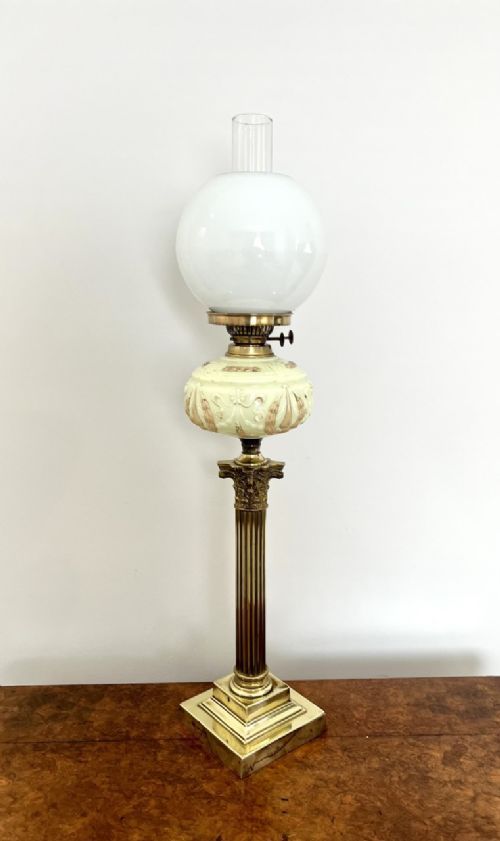
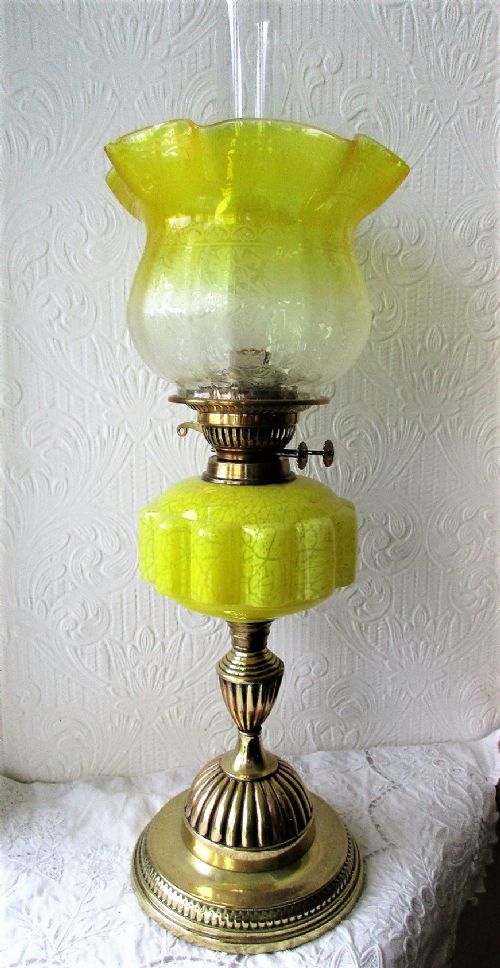
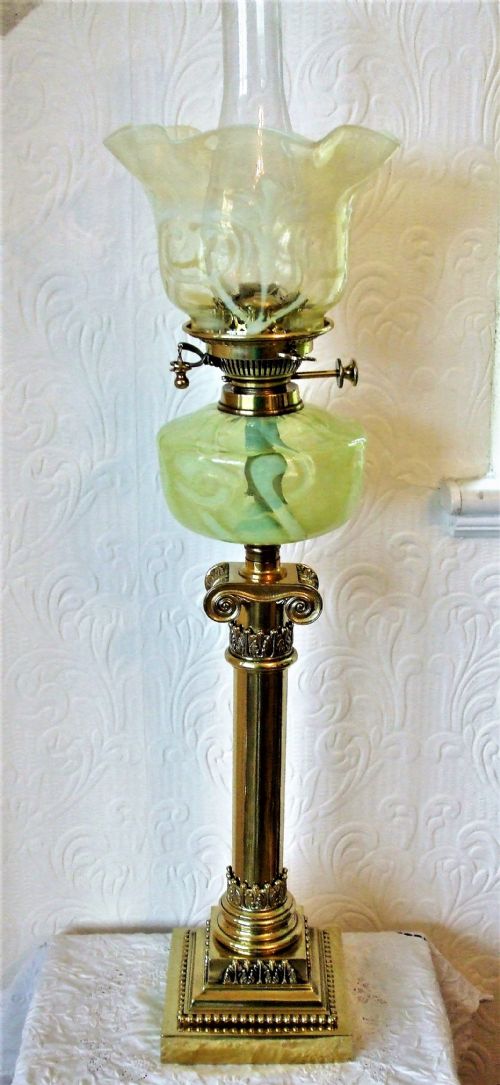
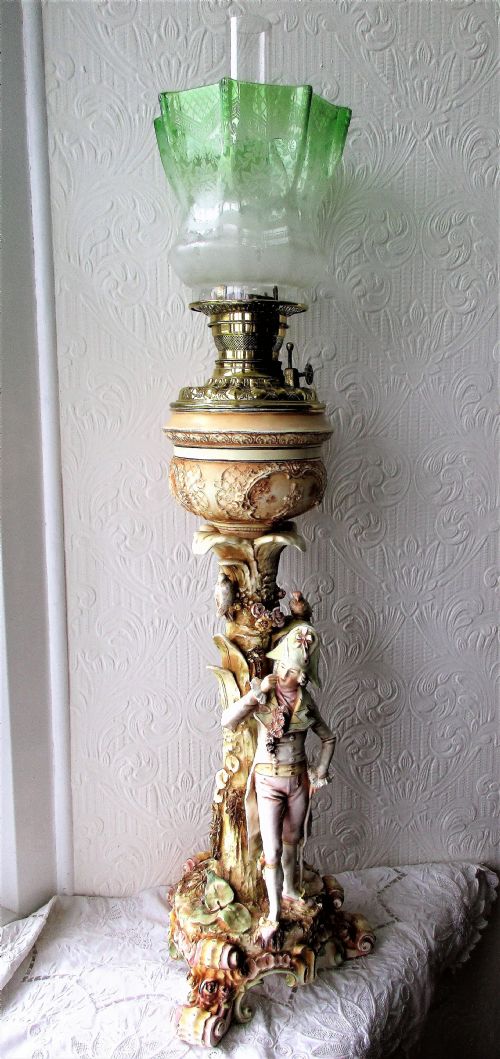
The pieces appearing on this page span the Victorian and Edwardian eras, with brass and ceramic bodies often paired with opaline or cranberry glass shades. Corinthian and Ionic column forms appear frequently alongside figural and botanical porcelain designs.
Most examples function as table lamps with double burners or duplex systems, whilst others take the form of hanging lamps designed to illuminate larger living spaces. Makers such as Hinks and Sitzendorf emerge among the recorded pieces, marking distinct periods of British and continental production.
Materials and construction
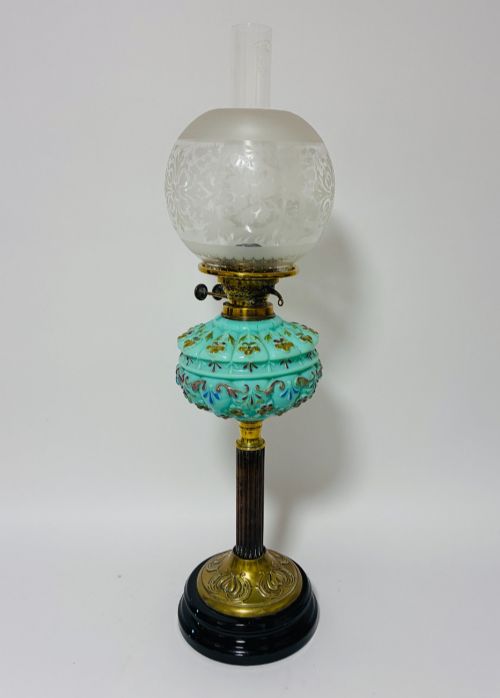
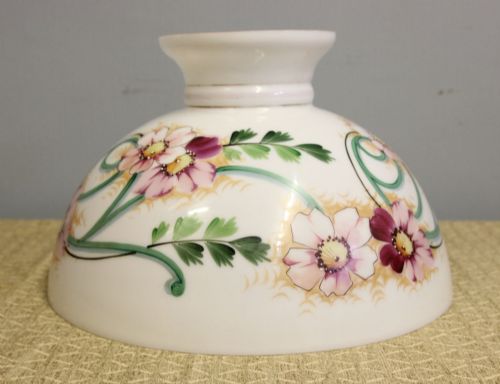
Brass serves as the primary structural metal for columns and bases, often cast and turned into classical architectural orders or slender standards. Ceramic and porcelain fonts provide colourful contrast, sometimes decorated with hand-painted botanical scenes or figural elements.
The listings show brass as the dominant metal, paired frequently with cranberry and opaline glass shades across the nineteenth and early twentieth centuries.
Assessing quality and finish
The distinction between standard and finer examples rests upon the crispness of the brass casting and the complexity of the column capitals. Heavier gauge metalwork and detailed fluting denote superior production standards.
Glass quality separates ordinary shades from exceptional ones, particularly where hand-painted decoration, cased cranberry layers, or delicate etching remain crisp and well-preserved. Complete pairings of matching fonts and shades elevate the integrity of the piece.
Hinks·Sitzendorf·Taylor Tunnicliff·Wild and Wessel
The Victorian Paraffin Light Glossary
- Duplex burner
- A lighting mechanism featuring two flat wicks placed side by side to produce a brighter flame. This system required a wider gallery and chimney.
- Font
- The reservoir container that holds the paraffin oil beneath the burner. It is frequently made of coloured glass, porcelain, or brass.
- Opaline glass
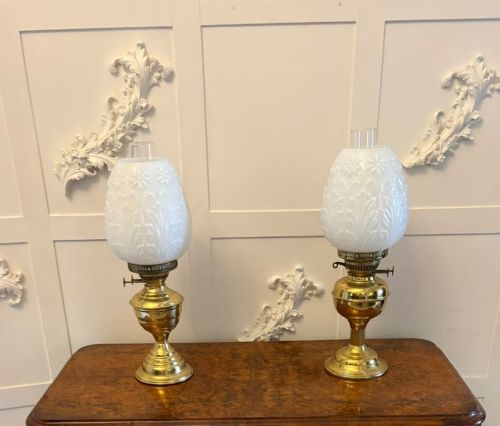
- A translucent, milky-white glass often used for lamp shades to soften and diffuse the glare of the flame. It was widely produced in the nineteenth century.
- Corinthian column
- An architectural column style featuring ornate, acanthus-leaf capitals that manufacturers frequently adapted for heavy brass lamp standards.
- Cranberry glass
- A rich red glass created by adding gold chloride to the molten mixture. It remains a defining feature of many nineteenth-century shade designs.
Victorian Paraffin Light: Frequently Asked Questions
How do I operate a Victorian paraffin lamp?
Operation requires filling the lower reservoir with paraffin oil and allowing the wick to saturate thoroughly before lighting. The wick height is adjusted via a small thumbwheel on the burner to maintain an even, smoke-free flame.
Modern users should ensure the burner mechanism moves freely and that the glass chimney sits securely in the gallery before use. Ventilation and careful fuel handling remain essential for safe operation.
Can I convert these lamps to electricity?
Many collectors choose to run invisible wiring up through the central column to mount a bulb holder where the original burner sits. This preserves the decorative brass or ceramic body whilst allowing safe daily use.
Professional conversion ensures the original metalwork is not permanently damaged or drilled incorrectly. Reversible methods maintain the historical integrity of the piece.
How do I clean old brass and glass?
Brass components benefit from gentle dusting with a soft cloth and occasional mild cleaning to preserve the natural patina built up over decades. Harsh metal polishes should be avoided to prevent stripping historical surface finishes.
Glass shades and fonts can be washed in warm soapy water using non-abrasive sponges. Hand-painted surfaces require particular care to avoid wearing away old enamel.
Were these lamps used in every room?
Table lamps provided portable illumination across parlours, drawing rooms, and dining tables where families gathered in the evening. Taller column models stood on side tables or heavy furniture to cast light downward.
Hanging versions illuminated hallways and larger reception rooms before central electric ceiling fixtures became common. Their placement depended entirely on where domestic activity required focused light.