


Victorian Open Salt Cellar
These Victorian open salt cellar pieces bring small-scale silver, glass and treen craftsmanship to the dining table.
Victorian Open Salt Cellar
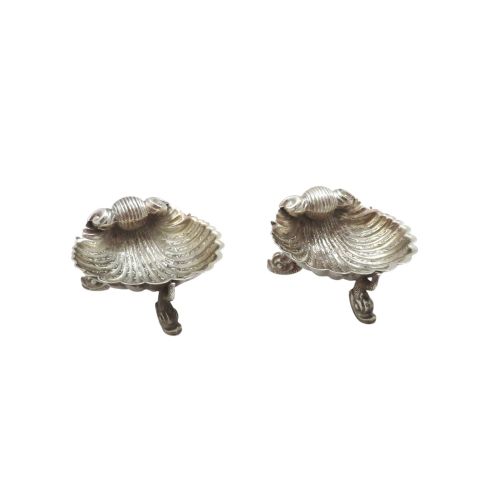
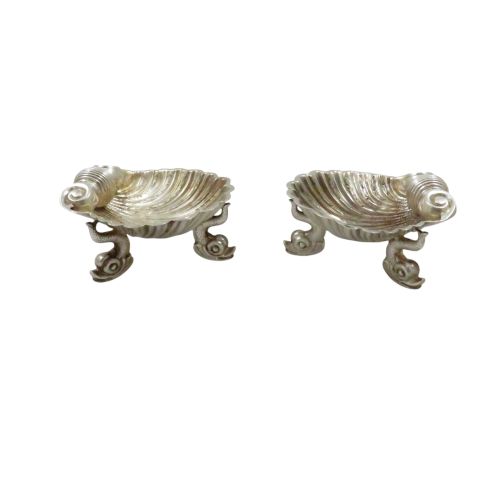
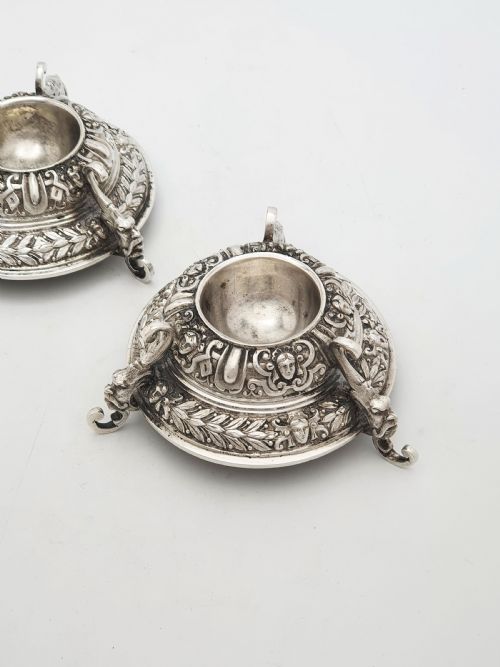
A victorian open salt cellar is a small open vessel designed to hold salt at the dining table before the widespread adoption of free-flowing table salt. These table accessories take many forms, from simple round bowls to sculptural shells, birds, swans and figural groups.
The pieces on this page span the Victorian era alongside related 19th-century, Georgian and Edwardian examples. Materials range from solid sterling silver and silver plate to coloured glass liners and carved wood.
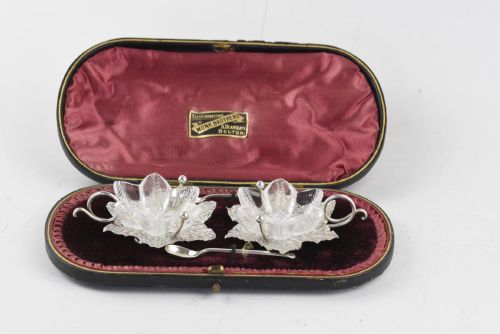
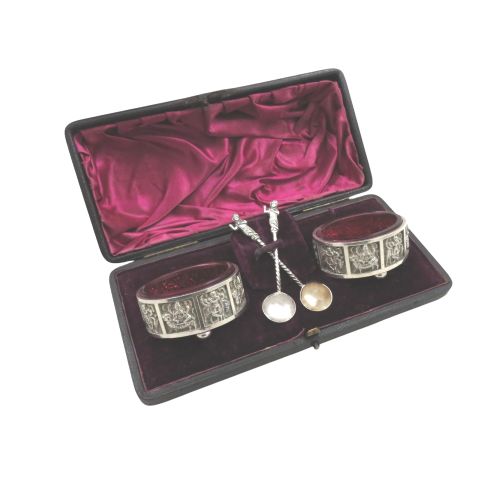
Most examples appear as matched pairs or sets of four, frequently accompanied by small matching spoons. Some sets survive complete with their original fitted presentation cases.
Materials and manufacture
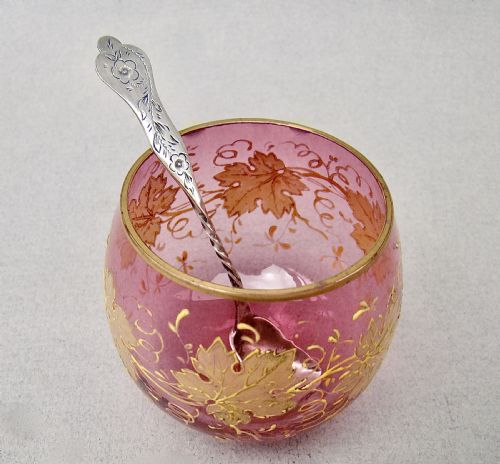
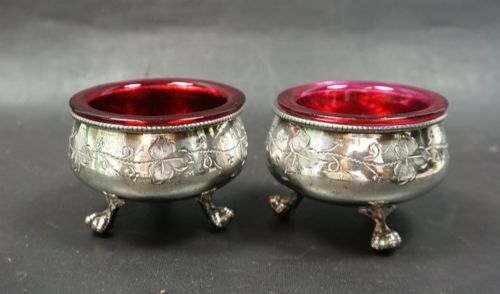
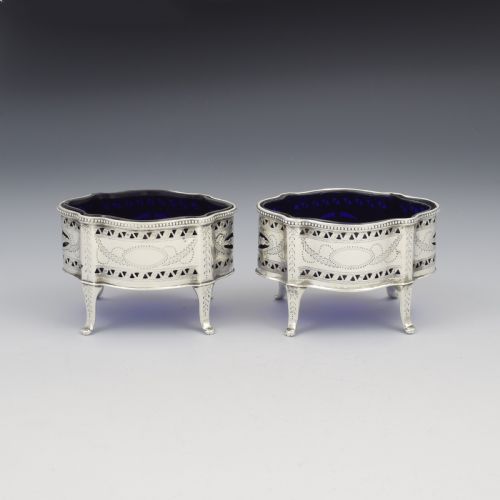
Sterling silver forms the primary body of many examples, shaped through casting, piercing and chasing to create detailed foliate and decorative surface patterns. Silversmiths often utilised removable cobalt or cranberry glass liners to protect the metal from corrosive salt.
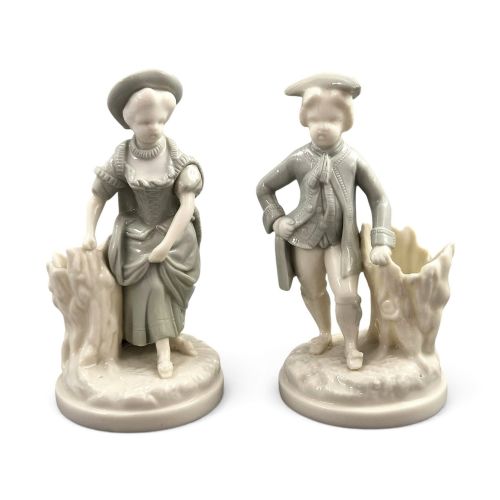
Other workshops turned to organic materials, producing carved wooden capstan salts from pollard oak and fruitwood alongside Black Forest bear condiment figures. Ceramic and porcelain factories also contributed figural pieces depicting putti and cherubs alongside traditional silver-plated foundations.
Judging quality in domestic silver and glass
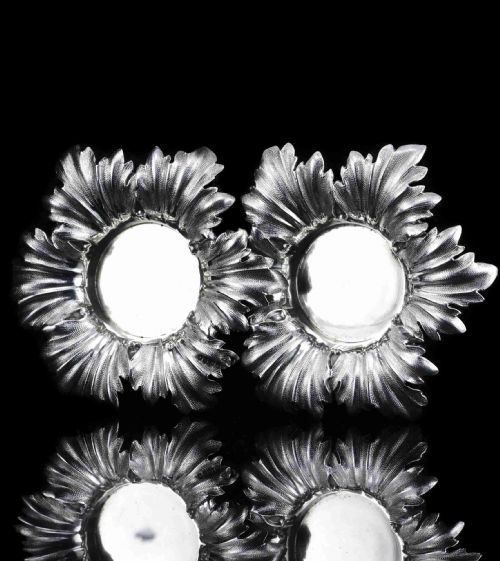
Quality rests on the crispness of the metalwork, whether seen in deep foliate chasing or the fine detail of cast dolphin feet and bird motifs. Hand-pierced silver requires precise control to maintain balanced geometric or serpentine patterns across the body of the dish.
The inclusion of intact, original coloured glass liners adds to the completeness of a piece. Maker marks and clear town assay stamps provide historical certainty regarding the origin and date of the metalwork.
Barnards·Thomas Smily·Vale Brothers and Sermon·Royal Worcester·KPM Berlin·Michael Alexandrovich Romanov·Moser
The Victorian Open Salt Cellar Glossary
- Open salt cellar
- A small container for salt that lacks a shaker top, requiring diners to take salt with a small spoon or pinch it.
- Liner
- A removable insert, often made of blue cobalt or red cranberry glass, placed inside a metal salt cellar to prevent corrosion.
- Chasing
- A metalworking technique where the smith pushes the surface of the silver from the outside to create raised decorative designs.
- Capstan salt
- A salt cellar shaped like a ship's capstan, typically turned from wood with a broad base and narrower waist.
- Cruet set
- A matched collection of bottles, casters and open salt cellars held together in a frame or presented in a fitted box.
Victorian Open Salt Cellar: Frequently Asked Questions
How were open salt cellars used at the table?
Diners used a small salt spoon or their fingers to take salt from the open vessel during meals.
Larger master salts sat centrally on the table while individual places received smaller matching cellars.
Why do many salt cellars have glass inserts?
Saline moisture corrodes silver over time, so makers introduced removable glass liners to protect the metal.
These liners usually appear in contrasting cobalt blue or cranberry red glass.
Are these salt cellars sold in sets?
Many examples survive as matched pairs or sets of four intended for multiple place settings.
Some complete sets include matching silver spoons and original fitted presentation boxes.
What materials were used besides silver?
Makers utilised cranberry and cobalt glass, porcelain, pollard oak, fruitwood and silver plate.
Figural designs often incorporated carved wood or porcelain alongside traditional metalwork.