





Vintage Salt Cellars Pair
These vintage salt cellars pair selections bring Georgian, Victorian and Edwardian dining traditions directly to your table with sterling silver, cut glass and enamel.
Vintage Salt Cellars Pair
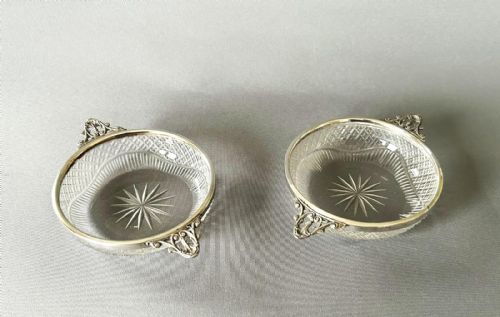
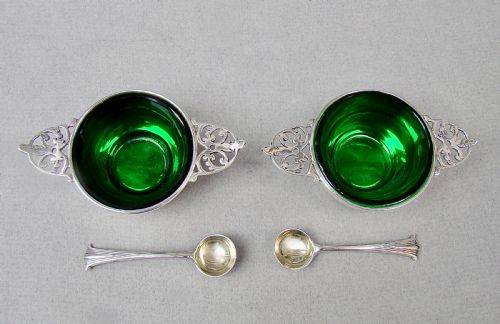
When you search for vintage salt cellars pair items, you are looking at dual sets of tableware designed to hold loose salt at the dining table. These pairs appear in various forms, from silver and cut glass trinket dishes to novelties shaped like quaichs.
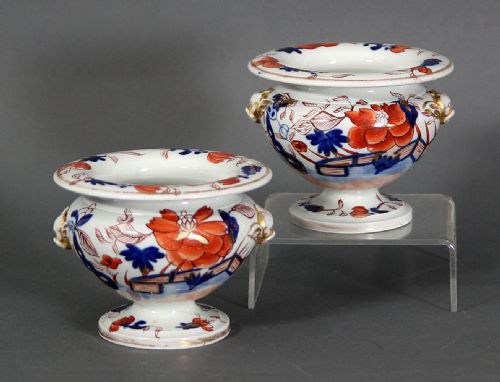
The pieces on this page span several periods, including Georgian, Victorian, Edwardian, and Art Deco styles. You will encounter open salts alongside cased pairs and occasionally ironstone china variations.
Origin and material combinations define these items, with Norwegian enamel and British silver appearing frequently. Each matched pair reflects the formal dining habits of its respective era.
Materials and construction
Makers shaped these items primarily from sterling silver and various types of glass, including cut glass, cobalt, green, and cranberry glass. Metal elements often received hallmark stamps to indicate silver purity and origin.
Enamel work adds colour and intricate detail to specific Art Deco and Victorian pieces, fused carefully onto the metal base. Glass bodies were frequently mould-blown or hand-cut to create decorative facets that catch the light.
Ironstone china forms an alternative material base for certain nineteenth-century examples, offering durability and a smooth glazed surface. Metal mounts and rims were frequently soldered or fitted securely to glass bowls.
Vintage Salt Cellars Pair Retail Price Guide 2026
Typical asking prices for vintage salt cellars pair among the pieces listed under this phrase on Sellingantiques today, from the lower quarter to the upper quarter. They describe what is for sale here now, not the wider market.
Some Victorian households deployed miniature drinking vessels as salt cellars just to confuse dinner guests.
Quality and craftsmanship
The distinction between standard items and superior examples lies in the crispness of the casting and the depth of the glass cutting. Finer pieces display sharp detailing in silver mounts and unblemished enamel surfaces.
Weight and balance indicate better production standards, where matched pairs show consistent thickness and uniform symmetry. Superior examples retain clear hallmarks and secure fittings between glass and metal components.
Josiah Williams & Co
The Vintage Salt Cellars Pair Glossary
- Open salt
- A small open vessel designed to hold salt, used before the invention of the shaker. Diners used a small spoon or fingers to take salt from the dish.
- Quaich
- A traditional two-handled Scottish drinking vessel, sometimes replicated in miniature form for novelty salt cellars. These feature characteristic low bowls and flat lugs for handles.
- Hallmark
- An official stamp or series of marks applied to precious metals in Britain and other countries. It indicates the standard of purity, the maker, and the year of assay.
- Ironstone china
- A type of heavy, durable earthenware patented in the nineteenth century. It provides a robust alternative to porcelain for tableware items.
- Cranberry glass
- A rich red glass created by adding gold to the molten batch during production. It appears frequently in Victorian tableware and decorative items.
Vintage Salt Cellars Pair: Frequently Asked Questions
How were salt cellars used?
Before free-flowing salt and shakers became common in the twentieth century, salt was served in open containers. Diners took a small pinch from the shared or individual cellar using a tiny spoon or their fingers.
These pairs sat directly on the dining table, often accompanied by matching spoons. They allowed households to present salt cleanly and decoratively during formal meals.
How do I clean antique silver salts?
Silver components require gentle cleaning with a specialised silver cloth to remove tarnish without damaging the metal. Avoid abrasive pastes or harsh chemical dips that strip away patination.
If the set includes glass or enamel liners, keep moisture away from glued joints or metal mounts. Wash glass sections separately in warm, soapy water and dry them thoroughly before reassembly.
Can I use these for modern dining?
These pieces function well for serving flaky sea salt or coloured salts during dinner parties. Their small size makes them suitable for holding individual portions of condiments or spices.
Careful handling ensures that delicate enamel or antique glass remains protected during everyday use. Hand washing preserves the finish of both the metal and the glass.
How do I date a pair of salts?
Silver items often carry official hallmarks that reveal the exact year of assay and the workshop that produced them. Comparing the style of the feet, rims, and glass cutting to known periods helps narrow down unmarked examples.
Victorian and Edwardian pieces frequently feature heavier silver mounts, whereas Art Deco sets display geometric enamel patterns and streamlined forms from the nineteen-thirties.