


19th Century Glass Salt
These 19th century glass salt pieces are small table vessels shaped by Victorian and Georgian makers to hold seasonings.
19th Century Glass Salt
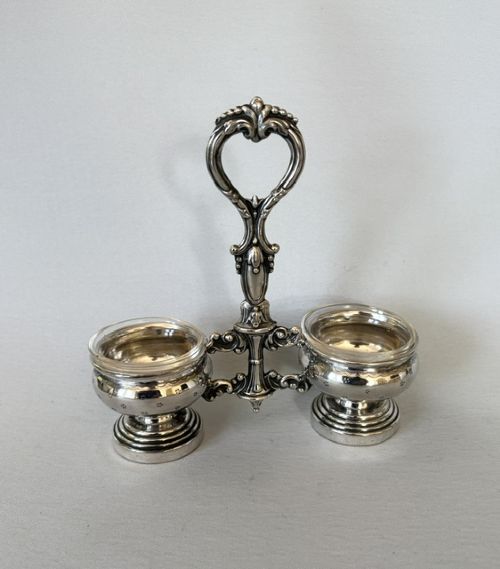
When you search for 19th century glass salt, you encounter small table vessels designed to hold salt for dining. The selection includes individual open salts, pairs, standing forms, and sets resting in silver-plated or silver frames.
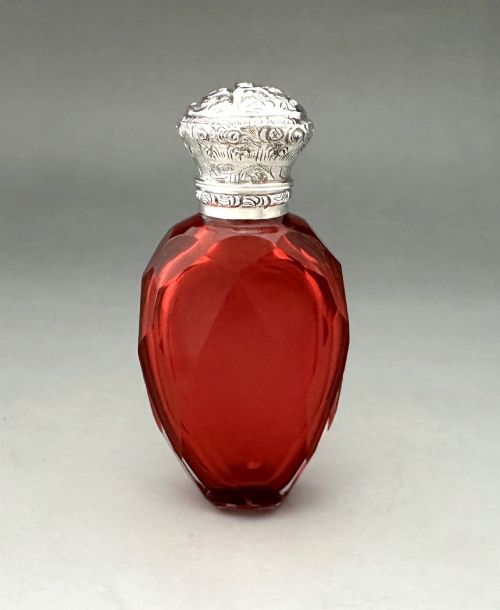
Most examples hail from the Victorian era and the broader 19th century, taking shapes like cranberry glass bowls, cut glass dishes, and opaline scallop shells. These pieces served a functional role on the dining table before domestic habits shifted.
How they were made
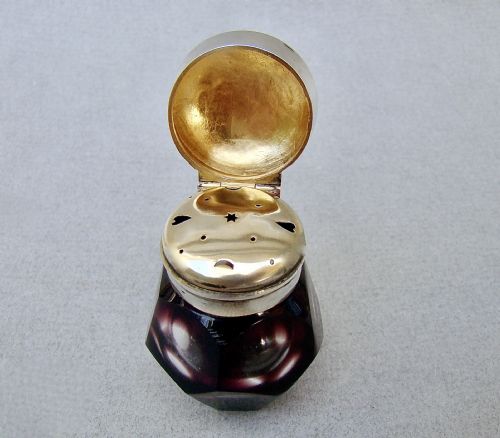
Maker workshops utilised clear and coloured glass, such as ruby, amethyst, blue opaline, amber, and cranberry varieties, often shaping them through cutting and etching techniques. Many items incorporate silver, silver-gilt, or gold leaf details to accent the glass body.
Mounts and frames involve cast or plated silver holding the glass securely, sometimes featuring engraved decoration or draped swag designs that reflect Georgian and Victorian tastes.
Recorded forms span across single dishes, pairs of cranberry salts, and larger sets housed in metal frames.
What varies in quality
The standard of a piece rests on the crispness of the glass cutting and the richness of the coloured metal oxide within the glass body. Heavy, well-proportioned glass paired with substantial silver mounts marks the better examples.
Completeness alters the character of the object, particularly where matching pairs or sets survive alongside their original fitted frames.
S. Morden & co london
The 19th Century Glass Salt Glossary
- Open salt
- A small open dish placed on the dining table to hold loose salt. Diners used a tiny spoon or pinched the salt directly from the vessel.
- Standing salt
- A salt cellar raised on a foot or pedestal base. These elevated forms were prominent on formal tables.
- Cranberry glass
- A rich pinkish-red glass produced by adding gold chloride to the molten batch. It appears frequently in nineteenth-century tableware.
- Opaline glass
- An opaque or translucent art glass developed in France. It often displays soft pastel tones.
- Silver-gilt
- Silver that has been coated with a thin layer of gold on its surface. This technique prevents tarnishing and adds warmth to metal mounts.
19th Century Glass Salt: Frequently Asked Questions
What is a 19th century glass salt?
A small decorative dish or vessel used for holding salt on the dining table during the Victorian and Georgian periods. They were manufactured in various coloured and cut glasses.
Many examples feature silver or silver-plated frames, mounts, or rims to complement the glassware.
How were glass salts used?
Diners placed them beside their plates to hold individual portions of salt before shaker bottles became common.
Servants filled them from larger central cellars so guests could season food easily during meals.
How do I identify a Victorian salt?
Look for characteristic colours like cranberry, amber, or opaline, alongside heavy cut glass patterns typical of nineteenth-century production.
Matching pairs and sets often appear in silver-plated frames dating from the middle to late eighteen-hundreds.
Can I use them today?
Yes, they make excellent small containers for modern dining tables or for holding small items like rings.
Hand washing preserves the delicate glass and any silver-plated or gilded metal details.