


Victorian Glass Salt Cellars
Victorian glass salt cellars bring brilliant colour and tactile weight to the dining table, pairing pressed or cut vessels with precious metal frames.
Victorian Glass Salt Cellars
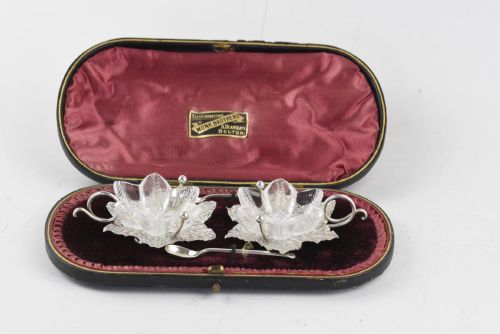
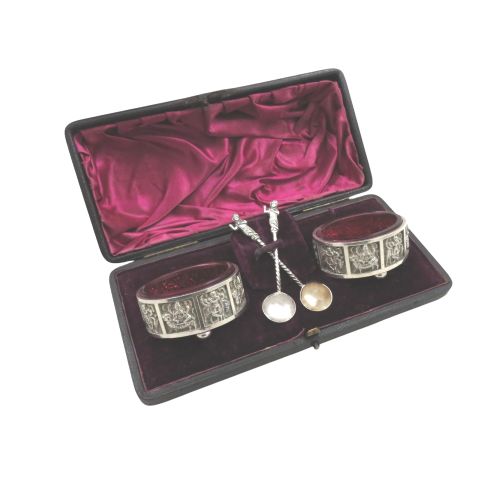
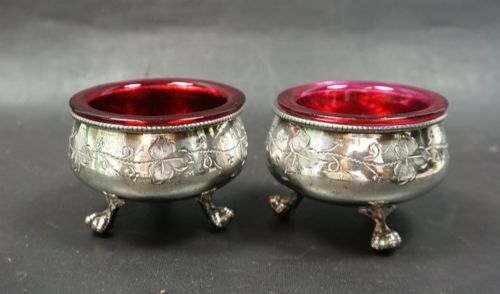
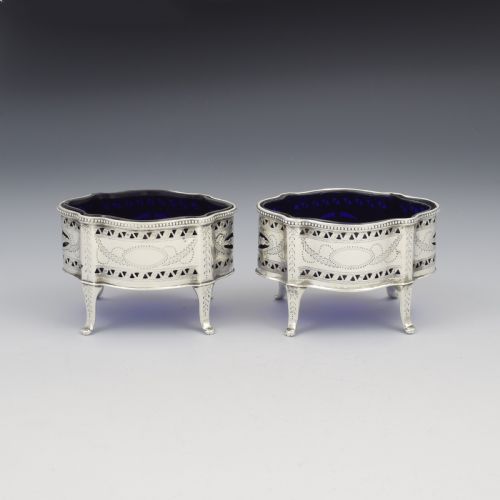
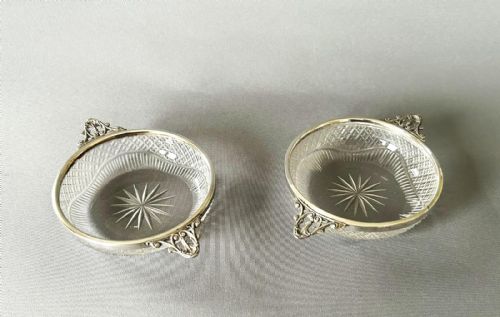
Victorian glass salt cellars are small open vessels or enclosed pots designed to hold loose salt on the dining table, appearing frequently as matched pairs or sets within larger cruet frames. Buyers seeking these items will find open boat-shaped bowls, round vessels, and scalloped shell dishes designed to sit beside individual place settings.
The pieces on this page span the nineteenth and early twentieth centuries, encompassing the Victorian and Edwardian eras alongside specific aesthetic movements. Most examples combine glass bodies with either sterling silver, silver plated mounts, or fitted spoons.
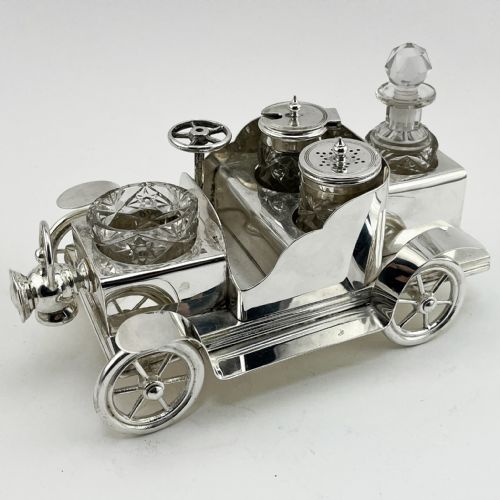
Forms range from simple domestic tableware to elaborate novelty designs shaped as carriages, bears, or musical instruments. Collectors also encounter fitted cruet sets housing multiple bottles and condiment pots alongside the primary salt cellars.
Materials and construction
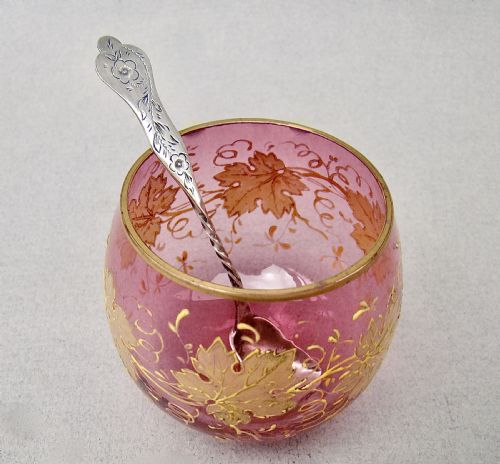
Makers utilised vibrant coloured glass, particularly deep cobalt blue and rich cranberry hues, alongside clear cut glass and green opaline. These glass bodies were blown, moulded, or cut to shape before being fitted into supportive metal frames.
Metalwork involved solid sterling silver and silver plated bases, often shaped through piercing, casting, or repoussé techniques. Frames frequently incorporated hallmarks or registration dates that indicate the precise year of manufacture.
Some Victorian tables featured salt cellars shaped as carousing bears and musical instruments, proving that nineteenth-century diners appreciated a touch of whimsy with their seasoning.
Quality factors
Quality rests upon the crispness of the glass cutting and the depth of its colour, with hand-polished facets and rich hues marking superior work. The weight and thickness of the glass liner provide an immediate sense of substance.
Metal mounts distinguish finer pieces through detailed casting, secure soldering, and well-preserved plating or sterling hallmarks. The presence of matching original spoons and fitted presentation boxes elevates the integrity of the set.
William Hutton & Sons·Moser
The Victorian Glass Salt Cellars Glossary
- Open salt
- A small tabletop bowl designed to hold salt served with a tiny spoon rather than shaken from a dispenser. These pieces rely on a contrasting glass liner to hold the mineral safely away from the metal frame.
- Cruet set
- A matched collection of condiment bottles, mustard pots, and salt cellars held within a shared metal stand. These stands often feature a central carrying handle for table service.
- Cranberry glass
- A rich pinkish-red glass produced by adding gold chloride to the molten batch during the nineteenth century. This distinctive material appears frequently in Victorian tablewares.
- Cobalt glass
- A deep, vibrant blue glass created by incorporating cobalt oxide into the mixture. It remains a hallmark of traditional salt cellars designed to provide a striking visual contrast with white salt.
- Silver plate
- A base metal, typically copper or brass, coated with a thin layer of pure silver through electroplating or older fusion methods. Victorian manufacturers applied this technique extensively to decorative cruet frames.
Victorian Glass Salt Cellars: Frequently Asked Questions
How were Victorian salt cellars used?
Diners used these open vessels by taking a pinch of salt with a small spoon or clean knife and sprinkling it directly onto their food. They sat at individual place settings or were shared between neighbours across the table.
Unlike modern shakers, open salts required the salt to remain dry and free-flowing. The fitted glass liners protected metal frames from the corrosive properties of the salt.
How do I date a silver salt cellar?
Check the metal components for official hallmarks, which include maker's marks, city assay marks, and date letters that pinpoint the exact year of production. Victorian sterling silver pieces often display duty marks corresponding to specific monarch reigns.
Stylistic cues such as Aesthetic Movement engraving or Edwardian proportions offer secondary clues when hallmarks are rubbed or absent. Patent or registration numbers stamped onto the base also narrow the period of manufacture.
Are original spoons important?
Original matched spoons enhance the completeness and historical integrity of a salt cellar set. Finding a pair with their period spoons intact is relatively uncommon due to the delicate nature of small cutlery.
Replacements can serve a functional purpose, but matched original spoons contribute significantly to the character of antique tableware. Collectors value sets that retain their authentic accessories.