


Repousse Silver Salt Cellar
These repousse silver salt cellar pieces bring intricate hammered detail to the dining table, offering tactile historical character for collectors of antique silver.
Repousse Silver Salt Cellar
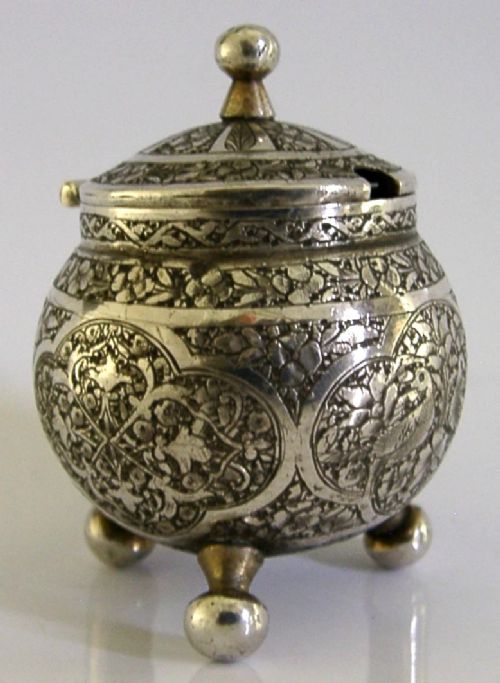
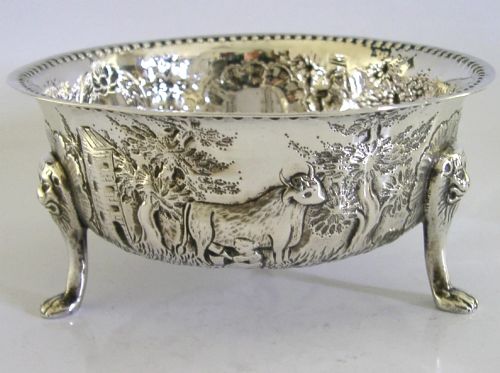
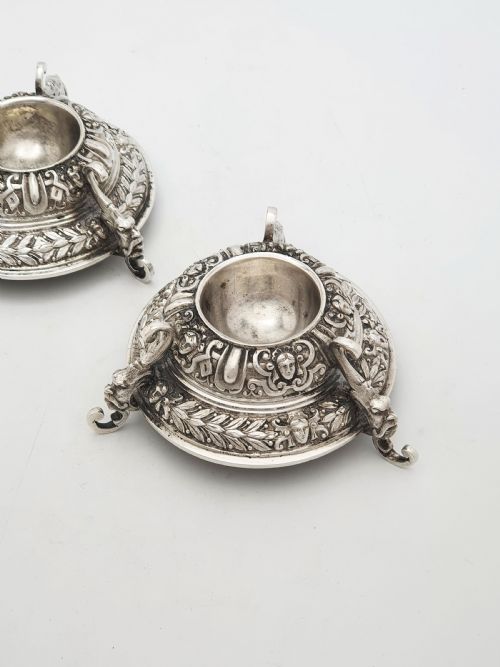
A repousse silver salt cellar is a small open vessel or covered container designed to hold salt at the table, shaped and decorated through metalworking hammered from the reverse. The items on this page span the Victorian era up to the nineteen-twenties, appearing as individual dishes, matched pairs, or larger condiment sets accompanied by mustard pots and cruets.
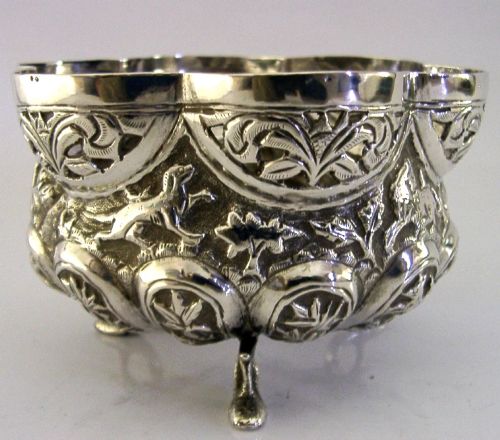
The forms range from traditional English Victorian pedestal bowls to distinct regional styles including Ottoman and Anglo-Indian colonial metalwork. Alongside standard open salt cellars, buyers encounter decorative bowls and fitted boxed sets lined with velvet, leatherette, or satin.
How they were made
The creation of these objects relies primarily on sterling silver and solid silver, shaped by hammering from the back to push out raised ornamental motifs on the front. This repousse technique allows artisan silversmiths to achieve deep, tactile surface relief depicting foliage, geometric patterns, or figurative animal scenes.
Many interior components and fitted presentation cases incorporate supplementary materials such as gilt silver, leather, velvet, and satin. These linings and inner gilding protect the precious metal and provide a contrasting backdrop for the textured exterior decoration.
Listings feature sterling silver, solid silver, and gilt silver items from the Victorian period up to the nineteen-twenties, alongside Ottoman and Anglo-Indian styles.
What varies in quality
Quality in these items is determined by the depth, crispness, and control of the hammered repousse decoration. Pieces displaying sharp, well-defined relief work executed by skilled hands stand apart from softer, shallower stampings that lose fine detail.
The overall weight of the solid silver and the integrity of any original fitted presentation box or lining also influence the standard of the piece. Matching sets that retain their uniform appearance and structural cohesion represent a higher tier of workmanship.
The Repousse Silver Salt Cellar Glossary
- Repousse
- A metalworking technique where the artisan hammers the reverse of a sheet of silver to form a raised design in relief on the front. This method creates tactile surface decoration seen across Victorian and Ottoman tableware.
- Sterling silver
- An alloy consisting of pure silver and other metals, usually copper, formulated to increase durability while maintaining a bright lustre. Most British salt cellars from this period utilise this standard.
- Condiment set
- A matched group of tableware vessels holding table seasonings such as salt, pepper, and mustard. These sets often arrive in fitted boxes lined with velvet or satin.
- Gilt silver
- Silver objects treated with a thin layer of gold applied to the interior surfaces. This process prevents the reactive salt from tarnishing the silver directly.
Repousse Silver Salt Cellar: Frequently Asked Questions
How do I date a silver salt cellar?
Dating relies on hallmarks stamped into the silver, which indicate the assay office, year of manufacture, and silversmith. Style and form also provide clues, moving from Victorian London designs to later Ottoman and Indian pieces.
Fitted presentation boxes and interior linings can further help confirm the period of origin. Comparing the decorative motifs to documented pieces narrows down the decade.
How were these salt cellars used?
Before salt shakers became common, open salt cellars sat on the dining table to hold coarse salt. Diners used a small spoon or fingers to pinch the salt onto their plates.
In larger condiment sets, the cellar shared space with mustard pots and cruet bottles. They served both a functional role at meals and a decorative one to display status.
How do I care for antique silver?
Antique silver requires gentle cleaning with a soft cloth and specialised silver polish to maintain its shine without removing the delicate repousse relief. Avoiding harsh abrasive cleaners preserves the historical surface texture.
Storing pieces in dry environments away from direct sunlight protects any original velvet, leather, or satin linings found in fitted boxes. Regular handling actually helps prevent heavy tarnish accumulation.