




Victorian Oak Footstool
A victorian oak footstool brings honest timber and sturdy nineteenth-century craft straight into a room.
Victorian Oak Footstool
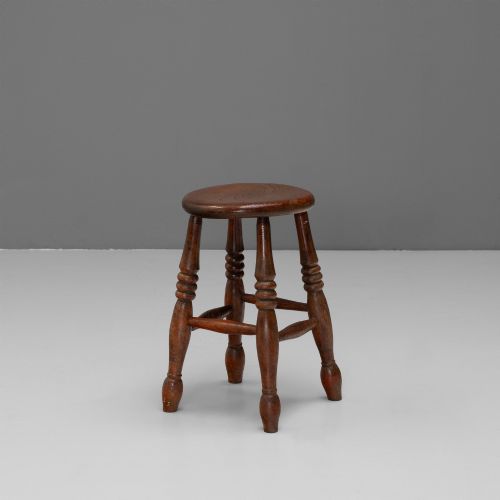
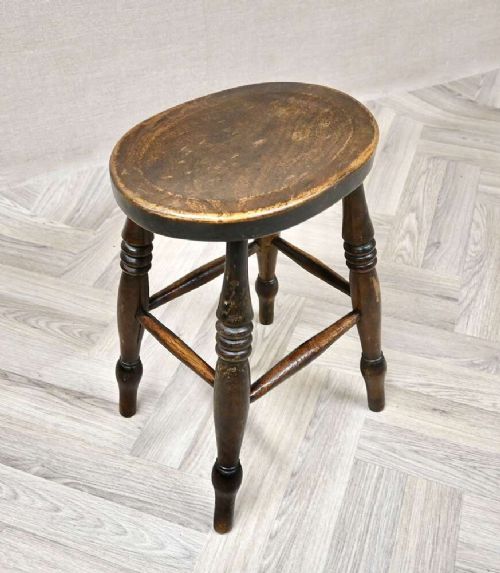
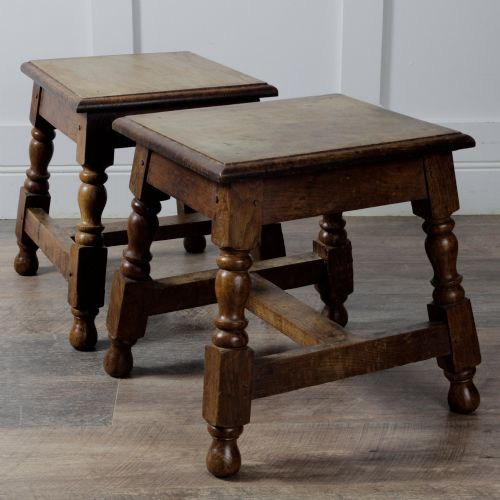
A victorian oak footstool is a low seating piece built from sturdy timber during the nineteenth century. The selection spans straightforward country forms alongside revival styles like Gothic and Chippendale.
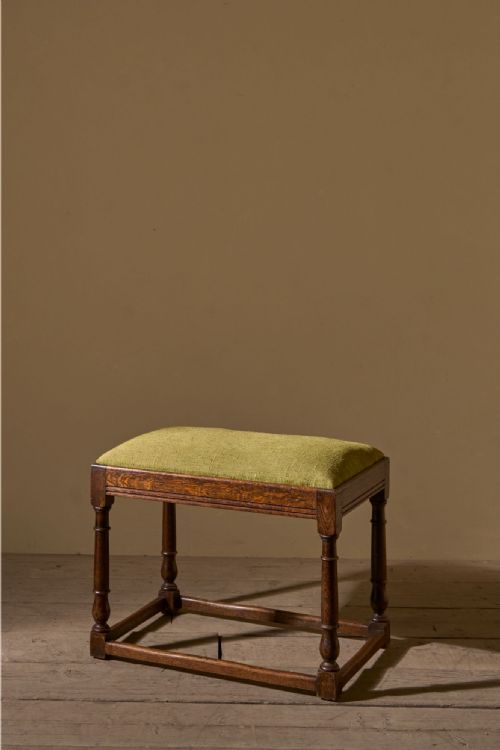
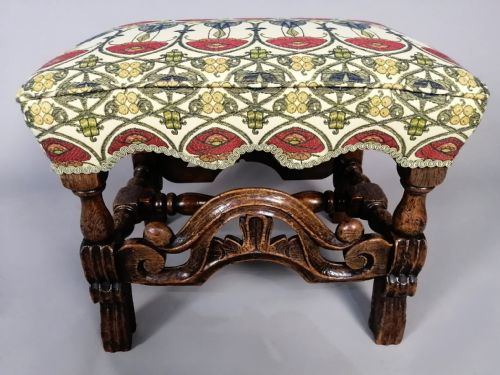
Most examples rely on solid oak frames, occasionally paired with elm, hardwood, or brass fittings. Upholstered options feature buttoned leather, green linen, velvet, or tweed.
How they were made
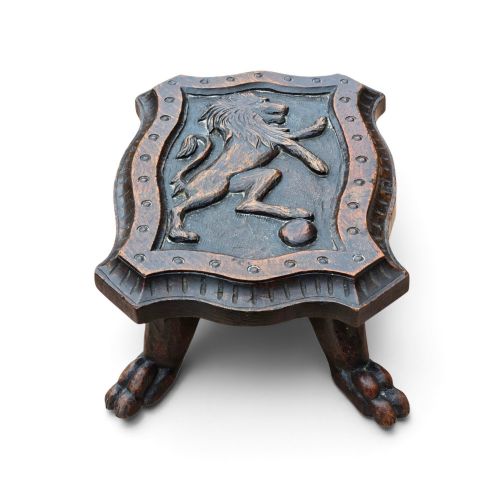
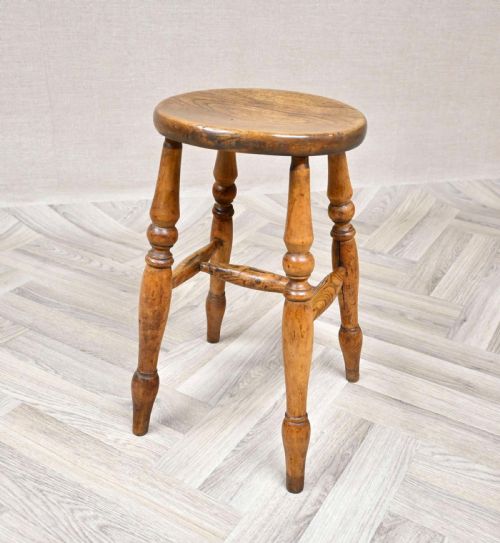
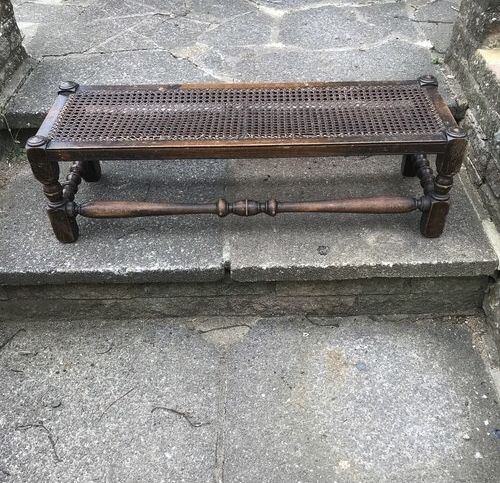
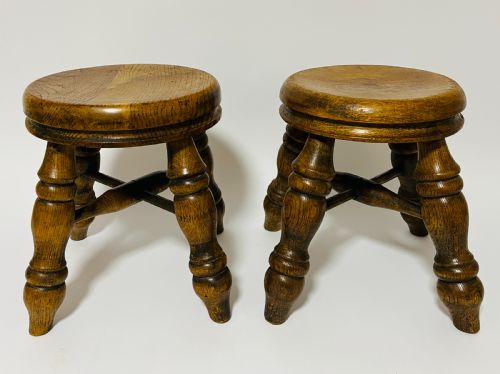
Cabinetmakers utilised solid oak for frames, jointed construction, and turned legs, while secondary timbers like elm appeared in country workshops. Carved decoration involved hand chiselling motifs such as heraldic lions or Gothic tracery directly into the dense wood.
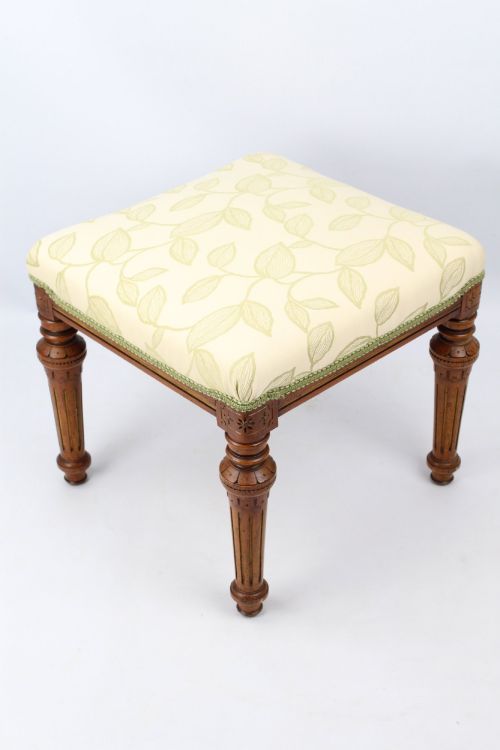
Upholstery required traditional stuffing secured beneath heavy linen, leather, or velvet, sometimes finished with brass tacking. Turnery lathes shaped legs with spiral or spindle profiles.
One tiny stool designated for a shoe boy preserves the everyday hustle of Victorian life.
What varies in quality
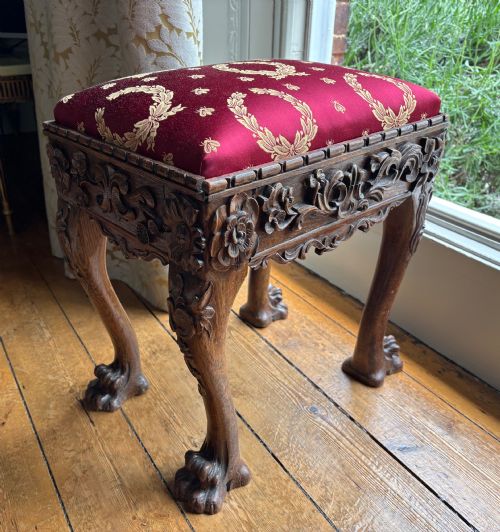
Quality rests upon the crispness of hand carving and the integrity of the timber joints. Simple vernacular pieces differ from ornate revival examples bearing detailed motifs like claw-and-ball feet.
The choice of covering material and the weight of the timber set finer domestic or public house pieces apart from basic utility items.
Liberty·James Shoolbred
The Victorian Oak Footstool Glossary
- Oak
- A hard, heavy timber with a pronounced grain pattern, favoured for its durability throughout the nineteenth century.
- Upholstery
- The padded covering of a seat, using materials like leather, velvet, linen, or tweed over internal stuffing.
- Turnery
- Wood shaped by rotating it on a lathe to create cylindrical supports, legs, and stretchers.
- Revival
- A design style looking back to earlier historical periods, such as Gothic, Chippendale, or William and Mary.
- Castor
- A small wheel attached to the base of a leg to allow smooth movement across floors.
Victorian Oak Footstool: Frequently Asked Questions
What were footstools used for?
These low seats supported tired feet beside the fireplace or served as portable seating in parlours and dressing rooms. Their sturdy build also suited domestic tasks or shoe shining.
Taller variants functioned as piano stools, window seats, or prayer kneelers within the Victorian home.
How do I spot a Gothic revival piece?
Gothic revival pieces display architectural motifs such as pointed arches, quatrefoils, and heavy carved tracery inspired by medieval design. The influence of designers like Augustus Pugin often shows in the solemn geometry.
These examples usually feature solid oak frames with deep bevelling and austere vertical lines.
Are upholstered seats original?
Upholstery materials frequently date from later restorations because fabrics wear out through daily use. Original horsehair stuffing and foundation webbing occasionally survive beneath replacement coverings.
Leather and heavy linen remnants sometimes preserve the original tactile character of the piece.
Where were country stools made?
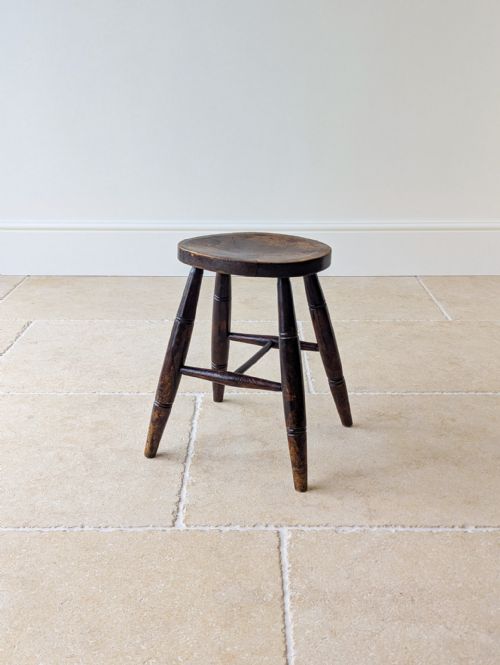
Regional workshops and rural turners produced simpler country stools using locally available timber like oak and elm. These vernacular items prioritised utility over ornamental carving.
Turned legs and saddle seats link these pieces to traditional Windsor furniture making traditions.