

Victorian Nautical Wall Art
Victorian nautical wall art brings the power of nineteenth-century maritime life into a room through oil paintings, watercolours, and detailed dioramas.
Victorian Nautical Wall Art
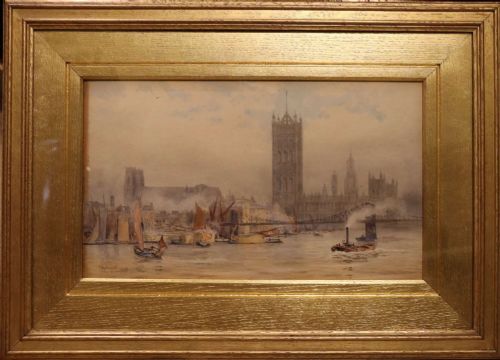
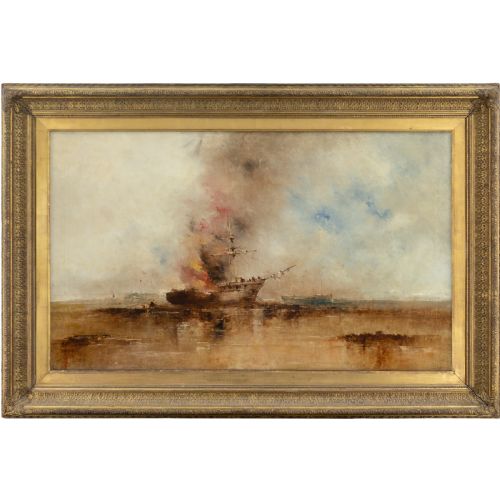
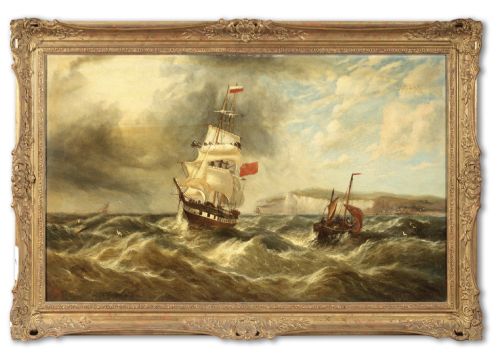
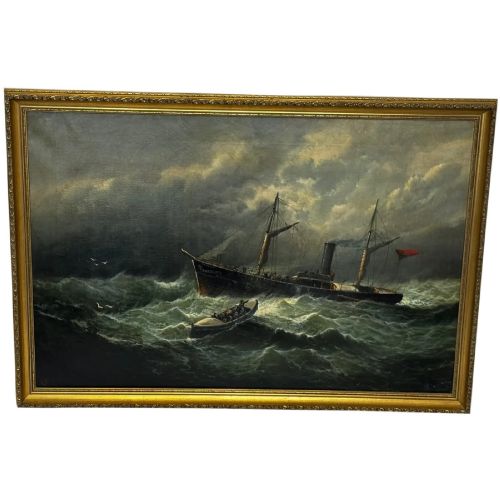
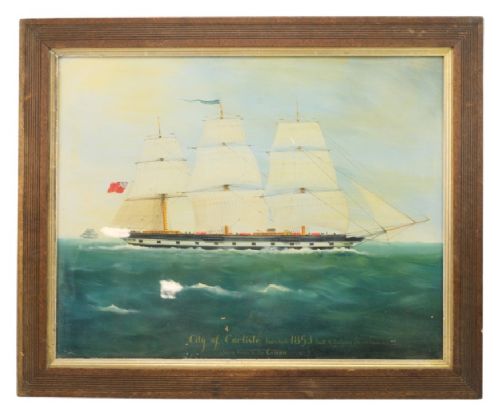
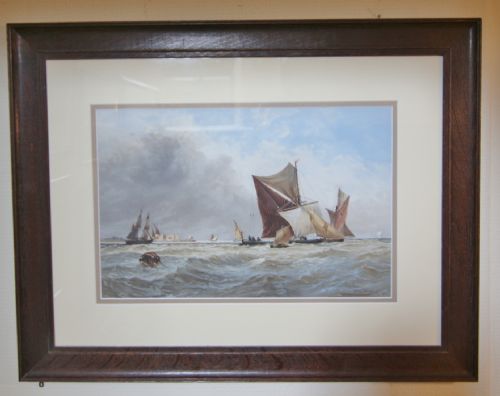
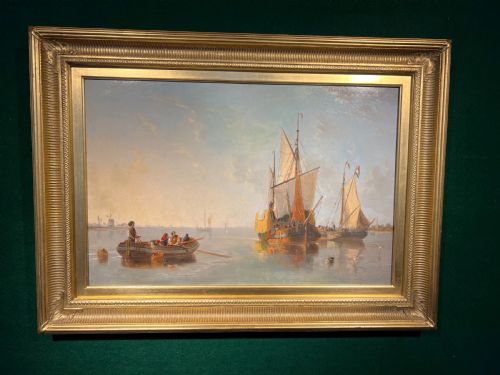
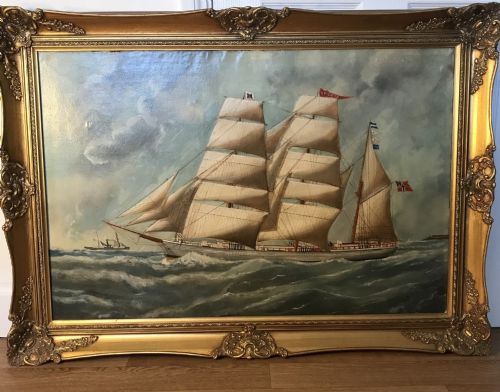
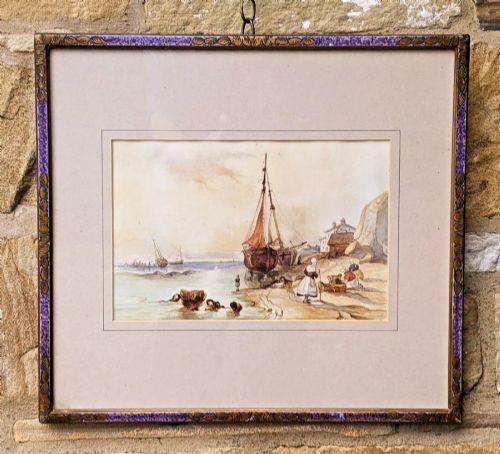
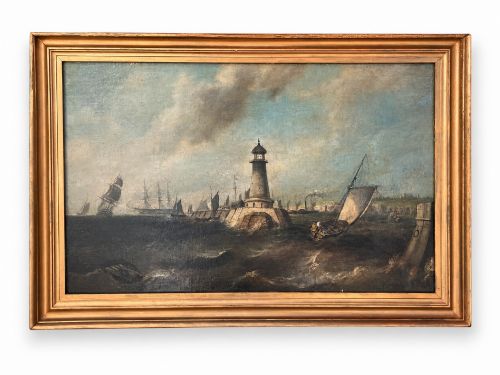
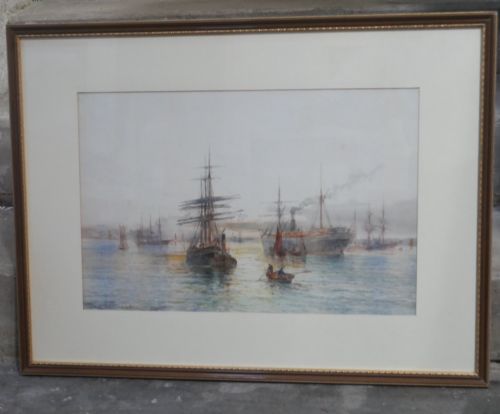
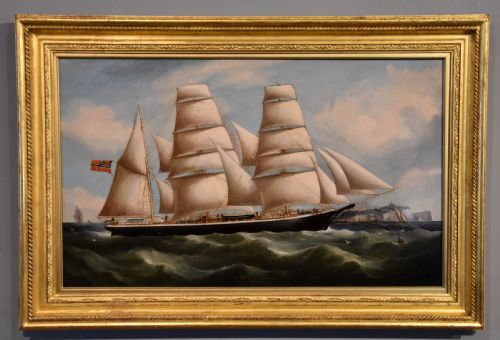
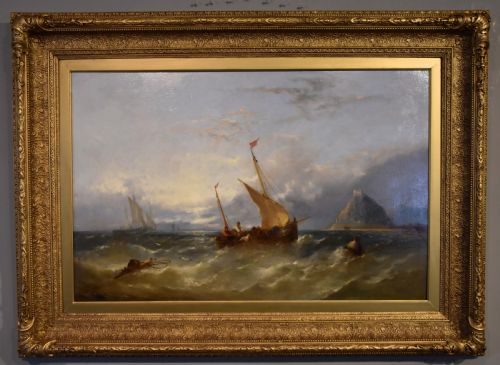
Victorian nautical wall art comprises framed paintings, watercolours, and textile works created during the nineteenth century and early twentieth century that depict ships, coastal harbours, and stormy seas. These pieces record the working vessels, naval ships, and fishing boats of the period through the eyes of contemporary artists and folk makers.
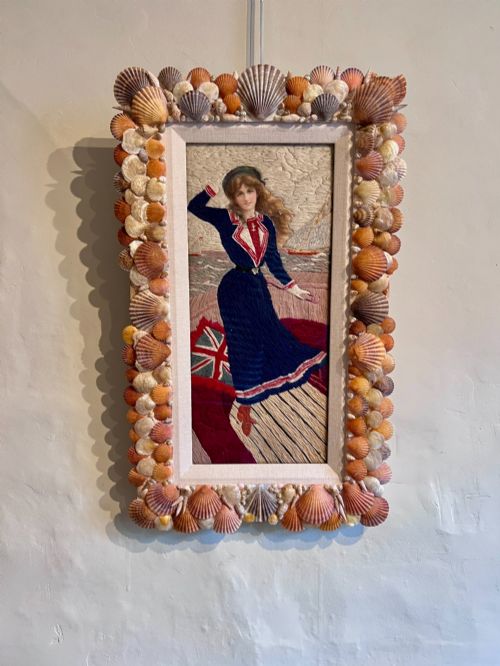
The selection on this page centres on original works executed in oil on canvas, card, and paper, alongside watercolours and woolwork pictures known as woolies. Many pieces capture specific vessels and documented locations, ranging from British coastal towns to international waters.
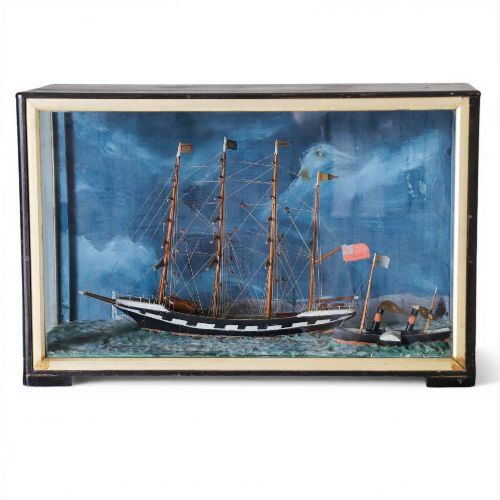
Dimensional objects such as cased dioramas of clippers and sailing ships also appear alongside flat wall art, offering a constructed perspective on maritime subjects. These works reflect the deep connection between nineteenth-century Britain and the sea.
How they were made
Makers utilised traditional artist materials including oil paints on canvas and card, transparent watercolours on paper, and fine wool yarns stitched onto canvas grounds. Frames were commonly constructed from wood, frequently finished with gilt to complement the interior aesthetic of the period.
Maritime dioramas were built using carved and painted wooden ship models set against painted backgrounds, enclosed within glass cases to create a sense of depth and movement. Painters worked both en plein air and in studios, applying pigments to capture changing coastal light and turbulent marine conditions.
Materials span oil on canvas, watercolour on paper, woolwork textiles, and wood for cased dioramas and frames.
What varies in quality
Quality rests in the precision of the maritime rigging, the accurate perspective of hulls in motion, and the artist's ability to render the weight of water and sky. Accomplished works by named painters demonstrate a secure grasp of atmospheric light and vessel architecture that distinguishes them from simpler folk art productions.
The condition of the surface medium, whether oil, watercolour, or woolwork, dictates the visual impact of the piece. Intact framing, original glass on dioramas, and minimal restoration preserve the integrity of these historical records.
Thomas Bush Hardy·George Stanfield Walters·Abraham Hulk I·Gustave De Bréanski·John Wilson Carmichael
The Victorian Nautical Wall Art Glossary
- Diorama
- A three-dimensional model set inside a glazed wooden case, featuring carved ships positioned against a painted maritime backdrop.
- Seascape
- A painting or watercolour focused primarily on the sea, coastal views, and ships operating in various weather conditions.
- Barque
- A sailing vessel with three or more masts, commonly recorded in nineteenth-century shipping art and merchant records.
- Gilt wood
- Wood coated with a thin layer of gold leaf or metallic paint, frequently used for traditional picture frames.
Victorian Nautical Wall Art: Frequently Asked Questions
What subjects do these maritime paintings show?
The works depict merchant ships, naval vessels, fishing boats, and specific coastal locations during the nineteenth century. Scenes range from calm harbour approaches to dramatic shipwrecks in rough seas.
Artists documented real vessels, historical events, and everyday maritime labour, providing a visual record of nineteenth-century shipping and coastal communities.
How do woolwork pictures differ from oil paintings?
Woolwork pictures, or woolies, are handmade textile pieces stitched with yarn by sailors or shore-based makers, often featuring detailed depictions of clipper ships and sailor girls. Oil paintings rely on pigment applied to canvas or card by professional marine artists.
While oil paintings offer refined perspective and atmospheric light, woolies represent a distinct branch of maritime folk art valued for tactile texture and handmade charm.
How should I care for a nineteenth-century diorama?
Cased dioramas require stable indoor environments away from direct sunlight and excessive humidity to protect the delicate wooden models and painted paper backgrounds inside the glass. The exterior wooden case should be dusted gently with a dry cloth.
Opening the sealed glass case is generally avoided to prevent dust and moisture from entering the enclosed display environment.
Are these artworks signed by the artists?
Many works on this page bear the signatures or initials of professional nineteenth-century painters, while others remain attributed to specific schools or anonymous folk makers. Signed pieces often link the artwork to documented exhibition histories and known studio practices.
Unsigned pieces, particularly folk art dioramas and woolies, rely on materials, construction methods, and subject matter to indicate their nineteenth-century origins.