








English Marine Landscape Painting
English marine landscape painting captures the changing light of coastlines, harbours and estuaries through the brush of artists working across the nineteenth and twentieth centuries.
English Marine Landscape Painting
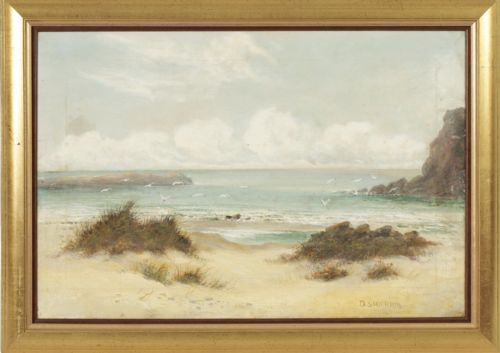
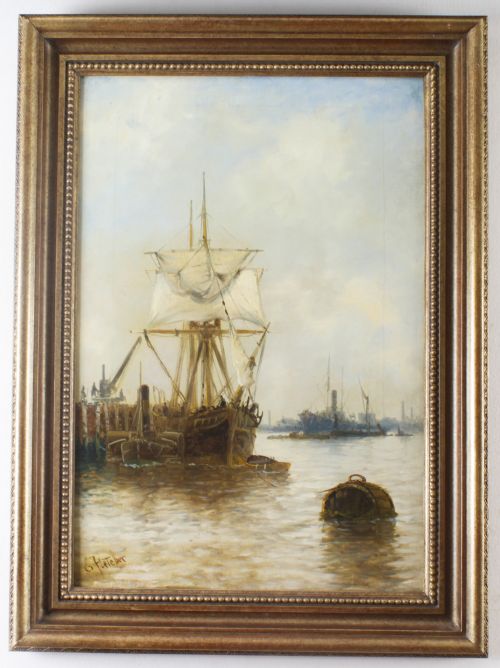
An english marine landscape painting records maritime life and coastal topography, ranging from busy fishing ports to quiet estuaries and open seas. These works appear as both watercolours on paper and oil paintings on canvas or board, reflecting the diverse approaches of artists drawn to the water.
The pieces on this page span from the nineteenth century into the mid-twentieth century, capturing shifts in artistic styles from traditional Victorian fine art to British impressionism and mid-century modernism. Viewers frequently encounter depictions of named locations such as Yorkshire harbours, Dorset cliffs and Norfolk rivers.
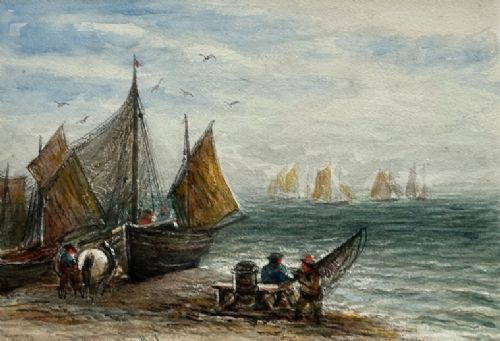
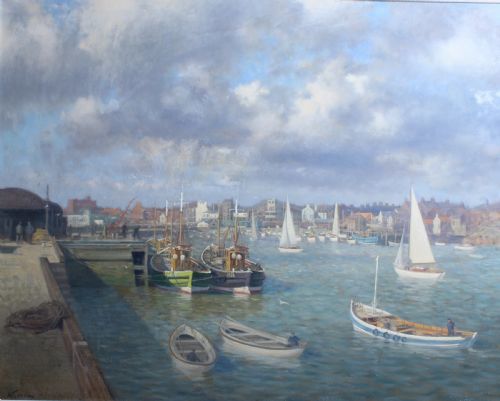
Harbour scenes dominate the selection, often featuring sailing vessels, fishing boats and coastal workers alongside the architectural landmarks of British ports. These paintings serve as historical documents of maritime trade and leisure as well as exercises in capturing atmospheric weather.
Materials and Technique
Artists relied primarily on oil on canvas, oil on board, and watercolour pigment on paper to render coastal scenes. Oil paints allowed for textured impasto and rich colour mixing, particularly effective when depicting choppy seas and dramatic skies.
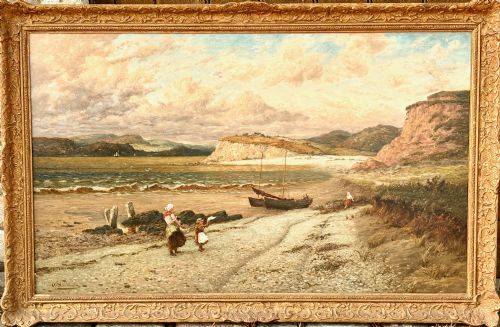
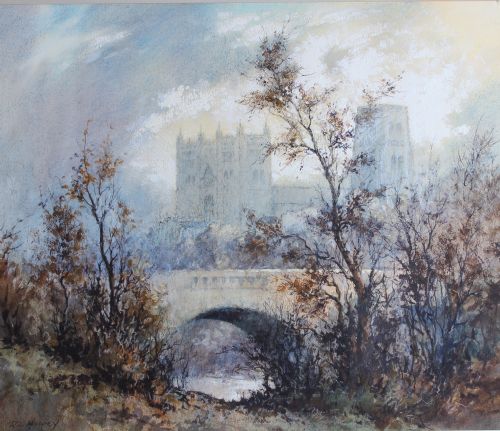
Watercolour works utilised the translucency of the medium on paper to capture the bright, transient light of the coast, often complemented by pen and ink or bodycolour. Many of these paintings retain their period giltwood frames, which contribute to the physical presence of the artwork.
English Marine Landscape Painting Retail Price Guide 2026
Typical asking prices for english marine landscape painting among the pieces listed under this phrase on Sellingantiques today, from the lower quarter to the upper quarter. They describe what is for sale here now, not the wider market.
Several coastal scenes capture boats braving choppy seas, reminding viewers that British weather has tested sailors for generations.
Evaluating the Work
The strength of a composition rests on the artist's ability to handle atmospheric light, water movement and spatial depth. Stronger examples display confident brushwork and precise topographical observation rather than formulaic execution.
Condition plays a central role, with preference given to works that retain their original pigments without excessive fading, foxing on paper, or heavy restoration to the canvas. The quality of the framing also influences the piece, as period frames matched to the painting enhance its overall integrity.
James Orrock·William Banks Fortescue·Thomas Bush Hardy·Frank Rousse·William Shayer
The English Marine Landscape Painting Glossary
- Watercolour
- A painting method in which fine pigment is suspended in a water-soluble binder and applied to paper. It allows for luminous washes and rapid execution.
- Impasto
- Paint applied thickly to a canvas or panel, leaving visible brush or palette knife marks that add tactile depth to the surface.
- Giltwood
- Wood carved and coated with a thin layer of gold leaf, commonly used for period picture frames.
- Seascape
- A work of fine art that depicts the sea, coastal views, ships or marine life as the primary subject.
English Marine Landscape Painting: Frequently Asked Questions
What subjects appear in these paintings?
The works depict a range of maritime subjects including busy harbour entrances, fishing fleets at rest, dramatic coastal cliffs and tidal rivers.
Artists often focused on specific British locations, documenting local architecture, boats and the daily routines of coastal communities.
How do I care for a watercolour painting?
Watercolour paintings require protection from direct sunlight to prevent the pigments from fading over time.
Framing behind UV-resistant glass and keeping the work away from damp environments will help preserve the paper and medium.
Are these paintings signed by the artists?
Many examples feature artist signatures, monograms or inscriptions detailing the specific location and date within the composition.
Unsigned works often rely on stylistic attribution or historical documentation to connect them to a particular school or maker.
How do I date an antique marine painting?
Dating relies on a combination of stylistic indicators, framing materials, artist working periods and inscribed dates on the front or reverse.
Costume details on any figures present and the type of vessel depicted also offer clues to the era in which the work was produced.