
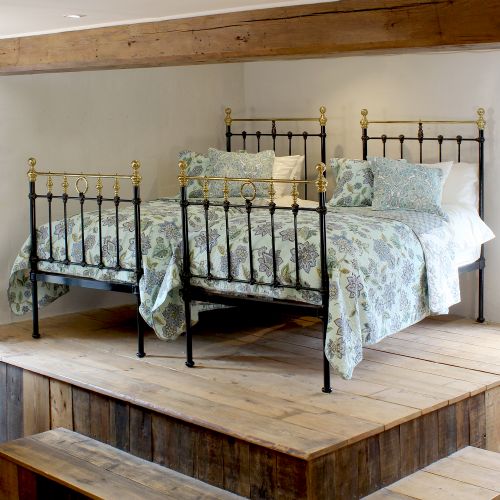
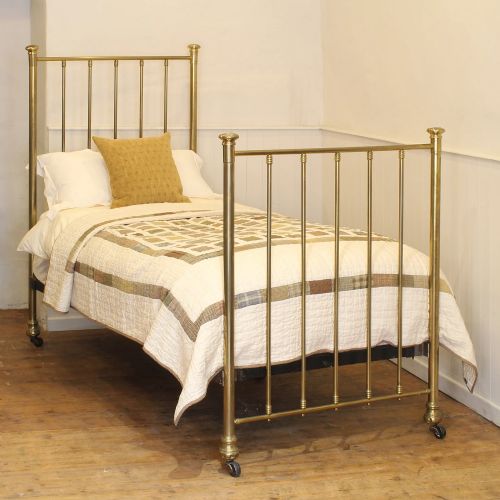
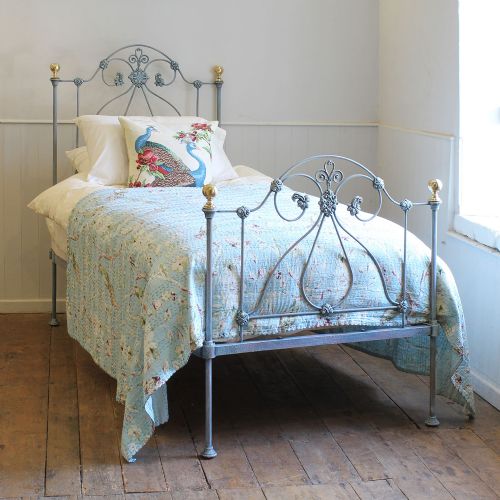
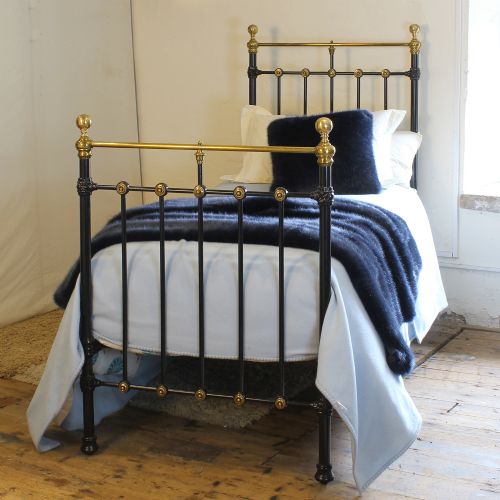
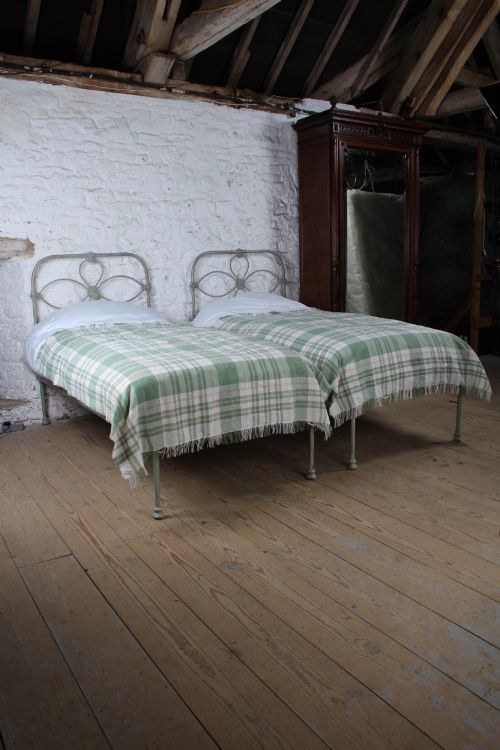


Victorian Metal Single Bed
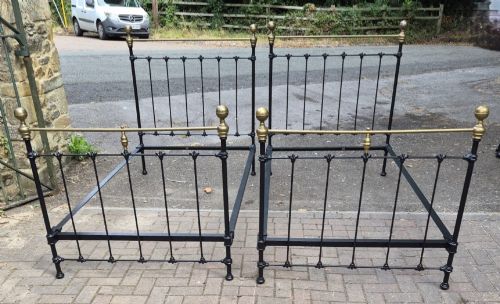
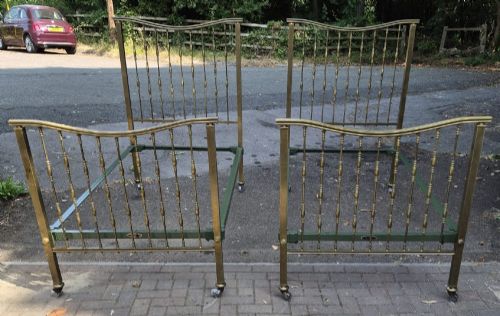
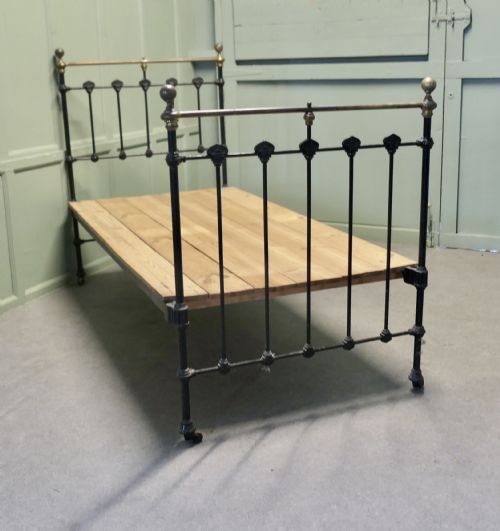
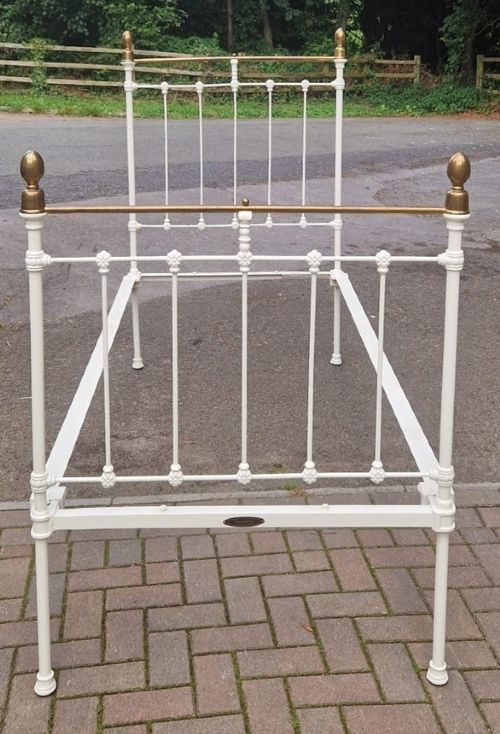
These robust victorian metal single bed frames combine practical proportions with enduring nineteenth century metalwork.
Victorian Metal Single Bed
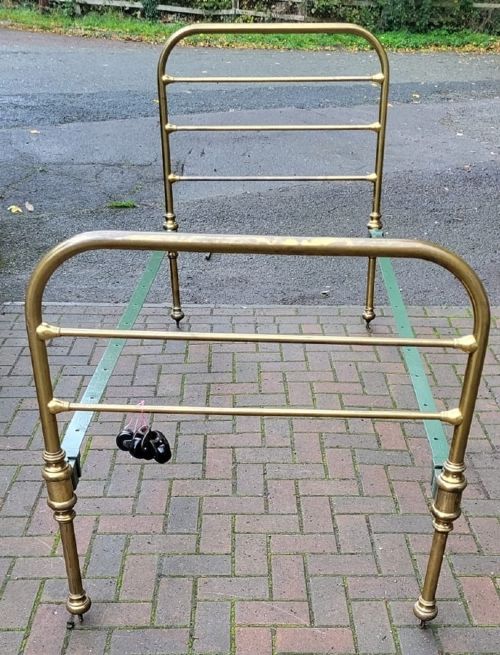
A victorian metal single bed offers a compact sleeping frame constructed primarily from cast iron, wrought iron, or brass. These pieces originate predominantly from the nineteenth and early twentieth centuries, spanning the Victorian and Edwardian eras.
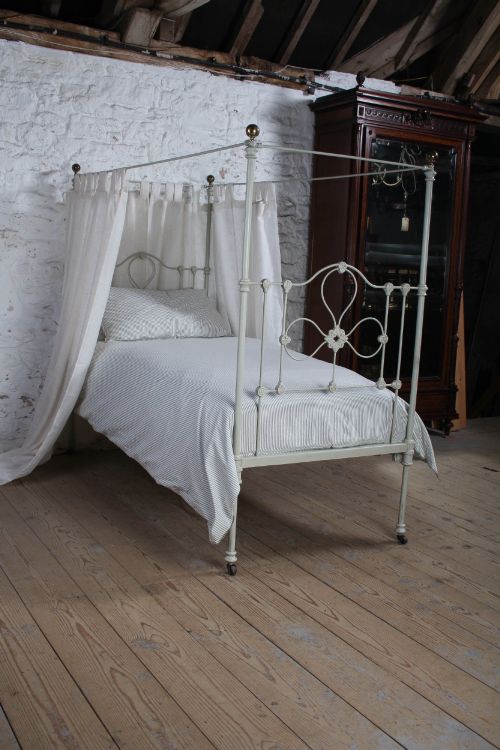
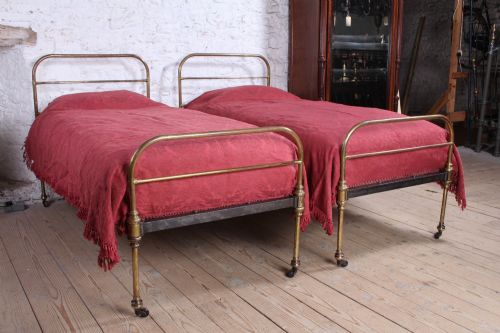
Buyers regularly encounter single bedsteads, platform beds, and four poster configurations designed for individual use. Many examples appear as matching pairs intended to join together, featuring finishes in black paint, blue verdigris, cream, white, or bare polished brass.
Materials and Construction
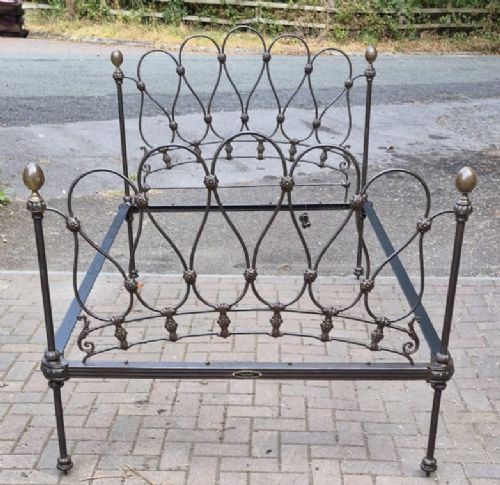
Makers utilised durable cast iron and hand forged iron for structural rigidity, often combining these metals with warm brass mounts and decorative rings. Ceramic and wood elements occasionally appear alongside painted metal finishes.
Workshops employed casting and forging techniques to shape sturdy frames capable of supporting standard single mattress widths such as three feet. Surface treatments included protective paint layers and polished brass detailing to enhance the visual appeal.
The listings show metal beds spanning from eighteen-fifty through the Edwardian period, utilising combinations of cast iron, wrought iron, and polished brass.
Distinctions in Quality
Superior examples demonstrate refined metalwork, such as intricate brass decoration, balanced hoop details, and substantial gauge iron that provides exceptional stability. Maker attributions to established firms also elevate the standing of a piece.
Simpler utilitarian models display plain iron framework with minimal ornamentation, serving practical functions rather than decorative display. The presence of original matching pairs or uncommon stylistic variations further differentiates the scope of available designs.
Hoskins & Sewell·R W Winfield·Shoolbred
The Victorian Metal Single Bed Glossary
- Bedstead
- A framework of a bed upon which the mattress rests. This term often encompasses both the headboard, footboard, and side rails.
- Cast iron
- An iron-carbon alloy poured into a mould to create complex shapes. It forms the heavy, rigid structure of many nineteenth century bed frames.
- Wrought iron
- Iron beaten into shape by a blacksmith rather than cast in a mould. This material provides exceptional strength and distinct hand forged textures.
- Verdigris
- A green patina formed on brass or copper through natural weathering or chemical treatment. Some antique beds retain this distinctive blue-green surface tint.
Victorian Metal Single Bed: Frequently Asked Questions
Will a standard modern mattress fit these beds?
Most antique single beds measure around three feet wide, accommodating standard modern single mattresses without difficulty. Adjustments to the internal rails or modern support slats are sometimes utilised to ensure a secure fit for contemporary mattress depths.
Buyers should verify the exact interior dimensions listed for each bedstead before purchasing a mattress. Tailored platform bases or modern slatted wooden inserts can also be integrated safely into the historic iron frames.
Can twin beds be joined together?
Several listed pairs are designed with compatible side rails or matching dimensions that allow them to be positioned and joined together as a larger bed. This modular flexibility was a common feature in nineteenth century guest room furnishings.
Consulting the specific listing details reveals whether a particular pair includes the necessary configuration for joining. Such setups offer the versatility of twin sleeping arrangements or a unified double frame.
How should brass and iron beds be cleaned?
Routine maintenance involves dusting the iron framework with a dry cloth and wiping painted surfaces with a mildly damp sponge. Abrasive cleaners should be avoided to preserve original painted finishes and protective clear coats.
Unlacquered brass components can be polished periodically using a dedicated metal cleaner to maintain their lustre. Preserving the patina on older pieces often requires minimal intervention beyond gentle cleaning.
How do you date a metal bedstead?
Dating relies upon stylistic markers, construction methods, and documented maker marks stamped into the iron or brass components. Simpler iron forms often align with mid-Victorian production, while elaborate brass combinations frequently point towards the later nineteenth century.
Edwardian examples introduce lighter proportions and distinct brass casting styles. Comparing decorative motifs like hoop details or ceramic castors helps narrow the period of origin.