

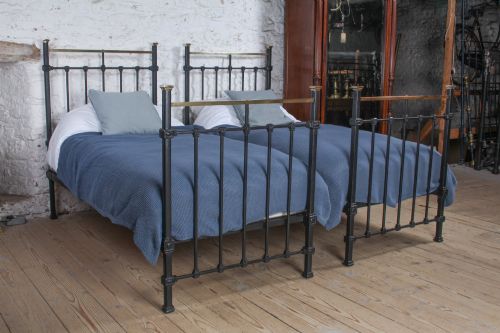
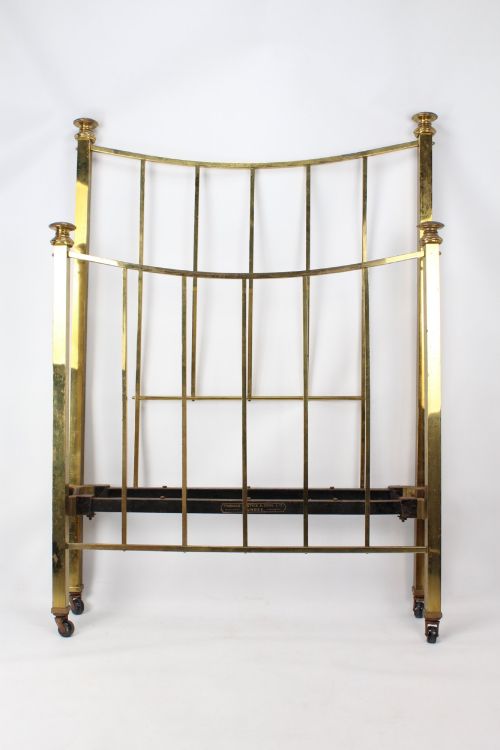
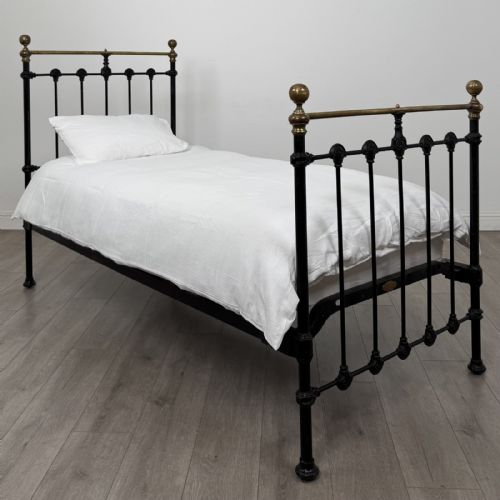
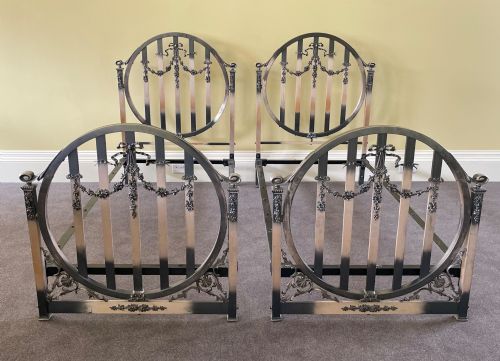



Cast Iron Single Bed
A cast iron single bed offers sturdy charm and compact utility, blending period metalwork with practical bedroom sleeping space.
Cast Iron Single Bed
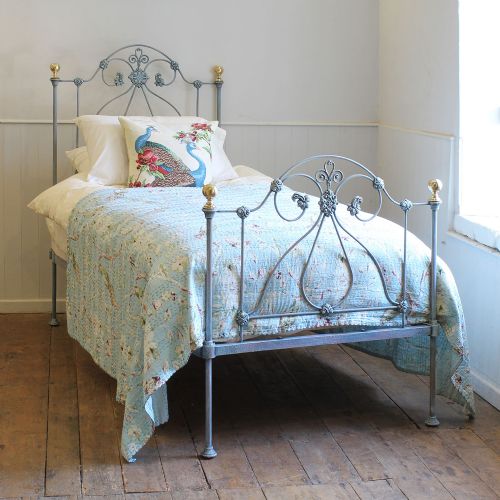
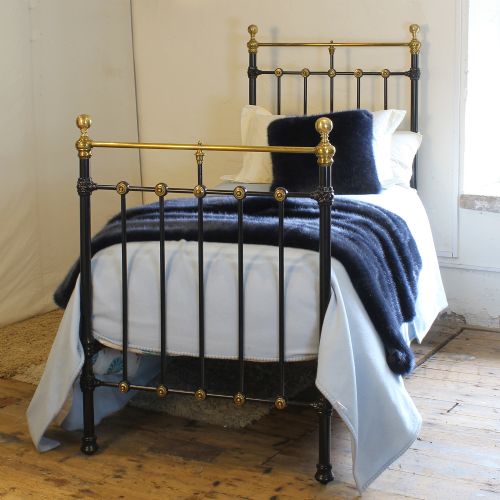
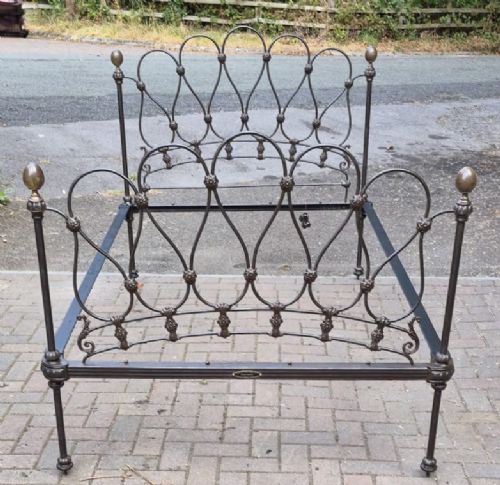
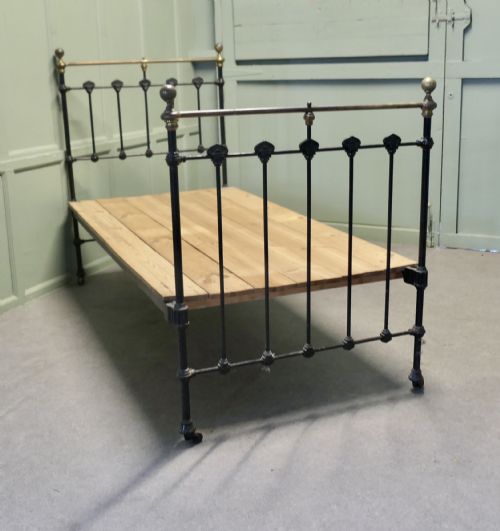
A cast iron single bed combines heavy metal framing with narrow dimensions suited for smaller sleeping quarters. These pieces appear frequently in Victorian and Edwardian iterations, featuring widths such as three feet alongside various platform and curly configurations.
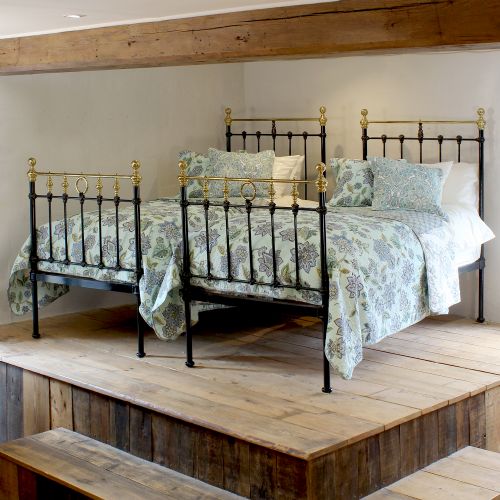
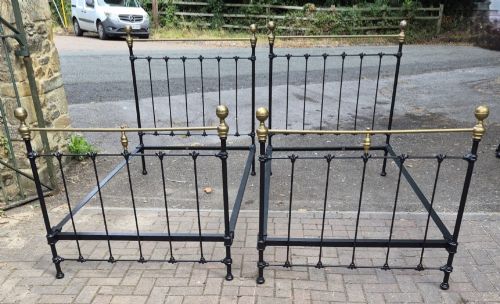
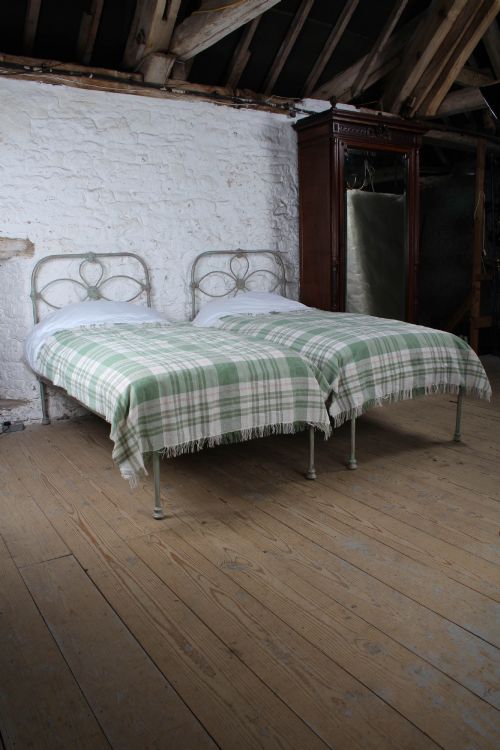
The material forms robust furniture ranging from plain black frames to more decorative assemblies with brass details and ceramic touches. Buyers encounter both single frames and matching pairs designed to stand alone or join together.
Origins trace through the nineteenth century and into the early twentieth century, capturing styles from plain industrial utility to ornate Art Nouveau lines. Many examples incorporate footboards or adopt no-end formats to fit specific spatial requirements.
How they were made
Makers utilised cast iron and wrought iron for the structural framework, pouring molten metal into moulds or hand forging components. Brass elements and nickel plating added contrasting metallic highlights to the dark iron bodies.
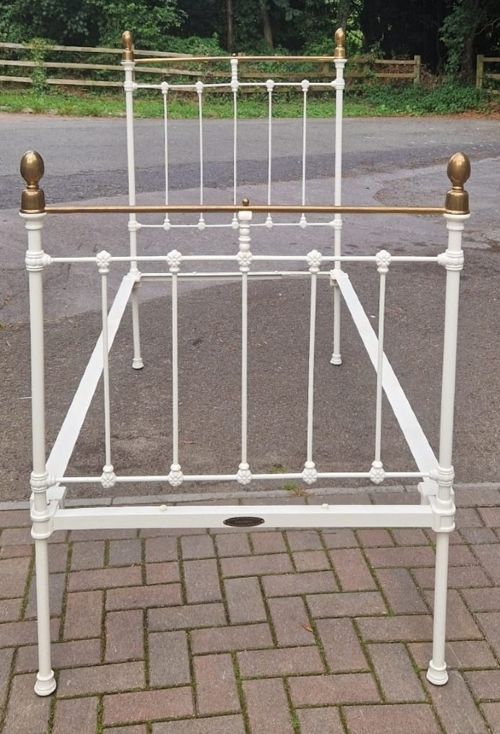
Surface finishes involved applied paint in black, blue verdigris, and cream colours, protecting the metal while defining the visual tone. Ceramic components sometimes integrated into the design alongside steel and brass decoration.
Cast Iron Single Bed Retail Price Guide 2026
Typical asking prices for cast iron single bed among the pieces listed under this phrase on Sellingantiques today, from the lower quarter to the upper quarter. They describe what is for sale here now, not the wider market.
Listings span from the mid-nineteenth century through the Edwardian era, incorporating materials like nickel plating, brass, and painted cast iron.
What varies in quality
The fineness of the casting work and the crispness of applied brass decoration distinguish simpler frames from more elaborate pieces. Detail in the iron scrolls, ring turnings, and stylistic flourishes dictates the visual weight of the bedstead.
Integrity of the original painted or plated surface layers influences the overall presentation, with well-preserved finishes holding distinct appeal. The presence of matching pairs or clever modular configurations adds functional distinction.
R W Winfield
The Cast Iron Single Bed Glossary
- Cast iron
- Iron melted and poured into a mould to shape complex decorative components. This material forms the rigid structure of the bedstead.
- Brass
- A yellow alloy of copper and zinc used for decorative knobs, mounts, and top rails on iron beds. It provides a bright contrast to the dark iron frame.
- Nickel plating
- A thin protective coating of nickel applied to iron to give a bright silver finish. This technique appears on Edwardian examples.
- Verdigris
- A green patina formed on copper and brass surfaces through natural oxidation or chemical treatment. It appears as a coloured finish on specific antique beds.
Cast Iron Single Bed: Frequently Asked Questions
Can these beds take modern mattresses?
Most antique single beds measure around three feet wide, accommodating standard modern single mattress sizes.
Buyers should verify internal frame dimensions and support slats to ensure a secure fit for contemporary bedding.
How do I join a pair of single beds?
Certain pairs of single beds are constructed with compatible side rails or fixings designed to lock together securely.
Checking the hardware configuration allows owners to convert two independent frames into a wider sleeping platform.
Are these beds heavy to move?
Cast iron and brass construction makes these bedframes substantial and weighty objects during relocation.
They typically dismantle into headboards, footboards, and side rails for easier transport and assembly in the bedroom.
What styles are common in iron beds?
Victorian and Edwardian designs dominate, ranging from plain industrial iron forms to elaborate Art Nouveau framing.
Decorative elements often include brass spindles, ceramic casters, and looped ironwork patterns.