
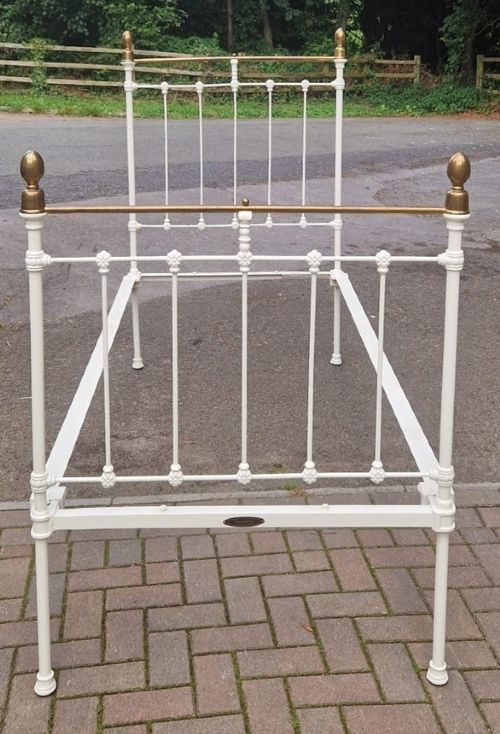


Edwardian Iron Single Bed
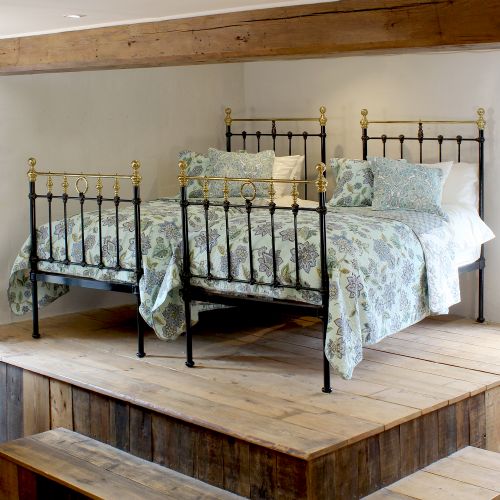
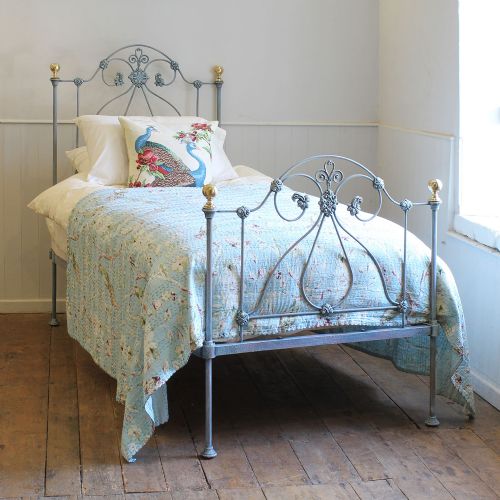
These edwardian iron single bed examples combine robust metal frames with period charm, offering a sturdy and practical sleeping solution for compact spaces.
Edwardian Iron Single Bed
An edwardian iron single bed provides a compact sleeping frame constructed primarily from durable metals like cast iron and wrought iron, often combined with brass components. These pieces originate from the Victorian and Edwardian eras, spanning years from 1870 through to 1920.
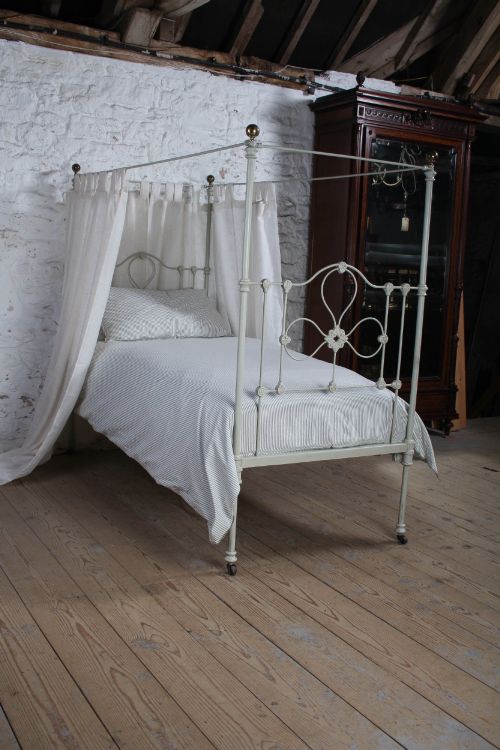
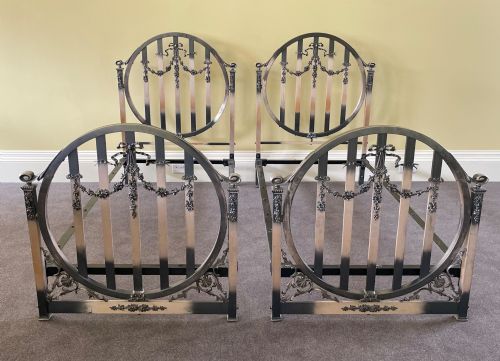
Buyers encounter single beds, bed frames, and bedsteads finished in various ways, including black paint, blue verdigris, cream, and nickel plating. Some examples feature decorative brass elements or rings, whilst others incorporate Art Nouveau stylistic details.
Configuration options on this page range from individual single beds to pairs that can be joined together for alternative layouts. Platform styles and four poster variations also appear within the selection.
Materials and Construction
Construction relies heavily on cast iron and hand forged ironwork, providing structural strength and rigidity to the single bed frames. Brass components are frequently integrated as decorative finials, rails, or decorative castings.
Surfaces receive protective or decorative finishes including painted metal, nickel plating, and patinated treatments such as blue verdigris. Some variations incorporate wooden elements like mahogany with satinwood inlay alongside iron side rails.
Listings feature materials including cast iron, wrought iron, brass, steel, and nickel plating across pieces dated from 1870 to 1920.
Assessing Quality and Craftsmanship
Quality in an edwardian iron single bed rests on the crispness of the cast iron mouldings and the security of the joints. Finer examples display meticulous hand forging and well-fitted brass ornamentation rather than rough casting seams.
The choice of finish and its preservation also set pieces apart, from simple painted surfaces to complex nickel plating or patinated verdigris. Structural integrity of the original side rails and matching pairs heavily influence desirability.
The Edwardian Iron Single Bed Glossary
- Bedstead
- The complete framework of a bed, including headboard, footboard, and side rails. This term often refers specifically to antique metal frames.
- Cast Iron
- Molten iron poured into a mould to create rigid structural or decorative shapes. It forms the primary chassis for these beds.
- Wrought Iron
- Iron that is heated and hammered into shape by hand. This material offers distinct texture compared to cast components.
- Nickel Plating
- A thin protective coating of nickel applied to metal surfaces. It provides a bright, silver-coloured finish seen on specific frames.
- Art Nouveau
- A design style characterised by flowing, organic lines. This aesthetic appears on selected Edwardian metal frames.
Edwardian Iron Single Bed: Frequently Asked Questions
Will a standard modern mattress fit these beds?
Many antique single beds measure around three feet wide, which aligns reasonably well with certain modern single mattress dimensions. However, overall length and exact internal frame clearances can vary among older pieces.
Buyers should verify the internal length and width dimensions of the specific bedstead before sourcing a mattress. Custom or specialist mattress suppliers can assist if the frame dimensions deviate from standard modern sizes.
How do I care for a painted iron frame?
Painted metal frames require gentle dusting with a soft, dry cloth to prevent dust accumulation. Avoid using abrasive cleaning agents or harsh chemical solvents that might damage the original painted finish or verdigris.
If the metal has exposed areas, consult a specialist in antique metal conservation to discuss appropriate protective waxes. Keeping the bed in a stable humidity environment prevents corrosion on unpainted iron sections.
Can these single beds be easily dismantled?
Most antique iron and brass beds utilise wedge or slot joints on the side rails that allow the headboard and footboard to separate. This modular construction made transport and room relocation straightforward during the period.
Care should be taken when dismantling older joints, as accumulated paint or age can make components tight. Applying a light lubricant to the joints can ease the process without damaging the metal.
How do I distinguish Victorian from Edwardian iron beds?
Victorian iron beds often feature heavier proportions, robust cast iron ornamentation, and darker painted finishes. Brass highlights on Victorian pieces tend to be bold and substantial.
Edwardian examples frequently exhibit lighter scaling, cleaner lines, and occasional Art Nouveau influences. Nickel plating and alternative colour palettes such as cream or verdigris also point towards the later Edwardian period.