

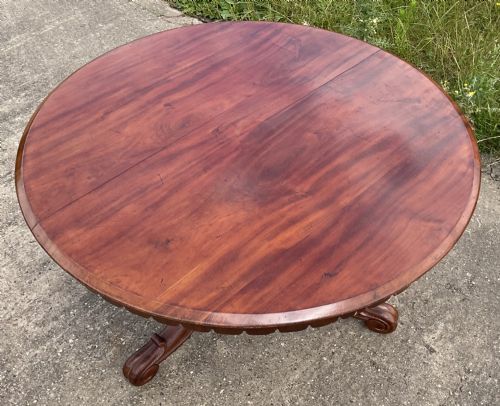
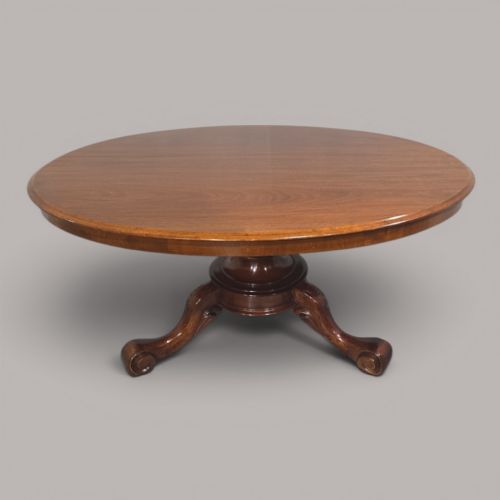
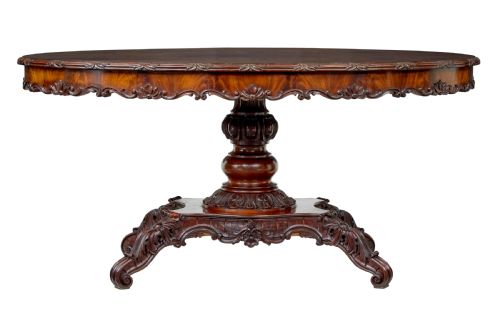


Victorian Mahogany Loo Table
A victorian mahogany loo table is a generous pedestal piece designed for late-night games and morning gatherings.
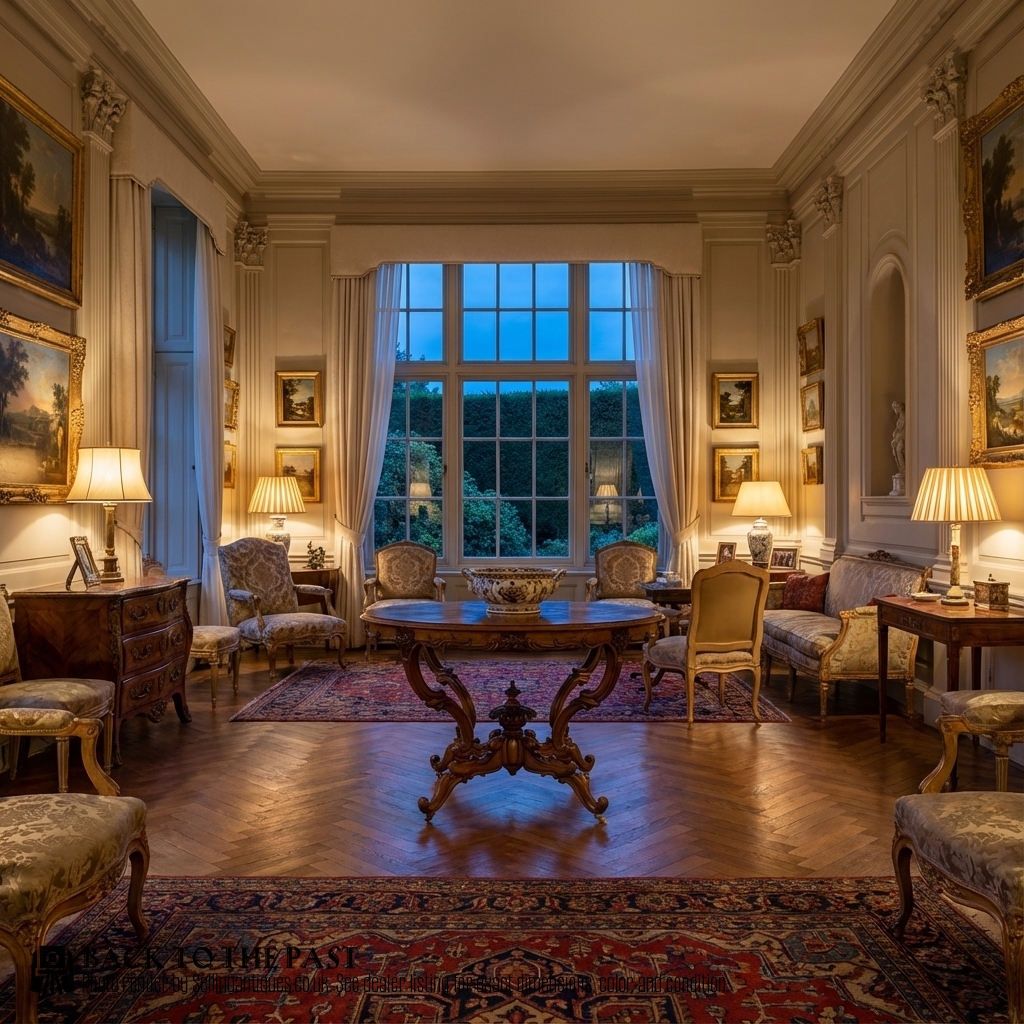
Victorian Mahogany Loo Table
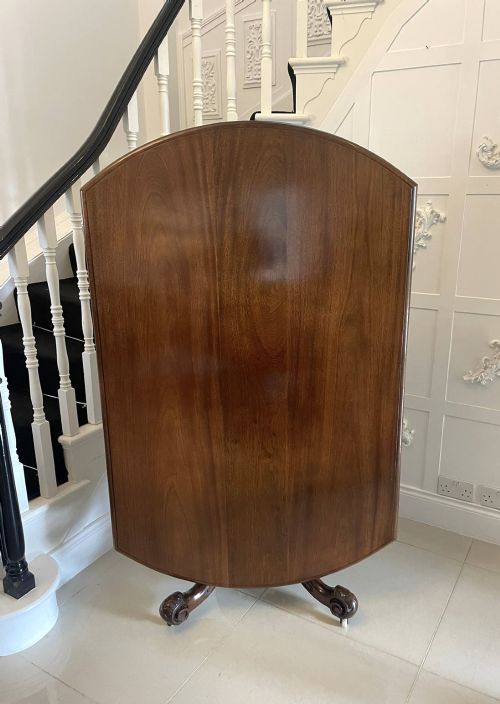
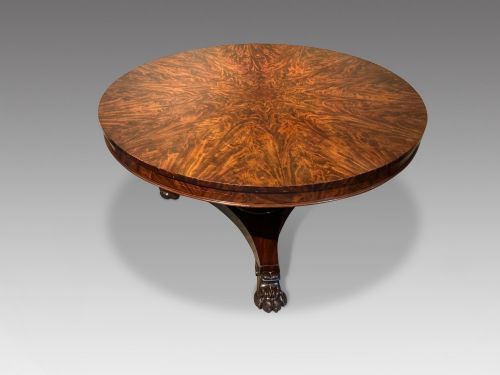
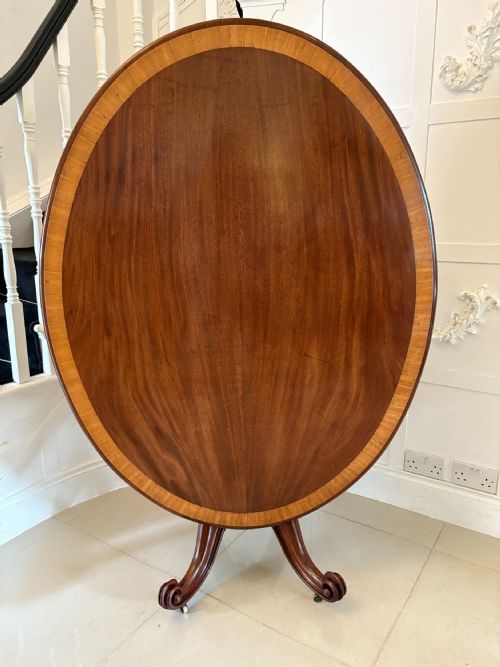
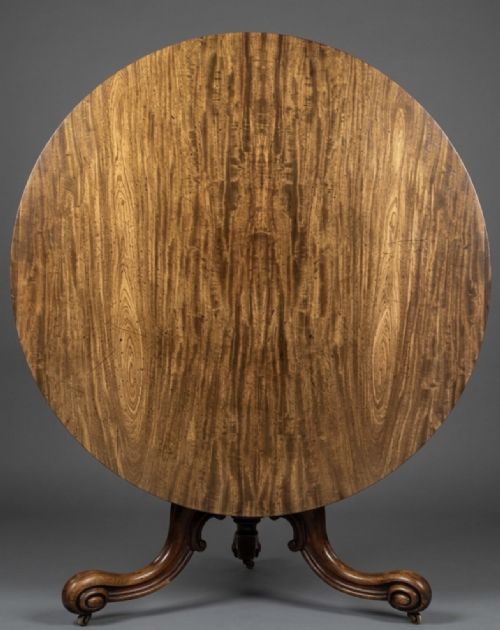
A victorian mahogany loo table is primarily found in circular or oval formats, often resting on a central pedestal base with supportive feet. These large surfaces frequently feature tilt-top or snap-top mechanisms that allow the table to be tipped upright against a wall when not in use.
The pieces appearing here span from the early nineteenth century through the Victorian era, encompassing styles from Regency to William IV. They function as centre tables, breakfast tables, or occasional dining tables depending on their proportions and the space they occupy.
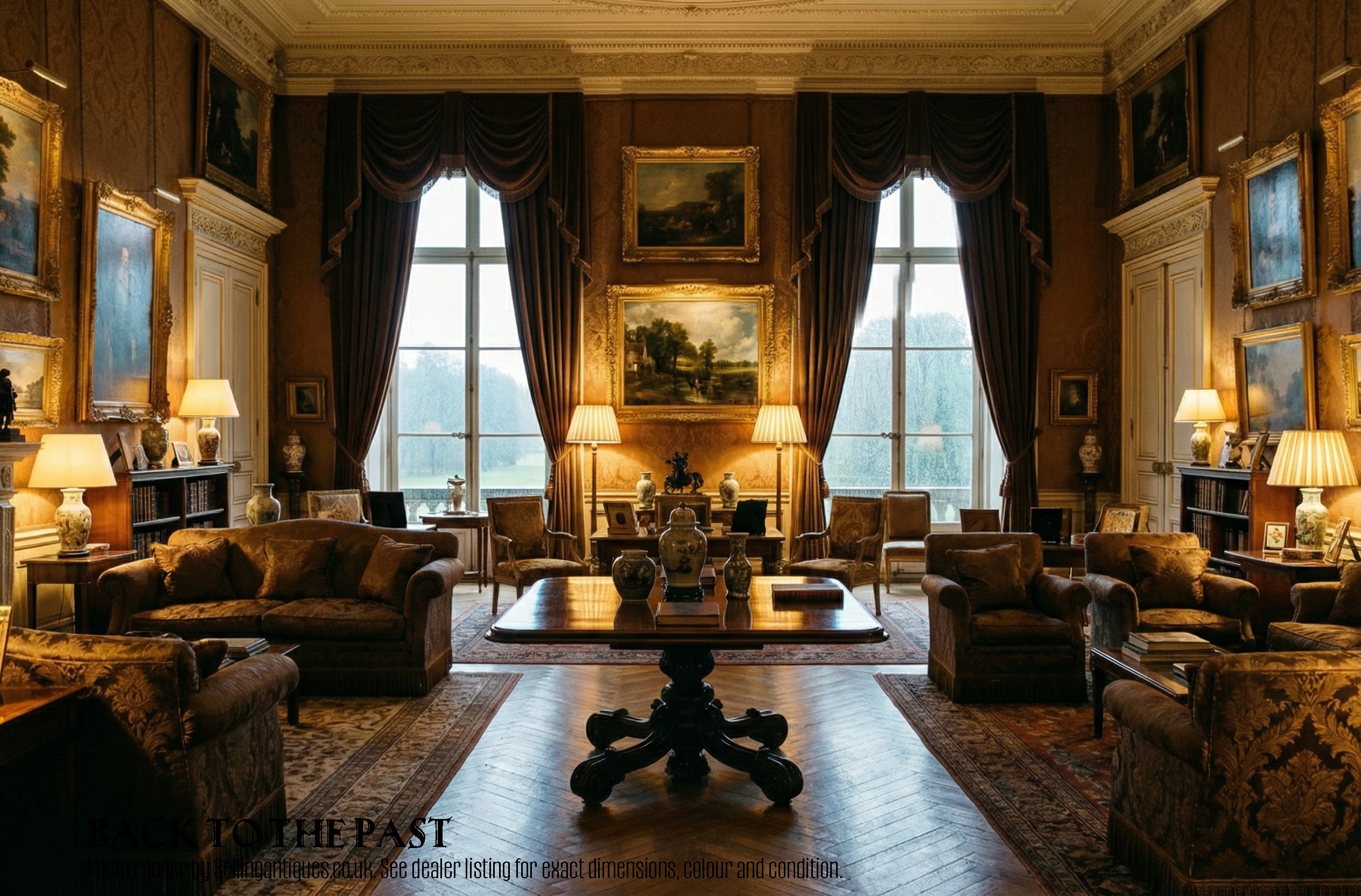
Materials and Construction
Makers utilised solid mahogany and flame mahogany veneer laid over secondary timbers to construct the substantial tops and sturdy pedestal bases. Brass castors frequently appear beneath the feet to ease movement across heavy carpets.
Carved details often embellish the pedestals and borders, while select examples incorporate contrasting materials like satinwood, walnut, ceramic, and leather inserts.
Victorian Mahogany Loo Table Retail Price Guide 2026
Typical asking prices for victorian mahogany loo table among the pieces listed under this phrase on Sellingantiques today, from the lower quarter to the upper quarter. They describe what is for sale here now, not the wider market.
Listings feature circular, oval, and serpentine forms in mahogany, flame mahogany veneer, walnut, and satinwood across the nineteenth century.
Evaluating Quality and Craftsmanship
Quality rests upon the selection of timber figures, particularly the intensity and depth of the flame mahogany veneer used across the broad top. A superior piece displays seamless grain matching and crisp, hand-carved ornamentation on the pedestal rather than cast resin or blunt tooling.
The mechanical integrity of the tilt-top mechanism and the rigidity of the central pillar dictate the physical longevity of the table. Sound joinery ensures the heavy top remains balanced and stable without wobble when lowered into position.
The Victorian Mahogany Loo Table Glossary
- Loo table
- A large round or oval parlour table used for the nineteenth-century card game loo. These tables tilt vertically to save space when idle.
- Tilt-top
- A hinged table top that pivots ninety degrees for storage. This mechanism relies on a brass catch or wooden peg to lock the surface horizontal.
- Flame mahogany
- A veneer cut from the fork of the mahogany tree where the branch meets the trunk. It creates a distinctive rippled, flame-like pattern across the timber.
- Centre table
- A freestanding table finished on all sides to stand in the middle of a room. They often double as breakfast or occasional dining surfaces.
- Pedestal table
- A table supported by a single central column rather than four corner legs. This design provides maximum legroom for seated guests.
Victorian Mahogany Loo Table: Frequently Asked Questions
What was a loo table used for?
These tables served as social hubs for evening card games such as loo, alongside daytime uses for breakfast and tea. Their substantial size made them versatile additions to the principal rooms of a Victorian home.
When the games ended, the top tilted vertically so the piece could stand compactly against the perimeter wall.
How do I identify a tilt top mechanism?
A tilt top relies on a pivoting block beneath the surface secured by a sliding brass pin or wooden catch. Pulling the release allows the massive wooden top to pivot upright.
Original mechanisms move smoothly and lock firmly in both the vertical and horizontal positions without excessive play.
Where should I place a centre table?
Centre tables are designed to be viewed from all angles, making them natural centrepieces for large hallways or drawing rooms. They require adequate floor space around them to allow movement and access to the seating.
Keep them away from direct heat sources to protect the polished mahogany and veneer from drying.
How do I care for mahogany veneer?
Maintenance involves dusting with a dry cloth and applying natural beeswax sparingly to nourish the timber. Avoid synthetic sprays and harsh chemical polishes that degrade the traditional finish.
Protect the surface from moisture by using coasters beneath glasses and hot dishes.