




Victorian Mahogany Drop Leaf
These Victorian mahogany drop leaf tables combine adaptable folding leaves with rich timber figures, offering practical surfaces for compact spaces.
Victorian Mahogany Drop Leaf
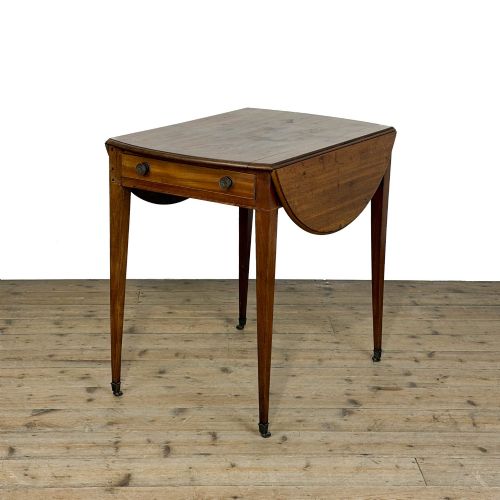
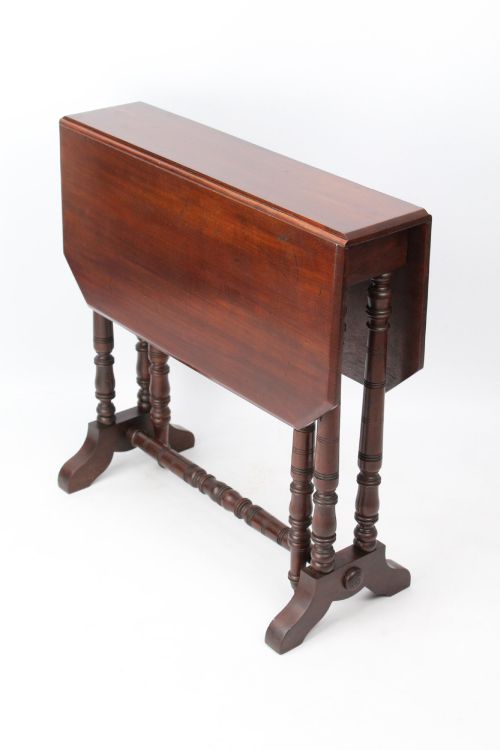
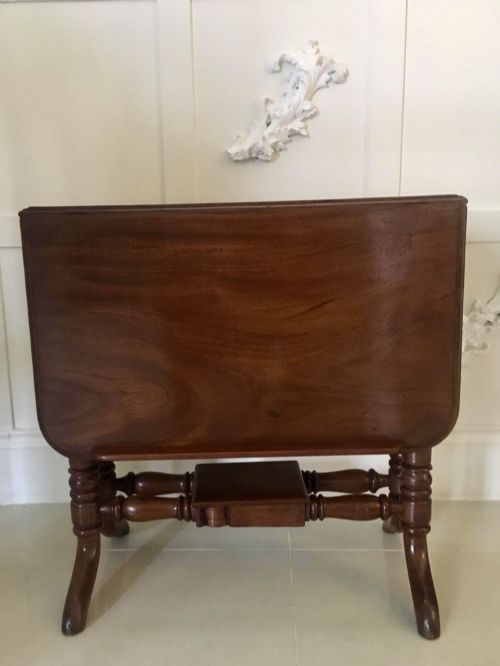
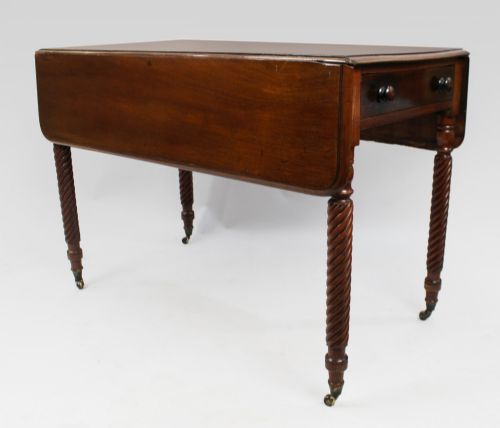
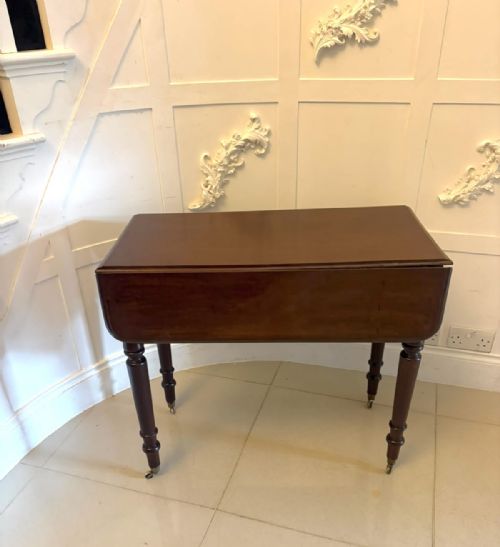
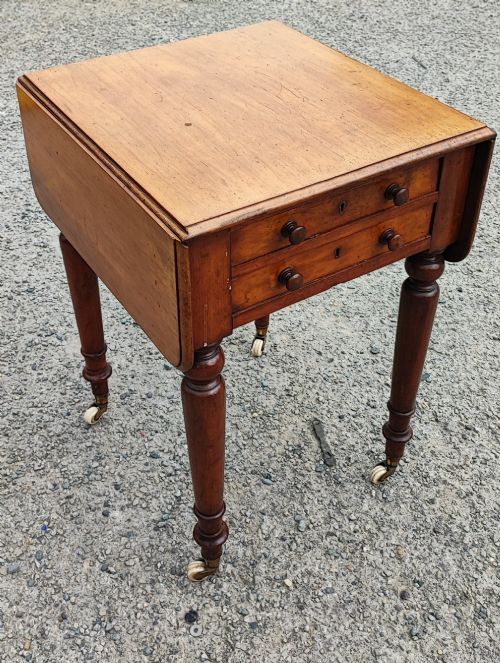
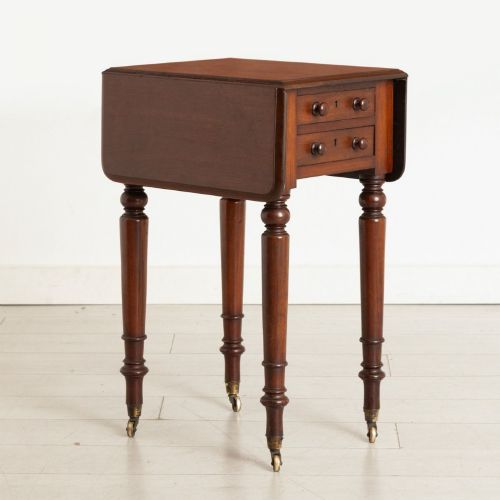
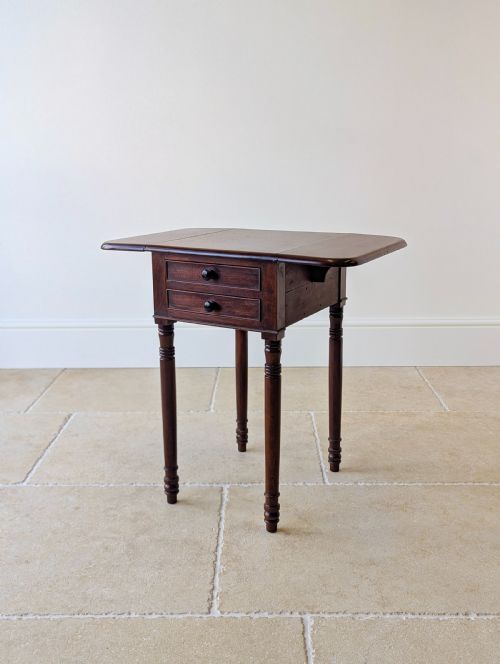
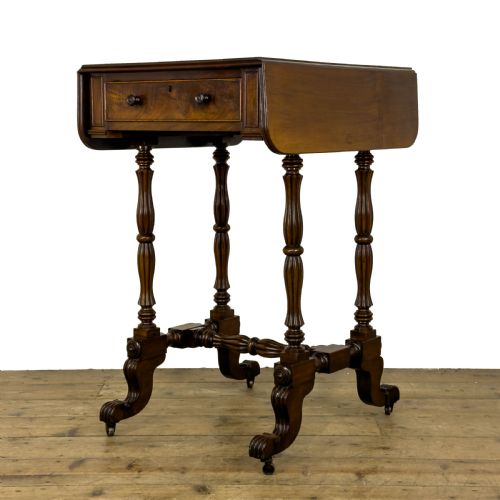
A victorian mahogany drop leaf selection centres primarily on Pembroke tables, Sutherland tables, and compact dining formats designed to fold away when not in use. These pieces originated to serve domestic needs in 19th-century interiors where room arrangements shifted between daytime tasks and evening dining.
The most frequent examples encountered on this page date from the Victorian era, spanning specific decades like the 1860s and 1880s alongside general 19th-century productions. Workshops utilised dense timber to build occasional tables, side tables, and work tables equipped with drop flaps or hinged leaves supported by swing legs.
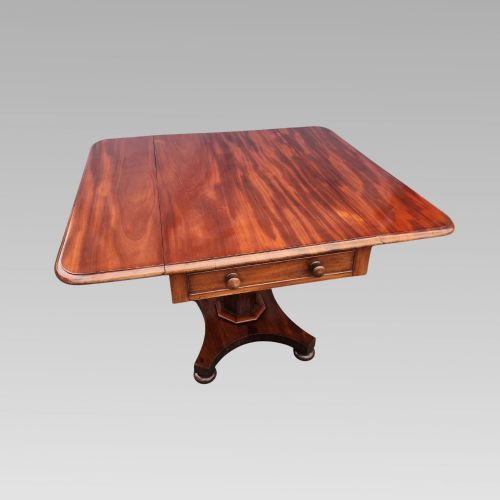
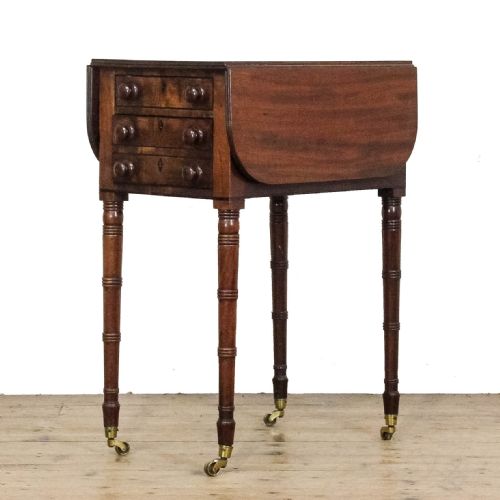
Buyers will also find variations incorporating drawers, reading surfaces, or pedestal bases, reflecting how these folding tables adapted to diverse rooms. Solid timbers and figured veneers define the overarching character of these utilitarian yet stylish furnishings.
How they were made
Cabinet makers built these tables using solid mahogany or applied mahogany veneers over secondary woods, often selecting figured timber for the top surfaces and drop leaves. Structural stability relied on tight joinery such as mortise and tenon frames, while swing legs or gate legs supported the folding flaps when extended.
Surface enhancement involved careful planing, scraping, and polishing to bring out the deep reddish-brown grain of the mahogany. Secondary materials like brass castors, ceramic fittings, and occasional satinwood inlay or painted details appeared on specific working or occasional pieces.
Some Victorian reading tables feature tiny hinged book rests tucked discreetly into the drop leaf surface for morning newspapers.
What varies in quality
The hierarchy of quality rests upon the selection of timber figure, the crispness of the turned supports, and the structural integrity of the folding leaf mechanism. Superior examples display highly figured mahogany veneers or solid boards with rich depth, whereas simpler utility items utilise plain grain and straightforward construction.
Proportion and execution also separate standard pieces from exceptional ones, particularly where clever internal drawers, bobbin-turned legs, or delicate satinwood stringing elevate the design. The smoothness of the drop flap action and the soundness of the original swing leg hinges indicate the care taken by the original maker.
Heal And Son·Liberty And Co
The Victorian Mahogany Drop Leaf Glossary
- Pembroke table
- A small rectangular table featuring two hinged drop leaves on opposing sides, frequently equipped with one or more drawers. These versatile items served as breakfast tables or writing desks in 19th-century parlours.
- Sutherland table
- A narrow drop leaf table characterised by particularly slender leaves that fold down almost vertically on either side of a fixed central section. They rely on swinging gate legs to support the extended flaps.
- Drop flap
- A hinged leaf attached to the main top of a table that drops down when released. This feature allowed furniture to occupy minimal floor space until extra surface area was required.
- Sofa table
- A rectangular occasional table traditionally placed in front of a sofa, featuring drop leaves at both ends and often twin pedestals or trestle supports. They frequently incorporated small drawers for needlework or stationery.
- Gate leg
- A hinged leg that swings outward from the centre frame to support an extended drop leaf. This mechanical support distinguishes many folding tables from standard fixed designs.
Victorian Mahogany Drop Leaf: Frequently Asked Questions
How do I use a drop leaf table daily?
Keep the leaves dropped against the sides for everyday space-saving in smaller rooms, raising them only when you need extra surface area for dining or writing.
Ensure that heavy objects rest primarily over the fixed centre section rather than the unsupported outer edges of the folding leaves.
Where should I place a Sutherland table?
Position your Sutherland table beside a sofa or against a hallway wall where its narrow profile remains unobtrusive until unfolded for guests.
Avoid placing antique mahogany directly next to active heat sources or in harsh direct sunlight to protect the polished timber finish.
How do I distinguish a Pembroke table?
Look for a compact rectangular top flanked by two relatively narrow drop leaves, usually accompanied by an end drawer configured for storage.
These pieces typically stand on four slender legs, sometimes fitted with small brass castors to allow easy movement around the room.
What maintenance does Victorian mahogany require?
Dust the timber regularly with a soft, dry cloth and occasionally apply a quality beeswax to nourish the aged mahogany grain.
Keep moisture away from the surface by using coasters under glasses and wiping up spills immediately to prevent water rings on the polish.