


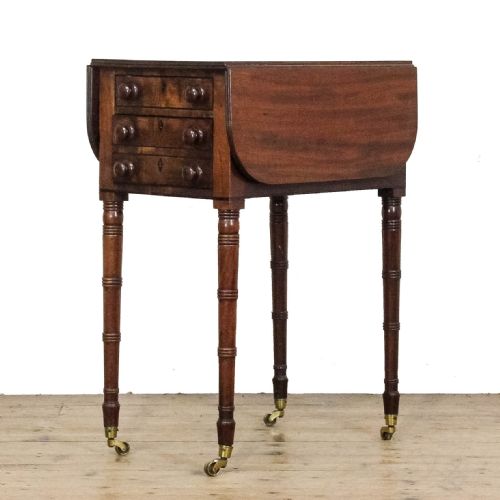


Traditional Mahogany Drop Leaf
Traditional mahogany drop leaf tables offer practical folding surfaces spanning the Georgian, Victorian, and Edwardian periods.
Traditional Mahogany Drop Leaf
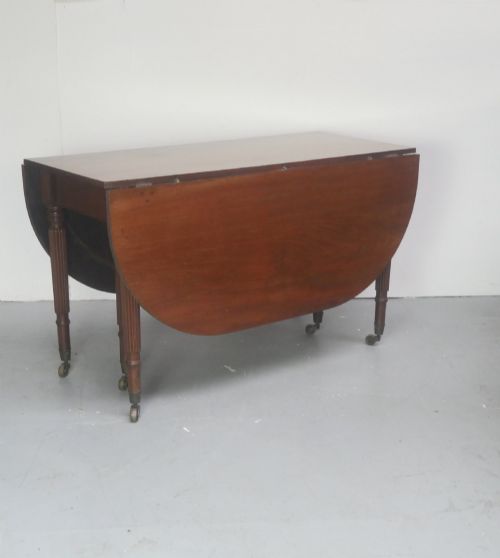
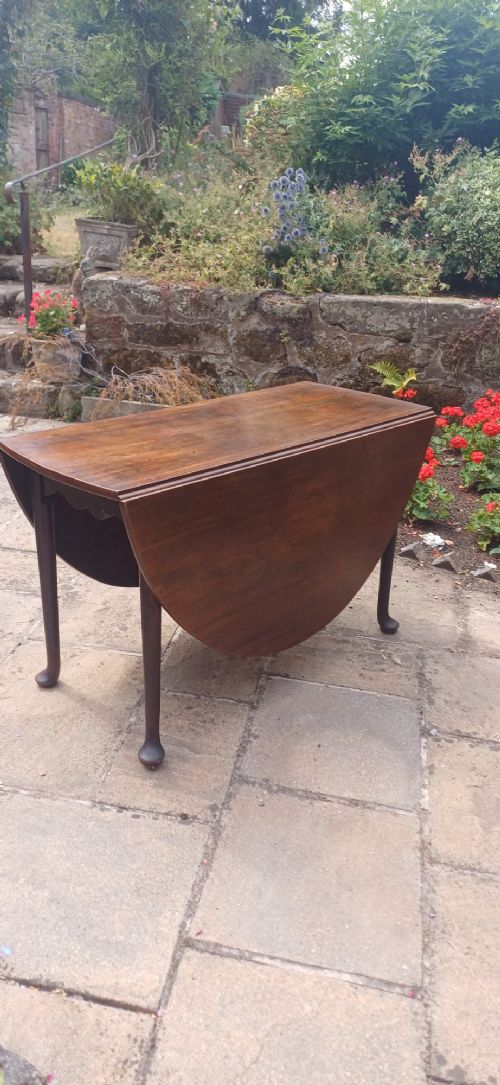
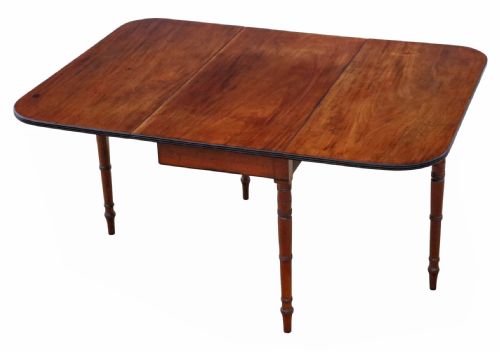
Traditional mahogany drop leaf tables encompass a range of folding furniture forms designed to save space in domestic interiors. When searching for traditional mahogany drop leaf pieces, buyers encounter dining tables, smaller Pembroke tables, and gateleg designs.
The selection on this page stretches from 18th-century examples to early 20th-century revivals. Dining tables and smaller occasional or work tables dominate the pieces currently available.
Originating largely from British workshops across several centuries, these items combine timber construction with hinged flaps. They function equally well extended for meals or folded against a wall.
How they were made
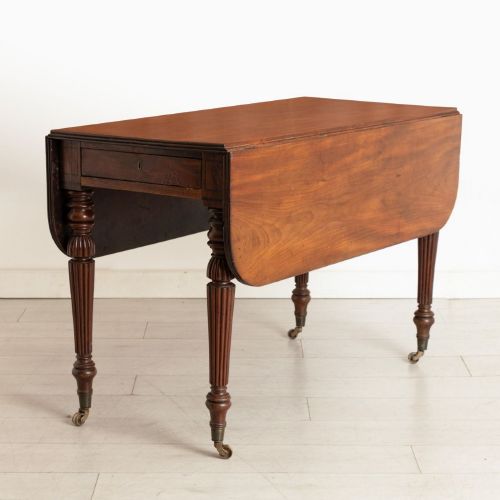
Cabinet makers utilised solid mahogany and mahogany veneers over secondary timbers for the primary structure. Workshops often incorporated brass hinges, castors, and occasionally satinwood inlay to decorate the surfaces.
Gateleg and spider leg mechanisms support the folding leaves, allowing the side flaps to rise and lock securely into position. Joinery techniques from the Georgian and Victorian eras ensure stability when the leaves bear weight.
Listings feature mahogany, brass, leather, and satinwood inlay across pieces spanning the Georgian, Victorian, and Edwardian periods.
What varies in quality
The standard of timber selection and the crispness of turning on the legs differentiate finer examples from standard production. Grain matching across the leaves and the quality of internal gateleg framing indicate the original maker's skill.
Original hardware such as brass castors and hinges contributes to a piece's integrity. Later replacements or heavy restoration alter the character and historical weight of the furniture.
The Traditional Mahogany Drop Leaf Glossary
- Drop leaf
- A table with a fixed centre section and hinged flaps on either side that fold down when not in use. These flaps are supported by swing legs or folding brackets.
- Pembroke
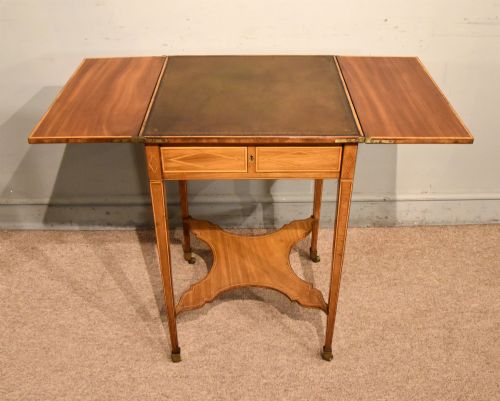
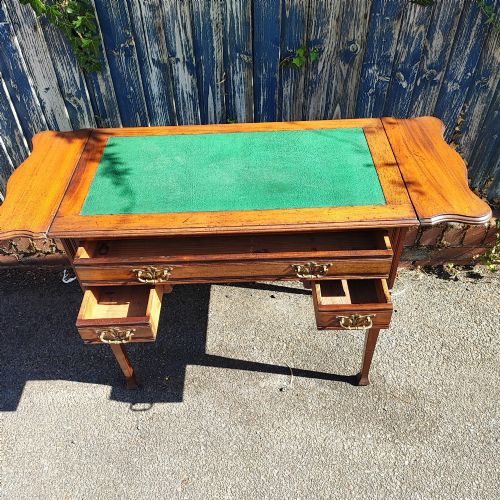
- A small rectangular table with two hinged drop leaves on opposing sides, frequently fitted with one or more drawers. It gained popularity during the 18th century.
- Gateleg
- A table featuring legs hinged to swing outward like a gate, providing direct support underneath the raised drop leaves. This design prevents sagging along the hinge line.
- Sutherland
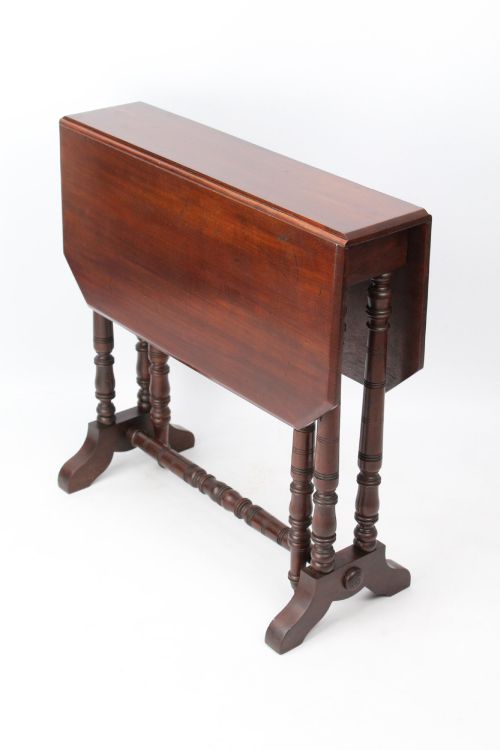
- A slender variety of drop leaf table with exceptionally narrow leaves and low-profile folding legs. It was designed to fold flat enough to slide against a wall when unoccupied.
- Satinwood inlay
- Contrasting blonde timber sections inserted into the mahogany surface in geometric or floral patterns. This decorative technique appears on pieces influenced by Sheraton designs.
Traditional Mahogany Drop Leaf: Frequently Asked Questions
How do I use a drop leaf table daily?
Keep the leaves dropped against the wall for everyday floor space, raising them only when you require surface area for dining or writing.
Ensure heavy items rest over the central fixed board rather than directly on the unsupported outer edges of the hinged flaps.
What is the difference between a gateleg and a Pembroke table?
Gateleg tables feature swing legs that support almost the entire surface of the folding leaves, making them sturdy enough for large dining.
Pembroke tables are smaller occasional pieces with narrower drop leaves and often include built-in drawers for writing or sewing supplies.
How can I tell a Georgian table from a Victorian one?
Georgian pieces often display lighter proportions, finer hand-carved details, and simpler structural lines associated with 18th-century and Regency cabinet making.
Victorian examples tend to be heavier in construction with bolder turned legs and darker timber finishes reflecting mid-19th-century domestic tastes.
Will a drop leaf table seat four people comfortably?
Many medium-sized gateleg and Pembroke formats provide adequate knee clearance and surface area for four diners once fully extended.
Check the length of the central fixed leaf and the drop of the side flaps to ensure chairs fit neatly underneath.