

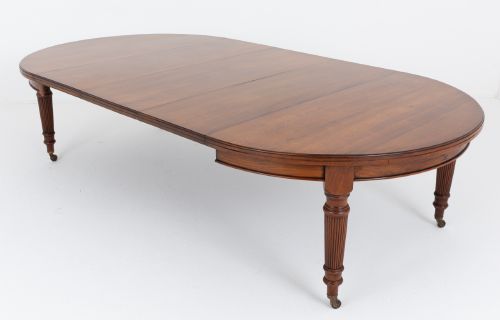
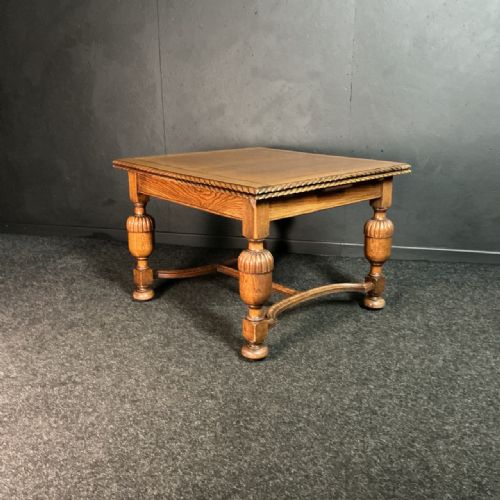
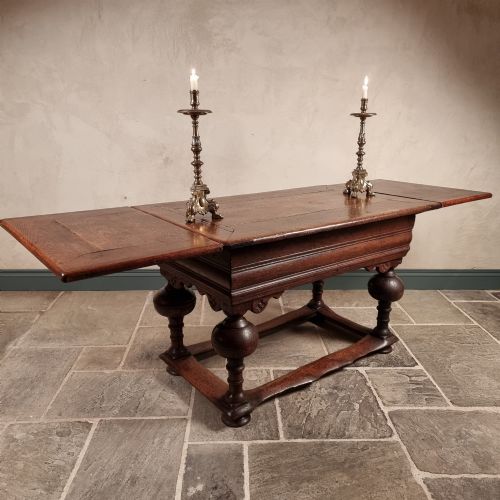
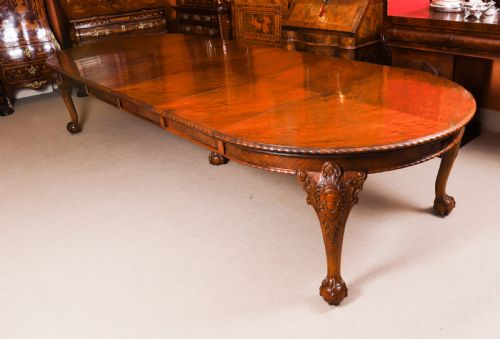
Extendable Wooden Dining Table
An extendable wooden dining table brings versatility to the room, adapting easily from everyday family meals to large gatherings.
Extendable Wooden Dining Table
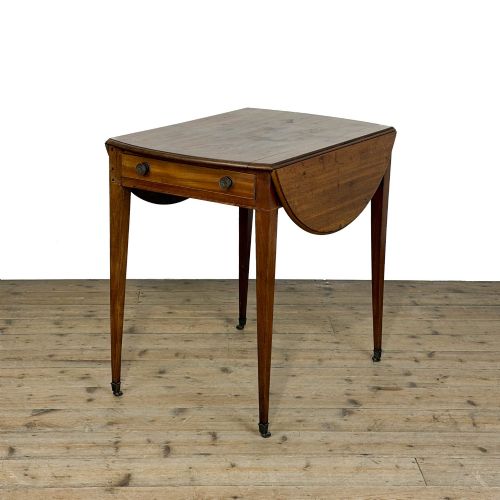
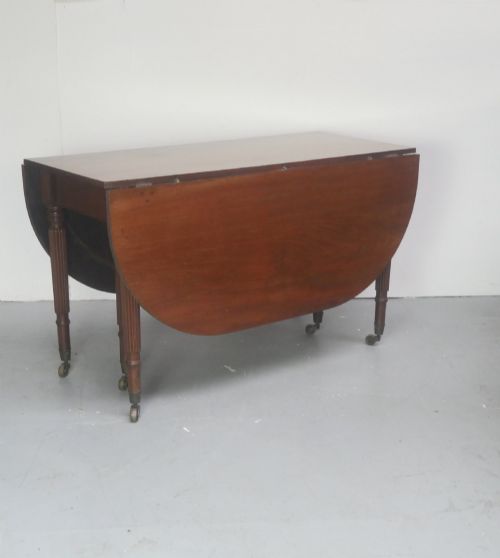
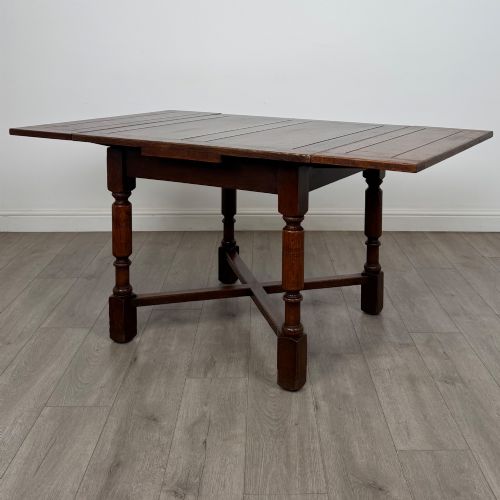
An extendable wooden dining table provides a practical surface for meals while offering the flexibility to expand when hosting guests. When searching for an extendable wooden dining table, buyers encounter formats ranging from classic drop-leaf and gateleg designs to substantial pedestal tables with extra leaves.
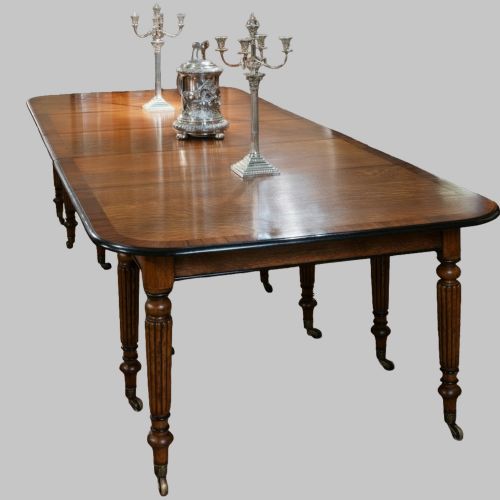
The pieces listed on this page span several distinct periods, including Georgian, Regency, and Victorian eras, alongside later revivals. Mahogany, oak, and walnut are the primary timbers utilised across these eras, appearing in various forms from farmhouse tables to formal dining suites.
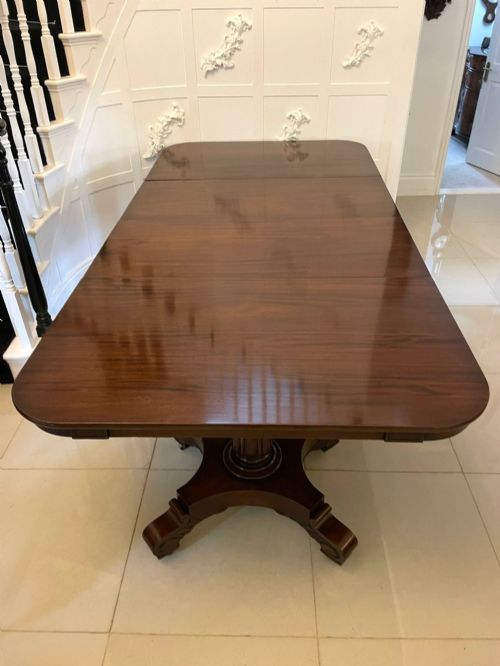
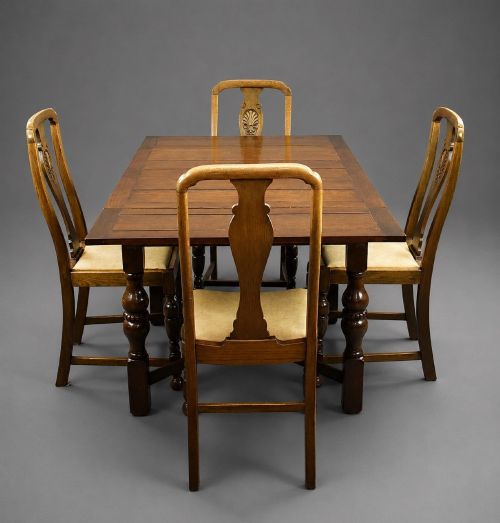
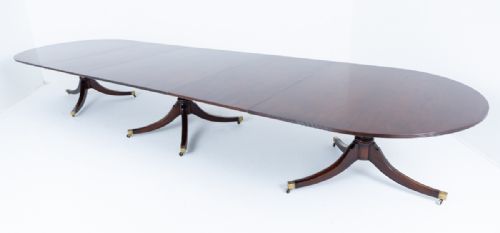
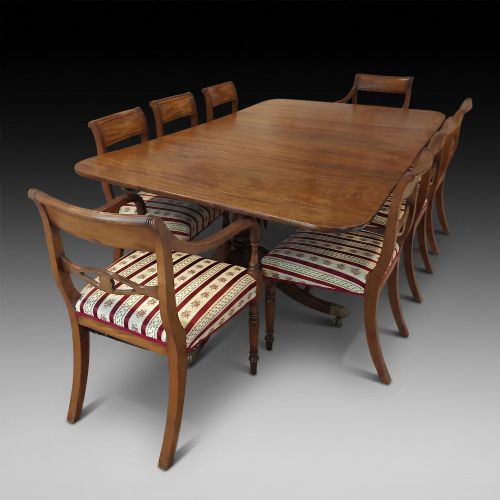
Pedestal tables utilising winding mechanisms and drop-leaf formats dominate the selection. Buyers frequently find tables capable of seating ten or more diners, often accompanied by matching chairs.
How they were made
Makers constructed these tables predominantly using dense hardwoods such as mahogany, oak, and walnut, frequently selecting figured veneers like burr walnut or Cuban flame mahogany for the top surfaces. Timber selection governed both the durability and the visual character of the finished piece.
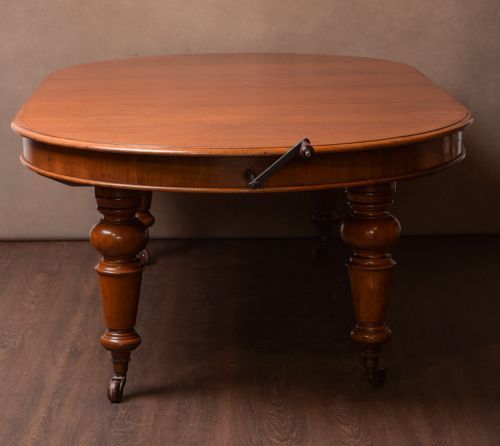
Engineering mechanisms evolved significantly, incorporating draw-leaf designs, drop-leaves, and mechanical wind-out systems operated with brass handles. Brass castors frequently fitted to the legs aided movement across heavy flooring.
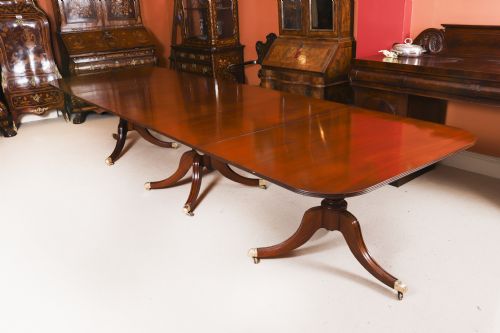
Joinery techniques relied upon sturdy framing, gatelegs, or multi-pillar pedestal bases to support heavy leaves and maintain stability during extension.
Extendable Wooden Dining Table Retail Price Guide 2026
Typical asking prices for extendable wooden dining table among the pieces listed under this phrase on Sellingantiques today, from the lower quarter to the upper quarter. They describe what is for sale here now, not the wider market.
Some tables require a dedicated brass crank handle kept safely in a drawer just to make Sunday lunch longer.
What varies in quality
Quality rests heavily upon the selection of timber and the precision of the mechanics governing the extension. Superior examples employ highly figured grains and solid construction that withstands the physical stress of frequent expansion.
The complexity of the base architecture distinguishes standard pieces from exceptional ones. Triple pedestal supports, intricate carving, and brass inlay reflect superior craftsmanship and greater labour input by the workshop.
Original components dictate the standing of a table. Maintaining matching leaves, original brass castors, and smooth winding actions elevates the integrity of the piece.
Maple & Co·Whytock & Reid·F & J Smith
The Extendable Wooden Dining Table Glossary
- Drop-Leaf Table
- A table with hinged flaps on either side that fold down to save space when not in use. Raising the leaves and supporting them allows the table to function for larger dining occasions.
- Draw Leaf Table
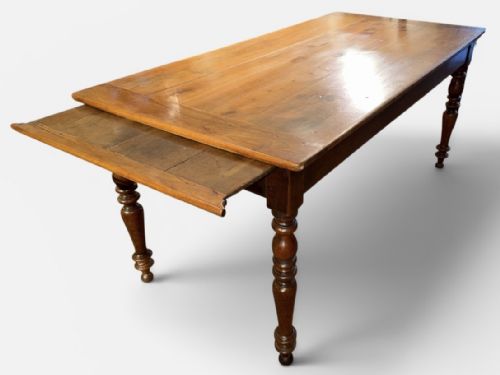
- A dining table equipped with sliding leaves stored beneath the main top that pull out to extend the surface area. This mechanism permits rapid adjustment without removing separate loose leaves.
- Wind-Out Table
- An extending table operated by a mechanical screw mechanism turned with a handle. This system separates the table halves smoothly to insert additional leaves.
- Pedestal Table
- A table supported by one or more central pillars rather than traditional corner legs. Multiple pillars provide enhanced stability for very long dining tables.
- Gateleg Table
- A drop-leaf table where the hinged legs swing out like a gate to support the raised flaps. This construction offers robust support underneath folding timber leaves.
Extendable Wooden Dining Table: Frequently Asked Questions
How do wind-out extension mechanisms work?
Wind-out mechanisms utilise an internal metal screw gear operated by a detachable crank handle inserted into the side apron. Turning the handle drives the table sections apart evenly to create a gap for loose leaves.
Once the gap reaches the correct width, the extra leaves drop into place and the mechanism locks the assembly together securely.
What is the difference between pedestal and pillar tables?
The terms are often used interchangeably to describe tables supported by central columns rather than four corner legs. Single pillar tables suit modest lengths, while triple pillar arrangements support very long tabletops.
Multiple pillars distribute weight evenly and prevent the timber from sagging along extended spans.
How do draw-leaf tables expand?
Draw-leaf tables conceal two extension leaves beneath the main top surface. Pulling the main top sections apart allows the hidden leaves to rise automatically into place from underneath.
This system keeps extra leaves integrated within the table frame so storage space is not required elsewhere.