
Victorian Locking Drawers
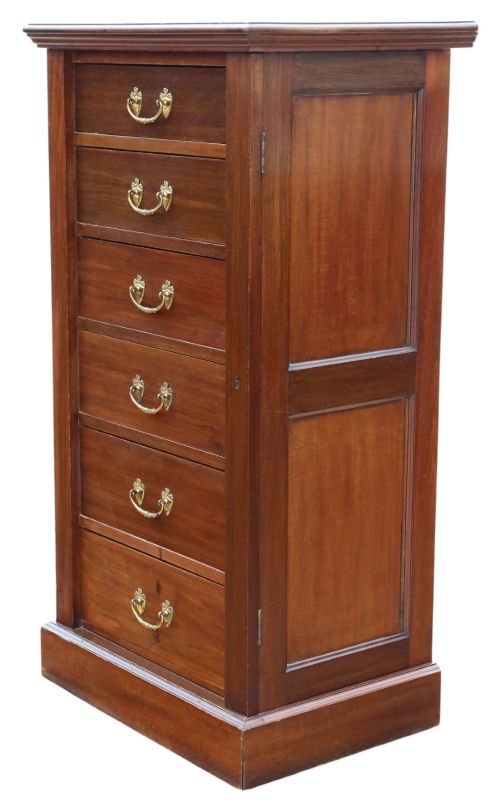
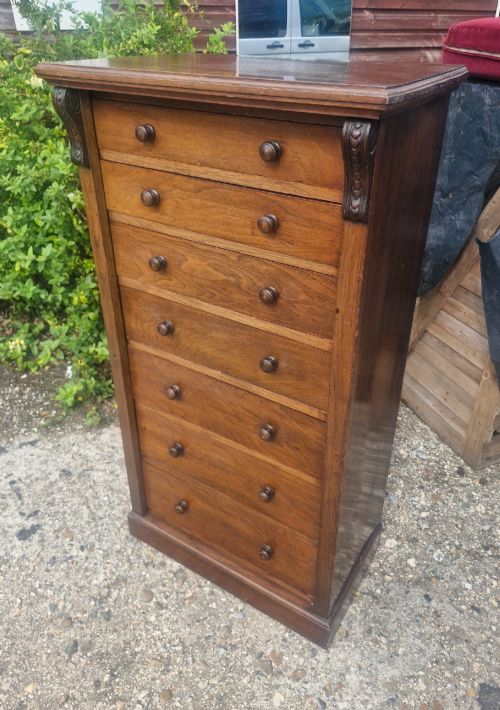
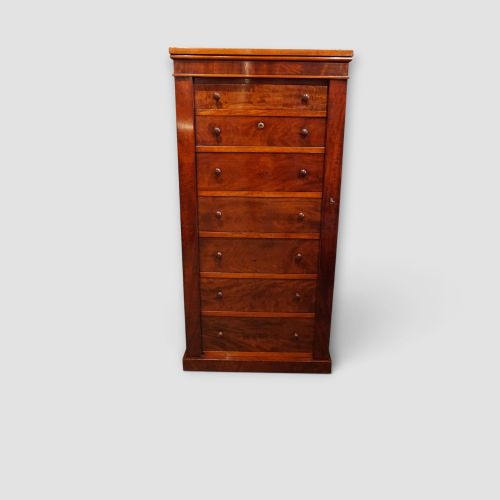
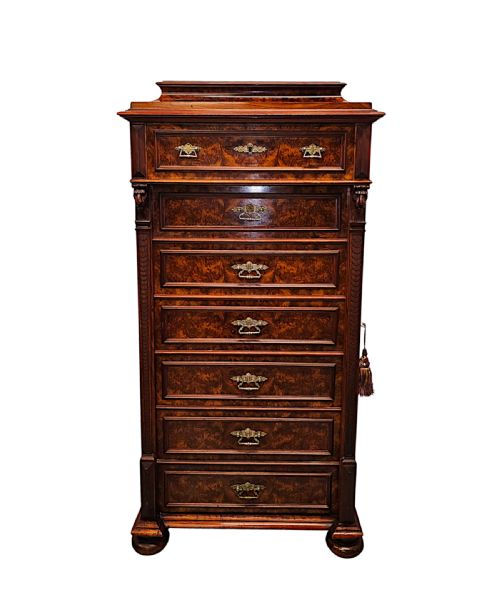
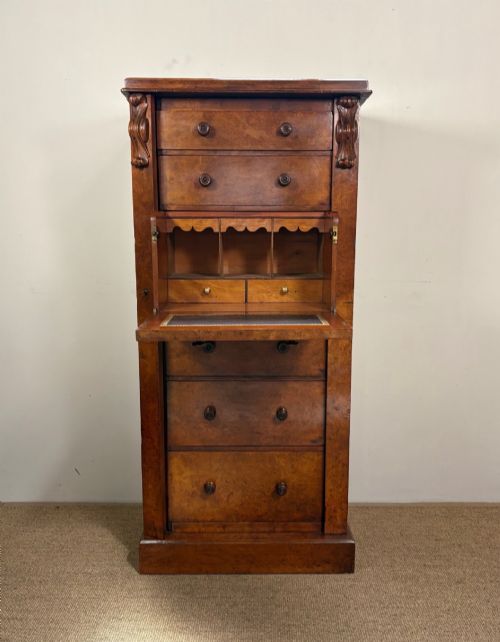
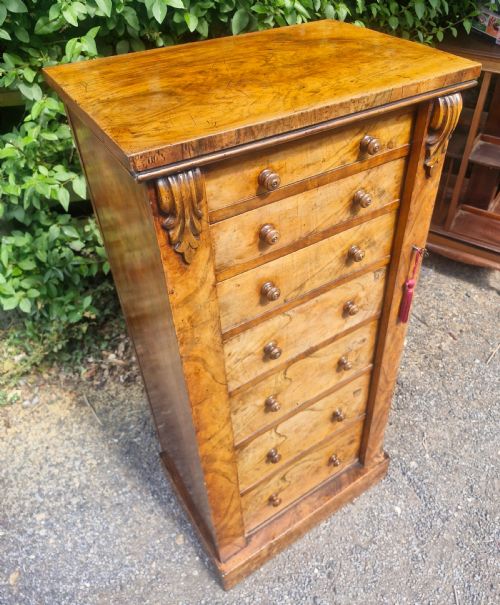
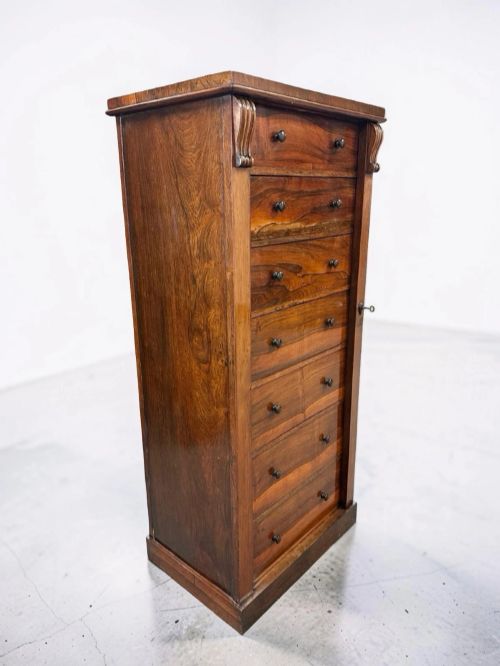
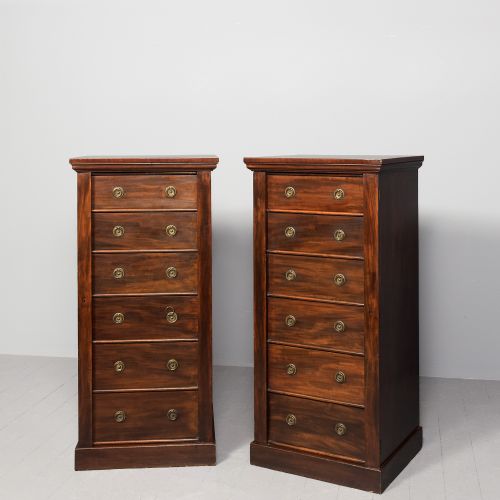
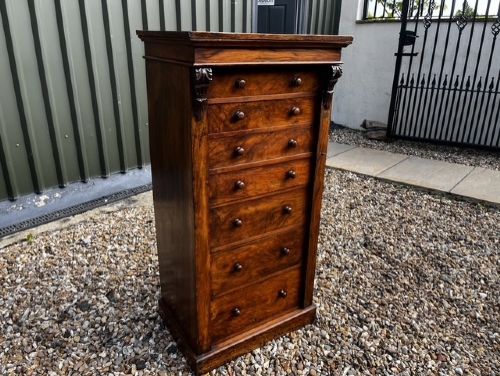
Victorian locking drawers are robust, secure pieces designed to safeguard private papers and valuables, predominantly taking the form of tall Wellington chests.

Victorian Locking Drawers
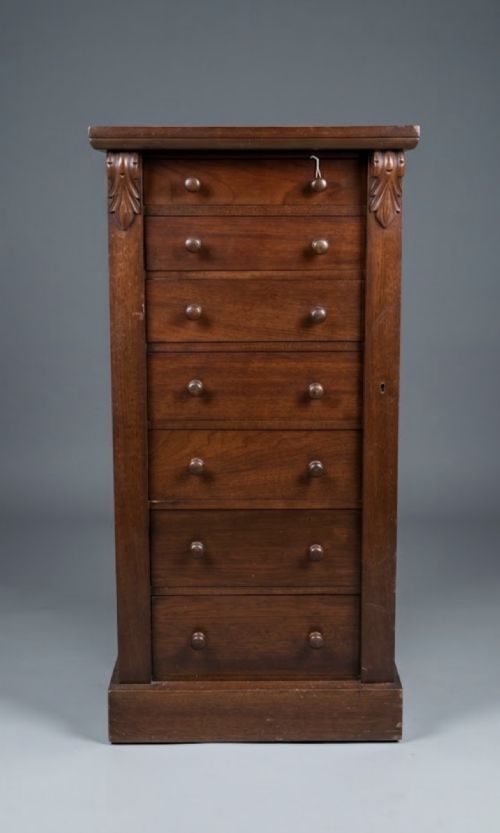
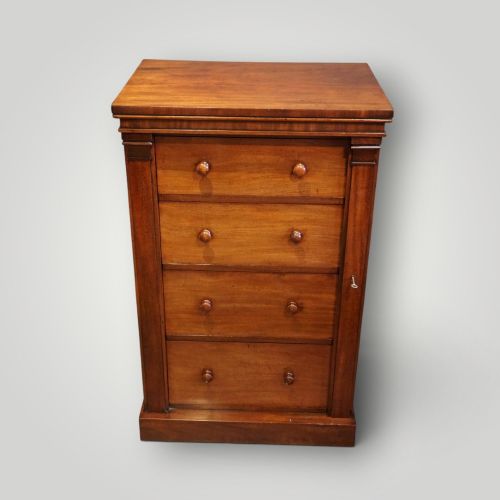
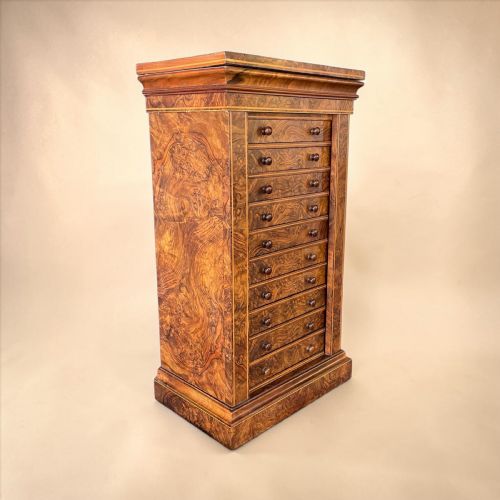
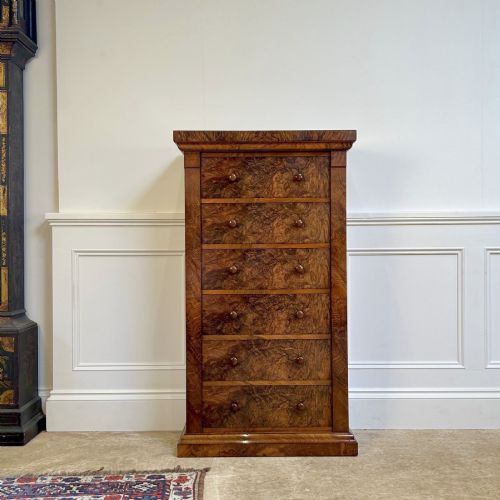
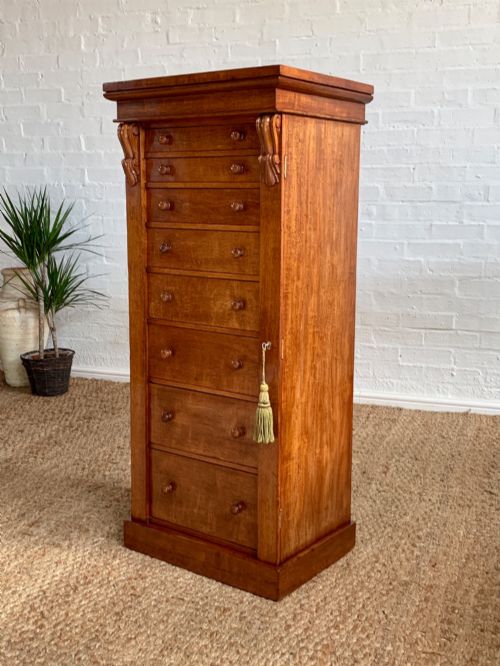
When you search for Victorian locking drawers, you encounter tall, narrow chests of drawers equipped with a hinged locking stile that secures all drawers simultaneously. These pieces date predominantly from the nineteenth century, spanning periods from William IV through late Victorian times.
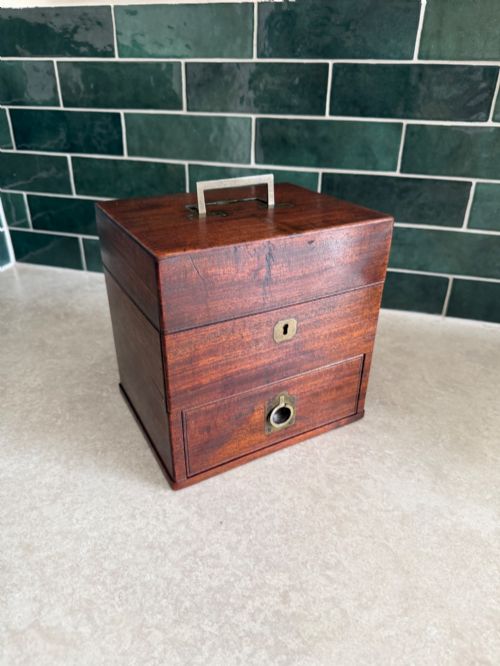
The most common incarnation on this page is the Wellington chest, built with six or seven graduated drawers and a right-hand locking bar held by a small key. Alongside these tall chests, the selection includes compact writing slopes, miniature chests, apothecary boxes, and specimen cabinets featuring integrated locks and secret compartments.
Timbers vary considerably across the selection, reflecting the preferences of nineteenth-century cabinet makers. Mahogany, walnut, burr walnut, rosewood, and oak appear frequently, sometimes enhanced by veneers or marquetry details.
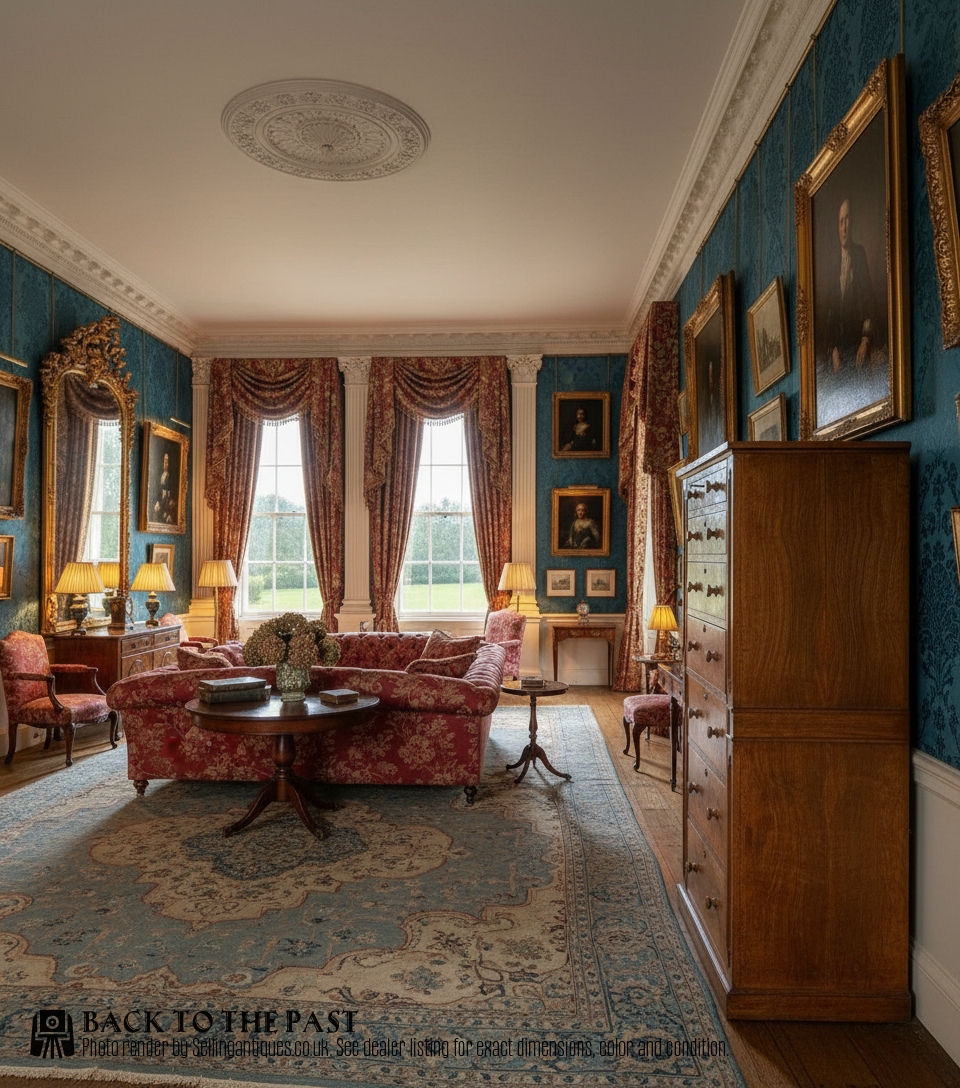
Materials and construction
Cabinet makers utilised dense hardwoods such as solid mahogany, oak, and rosewood, frequently applying figured mahogany, burr walnut, or flame mahogany veneers to primary visible surfaces. These timbers provided the structural rigidity necessary for tall, narrow forms subjected to daily use and mechanical locking pressure.
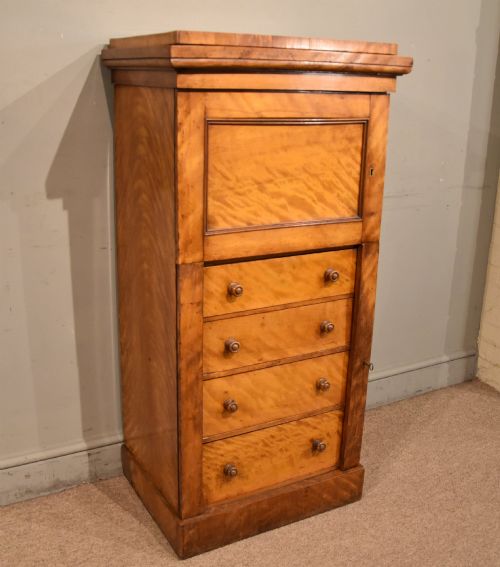
The defining mechanism relies on a hinged wooden locking flap or stile attached to one side of the carcass, which swings into place over the drawer fronts and is secured by a brass lock and key. Finer examples incorporate specialised security mechanisms such as Bramah locks to protect the contents of the drawers or internal secretaire flaps.
Listings feature woods spanning mahogany, walnut, burr walnut, oak, rosewood, and pitch pine across forms from full-sized chests to miniature drawers.
Gradations in quality
Quality reveals itself in the choice of timber and the precision of the veneer matching across the drawer fronts and locking stile. Finer pieces display carefully selected burr walnut, flame mahogany, or satin birch, whilst simpler variants utilise plain pitch pine or country house scumble paint.
Gillows·Holland & Sons·S. Mordan & Co
The Victorian Locking Drawers Glossary
- Wellington chest
- A tall, narrow chest of drawers featuring a hinged locking flap on one side that secures every drawer with a single key. Tradition suggests the style is named after the first Duke of Wellington.
- Secretaire
- A desk form incorporating a fitted drop-front writing drawer or flap that conceals small pigeonholes and subsidiary compartments. These are frequently integrated into the upper section of a locking chest.
- Bramah lock
- A high-security cylindrical lock invented by Joseph Bramah in the late eighteenth century, prized by nineteenth-century cabinet makers for protecting valuable contents in writing slopes and cabinets.
- Specimen drawers
- Shallow, dust-proof drawers traditionally designed for organising natural history collections, coins, or small artefacts. They are commonly housed within collector chests and locking cabinets.
- Scumble paint
- A decorative paint technique applied over a base coat to simulate the grain of more expensive timber. It appears on vernacular and country house furniture.
Victorian Locking Drawers: Frequently Asked Questions
What is a Wellington chest?
A Wellington chest is a tall, narrow nineteenth-century drawer unit characterised by a hinged vertical locking stile on the right side. This flap covers the drawer edges and is secured by a key, locking the entire stack simultaneously.
The design maximises vertical storage capacity while maintaining a small footprint, making it ideal for bedrooms and studies where floor space is limited.
How do the locking mechanisms work?
The mechanism relies on a hinged wooden bar that swings against the drawer fronts when closed. Turning the key throws a bolt into the carcass, pinning the bar firmly in place.
Because the bar blocks the drawer edges, none of the drawers can be opened until the locking stile is unlocked and swung clear.
Where were these pieces used?
These secure chests and boxes were utilised in nineteenth-century townhouses and country estates for private correspondence, journals, and valuables. Smaller variations served as portable writing desks or medicine chests.
Their secure nature made them suitable for keeping sensitive household accounts and personal effects away from prying eyes.
How do you distinguish late Victorian pieces?
Late Victorian examples often incorporate factory-produced hardware, machine-cut dovetails, and timber choices like pitch pine or lighter walnut veneers. Stylistic details may include modest carved brackets or brass-inlaid escutcheons.
Earlier pieces from the mid-nineteenth century tend to feature heavier solid mahogany, hand-cut joinery, and simpler classical proportions without excessive ornamentation.