
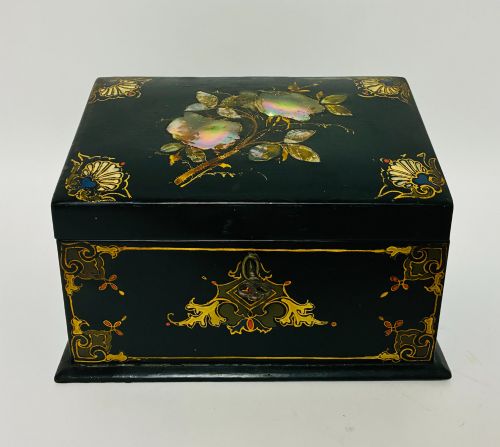
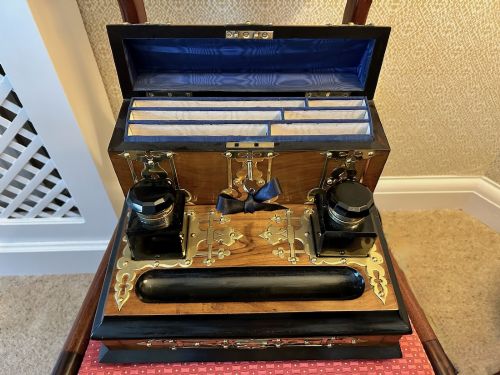
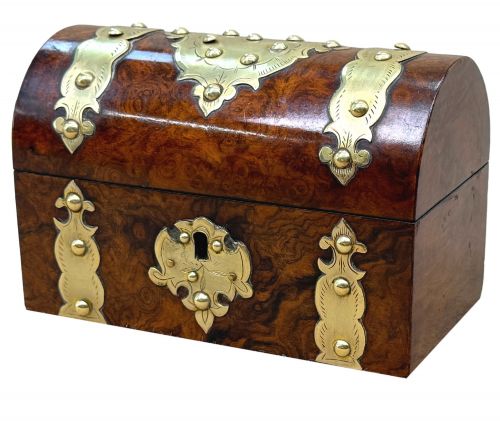


Victorian Letter Casket
A victorian letter casket keeps incoming correspondence secure on a desk, combining fine cabinet timbers with heavy brass mounts.
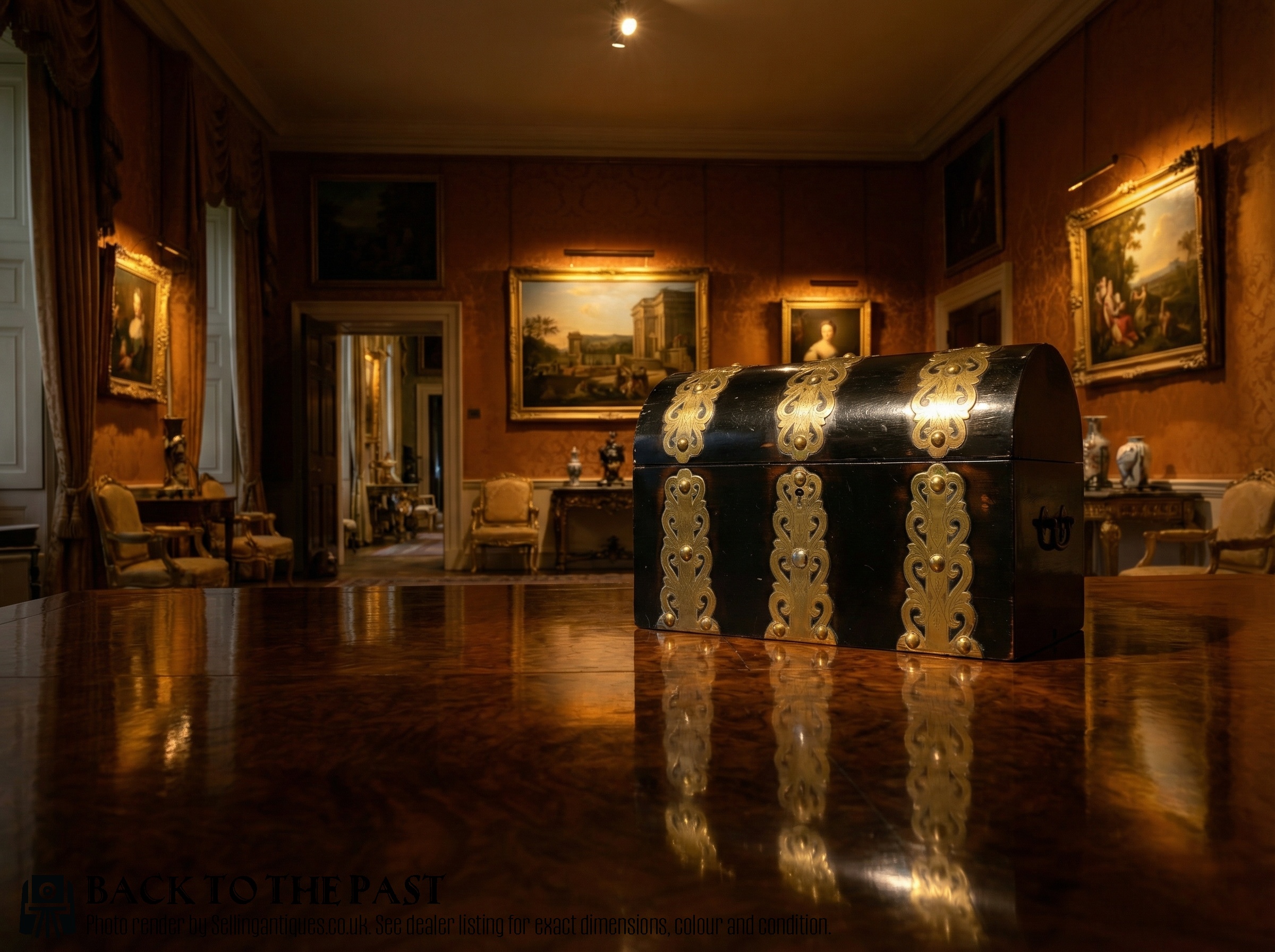
Victorian Letter Casket
A victorian letter casket is a specialised desktop box designed to hold correspondence, arriving primarily in forms like stationery boxes, desk stands, and letter cases from the nineteenth century. These pieces emerge in a variety of styles including Gothic Revival, French Napoleon III, and Anglo-Indian, reflecting the diverse tastes of the period.
The pieces on this page span from the early decades of the eighteen-hundreds through to the turn of the twentieth century, with many examples originating from the mid-Victorian era. Buyers encounter flat lids, dome tops, and sloping forms that open to reveal fitted compartments for writing paper and envelopes.
How they were made
Cabinetmakers constructed these caskets using dense hardwoods such as walnut, burr walnut, pollard oak, and exotic coromandel, often laid over a sturdy wooden carcass. Surfaces were frequently decorated with intricate marquetry, Tunbridge ware mosaics, hand-painted porcelain panels, or inlaid pietra dura work.
Strength and ornamentation came from heavy brass straps, corner mounts, lockplates, and ormolu framing, secured by small iron or brass screws. Interior compartments were lined with silk, velvet, or roan leather to protect the paper contents.
Victorian Letter Casket Retail Price Guide 2026
Typical asking prices for victorian letter casket among the pieces listed under this phrase on Sellingantiques today, from the lower quarter to the upper quarter. They describe what is for sale here now, not the wider market.
Bone and porcelain elements peek out from utilitarian post boxes, proving Victorians liked their correspondence with a dash of theatre.
What varies in quality
The distinction between ordinary desk accessories and exceptional pieces rests on the choice of timber and the precision of the joinery. Dense burr walnut and figured coromandel with balanced grain patterns command greater attention than plain oak or standard softwoods.
Decorative embellishments also drive the hierarchy, separating standard brass-bound boxes from those featuring fine Tunbridge ware, pietra dura plaques, or ormolu mounts. The complexity of the interior fittings and the survival of the original maker's signature further elevate a casket's standing.
C.G. Hope Hastings
The Victorian Letter Casket Glossary
- Coromandel wood
- A dense, heavy timber imported from Asia, featuring dark brown stripes and rich contrast that made it popular for luxury nineteenth-century boxes. This material is frequently paired with brass binding.
- Pietra dura
- An Italian technique involving the inlay of hand-cut polished coloured stones to create pictorial motifs on a stone base. These panels appear inset into the wooden lids of select caskets.
- Tunbridge ware
- A meticulous form of woodworking originating in Kent, utilising thousands of tiny dyed wood blocks to form geometric or pictorial mosaic patterns. It decorates the surfaces of specific Victorian stationery boxes.
- Ormolu
- Gilded bronze ornamentation cast and chased into decorative mounts, corners, and feet. This finish adds brightness and structure to French and English caskets.
- Gothic Revival
- An architectural and decorative style drawing on medieval pointed arches and structural motifs. In desk boxes, this translates to steep dome tops and iron or brass strapwork.
Victorian Letter Casket: Frequently Asked Questions
What is a victorian letter casket?
A victorian letter casket is a desktop storage box built to hold incoming and outgoing correspondence. These pieces feature internal dividers designed specifically for envelopes and writing paper.
Cabinetmakers constructed them in various shapes, including rectangular boxes and domed caskets, utilising durable timbers and decorative metalwork.
How were letter caskets used?
In nineteenth-century households and offices, these boxes sat on writing tables to keep daily post organised and private. The compartments separated different sizes of stationery and postage supplies.
Many included working locks and keys so sensitive letters remained secure from prying eyes.
How do I date a letter casket?
Dating relies on observing the combination of timber, construction methods, and decorative styles recorded in the period evidence. Mid-nineteenth-century examples often favor burr walnut and coromandel with Gothic or classical brass mounts.
Later Victorian pieces from the eighteen-nineties introduce different manufacturing marks and broader stylistic influences.
How do I live with a letter casket?
These caskets function effectively on modern desks or console tables as practical storage for contemporary letters, receipts, or small keepsakes. They require minimal maintenance beyond dusting the wood and metal surfaces.
Keeping them out of direct sunlight preserves the rich tones of the walnut and coromandel veneers.