





Victorian Japanned Tea Tray
A victorian japanned tea tray brings heavy papier-mâché and painted tinwork into the drawing room, prized for glossy hand-finished surfaces.
Victorian Japanned Tea Tray
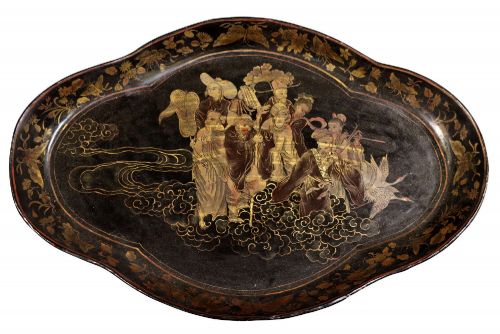
When you search for a victorian japanned tea tray, you encounter serving pieces and decorative trays spanning the nineteenth century, alongside occasional tables mounted on later stands. These objects originate from English, French, and Japanese export workshops, capturing the Victorian fascination with dark lacquer and orientalist design.
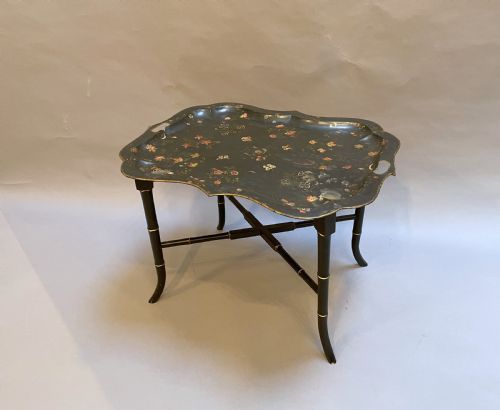
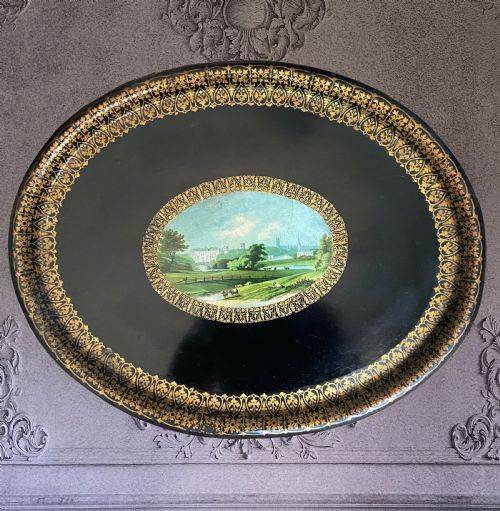
The most common forms on this page include large oval papier-mâché trays with gilded borders and painted toleware or tôle peinte pieces. Many survive paired with nineteenth-century or later table bases, converting deep serving vessels into coffee and side tables for modern interiors.
Materials and construction
The foundation of these pieces relies on pressed papier-mâché or heavy tôleware metal, built to withstand daily use while providing a stable canvas for decoration. Artisans applied successive layers of lacquer and dark paint, smoothed by hand to achieve a deep, reflective black or dark ground.
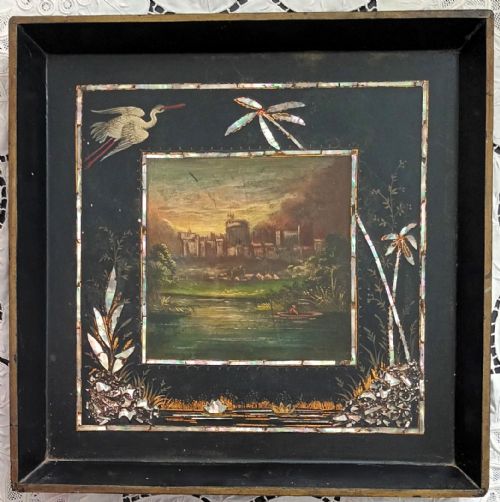
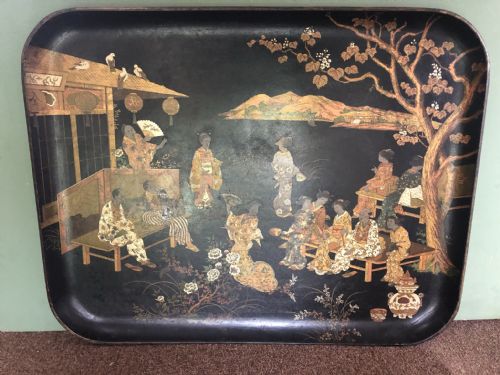
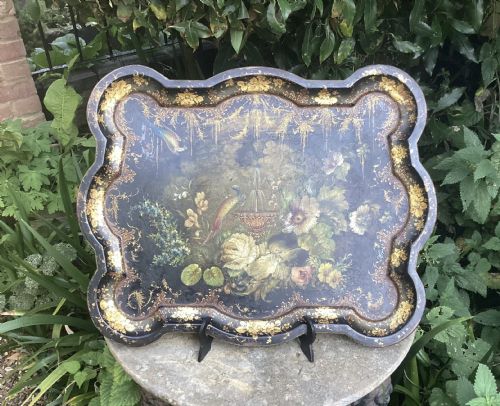
Decoration involved meticulous hand-painting using gold leaf, polychrome pigments, and occasionally mother-of-pearl inlay. Chinoiserie motifs and scenic landscapes were finished with protective varnishes cured over extended periods.
Victorian Japanned Tea Tray Retail Price Guide 2026
Typical asking prices for victorian japanned tea tray among the pieces listed under this phrase on Sellingantiques today, from the lower quarter to the upper quarter. They describe what is for sale here now, not the wider market.
Listings feature nineteenth-century pieces constructed from papier-mâché, wood, and toleware, finished with hand-painted gold leaf, lacquer, and mother-of-pearl.
Assessing craftsmanship and condition
Quality rests in the crispness of the hand-painted details and the stability of the japanned surface. Finer examples display intricate gilt embellishment and complex figural or landscape scenes executed with genuine artistic control rather than mass-produced stencilling.
The integrity of the papier-mâché or metal body dictates the structural grade, distinguishing robust, heavy blanks from warped or excessively restored pieces. Original surfaces retain a deep, uncracked lustre that shows the hand of the maker clearly.
Jennens & Bettridge·H. Meeson·Pontypool
The Victorian Japanned Tea Tray Glossary
- Japanning
- European imitation of East Asian lacquerwork, created by applying layers of varnish heated to produce a hard, glossy black or dark finish. It was widely used on nineteenth-century trays and furniture.
- Papier-mâché
- A composite material made from paper pulp or sheets of paper mixed with glue and resin, then pressed and dried into rigid forms. It provided a lightweight yet remarkably strong base for heavy lacquer decoration.
- Toleware
- Enamelled or lacquered metalware, typically tin-plated iron, painted with decorative scenes and floral motifs. Pontypool and French workshops were notable centres of this production.
- Chinoiserie
- European theatrical interpretation of Chinese and East Asian artistic traditions, featuring imaginary landscapes, pagodas, and exotic figures. This style dominated nineteenth-century decorative lacquer.
- Gilt
- Application of gold leaf or gold powder onto a surface to highlight borders, motifs, and architectural details. It provides high contrast against dark japanned grounds.
Victorian Japanned Tea Tray: Frequently Asked Questions
Can I use these trays for serving tea?
While originally designed for hospitality and carrying porcelain, nineteenth-century japanned trays have delicate lacquer and gold leaf surfaces that are vulnerable to moisture and heat.
Most owners today use them as decorative display pieces or convert them into stable coffee tables to protect the historic finish from daily wear.
How do I clean a japanned surface?
Dusting gently with a dry, soft microfibre cloth is the safest method for maintaining nineteenth-century lacquer and painted tinwork.
Avoid all liquid cleaners, abrasive cloths, and modern polishes, as moisture and chemicals quickly penetrate aged varnishes and lift the delicate gold leaf.
What is the difference between papier-mâché and toleware?
Papier-mâché uses compressed paper pulp and binding agents to form lightweight, rigid trays with smooth, deep rims suited to intricate hand-painting.
Toleware uses sheet metal, usually iron, finished with enamel or paint, offering a heavier weight and a different resonance when tapped.
Why are some trays mounted on stands?
Many nineteenth-century trays were converted into occasional or coffee tables by attaching custom wooden legs during the Victorian era or later.
This practical adaptation preserved decorative serving trays by elevating them off the floor and giving them a stable domestic function.