




Large Black Serving Tray
A large black serving tray is a historic domestic centrepiece combining heavy duty utility with hand-painted artistry.
Large Black Serving Tray
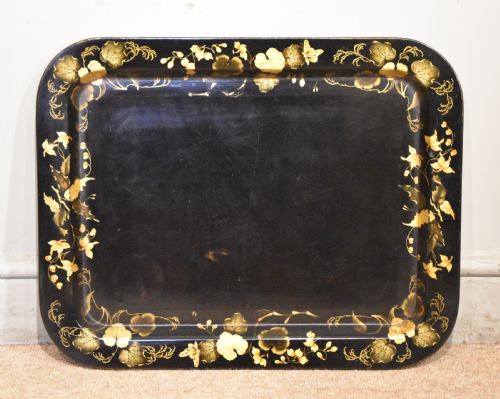
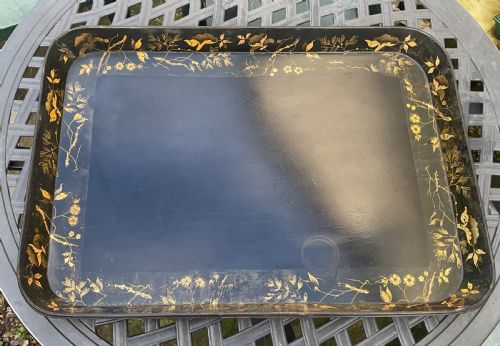
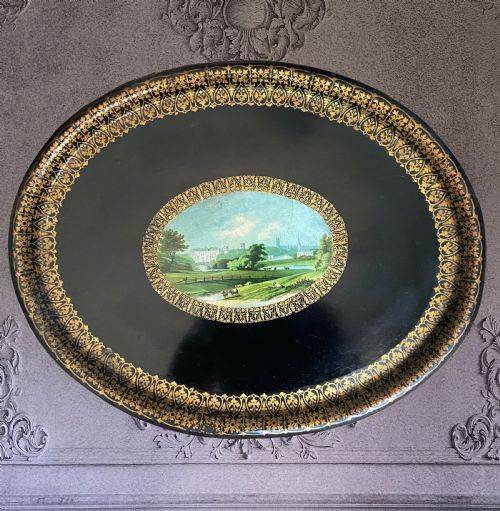
A large black serving tray is an expansive surface designed for carrying beverages or displaying objects, frequently found in Regency, Victorian, and Georgian forms. The selection on this page centres on substantial oval and kidney-shaped examples originating from the eighteenth, nineteenth, and early twentieth centuries. Makers created these pieces from papier-mâché, lacquered wood, and sheet iron, often mounting them on stands to function as low tables.
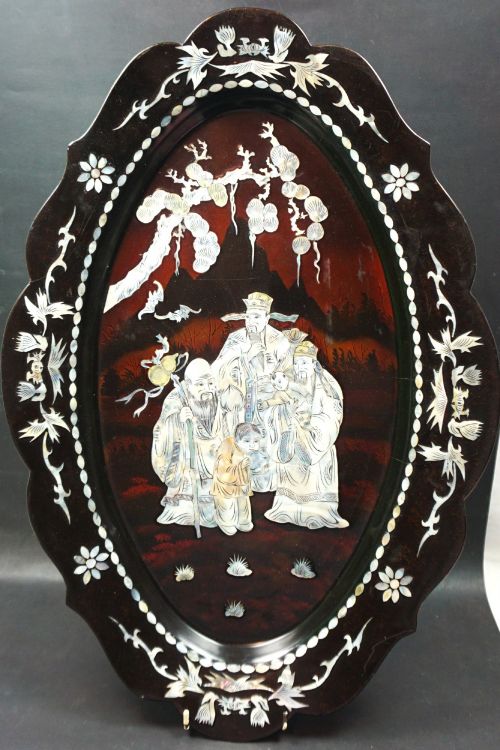
Buyers encounter Victorian papier-mâché items alongside Regency painted toleware and Chinese lacquered wood platters featuring mother of pearl inlay. These objects served drawing rooms for tea service before transitioning into decorative wall hangings or occasional furniture. The presence of eighteenth-century naive fishing scenes and nineteenth-century gilded borders demonstrates the diverse decorative scope within this category.
How they were made
Artisans constructed papier-mâché bodies by pressing layers of paper pulp or sheets with glue and oil, creating a sturdy yet lightweight board suitable for heavy use. They applied deep black lacquer surfaces that provided a smooth base for subsequent ornamentation. Craftsmen then added gold leaf gilding, delicate hand-painting, and mother of pearl inlay to enrich the visual depth.
Toleware pieces utilise sheet iron shaped into trays before receiving protective dark coatings and painted details. Makers of lacquered wood platters relied on traditional Asian woodworking and finishing techniques, applying successive coats of varnish and pigment. Gilding and polychrome pigments completed the decoration, sealing the materials against moisture.
Large Black Serving Tray Retail Price Guide 2026
Typical asking prices for large black serving tray among the pieces listed under this phrase on Sellingantiques today, from the lower quarter to the upper quarter. They describe what is for sale here now, not the wider market.
Listings feature items from the 18th century, Regency period, and Victorian era, utilising papier-mâché, lacquered wood, and sheet iron.
What varies in quality
The sophistication of the surface decoration and the integrity of the material core distinguish exceptional examples from standard production. Superior pieces display crisp hand-painted motifs, refined gold leaf gilding, and secure mother of pearl inlay rather than simple stencilled patterns. The weight and rigidity of the papier-mâché or sheet iron foundation also indicate superior workshop standards.
Makers such as Jennens and Bettridge achieved notable refinement through meticulous lacquering and detailed ornamentation. The precision of the border work and the preservation of the original black ground paint determine the overall aesthetic standing of an individual tray.
Jennens and Bettridge
The Large Black Serving Tray Glossary
- Papier-mache
- A composite material made from paper pulp or reinforced paper sheets mixed with glue, pressed and dried to form a rigid shape. This substance provided a lightweight alternative to metal for large serving trays.
- Toleware
- Enamelled or lacquered sheet metal, typically iron, painted with decorative motifs. It was widely used in the eighteenth and nineteenth centuries for domestic serving items.
- Gilding
- The application of gold leaf or gold powder to a surface to create a metallic border or highlight. This technique enhanced the visual richness of dark lacquer.
- Mother of pearl
- An iridescent inner layer of mollusc shell cut into thin pieces and embedded into lacquer surfaces. It catches the light to create shimmering floral or geometric designs.
- Regency
- An English design period spanning the early nineteenth century characterised by classical revival motifs and bold ornamentation. Trays from this era often feature distinctive painted borders.
Large Black Serving Tray: Frequently Asked Questions
How were large black serving trays used?
These large trays served aristocratic and middle-class households for carrying heavy tea services, decanters, and glassware across drawing rooms. Servants utilised the robust surfaces to transport multiple vessels simultaneously without spilling.
Over time, many owners repurposed these decorative platters as stationary table tops by placing them onto folding wooden stands. Others mounted them directly onto walls to display the intricate painted scenes and gilded borders.
What materials make up these trays?
The primary body materials include pressed papier-mâché, sheet iron known as toleware, and solid lacquered wood. Artisans built up these foundations using multiple layers of dense paper pulp or metal sheets before applying dark varnishes.
Decoration relied on contrasting materials such as gold leaf, polychrome pigments, and shimmering mother of pearl inlay. These elements created durable, light-reflecting surfaces suited to both dining and display.
How do I identify a Regency tray?
Regency trays often feature classical motifs, painted borders, and formal geometric or floral compositions executed in rich polychrome and gold. The overall shape tends towards substantial ovals constructed from sturdy papier-mâché or metal.
Comparing the border style and the depth of the black lacquer ground against documented pieces helps confirm the period. Makers from this era favoured balanced, elegant layouts that reflected contemporary neoclassical tastes.
Can I use an antique tray daily?
While these pieces were built for functional service, their age and delicate surface decorations require careful handling today. Moisture, heat, and abrasive cleaning can damage the historic lacquer and original gilding.
Many collectors prefer to exhibit them as wall art or place them on sturdy stands as occasional tables rather than using them for active dining service. Gentle dusting preserves the integrity of the material.