


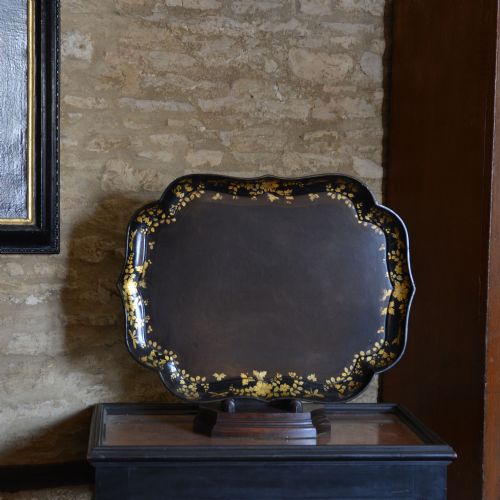


Decorative Lacquered Wall Tray
These decorative lacquered wall trays bring rich hand-painted scenes and lustrous finishes straight onto the interior wall.
Decorative Lacquered Wall Tray
A decorative lacquered wall tray represents a blend of utility and display, repurposed from serving ware into wall hanging art. When you search for a decorative lacquered wall tray, you find pieces originating from various traditions including Georgian, Victorian, and Chinese Qing Dynasty periods.
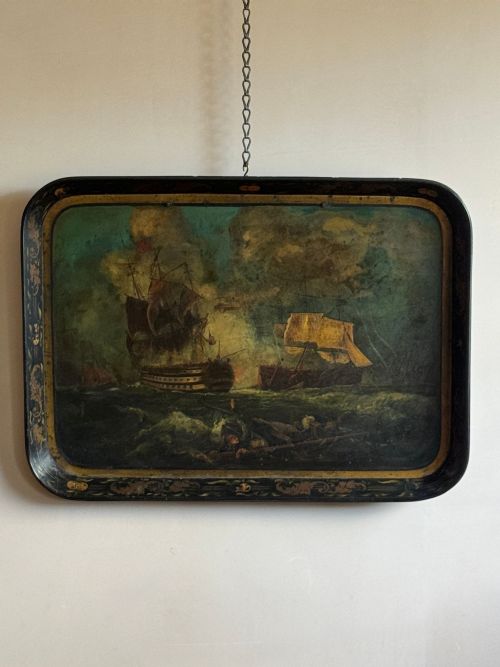
The most common examples encountered on this page date from the nineteenth century and utilise durable papier-mâché or lacquered wood. These items often feature oval or rectangular forms designed originally for table service but adapted securely for vertical display.
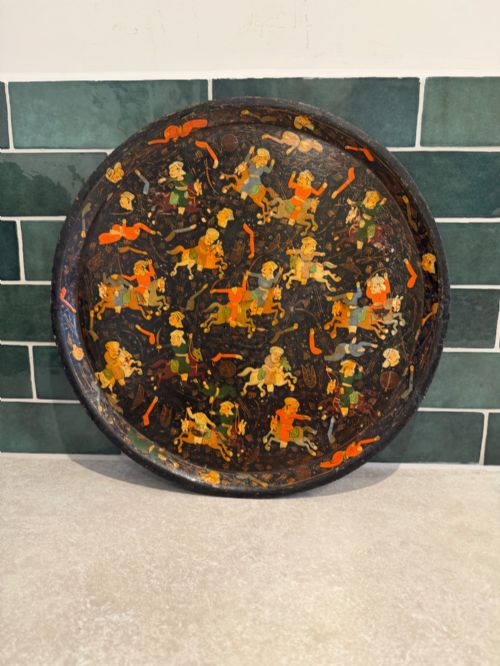
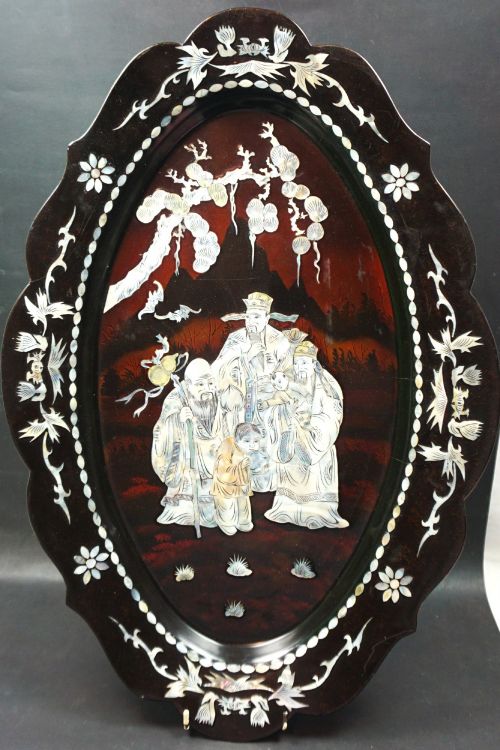
Makers utilised diverse regional aesthetics, ranging from English Chinoiserie and Regency japanning to traditional Japanese lacquer plaques and Chinese mother-of-pearl inlay platters. Each piece carries the distinct cultural imprint of its manufacturing era.
Construction and materials
Artisans built the foundation of these pieces using sturdy papier-mâché, pressed paper pulp treated with oil and resin, or solid lacquered wood. This substrate provided a smooth, stable canvas capable of holding intricate surface decoration without warping over time.
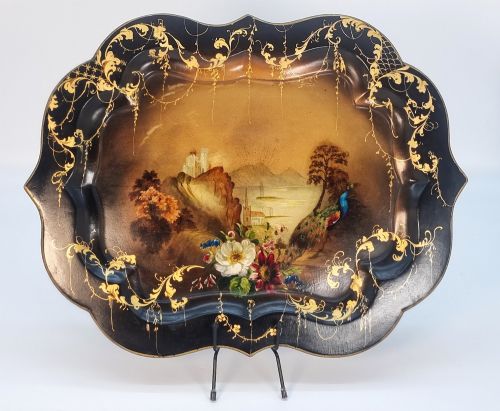
Makers applied multiple coats of lacquer, such as traditional urushi or japanned finishes, building up a deep, protective gloss. Artisans then embellished the surface using gold leaf, hand-applied paint, and inlaid mother-of-pearl to create detailed landscapes and decorative motifs.
Decorative Lacquered Wall Tray Retail Price Guide 2026
Typical asking prices for decorative lacquered wall tray among the pieces listed under this phrase on Sellingantiques today, from the lower quarter to the upper quarter. They describe what is for sale here now, not the wider market.
Even nineteenth-century paper pulp can outlast modern plastics when dipped in enough lacquer and painted with a hunting scene.
Judging quality and execution
Quality in these pieces rests upon the precision of the hand-painted artistry and the depth of the lacquer finish. Superior examples display finely rendered landscape hunting scenes or delicate botanical details executed by skilled hands rather than generic stencils.
The integration of decorative elements like mother-of-pearl inlay and gold leaf application distinguishes finer works from simpler production. Better pieces retain structural integrity within the papier-mâché or wood base, showing minimal surface crazing and secure inlay placement.
Jennens & Bettridge
The Decorative Lacquered Wall Tray Glossary
- Papier-mâché
- A composite material made from paper pulp or reinforced paper sheets mixed with adhesive, moulded and baked to create a hard surface. This material formed the lightweight base for many nineteenth-century serving trays.
- Japanning
- A European imitation of East Asian lacquerwork, created by applying heat-dried varnishes to metal or papier-mâché. This technique produced a glossy black or dark surface often highlighted with gilt ornamentation.
- Urushi
- A natural lacquer derived from the sap of the Toxicodendron vernicifluum tree, applied in successive layers in Asian traditions. It cures into an exceptionally durable, water-resistant finish with a deep lustre.
- Mother-of-pearl
- The iridescent inner layer of mollusc shells, carved into thin pieces and embedded directly into the lacquer surface. This inlay technique catches the light to add dimension to pictorial scenes.
Decorative Lacquered Wall Tray: Frequently Asked Questions
How do I hang a decorative lacquered wall tray?
Hanging these trays requires specialised bracket fixings that support the weight securely without biting into the papier-mâché or wood rim. Ensure the mounting hardware takes the full load of the object evenly.
Position the tray at eye level where fluctuations in room temperature and direct sunlight remain minimal to protect the delicate lacquer surface.
Can I use these trays for serving food?
Most pieces listed here function primarily as decorative wall art or display plaques due to their age and delicate painted surfaces. Using them for active food service risks damaging the historic lacquer and gold leaf.
Keep them mounted on the wall to preserve the painted landscapes and intricate mother-of-pearl inlay from moisture and physical wear.
How do I clean a lacquered wall tray?
Dust the surface gently using a soft, dry microfibre cloth to remove particulate matter without scratching the finish. Avoid all liquid cleaners, polishes, and chemical solvents.
Harsh cleaning agents strip away historic japanning and degrade the underlying papier-mâché or wood substrate.
How do I tell Victorian trays from Georgian pieces?
Georgian trays often display simpler japanned borders and restrained ornamentation, reflecting the aesthetics of the late eighteenth and early nineteenth centuries. Victorian examples frequently incorporate richer gold leaf work and more elaborate papier-mâché moulding.
Examination of the painted subject matter and the specific lacquer formulation helps pinpoint the manufacturing decade.