





Victorian Inlaid Walnut Box
When you search for a victorian inlaid walnut box, you find a fitted repository for letters, trinkets or tea crafted during the nineteenth century.
Victorian Inlaid Walnut Box
A victorian inlaid walnut box encompasses a wide variety of household receptacles, ranging from small jewellery caskets and correspondence boxes to larger tea caddies, writing slopes and games compendiums. Many of these pieces date from the mid to late nineteenth century, reflecting the period's domestic demand for tidy and decorative storage.
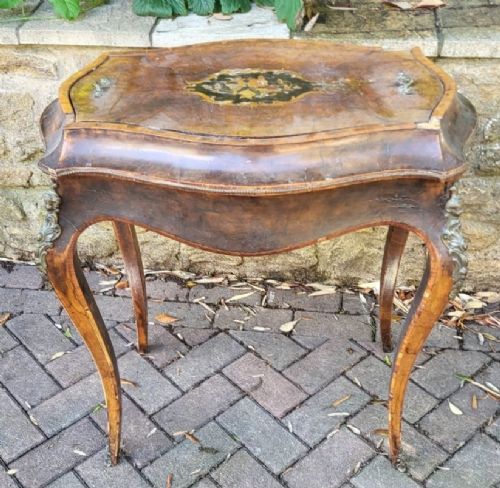
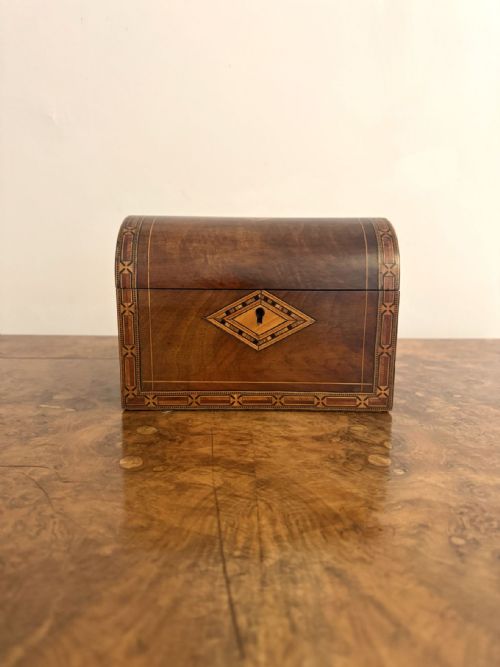
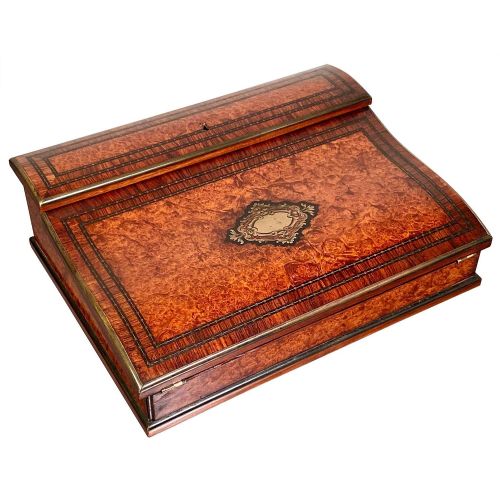
The objects frequently take the form of tabletop writing slopes with secret drawers, compartmented sewing boxes, or sarcophagus-shaped tea caddies designed to hold loose leaves. Alongside these smaller cases, buyers regularly encounter larger furnishings like work tables and trumpet-shaped sewing cabinets incorporating similar decorative treatments.
Originating predominantly from British workshops, these pieces occasionally show continental influences, including French campaign styling or Italian Sorrento marquetry. The predominant style is Victorian, though examples stretch from mid-century productions through to Arts and Crafts interpretations near the close of the era.
Materials and Technique
Makers constructed the primary carcass using solid timber or pine lined with rich walnut, frequently selecting figured burr walnut for its distinct, swirling grain patterns. This outer surface served as a canvas for decorative treatments rather than structural timber alone.
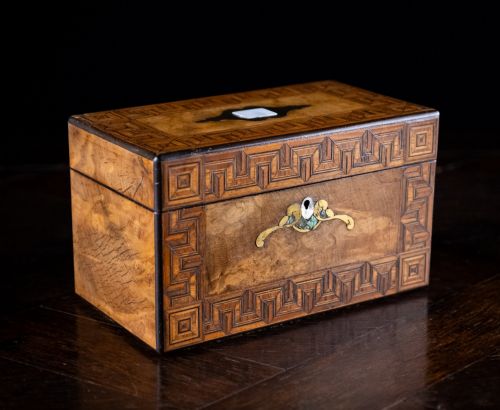
Wood inlay forms the central decorative vocabulary, utilising contrasting timbers such as boxwood alongside parquetry and geometric Tunbridge ware mosaics. Artisans also incorporated organic materials like mother-of-pearl alongside polished brass banding, escutcheons and Bramah locks to secure the lids and drawers.
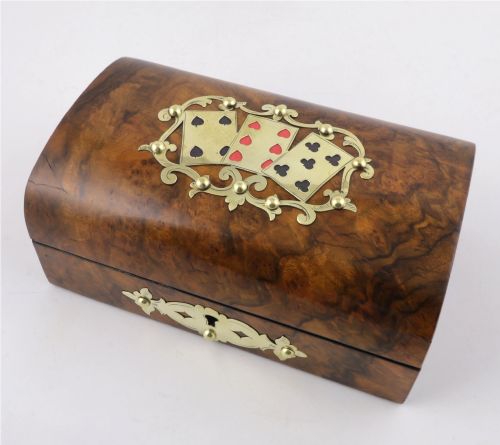
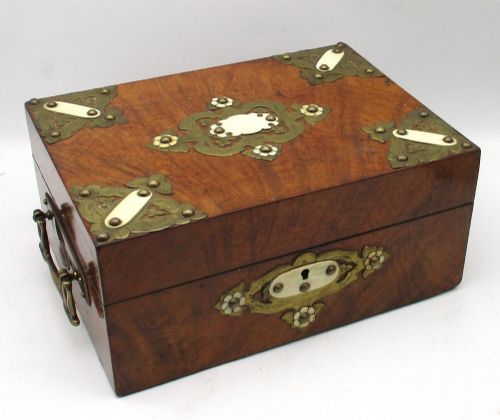
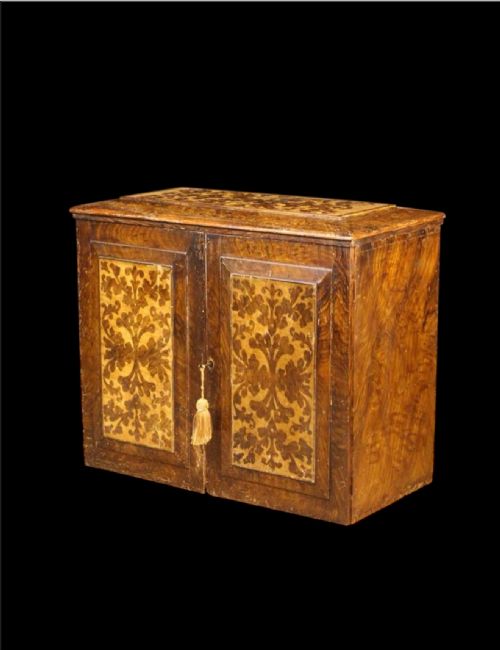
The archive records nineteenth-century walnut boxes taking the form of writing slopes, sewing compendiums, and jewellery caskets.
Distinctions in Execution
The standard of a victorian inlaid walnut box is largely defined by the intricacy and precision of its surface decoration, from simple boxwood stringing to complex multi-wood pictorial marquetry and micro-mosaic Tunbridge ware. Finer examples display a seamless integration of these elements across every visible surface, including fitted internal trays.
Internal engineering and hardware contribute significantly to a piece's standing, evidenced by fully fitted velvet-lined interiors, working secret drawers, functional mirrors and robust brass locks bearing maker stamps. The depth of the burr walnut veneer and the preservation of the original polished finish complete the distinction between standard utility items and masterwork pieces.
Henry Hollamby·Edmund Nye·Langdorff & Fils
The Victorian Inlaid Walnut Box Glossary
- Burr walnut
- A prized timber veneer harvested from the irregular growths or burls of the walnut tree, noted for its swirling, highly figured grain patterns. It was extensively used by nineteenth-century cabinet makers to create decorative surfaces on luxury boxes and tables.
- Tunbridge ware
- A specialised form of woodworking originating from Tunbridge Wells, characterised by mosaic patterns assembled from thousands of tiny tinted wood blocks. These geometric or floral designs decorate the lids and panels of nineteenth-century boxes and stationery cases.
- Marquetry
- The art of applying pieces of veneer to a structure to form decorative patterns, pictures or designs. In nineteenth-century boxes, this often involved contrasting woods, brass and mother-of-pearl.
- Writing slope
- A portable desk featuring a hinged, sloping lid that opens to reveal a writing surface, inkwell compartments and concealed secret drawers. They were essential personal items for correspondence before the widespread availability of fitted home office furniture.
- Parquetry
- A geometric mosaic of wood pieces used for ornamentation on furniture and box lids. It relies on regular angles to create repeating diagonal, chevron or cube patterns.
Victorian Inlaid Walnut Box: Frequently Asked Questions
What were writing slopes used for?
Writing slopes provided a portable, dedicated surface for drafting letters, storing stationery, and keeping personal documents secure. Their internal compartments held inkwells, nibs, and postage stamps.
Many examples included hidden compartments or secret drawers activated by small wooden pins, designed to keep private correspondence safe from prying eyes.
How do I care for burr walnut?
Burr walnut requires stable indoor humidity and protection from direct sunlight to prevent the thin nineteenth-century veneers from drying out or lifting. Regular dusting with a soft, dry cloth maintains the polished surface.
Avoid placing these boxes near heat sources or damp areas, and apply specialised furniture wax sparingly only when the wood appears dry.
How do I identify a tea caddy?
Tea caddies are small lidded boxes originally designed to store expensive loose-leaf tea safely under lock and key. Inside, they frequently feature one or two lidded compartments, sometimes alongside a central space for a mixing bowl.
Because tea was a valuable commodity in the nineteenth century, these containers were built with sturdy locks and decorative veneers to sit prominently in the drawing room.