




Parquetry Trinket Box
A parquetry trinket box is a small timber container decorated with geometric wood veneers, offering a neat desktop home for small valuables.
Parquetry Trinket Box
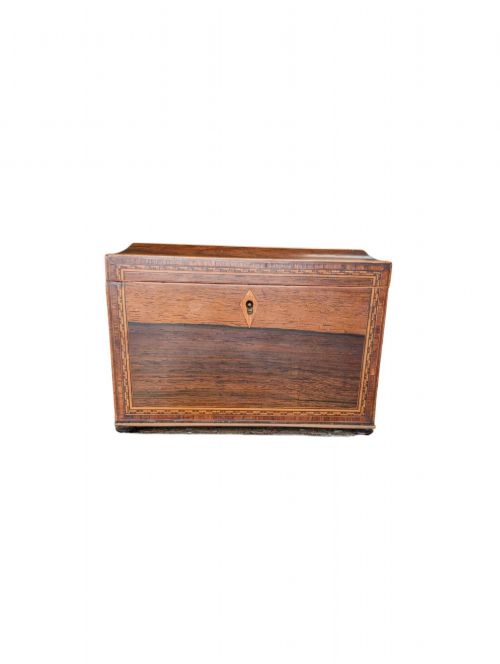
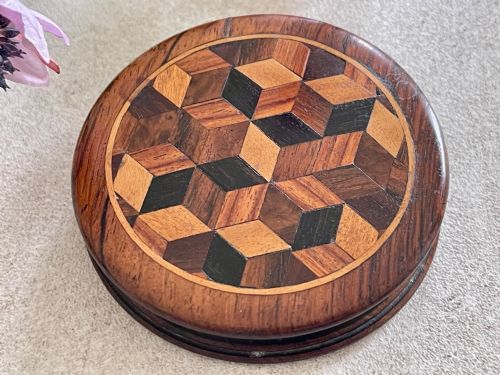
A parquetry trinket box is a compact container designed for holding small personal items on a desk or dressing table. You will frequently encounter Victorian and nineteenth-century examples on this page, often utilising geometric wood patterns to create depth on the lid.
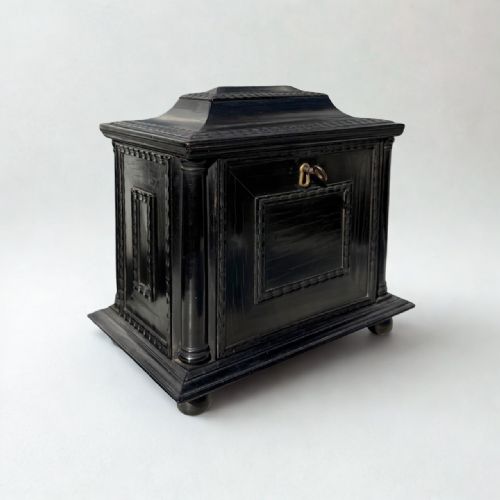
The form spans several centuries, touching upon seventeenth-century olive wood construction, Regency games and tea caddies, and nineteenth-century Tunbridge ware ladies boxes. These pieces served practical storage roles for keepsakes, snuff, or correspondence before evolving into purely decorative objects.
Makers utilised distinct regional traditions, ranging from English Tunbridge Wells mosaic work to continental kingwood and ebony caskets. The variety ranges from table boxes to miniature commodes and keepsake chests, all sharing an emphasis on precise surface geometry.
Materials and construction methods
Carpenters constructed these boxes using solid foundational timbers like walnut, oak, or pine, onto which they applied thin veneers of decorative woods. Woods such as rosewood, boxwood, kingwood, ebony, and burr walnut provided contrasting natural tones for geometric arrangements.
Parquetry relies on cutting small blocks or strips of tinted and natural timber into precise angles and gluing them onto a carcase to form geometric mosaics. In Tunbridge ware pieces, artisans assembled thousands of minute wood squares to build pictorial or geometric friezes.
Parquetry Trinket Box Retail Price Guide 2026
Typical asking prices for parquetry trinket box among the pieces listed under this phrase on Sellingantiques today, from the lower quarter to the upper quarter. They describe what is for sale here now, not the wider market.
Some nineteenth-century ladies boxes included secret compartments designed to guard secret love letters from prying family members.
Assessing quality and execution
Quality rests primarily in the precision of the veneer work and the tightness of the geometric joins across the surfaces. Finer boxes maintain absolute symmetry and alignment in their parquetry, showing no gaps or uneven filler between the wood elements.
The choice of secondary woods and the sophistication of the interior fittings also dictate the tier of the piece. Better boxes retain original paper linings, fitted velvet trays, or working brass locks, whereas simpler versions rely on plain timber interiors.
The Parquetry Trinket Box Glossary
- Parquetry
- Geometric wood mosaic work formed by fitting small veneer pieces together onto a carcase. It creates repeating patterns like cubes, triangles, and chequered boards.
- Tunbridge Ware
- A specialised form of nineteenth-century woodwork originating from Tunbridge Wells. It uses mosaic techniques from thousands of tiny wood blocks to depict landscapes or geometric bands.
- Veneer
- A thin slice of decorative timber applied to a thicker structural wood base. This technique allows cabinetmakers to display expensive grain figures economically.
- Carcase
- The main structural body or framework of a box before the application of veneers, hardware, and interior fittings. It provides the rigid support for the decorative exterior.
- Specimen Woods
- A collection of various native and exotic timber species used within a single object to show natural colour contrast. They highlight the maker's access to diverse botanical materials.
Parquetry Trinket Box: Frequently Asked Questions
How do I date a parquetry box?
Dating relies on examining the construction of the interior, the style of the hinges, and the primary wood species used. Earlier pieces from the seventeenth and eighteenth centuries often feature hand-cut dovetails and solid timber carcases.
Later nineteenth-century examples frequently employ machine-sawn veneers and incorporate mass-produced brass locks or paper linings. Comparing the geometric patterns to known Tunbridge ware or Regency styles helps narrow the decade.
What were these boxes used for?
These boxes served as secure, portable containers for personal valuables, letters, sewing tools, or luxury goods like tea and snuff. Smaller table boxes held everyday trinkets and jewellery on bedroom dressing tables.
Larger caskets functioned as desk accessories or games boxes, keeping playing pieces and cards organised in the parlour.
How do I care for wooden parquetry?
Keep wooden parquetry boxes away from direct sunlight and sources of extreme heat to prevent the thin veneers from lifting or cracking. Maintain a stable room humidity to protect the old animal glues holding the mosaic pieces.
Dust the surface gently with a dry, soft cloth and avoid applying modern silicone polishes.
Are all geometric boxes Tunbridge ware?
Not all geometric boxes originated in Tunbridge Wells, though that English town became famous for its mosaic wood craft. Continental makers in France and the Netherlands also produced extensive parquetry and marquetry boxes using local and exotic woods.
Examining the specific timber species and construction methods helps distinguish English regional work from continental European pieces.