




Walnut Work Box
A walnut work box brings tactile warmth to a room, offering a neat vessel for needlework, letters or small treasures.
Walnut Work Box
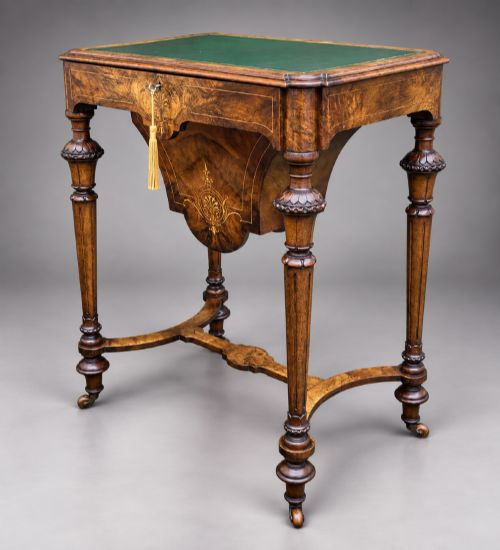
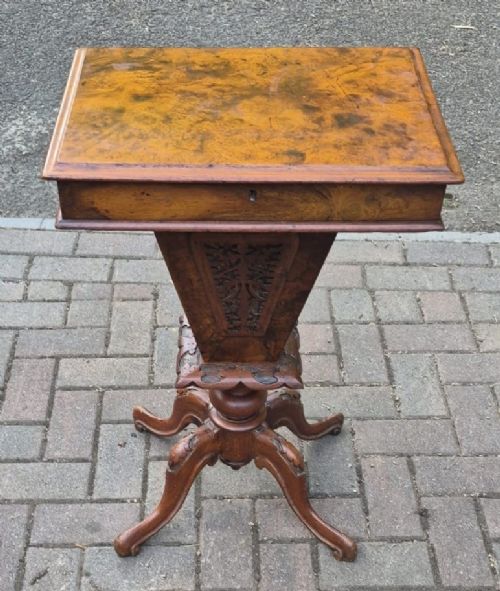
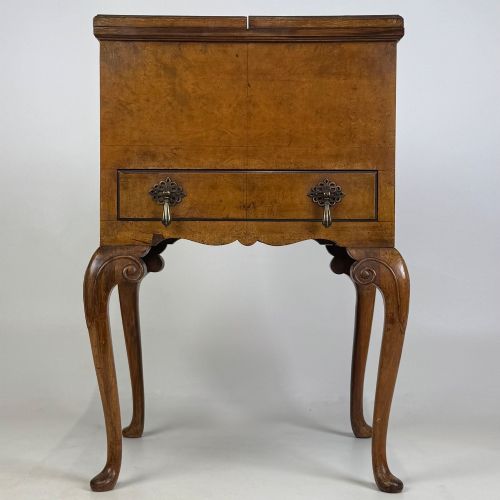
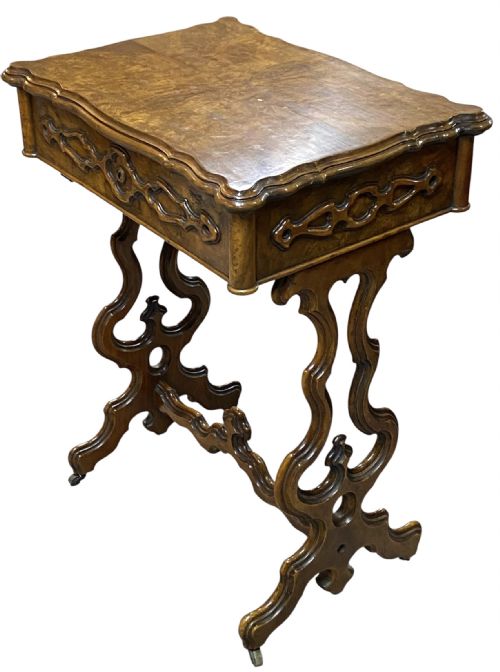
A walnut work box encompasses everything from compact tabletop caskets to freestanding trumpet tables equipped for sewing and games. The selection centres heavily on Victorian examples, alongside Georgian table boxes and later Edwardian variants.
Many items combine storage with dual functions, serving as games boards or folding card tables alongside their primary sewing compartments. These pieces range from simple lidded boxes to elaborate pedestal tables with fitted internal trays.
Originating largely from nineteenth-century British workshops, the category also admits continental pieces such as Italian Sorrento marquetry boxes and Spanish walnut caskets.
How they were made
Cabinet makers utilised solid walnut and decorative veneers like burr and figured walnut over secondary timbers, often accentuating surfaces with boxwood and wood inlay. Tunbridge ware detailing and marquetry frequently appear on the finest lids and panels.
Interiors typically feature fitted compartments, sometimes lined with fabric, designed to organise threads, needles and personal trinkets. Brass hinges, locks and escutcheons secure the lids of portable boxes and freestanding tables alike.
Some Victorian sewing boxes hide secret compartments beneath the needle trays for truly clandestine pins.
What varies in quality
Quality rests upon the choice of timber and the precision of the veneer work, with heavily figured burr walnut commanding greater visual depth. The complexity of inlaid banding and the crispness of carved supports distinguish finer examples from standard production pieces.
Internal organisation also dictates worth, particularly where fitted trays retain their original compartments and delicate lids. The integrity of the construction, from tight mitre joints to smoothly operating drawers and folding tops, separates superior specimens.
The Walnut Work Box Glossary
- Burr walnut
- A veneer taken from the gnarled growths on walnut trees, prized for its swirling, highly figured grain patterns. It forms the primary decorative surface on many high-end Victorian pieces.
- Trumpet table
- A freestanding work table featuring an octagonal or flared body set upon a pillar and tripod base. The name derives from the distinctive shape of the lower receptacle.
- Tunbridge ware
- A form of intricate mosaic woodwork created by gluing together tiny coloured wooden blocks to form geometric or pictorial motifs. It frequently decorates the lids of mid-nineteenth-century boxes.
- Marquetry
- The art of applying decorative veneer pieces to a structure to form pictorial or geometric designs. Craftsmen use various contrasting woods to achieve tonal shading.
- Fitted interior
- The compartmented tray or layout beneath the lid of a box designed to hold sewing implements, reels and tools. These layouts often include small lidded compartments and pin cushions.
Walnut Work Box: Frequently Asked Questions
What is a trumpet work table?
A trumpet work table is a freestanding Victorian piece featuring an octagonal, flared body atop a pillar and carved base. It houses a deep compartment for sewing and wool work beneath the hinged lid.
Inside, these tables often retain fitted trays for needles and cotton reels. The flared shape gives the piece its musical instrument namesake.
How do I date a walnut work box?
Dating relies on stylistic clues, construction methods and timber choices. Georgian boxes tend to feature simpler geometric lines and heavier proportions, while Victorian examples often embrace burr walnut veneers and elaborate Tunbridge ware.
Later Edwardian and Art Deco pieces display simpler veneers and cleaner, streamlined silhouettes. Hardware such as brass locks and hinges also helps narrow down the decade of manufacture.
Can I use these boxes for modern storage?
These boxes suit modern living for storing jewellery, sewing gear, stationery or small desk accessories. The internal compartments keep tiny items organised while the decorative exterior adds character to a dressing table or side surface.
Freestanding versions also function as lamp tables or side tables beside a chair. Their compact footprints make them versatile additions to various rooms.
What is Tunbridge ware?
Tunbridge ware is a meticulous form of mosaic woodwork originating from Kent. Artisans assemble thousands of tiny coloured wooden blocks to create pictorial or geometric mosaic patterns.
These panels adorn the lids of nineteenth-century boxes and work tables. Each tiny square is cut from natural woods to achieve contrasting shades without paint.