


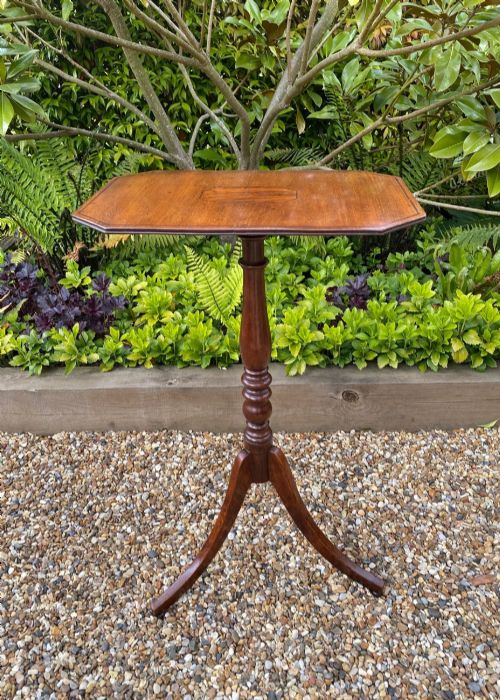
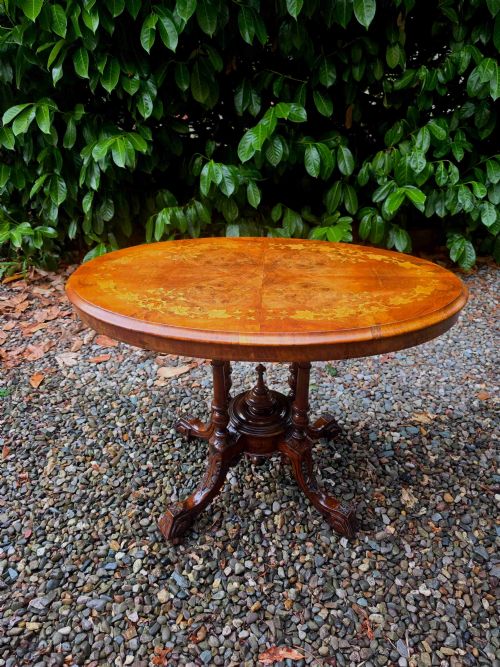
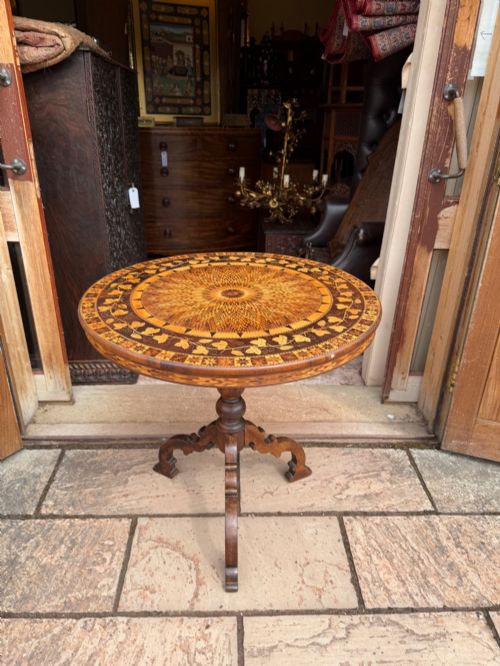
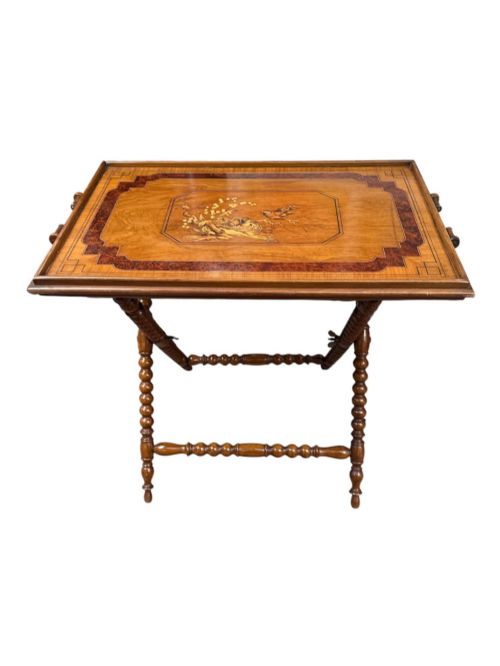
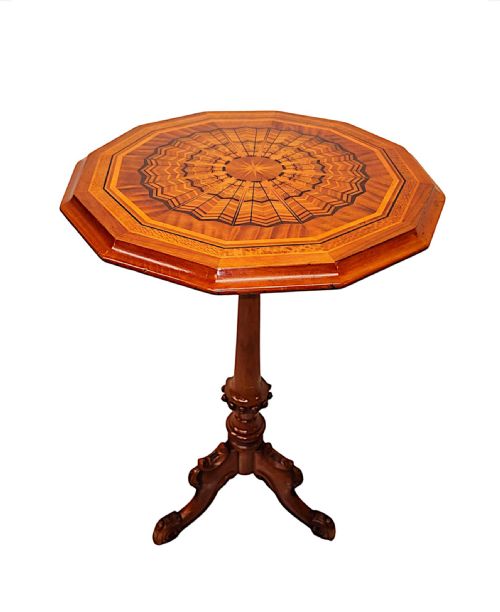
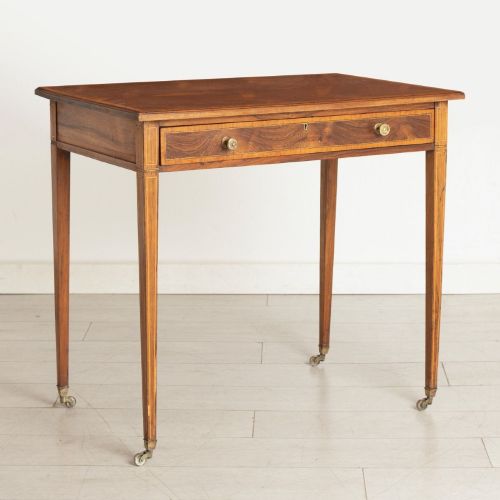
Victorian Inlaid Side Table
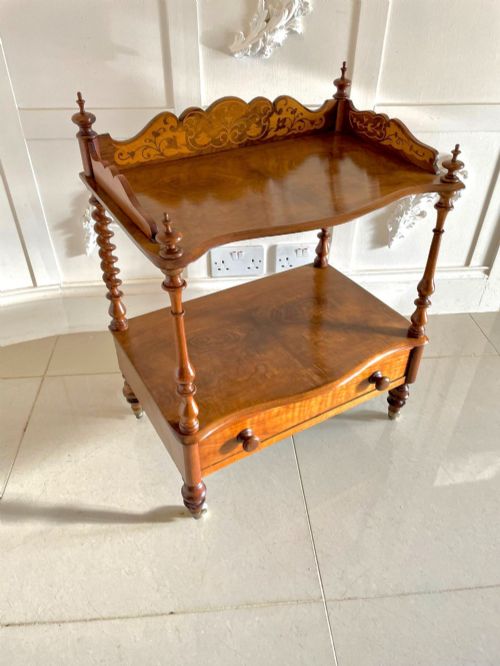
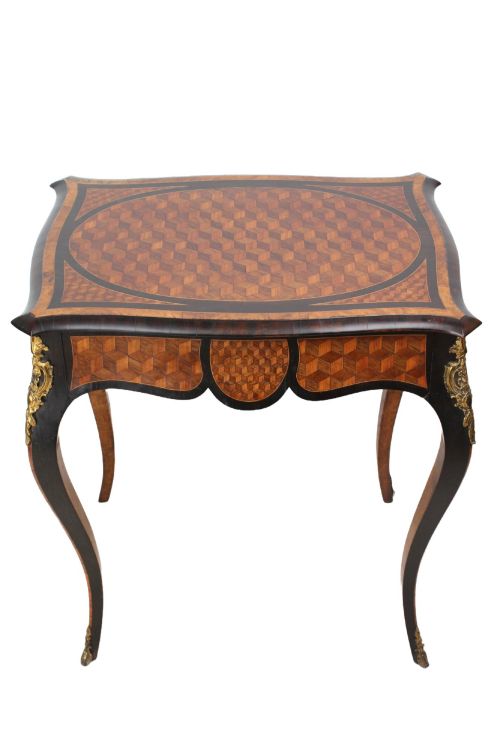
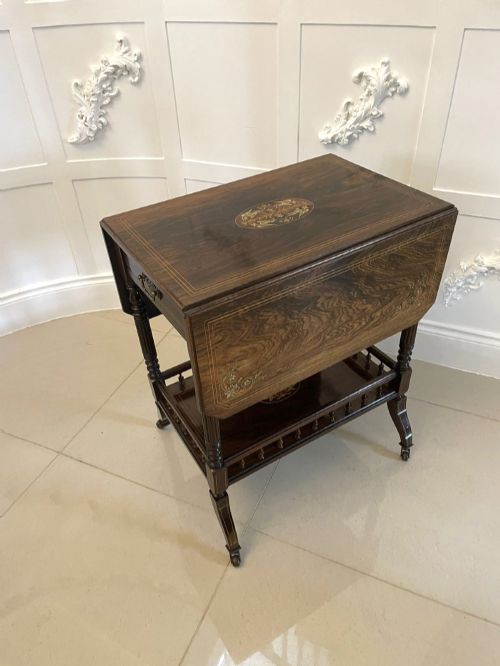
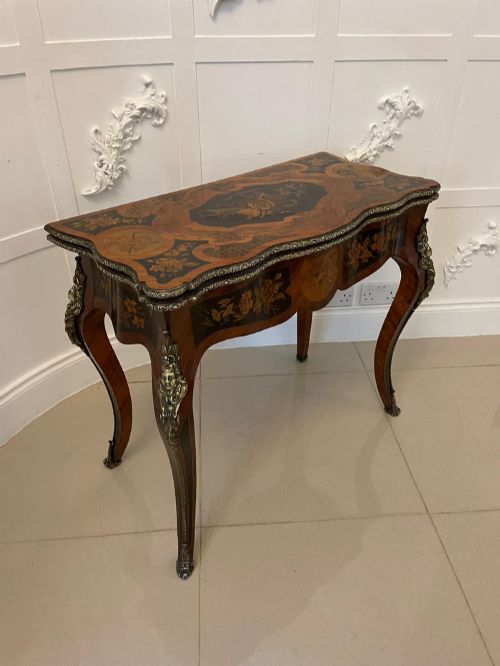
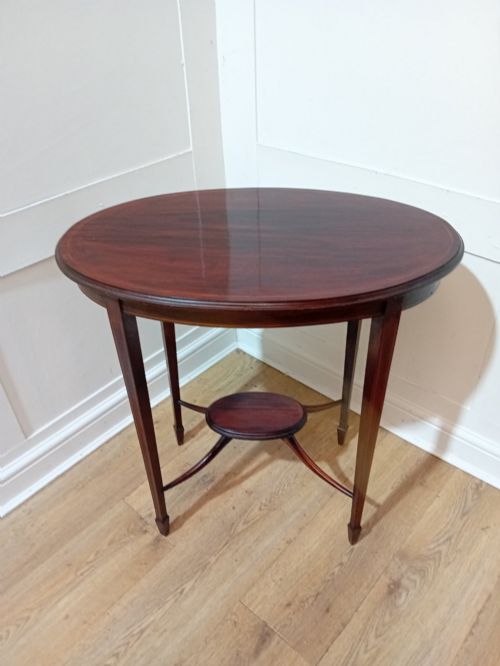
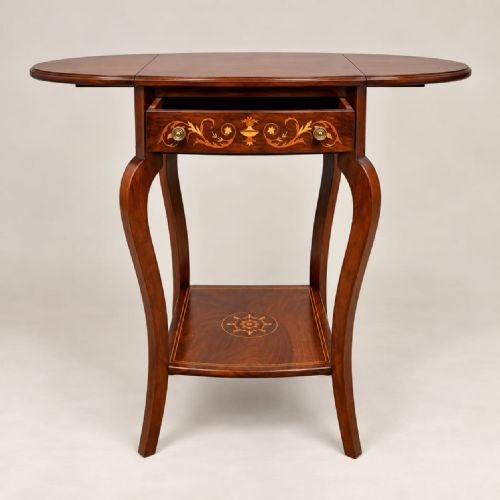
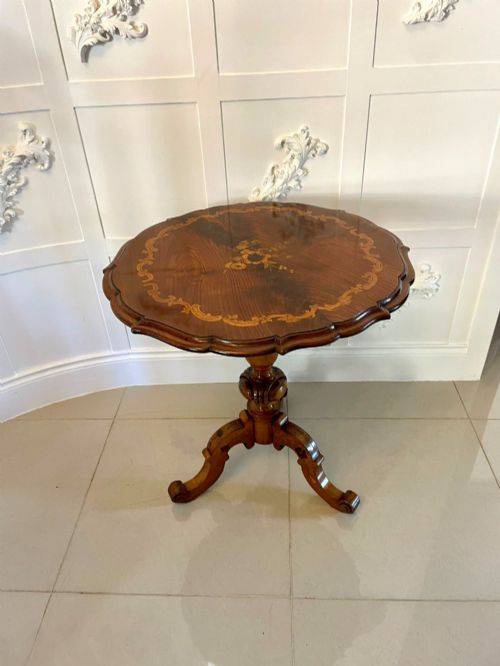
When you search for a victorian inlaid side table, you encounter timber surfaces worked with marquetry, parquetry, and contrasting veneers.
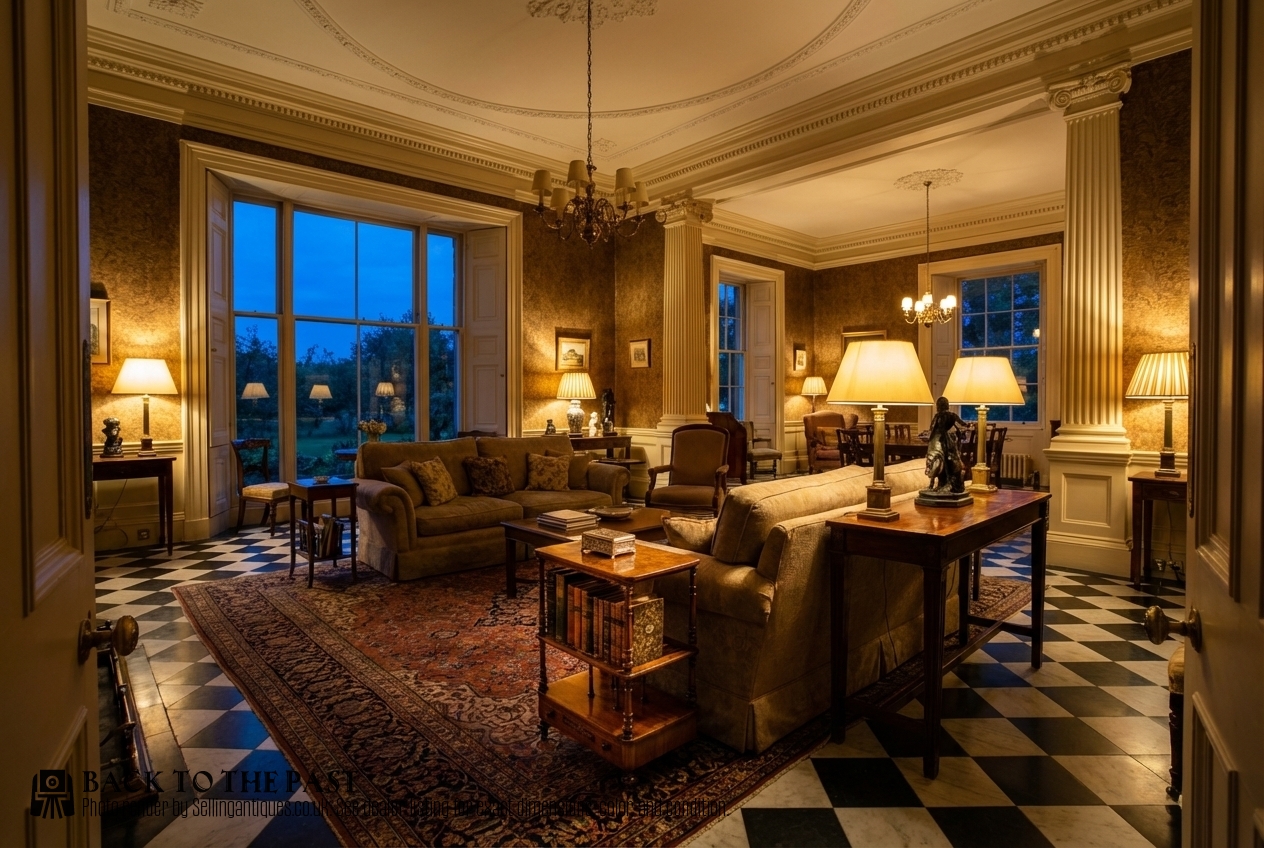
Victorian Inlaid Side Table
A victorian inlaid side table encompasses various compact formats used for writing, games, and displaying lamps or small objects within nineteenth-century interiors.
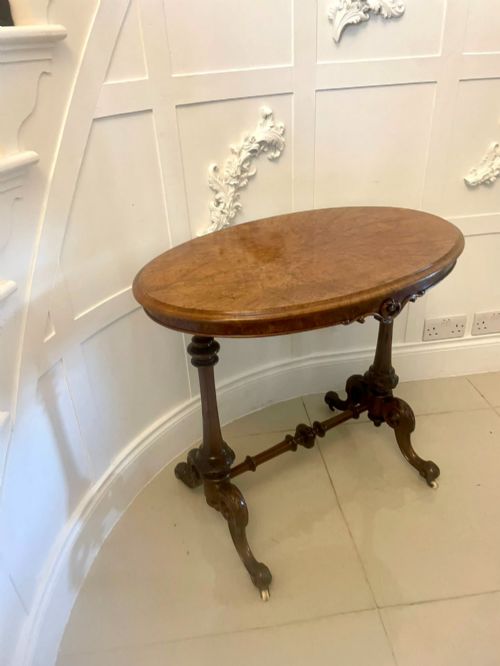
The selections span oval, rectangular, and octagonal shapes, alongside specialised forms like drop-leaf, kidney-shaped, and pedestal tables originating from English workshops and continental revival styles.
Makers utilised rich hardwoods to construct versatile furnishings that functioned as occasional pieces, centre tables, or gaming boards across domestic parlours and drawing rooms.
Materials and Construction
Cabinet makers built these tables using primary structural timbers such as walnut, rosewood, mahogany, and satinwood, frequently selecting burr veneers for figured surfaces.
Decoration relied on precision cutting of contrasting woods, brass, bone, and mother-of-pearl to create floral marquetry, geometric parquetry, and Sorrento ware patterns.
Mounts in ormolu and turned supports, including bobbin legs and pedestals, completed the assembly of these multi-format tables.
Victorian Inlaid Side Table Retail Price Guide 2026
Typical asking prices for victorian inlaid side table among the pieces listed under this phrase on Sellingantiques today, from the lower quarter to the upper quarter. They describe what is for sale here now, not the wider market.
The inventory combines English Victorian walnut pieces with Anglo-Indian Hoshiarpur tables and French-influenced revival designs utilising marquetry and parquetry.
Craftsmanship and Execution
The distinction between standard production and fine pieces rests on the precision of the inlay work, where tight joints and varied botanical or geometric veneers indicate skilled hand execution.
Timber selection drives value, with highly figured burr walnut, kingwood, and satinwood commanding attention through deliberate grain matching across the table top.
Secondary detailing, such as finely cast ormolu mounts, well-turned legs, and integrated functional elements like chess boards or hidden drawers, separates ordinary furniture from exhibition quality work.
JAS Shoolbred·Gillows·Liberty & Co·Anton Seuffert·Edwards And Roberts
The Victorian Inlaid Side Table Glossary
- Marquetry
- Decorative veneer work arranged in pictorial or floral patterns across a wooden surface. Craftsmen cut various woods together to form complex motifs.
- Parquetry
- Geometric mosaic woodwork applied to create repeating patterns such as cubes or chequers. This technique provides durable decoration for table tops.
- Ormolu
- Gilded bronze mounts applied to furniture edges and legs. This decorative hardware appears frequently on French-influenced revival pieces.
- Sorrento ware
- Inlaid woodwork originating from Italy featuring characteristic micro-mosaic designs. These pictorial panels decorate late nineteenth-century trays and tables.
- Burr walnut
- Wood grain taken from walnut tree growths that produces swirling patterns. Cabinet makers prized this timber for high-status table surfaces.
Victorian Inlaid Side Table: Frequently Asked Questions
How were these tables used?
These tables served multiple functions in the Victorian home, acting as surfaces for tea, reading lamps, or needlework. Many incorporated folding leaves or removable trays for entertaining.
Others included built-in chess and backgammon boards for parlor games, combining utility with decorative display in reception rooms.
What woods are most common?
Walnut and rosewood appear most frequently in surviving examples, often enhanced by lighter satinwood or mahogany borders. Burr walnut provided a heavily figured surface favoured for central drawing-room tables.
Exotic woods and fruitwoods were deployed specifically for the contrasting details found in floral marquetry and geometric parquetry panels.
How do I identify French revival styles?
French revival pieces incorporate curved cabriole legs, kidney-shaped tops, and gilt bronze ormolu mounts. They draw directly on Louis XV and Louis XVI design vocabulary.
Makers utilised kingwood and elaborate marquetry alongside these serpentine forms to emulate continental standards of luxury.
What is an octagonal table?
Octagonal tables feature eight-sided tops, frequently associated with Anglo-Indian production from Hoshiarpur or Liberty & Co retail lines. These pieces often showcase intricate bone or brass inlay work.
They functioned widely as occasional or smoking tables, utilising folding bases or rigid pedestal supports.