
Victorian Inlaid Pier Bookcase
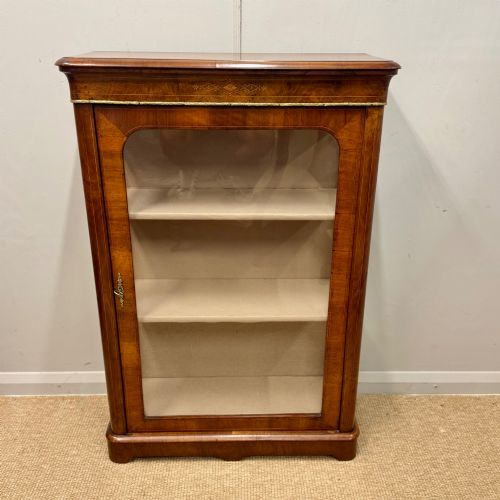
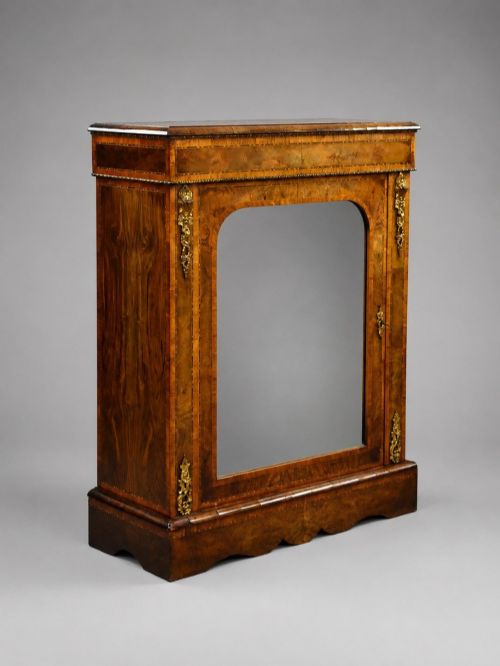
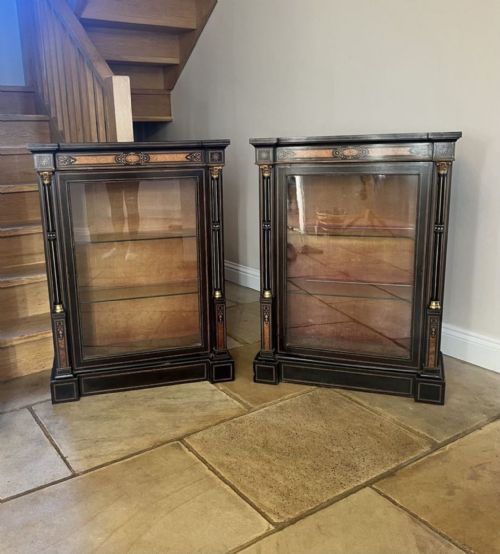
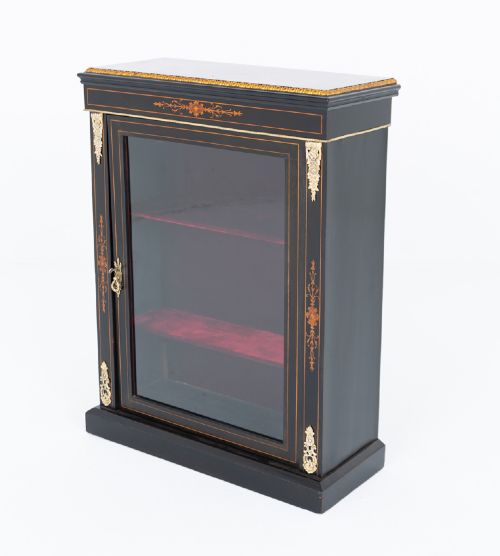
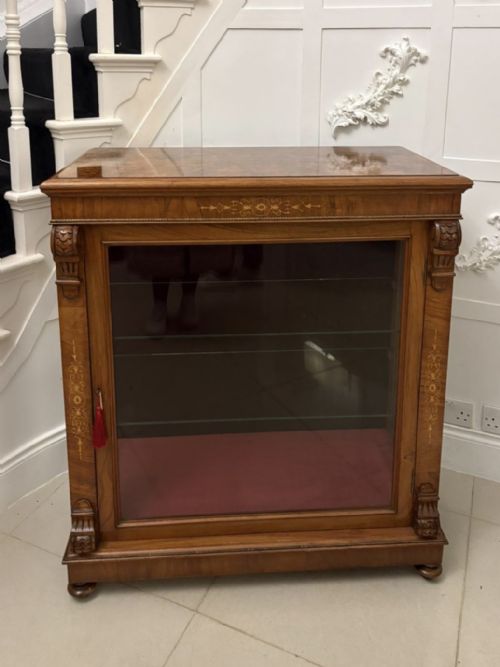
A victorian inlaid pier bookcase is a slim display cabinet designed to stand against a drawing room pier wall.
Victorian Inlaid Pier Bookcase
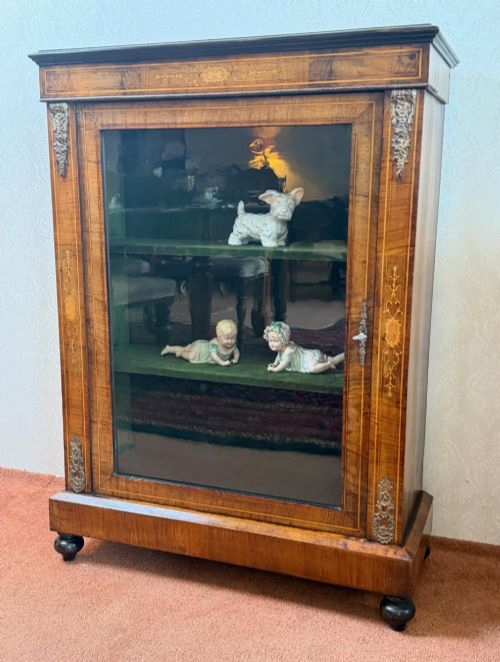
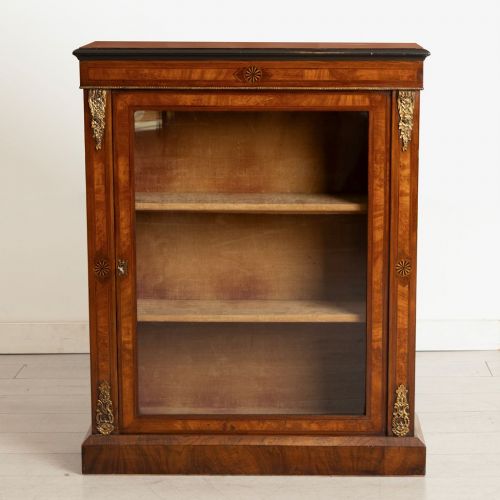
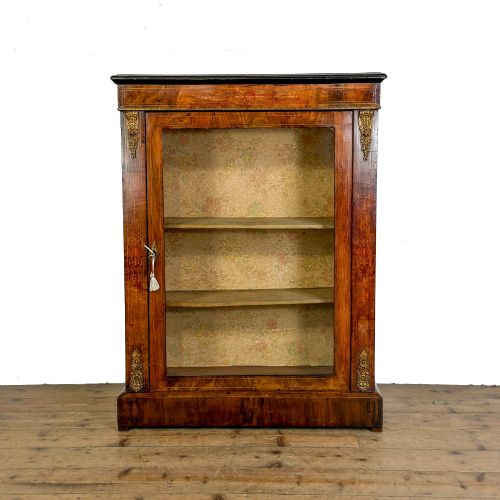
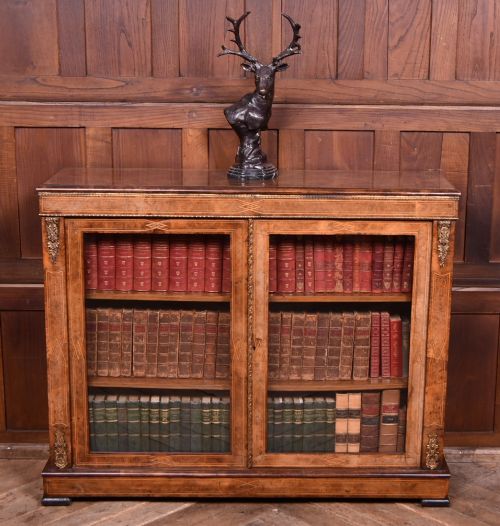
A victorian inlaid pier bookcase combines open or glazed shelving with a narrow footprint built to fit the wall space between tall windows. Most examples seen here date from the nineteenth century, spanning decades from eighteen fifty to eighteen eighty.
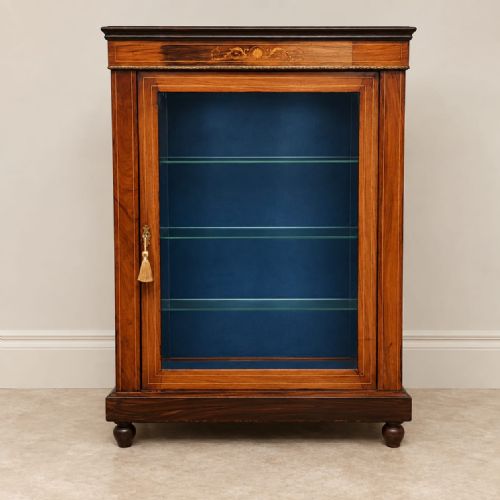
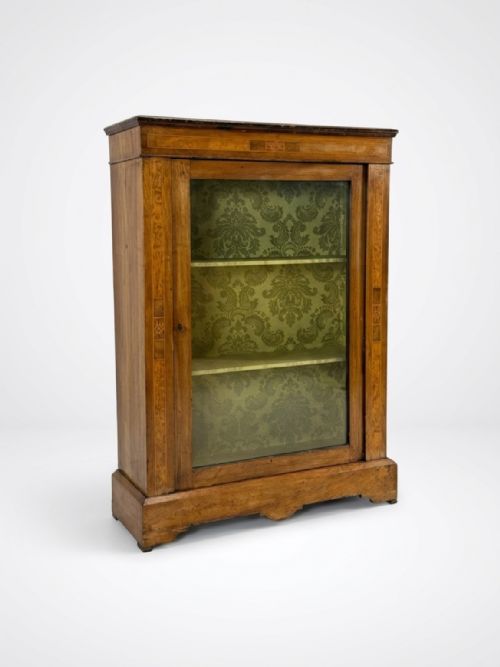
The primary form is a single door cabinet enclosing adjustable shelves, often topped with a flat surface for ornaments. These pieces functioned as both display spaces for treasured volumes and decorative furniture for formal rooms.
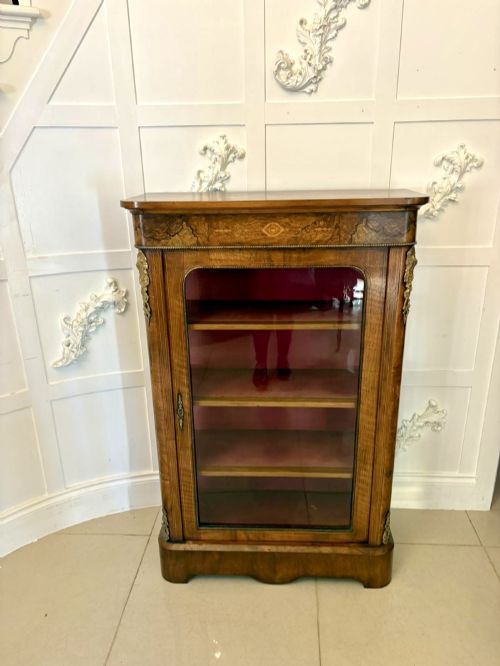
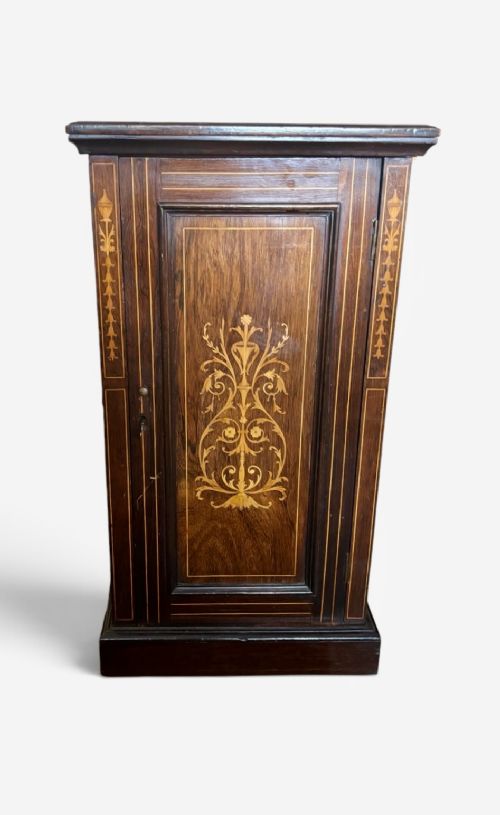
While walnut and burr walnut dominate the selection, variations in timber include rosewood, mahogany, satinwood, and ebonised wood. The proportions remain consistently shallow to preserve floor space in period drawing rooms.
Materials and construction
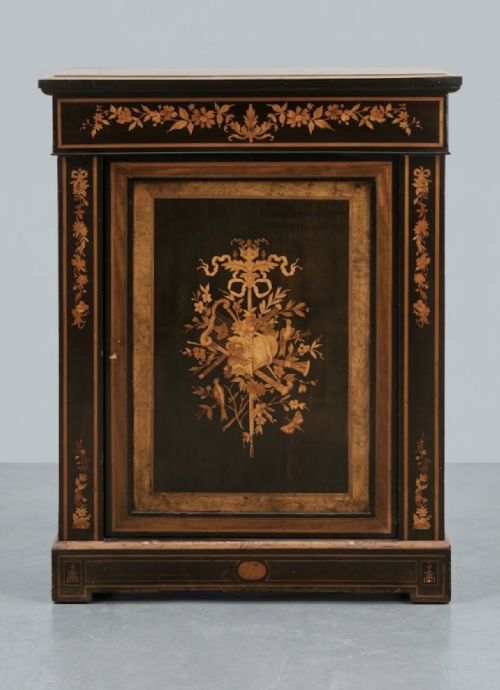
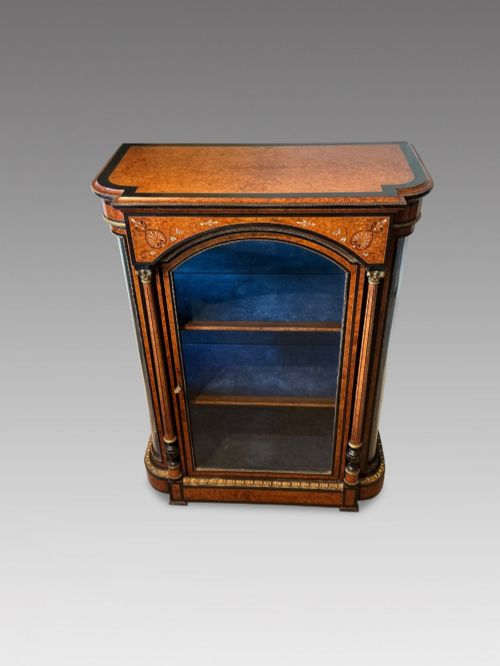
Cabinet makers applied fine veneers of burr walnut, rosewood, or amboyna over stable secondary timbers to create rich, figured surfaces. Marquetry and boxwood inlay formed delicate floral or geometric motifs across the doors and friezes.
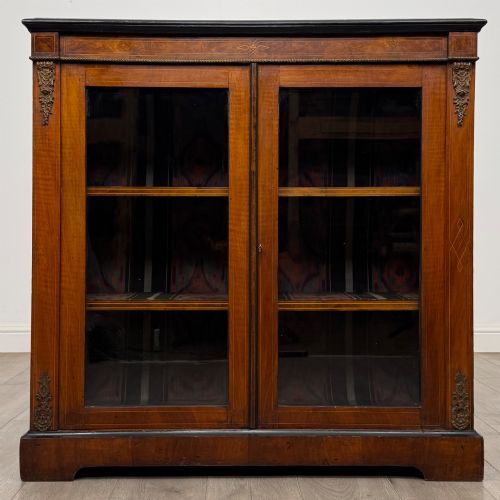
Ormolu mounts, brass stringing, and gilt bronze details highlighted the structural lines and glazed door frames. Ebonised finishes were frequently paired with gilt incising or contrasting satinwood panels to achieve specific aesthetic effects.
Listings feature woods including walnut, burr walnut, rosewood, satinwood, mahogany, amboyna, and ebonised timber.
Distinctions in craftsmanship
The sophistication of the marquetry and the choice of veneer dictate the tier of a piece, with figured burr walnut and multi-wood inlay representing finer workshops. Crispness in the cast ormolu mounts and the precision of the brass stringing separate standard production from exceptional examples.
Interior detailing, such as original velvet linings, cross-banded borders, and carefully matched timber grains across the front elevation, demonstrates greater ambition during original manufacture.
The Victorian Inlaid Pier Bookcase Glossary
- Marquetry
- Decorative patterns formed by fitting together small pieces of wood veneer, shell, or ivory into a background panel. It differs from inlay by covering the entire surface in a mosaic design.
- Ormolu
- Gilded bronze mounts and decorative trimmings applied to furniture. The technique involves coating cast bronze with a mercury and gold amalgam.
- Ebonised
- Wood treated to imitate ebony through staining or painting. This finish was common in nineteenth century revival and Aesthetic Movement pieces.
- Cross-banding
- A border veneer applied so that the grain runs perpendicular to the main panel. This technique frames the central wood and adds visual depth.
Victorian Inlaid Pier Bookcase: Frequently Asked Questions
What is a pier bookcase used for?
These cabinets served primarily to display prized volumes and decorative ornaments in formal reception rooms. The glazed doors protected contents from dust while maintaining visibility.
Today they function effectively in modern interiors to display collections or store books in rooms with limited floor space.
How do I date a pier cabinet?
Dating relies on timber choices, inlay styles, and structural markers recorded across nineteenth century pieces. Walnut and rosewood dominate mid-century examples, while ebonised finishes often point towards the eighteen seventies and eighteen eighties.
Cabinet construction methods, such as secondary framing woods and hinge types, provide further clues to the decade of manufacture.
Are these cabinets suitable for small rooms?
The narrow and shallow footprint makes them ideal for tighter spaces where standard bookcases would project too far into the room. Their vertical emphasis draws the eye upward without consuming floor area.
They sit comfortably against blank wall spaces, hallways, or beside fireplaces where traditional furniture proves too bulky.
What styles appear in these listings?
The selection encompasses standard Victorian production alongside specific movements such as Regency, Napoleon III, Louis XVI Revival, and the Aesthetic Movement. Each style brings distinct decorative vocabulary, from classical ormolu mounts to stark ebonised surfaces.
French influences frequently manifest in rich marquetry and curved gilt details, while later nineteenth century pieces lean towards geometric lines.