

Victorian Inlaid Occasional Table
When you search for a victorian inlaid occasional table, you enter a diverse field of small nineteenth century furniture made for display and parlor use.
Victorian Inlaid Occasional Table
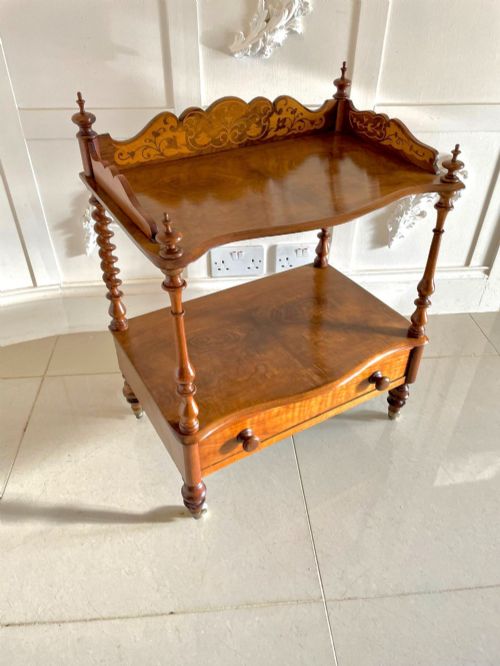
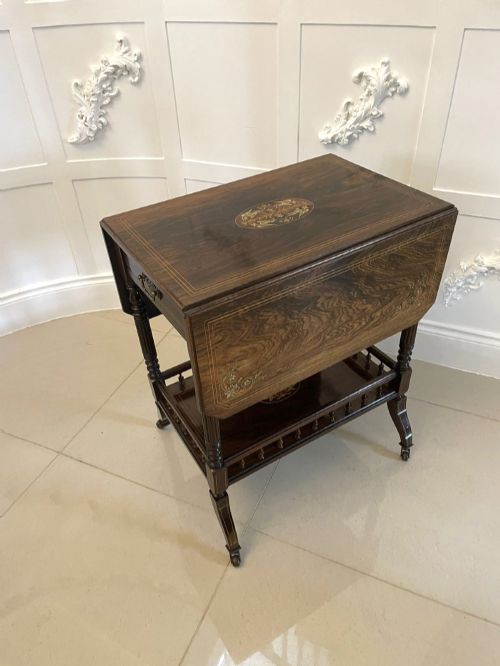
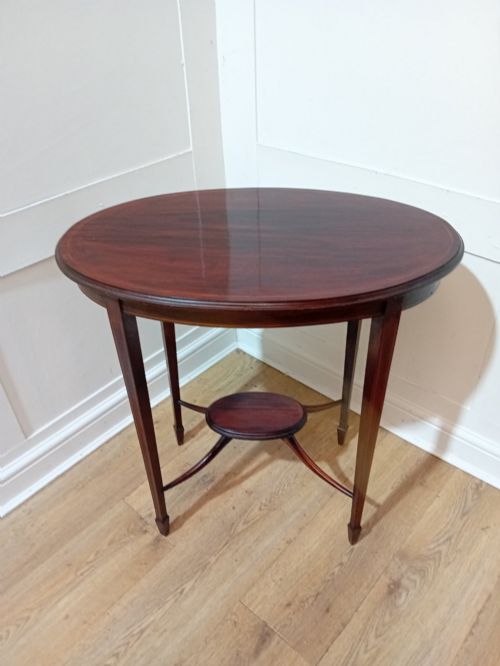
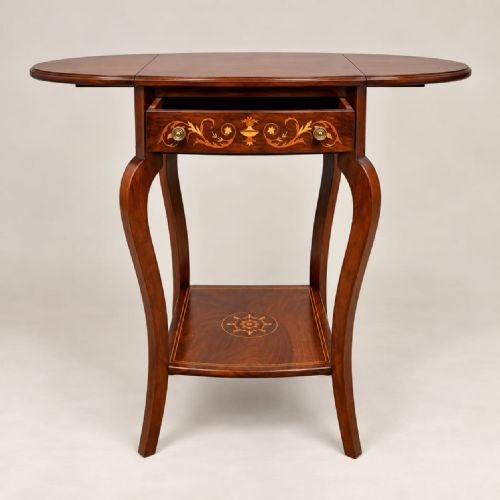
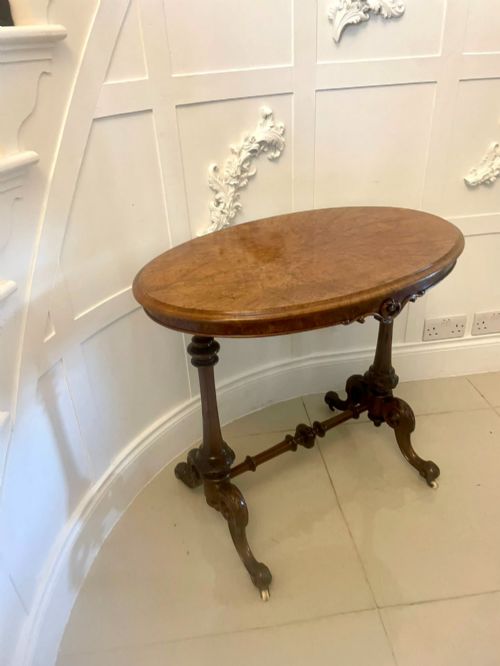
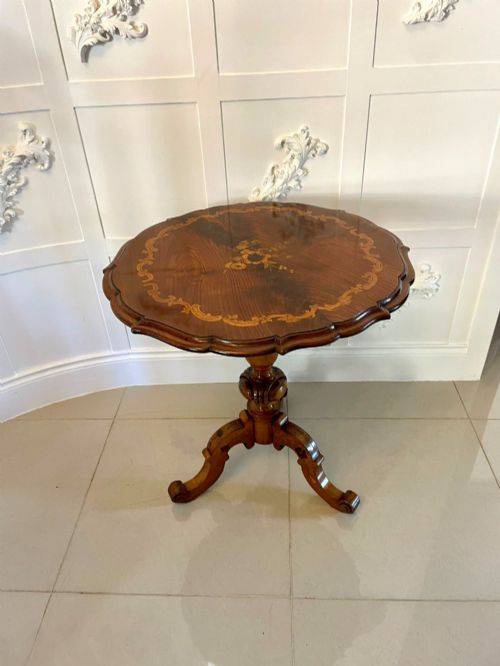
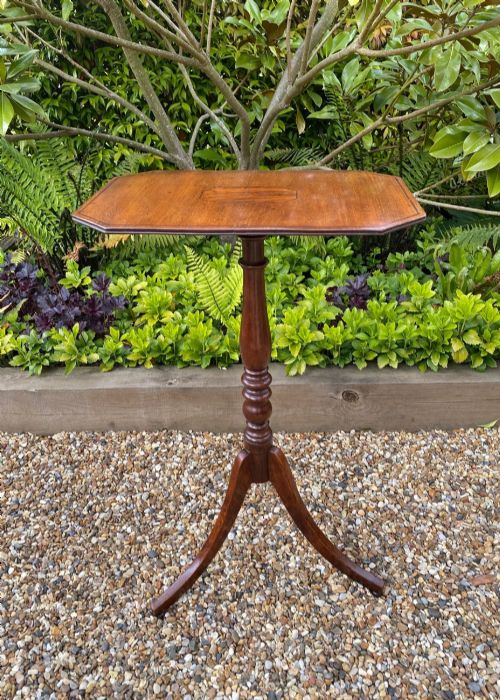
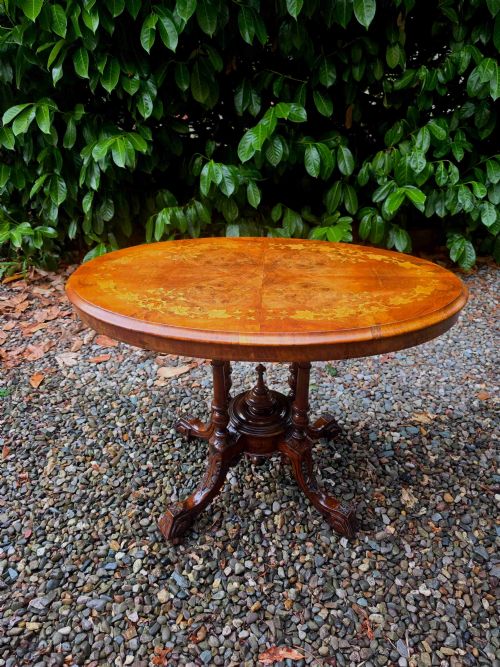
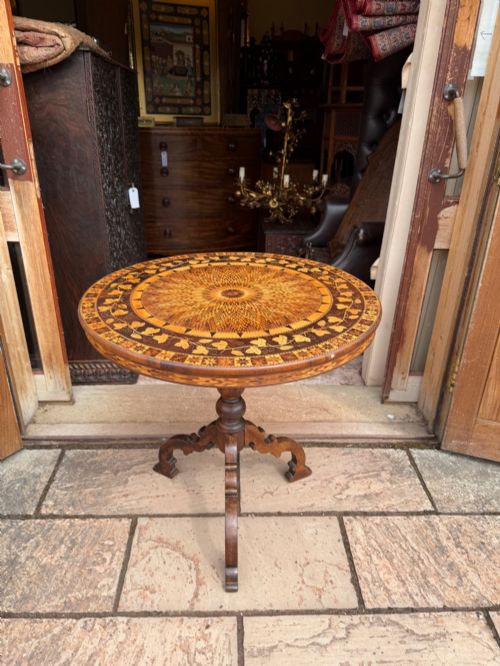
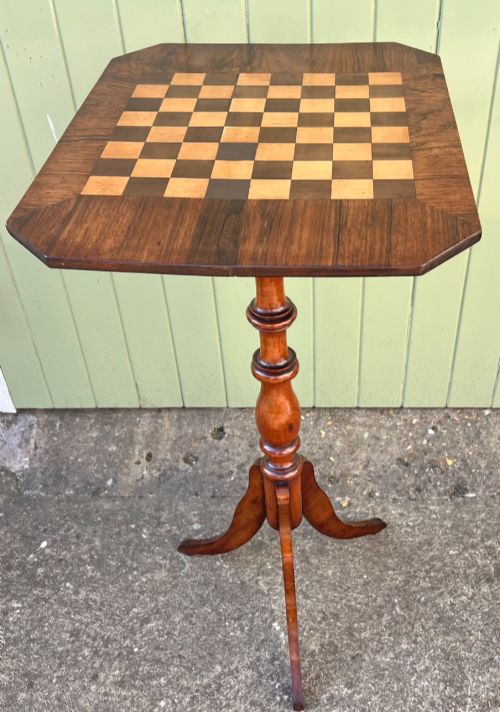
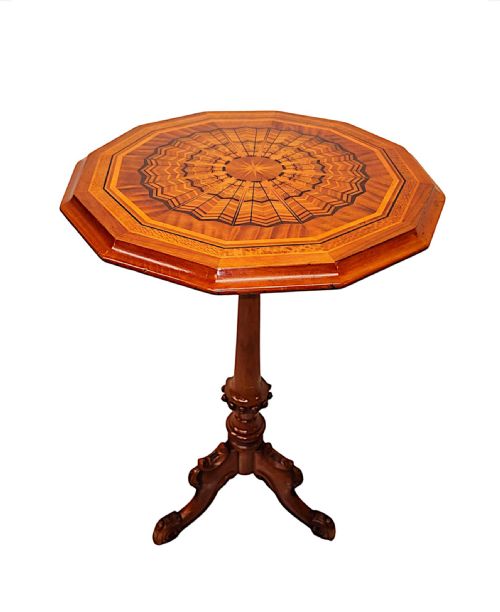
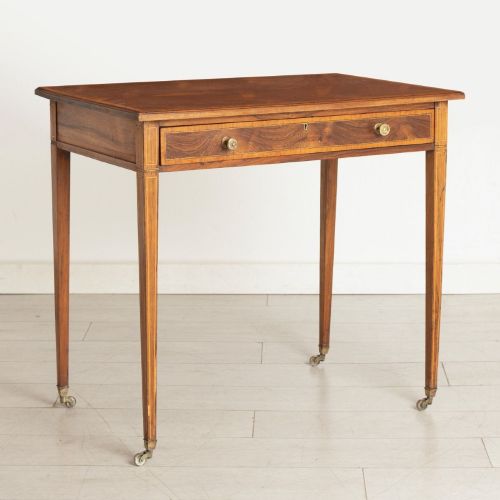
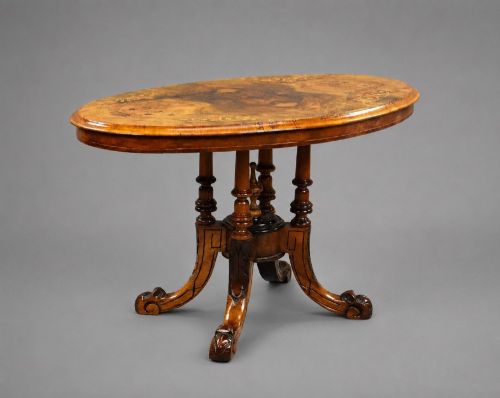
A victorian inlaid occasional table is a small, movable piece designed for nineteenth century drawing rooms, serving as lamp stands, games tables, and display surfaces. The form encompasses circular, oval, octagonal, and rectangular tops supported on pedestals, tripod bases, or four legs.
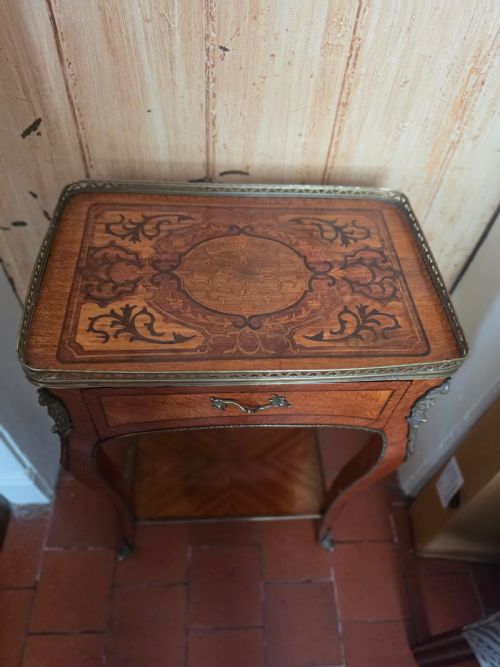
Burr walnut and rosewood form the core of the domestic English pieces, frequently embellished with floral marquetry and contrasting wood veneers. Alongside these local productions, the selections include Anglo-Indian Hoshiarpur octagonal tables and Moorish revival works employing bone, wire, and exotic timber inlay.
The category bridges utilitarian small tables and decorative centre pieces, reflecting nineteenth century tastes for revival styles ranging from Louis XV to Sheraton. Buyers encounter both compact lamp tables and larger octagonal centre pieces suitable for central placement in a room.
How They Were Made
Cabinet makers utilised solid secondary timbers like mahogany and beech as foundations, applying decorative surface veneers of burr walnut, rosewood, and satinwood. Wood inlay, parquetry, and pictorial marquetry were meticulously cut and fitted into the top surfaces.
Metal elements such as brass, copper, and ormolu mounts were integrated into French style and Cairo ware tables, while Anglo-Indian workshops carved dense floral patterns into native woods and inlaid bone or white metal.
Victorian Inlaid Occasional Table Retail Price Guide 2026
Typical asking prices for victorian inlaid occasional table among the pieces listed under this phrase on Sellingantiques today, from the lower quarter to the upper quarter. They describe what is for sale here now, not the wider market.
Some octagonal tables fold completely flat, proving the Victorians invented portable furniture for people who loved rearranging their rooms.
What Varies in Quality
The precision of the marquetry and parquetry defines the upper tiers of the range, where individual wood grains and contrasting tones create crisp, detailed motifs without visible filler or gaps. Finer pieces demonstrate superior selection in burr walnut and figured rosewood, showing deep natural figuring across the primary surfaces.
Construction methods and secondary details set standard commercial production apart from exhibition standard work. Robust internal framing, well-turned pedestals, and original brass hardware elevate the standing of a piece.
JAS Shoolbred·Gillows·Liberty & Co·Anton Seuffert
The Victorian Inlaid Occasional Table Glossary
- Marquetry
- A decorative technique where small pieces of veneer are assembled to form pictorial designs on a surface. This differs from simpler banding by creating complex floral or geometric pictures.
- Parquetry
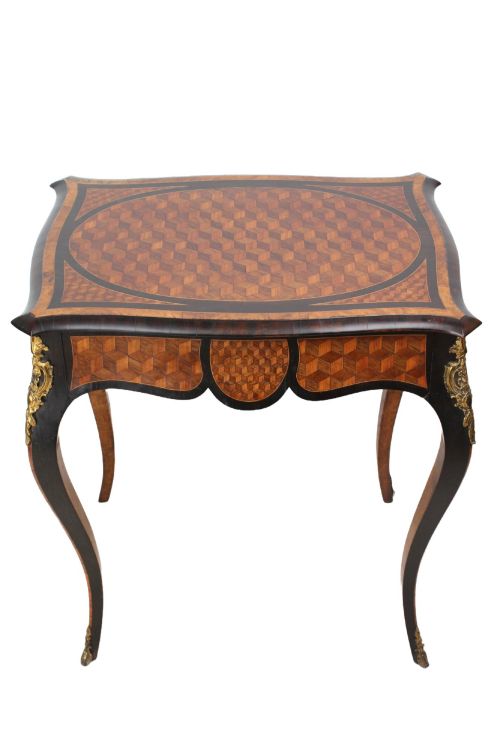
- Geometric wood inlay forming repeating patterns such as cubes or triangles across a table top. Craftsmen utilise contrasting timbers to achieve a three dimensional optical effect.
- Burr walnut
- Timber taken from the gnarled growth of a walnut tree, prized for its swirling, highly figured grain patterns. It provides a rich, textured surface for nineteenth century table tops.
- Ormolu
- Gilded bronze mounts applied to furniture edges and legs, common in French revival pieces. The metalwork adds sculptural weight and bright metallic contrast to dark woods.
- Occasional table
- A general term for a small, movable table used for specific tasks like holding lamps or books. These pieces were easily shifted around Victorian parlours as needed.
Victorian Inlaid Occasional Table: Frequently Asked Questions
What is an occasional table?
An occasional table is a small, movable piece of furniture designed for specific, intermittent use around the home, such as holding a lamp, book, or small decorative object.
During the nineteenth century, these versatile items were easily repositioned in parlours and drawing rooms to suit the social activities of the household.
What is the difference between marquetry and parquetry?
Marquetry involves cutting and assembling wood veneers to create pictorial scenes, scrolls, or floral motifs. It relies on curving organic shapes and tonal wood variations.
Parquetry uses geometric shapes like squares, triangles, and diamonds to build repeating, orderly patterns across a surface.
Where were Hoshiarpur tables made?
Hoshiarpur tables originated in the Punjab region of India and were heavily exported during the late nineteenth century to satisfy British demand for exotic furnishings. They are characterised by dense, all-over wood carving and intricate bone or metal inlay.
These octagonal pieces reflect the Victorian taste for Anglo-Indian and Moorish revival interior design.