



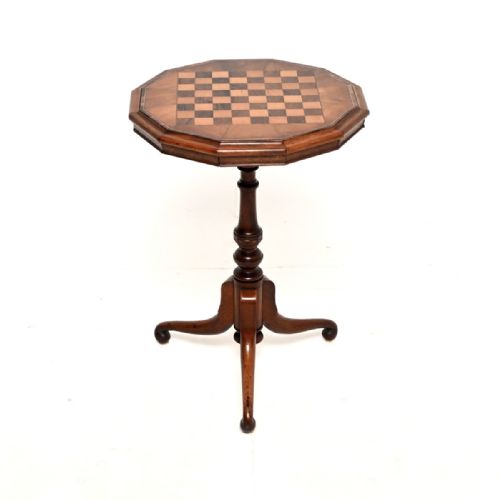
Victorian Inlaid Games Table
When you search for a victorian inlaid games table, you uncover dual-purpose walnut and rosewood folding surfaces engineered for nineteenth-century parlour pastimes.
Victorian Inlaid Games Table
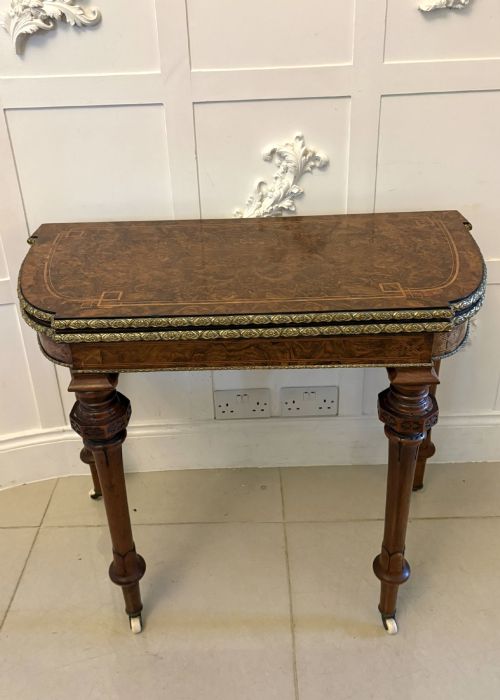
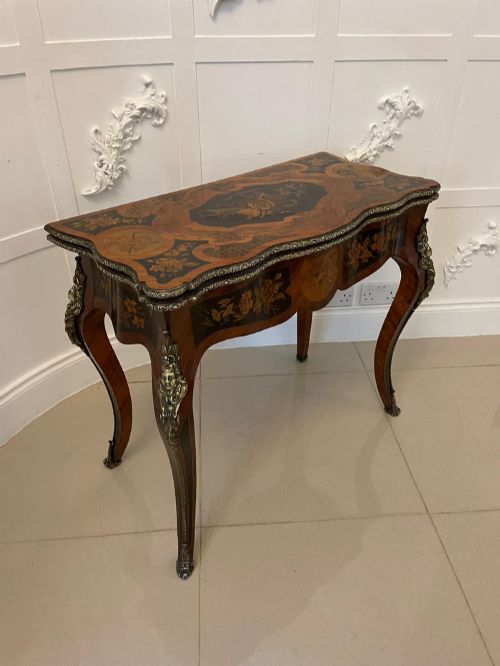
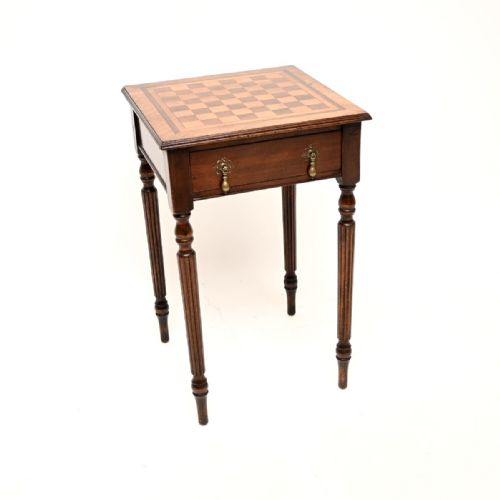
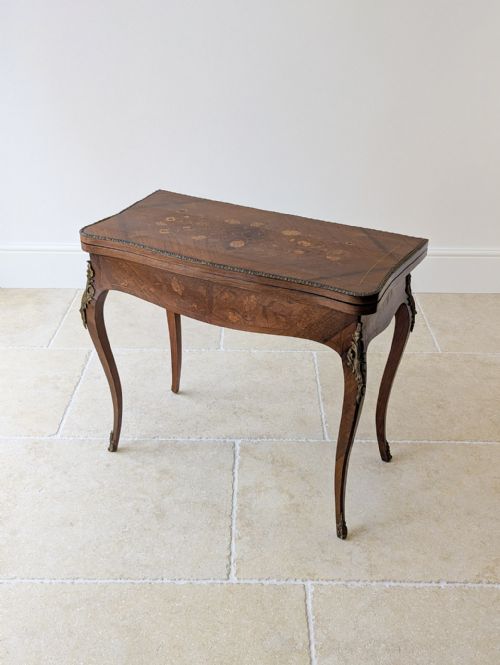
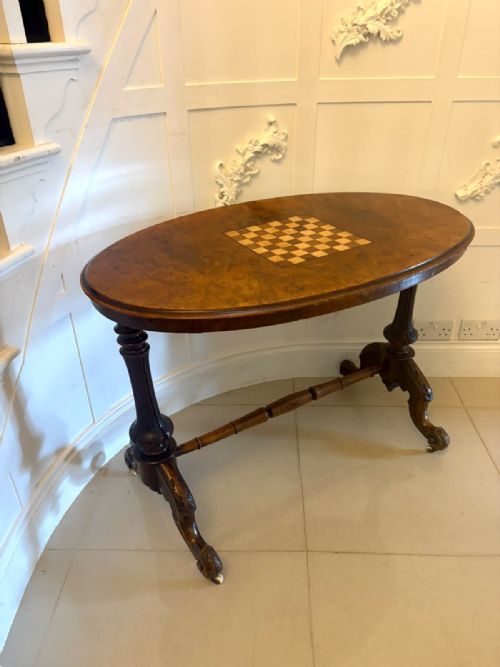
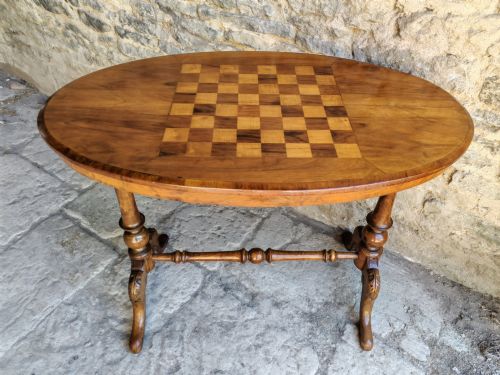
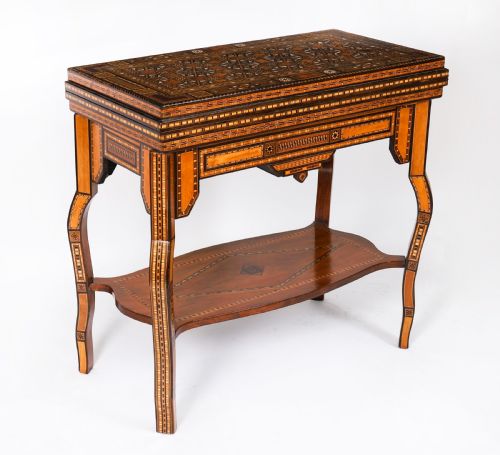
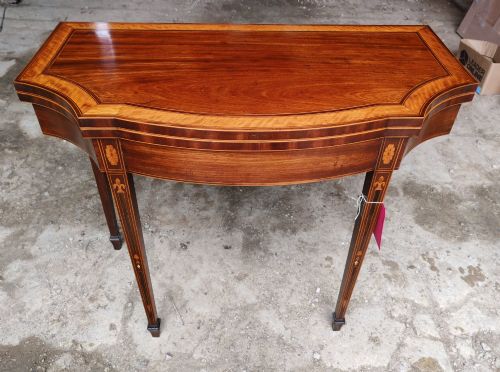
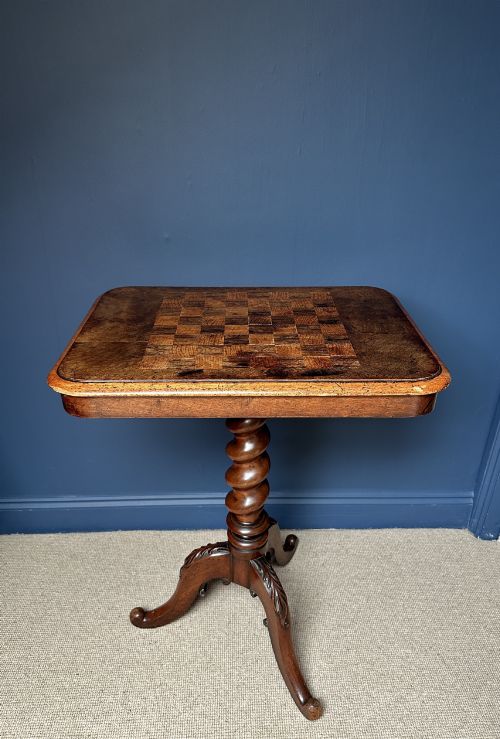
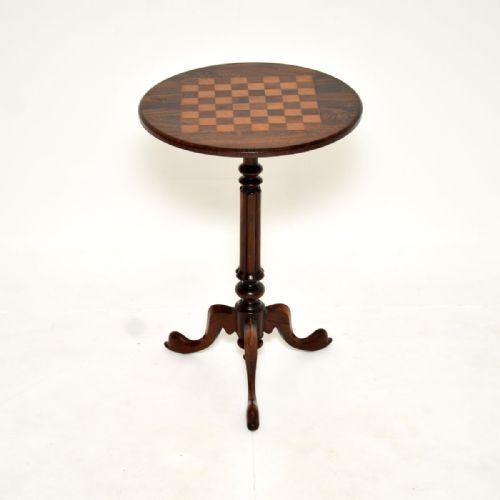
A victorian inlaid games table combines domestic utility with decorative marquetry, serving simultaneously as a writing surface, tea stand, or sewing station. The most prevalent versions encountered here are burr walnut fold-over card tables featuring integrated chess or backgammon boards.
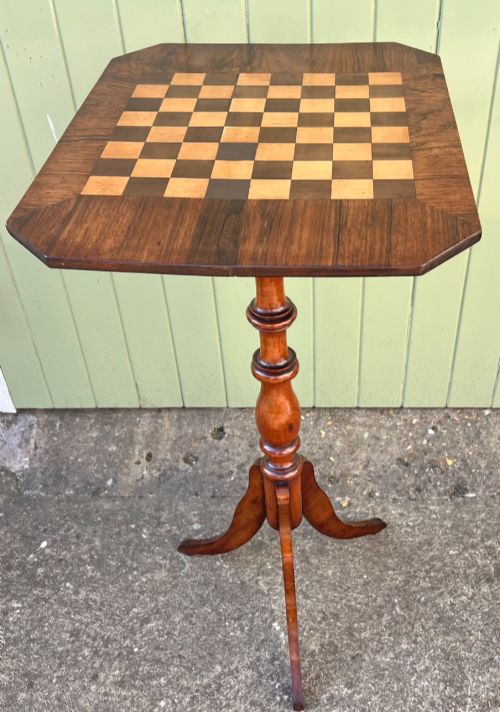
Makers utilised various formats, including swivel-top occasional tables, tripod bases, and sophisticated envelope designs that unfold symmetrically. Cabinetmakers also produced combined work-tables with drop bags for sewing beneath the gaming surface.
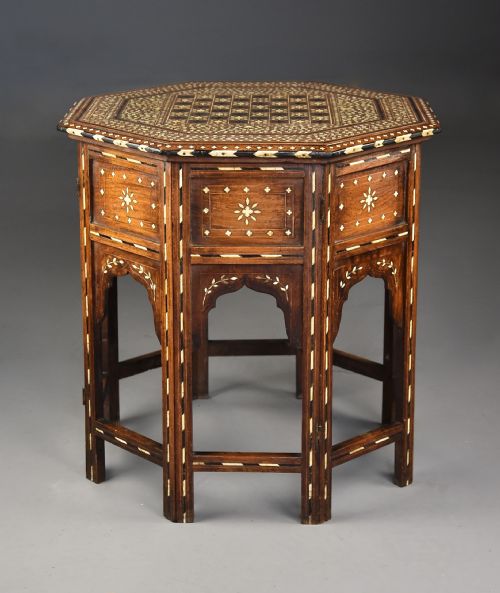
Origins span the core Victorian decades alongside later aesthetic movement and louis xv revival interpretations. Regional variations such as anglo-indian hoshiarpur tables introduce distinct carved elements to the standard European forms.
Materials and Construction
Cabinetmakers selected figured timbers like burr walnut, rosewood, and kingwood as primary foundations for veneering. These rich woods provided stable surfaces for intricate wood inlay and marquetry depicting floral motifs or geometric chess squares.
Structural elements incorporated secondary woods such as mahogany and oak, particularly within internal framing and drawer compartments. Brass hinges, swiveling mechanisms, and cast ormolu mounts secured the folding leaves and supported heavier console bases.
Some tables double as sewing desks, hiding wool and needles beneath the chessboard for industrious Victorians.
Markers of Distinction
Quality rests upon the selection of timber veneers and the precision of the marquetry work. Highly figured burr walnut and balanced floral panels indicate superior workshop output compared to simpler, repetitive geometric banding.
Mechanical integrity dictates practical value. Tables with smoothly operating swivel hinges, tightly aligned folding leaves, and original castors demonstrate careful initial construction and attentive preservation.
Maple and Co·Edwards and Roberts
The Victorian Inlaid Games Table Glossary
- Burr walnut
- A prized timber harvested from walnut tree growths, producing highly figured, swirling grain patterns. It forms the primary visual surface on many fine nineteenth-century examples.
- Marquetry inlay
- The art of applying decorative veneer pieces of various woods to create pictorial designs on a solid background. Floral sprays and geometric borders dominate these surfaces.
- Envelope card table
- A clever design featuring four triangular leaves that swivel and fold outward to reveal a baize-lined playing surface. The mechanism opens in a single diagonal motion.
- Ormolu
- Cast bronze finished with a fine gold-gilt layer, utilised for decorative mounts and edgings. It accents the corners and legs of revival pieces.
- Trumpet table
- A pedestal table featuring an octagonal or flared body resembling a musical instrument, often housing a fitted sewing compartment beneath the lid.
Victorian Inlaid Games Table: Frequently Asked Questions
How do these tables function?
Most examples feature a hinged top that folds open to double the surface area, often revealing a lined interior for playing cards, chess, or backgammon. Some incorporate internal compartments for storing game pieces or sewing accessories.
Heavier console versions rely on swivel mechanisms or pivoting supports to hold the heavy walnut leaf steady when open. Smaller tripod and envelope models utilise pivoting pivots or folding actions to expose the baize playing surface.
What woods were used?
Burr walnut remains the most common primary timber, valued for its complex, swirling grain patterns. Rosewood, kingwood, and mahogany also appear frequently across different stylistic periods.
Inlays incorporate contrasting light and dark woods, including satinwood, boxwood, and ebony, to delineate chess squares and floral marquetry details.
Where were they placed?
Victorian households positioned these items in drawing rooms and parlours where guests gathered for entertainment. Against a wall as a console or freestanding in the centre of the room, they served decorative and practical roles alike.
When closed, they functioned as ordinary side tables, lamp tables, or desks until needed for evening games.
How do I date an example?
Mid-nineteenth-century pieces typically display rich burr walnut veneers with elaborate floral marquetry and heavy serpentine forms. Later nineteenth-century versions often embrace rosewood, lighter satinwood banding, or aesthetic movement oak.
Construction details, such as screw types, secondary timbers like oak versus mahogany, and specific maker signatures or stamps, provide further chronological markers.