
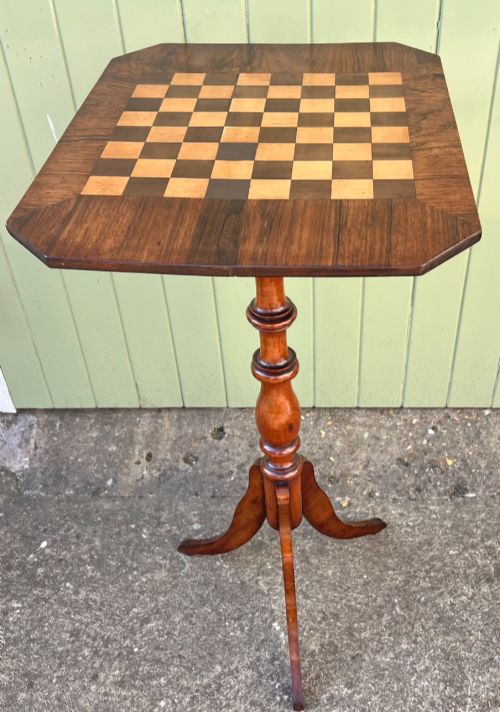
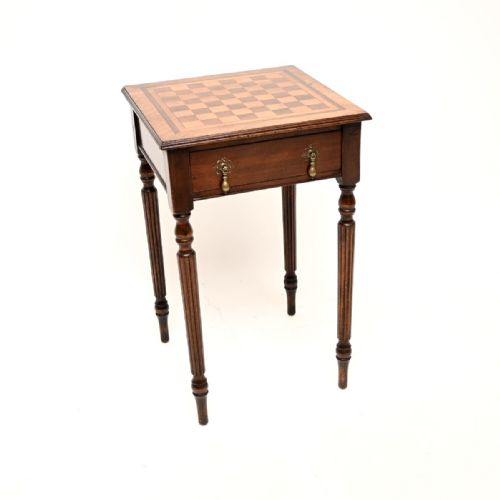
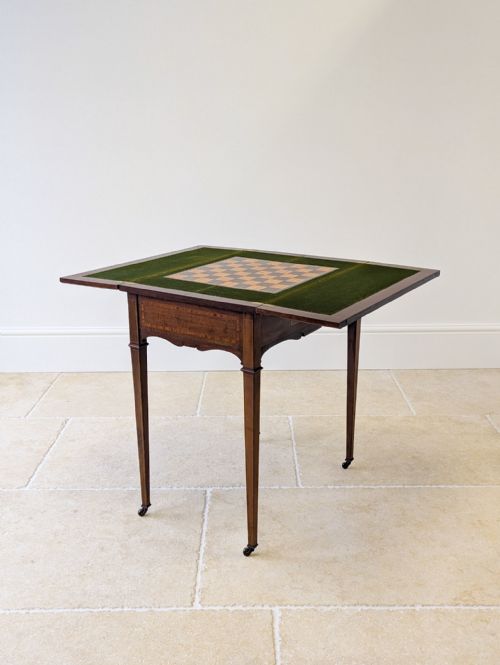
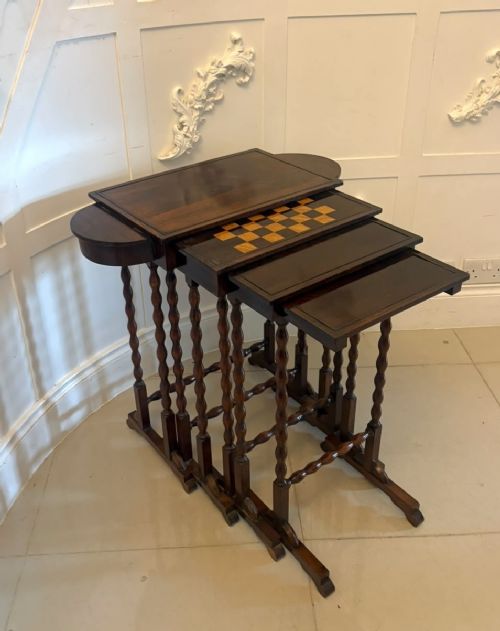


Vintage Chess Game Table
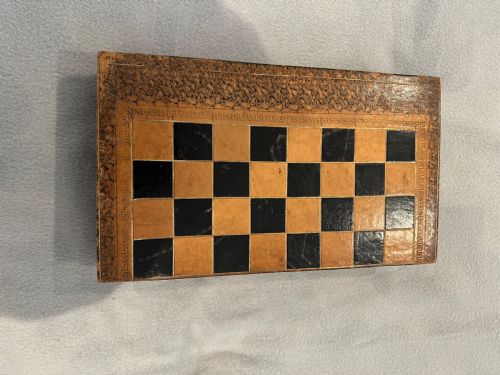
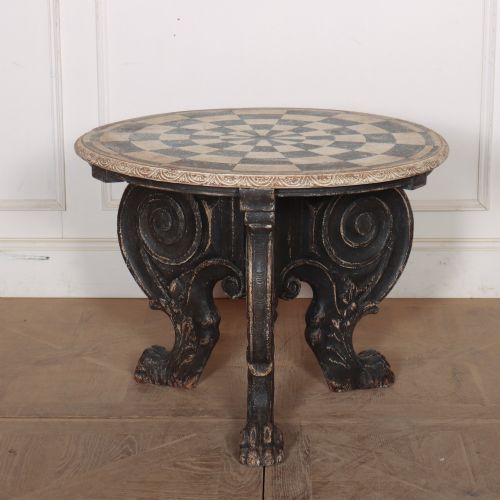
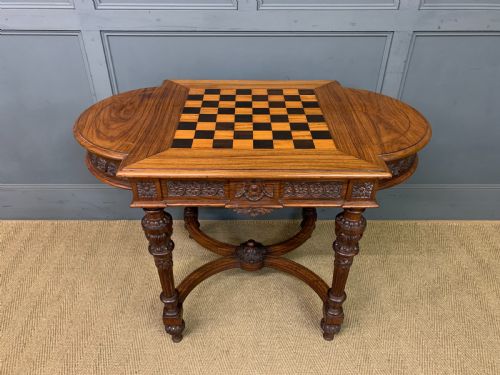
A vintage chess game table brings a tactile challenge and rich timber into a room, offering both a surface for play and a piece of period furniture.
Vintage Chess Game Table
When you search for a vintage chess game table, you encounter a specialised form designed for tabletop strategy, often combining everyday utility with a dedicated playing surface. These pieces range from compact folding boards to elaborate multi-game compendiums and nested tables.
The selections span various eras, drawing from nineteenth-century workshops, Edwardian parlours, and Regency designs. Rosewood, mahogany, and walnut dominate the forms, frequently enriched with contrasting woods or leather work.
How they were made
Cabinetmakers utilised dense timbers such as rosewood, mahogany, and walnut for the primary structures, ensuring stability during play. Inlays of boxwood, ebony, and satinwood created the precise contrasting squares required for the board.
Specialised construction techniques accommodated folding mechanisms, integrated drawers for pieces, and multi-functional tops that convert from side tables to gaming surfaces.
Listings feature nineteenth-century, Edwardian, and Regency periods, utilising rosewood, mahogany, walnut, and brass.
What varies in quality
The standard of timber selection and the precision of the wood inlay define the upper tier of these pieces. Clean alignment of the contrasting squares and tight joinery in the folding mechanisms indicate superior craftsmanship.
Design complexity also sets examples apart, ranging from simple occasional tables with inlaid tops to intricate nests of tables and comprehensive games compendiums housing multiple pastimes.
British Chess Company
The Vintage Chess Game Table Glossary
- Inlay
- A technique where pieces of contrasting material are fitted into a recess flush with the surface to create decorative patterns. This method forms the distinct light and dark squares of the playing surface.
- Compendium
- A boxed collection of several games housed together in a single portable or table unit. These often include chess, checkers, and card accessories.
- Quartetto
- A matched set of four tables designed to slide neatly beneath one another. Evidence shows examples incorporating integrated chess tables within this nested arrangement.
- Fold over
- A tabletop design featuring a hinged leaf that opens to double the surface area. This mechanism frequently conceals a green baize card playing surface or a chess board beneath.
Vintage Chess Game Table: Frequently Asked Questions
What is a vintage chess game table?
A vintage chess game table is a dedicated piece of furniture featuring an integrated playing surface for chess. These tables date from various historical periods and often combine ornamental woodwork with practical use.
Many examples offer multi-functional surfaces, such as fold-over tops or removable boards, allowing them to serve as standard occasional tables when not in use.
How do I choose the right size?
Consider the available floor space in your room and whether you intend to use the table primarily for display or regular play. Smaller folding or nested versions suit compact areas.
Larger compendiums and pedestal tables require more permanent placement and offer a distinct focal point for a study or drawing room.
Were these tables used only for chess?
Many tables designed for chess incorporate multi-game functionality. Examples often support cards, backgammon, and draughts alongside the standard chess layout.
Comprehensively fitted compendiums include entire sets of pieces and boards for multiple traditional parlour games within a single cabinet.
What woods are commonly found?
Rosewood, mahogany, and walnut form the predominant structural timbers across the available selection. Lighter woods like boxwood and satinwood provide the contrast for the board squares.
Some regional variations also utilise birch, oak, and specialised inlaid marble to achieve distinct aesthetic qualities.