


Sheraton Revival Console Table
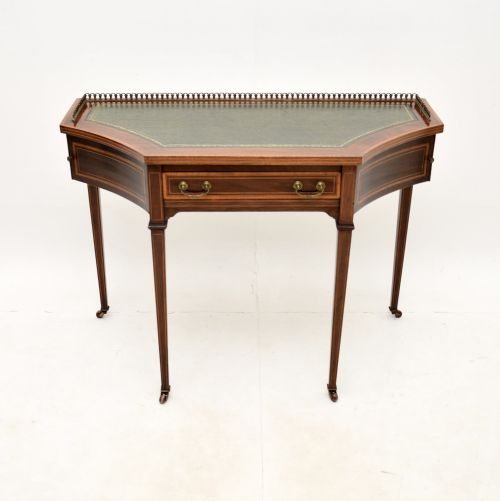
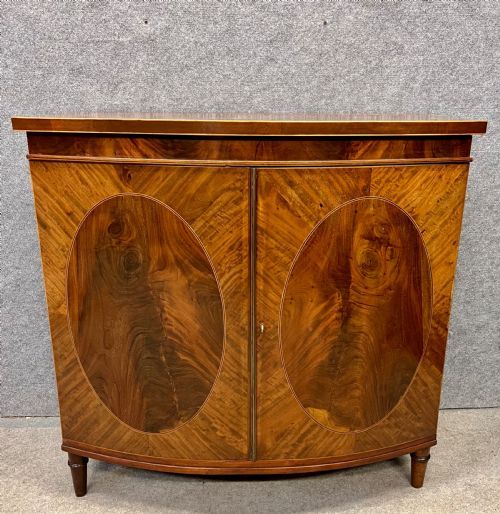
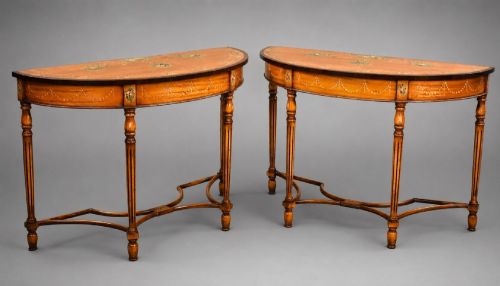
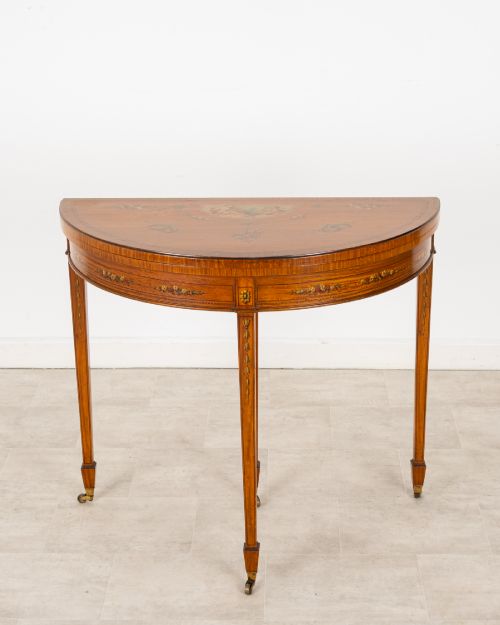
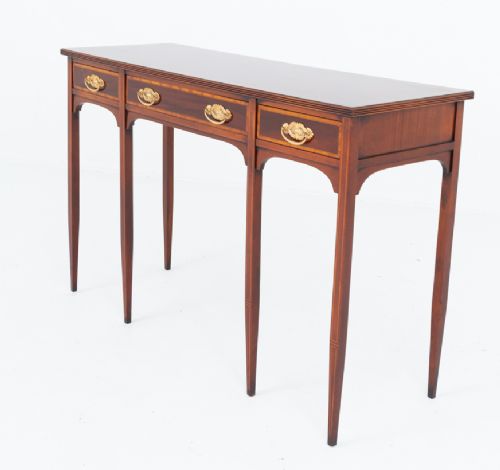
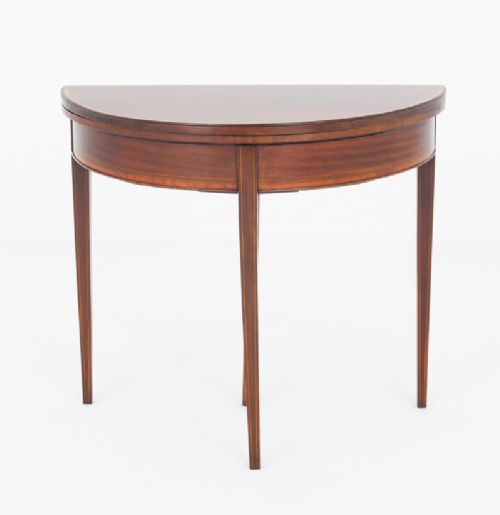
These sheraton revival console table pieces bring neoclassical elegance into a room through curved satinwood and mahogany structures.
Sheraton Revival Console Table
A sheraton revival console table embodies the refined lightness of late eighteenth-century design reinterpreted during the Victorian and Edwardian periods. You will frequently encounter demi-lune shapes designed to stand flush against a wall in a hallway or drawing room.
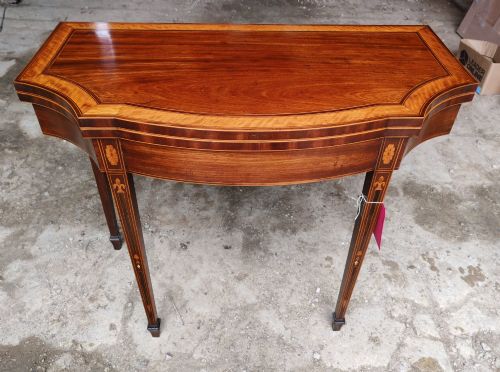
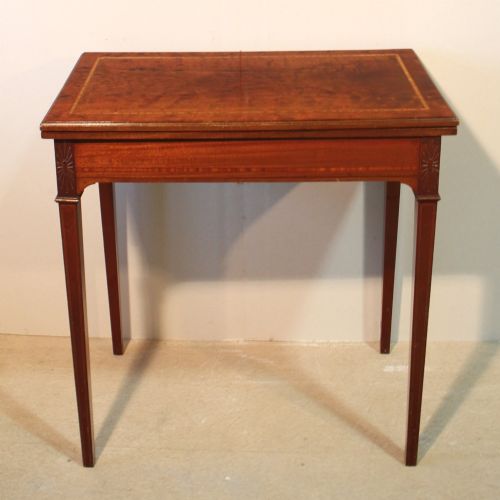
The selection here spans console tables alongside related forms such as card tables, games tables, and writing tables created in the same stylistic vocabulary. These pieces bridge the gap between ornamental display surfaces and functional occasional furniture.
Origins stretch from the late nineteenth century through to the early decades of the twentieth century, capturing the height of Edwardian and Victorian cabinet-making revivals. Makers of this era looked back to Sheraton's neoclassical lightness while employing the denser timbers available to them.
Assessing Quality and Execution
Quality rests upon the crispness of the inlay work and the harmonious choice of timber veneers, where balanced figuring elevates a piece above standard production. Painted details show their merit in the fineness of the brushwork and the preservation of pigment over time.
Structural integrity reveals itself in the seamless movement of foldover mechanisms on card and games tables, alongside the stability of slender tapering legs. Superior examples maintain tight joints and careful matching of mahogany or satinwood grains across curved surfaces.
Listings feature mahogany and satinwood predominantly, enhanced by boxwood inlay and occasional brass accents across Edwardian and Victorian periods.
Edwards & Roberts·Maples of London
The Sheraton Revival Console Table Glossary
- Demi-lune
- Half-moon shape. This semi-circular form allows console tables to sit compactly against walls while offering a decorative surface.
- Inlay
- Material embedded into a recess. Craftsmen use boxwood or contrasting timbers flush with the primary wood surface to form geometric or floral patterns.
- Cross-banding
- Border veneer applied perpendicular to the grain. This technique frames table tops and drawer fronts with a contrasting stripe of timber.
- Marquetry
- Veneers arranged to form decorative pictures. Artisans assemble small pieces of various woods to create pictorial designs on table tops and cabinet doors.
- Satinwood
- Luminous yellowish timber. Highly prized for its reflective grain, it serves as a primary wood or a contrasting veneer in neoclassical revival furniture.
Sheraton Revival Console Table: Frequently Asked Questions
What is a sheraton revival console table?
A sheraton revival console table is a decorative piece of furniture produced in the nineteenth or early twentieth century in the style of the Georgian designer Thomas Sheraton.
These tables typically feature slender tapering legs, satinwood or mahogany veneers, and delicate inlay work designed for display rather than heavy domestic use.
How do I use a console table at home?
Console tables fit neatly against walls in narrow spaces like hallways, entryways, and reception rooms where floor space is at a premium.
They provide a convenient surface for lamps, mirrors, or decorative objects while adding a distinct neoclassical accent to your interior scheme.
How can I tell Edwardian from Victorian pieces?
Victorian revival pieces often display heavier proportions and deeper mahogany tones, reflecting the tastes of the later nineteenth century.
Edwardian examples tend towards greater lightness, frequently utilising bright satinwood veneers and more restrained, delicate painted decorations.
Were these tables used for games?
Many console and occasional tables from this period were built with foldover tops designed to open out for card games and board pursuits.
When closed, they function as standard console tables, hiding green baize playing surfaces safely inside the folded top structure.