
Victorian Glazed Display Case
When you need a victorian glazed display case, you are looking for timber furniture built to hold books, curiosities, or collections behind glass.
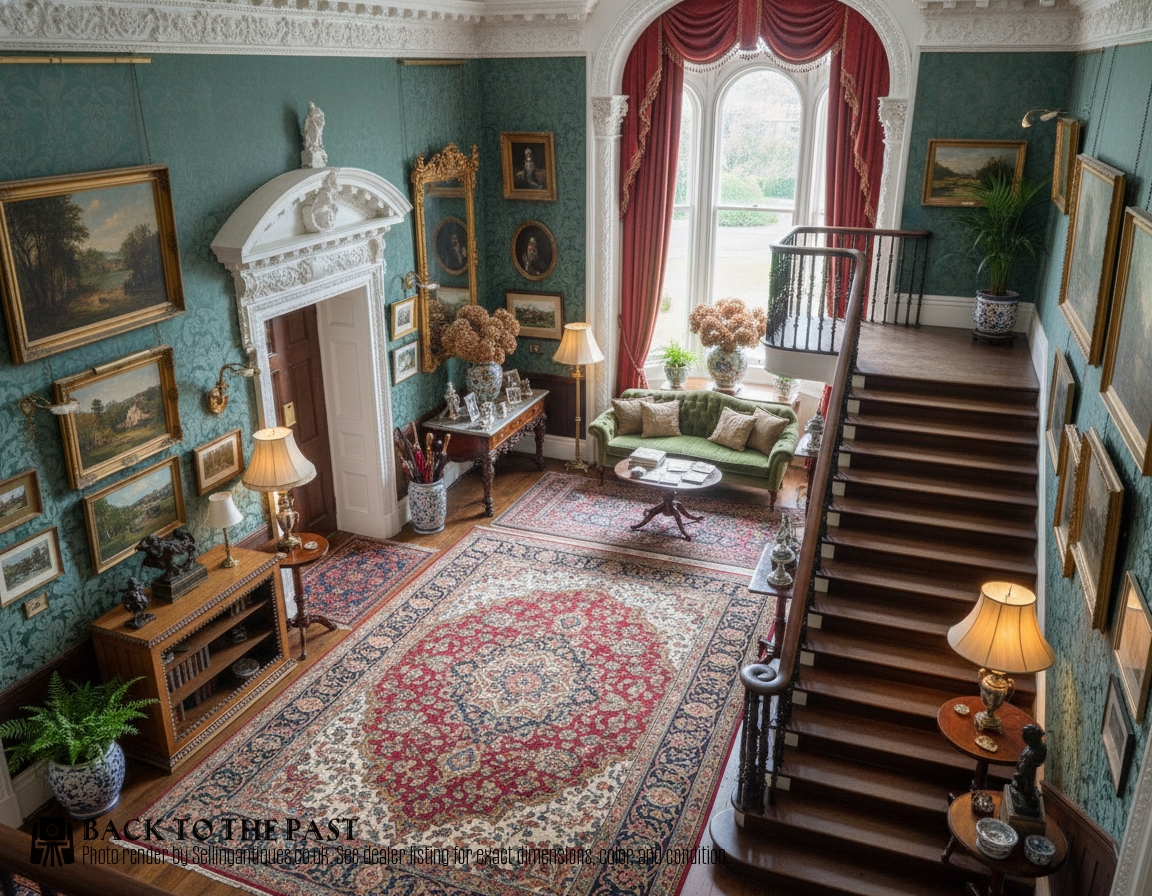
Victorian Glazed Display Case
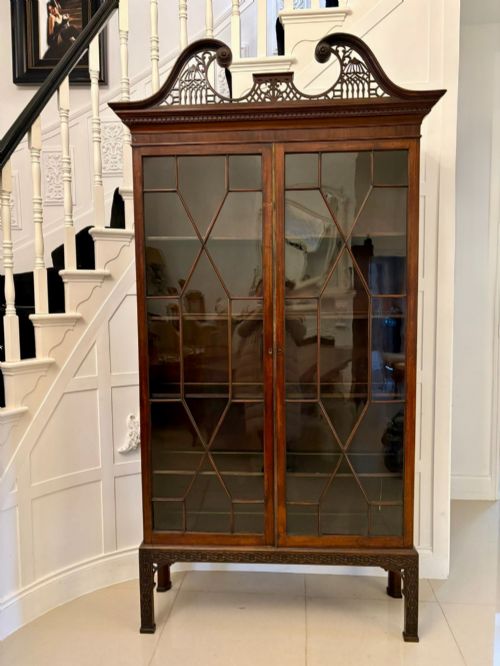
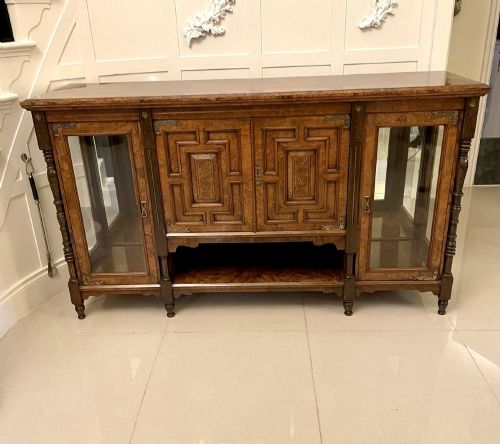
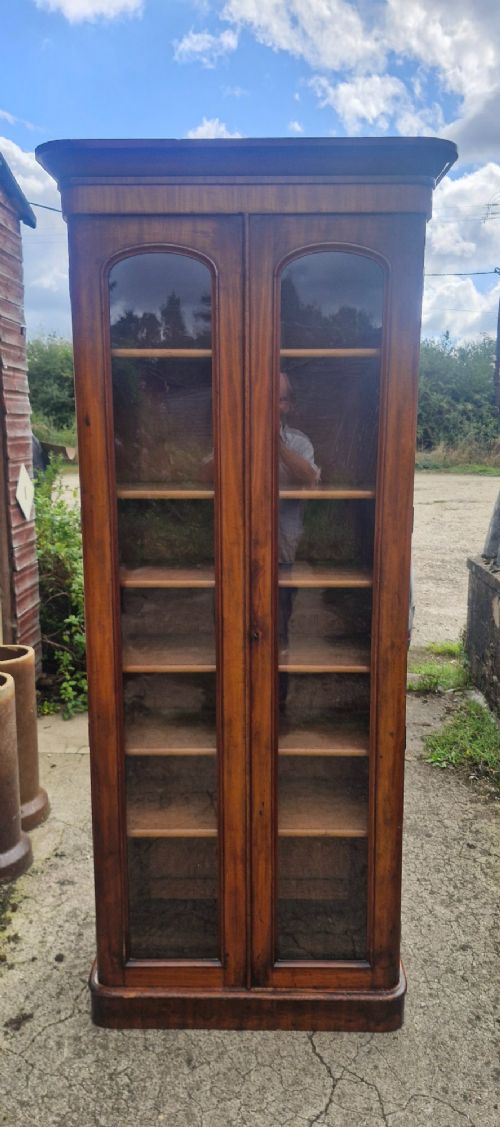
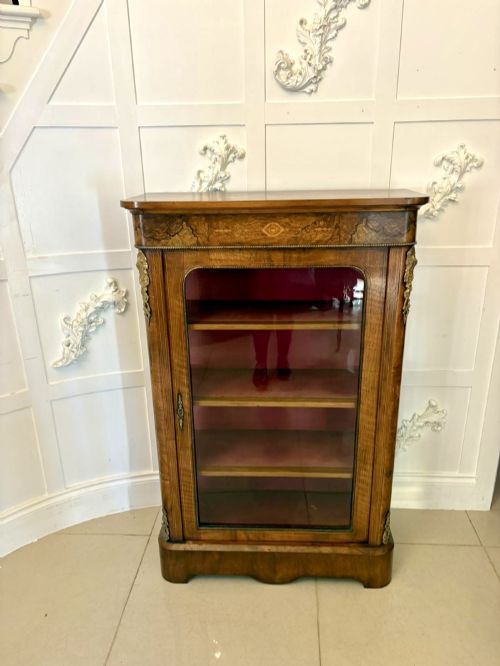
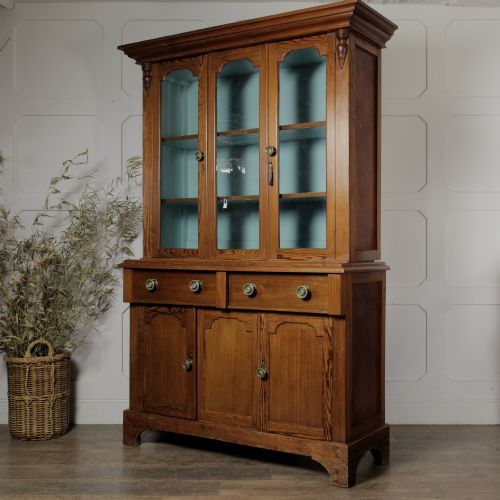
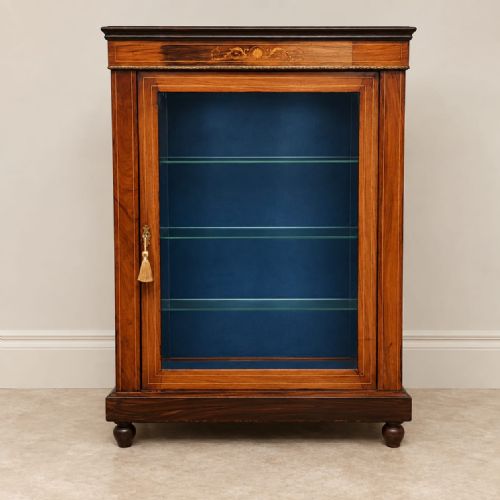
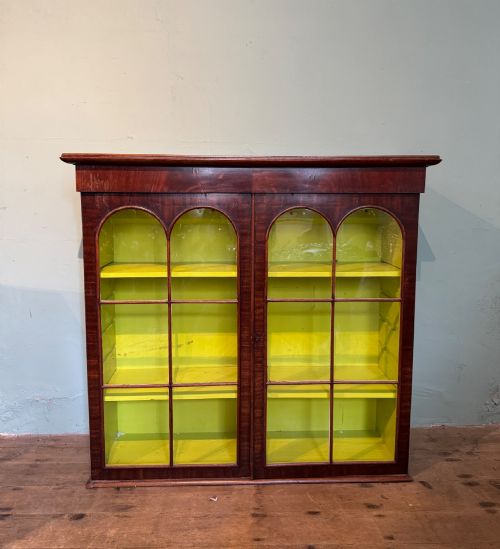
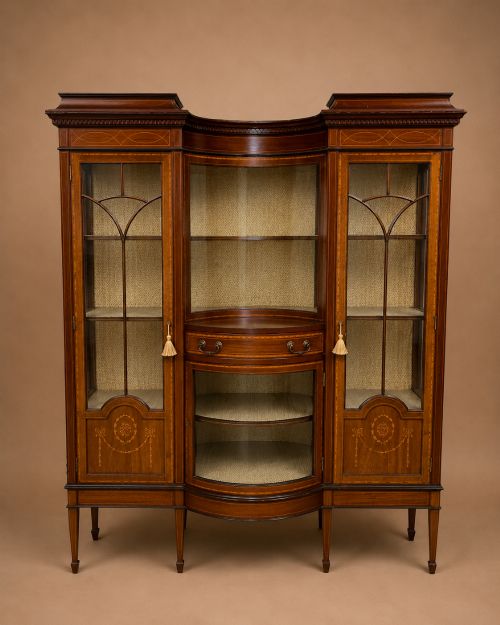
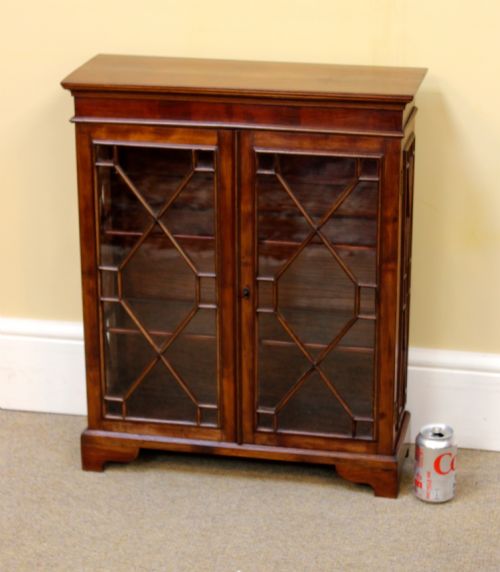
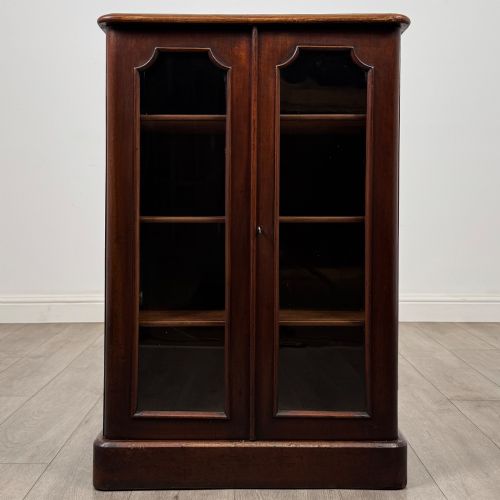
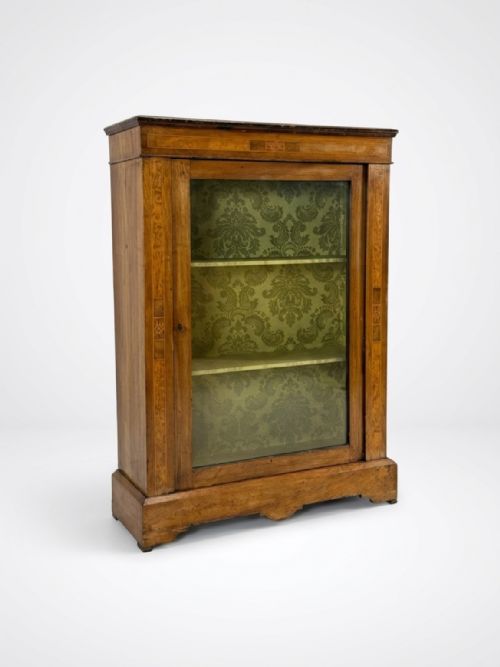
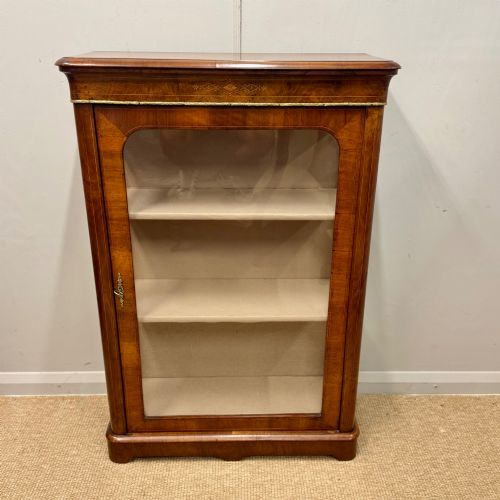
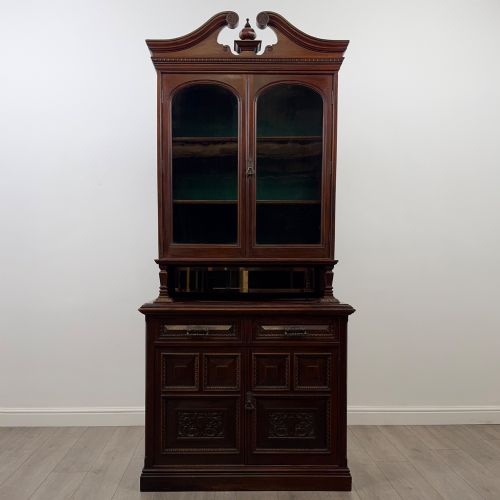
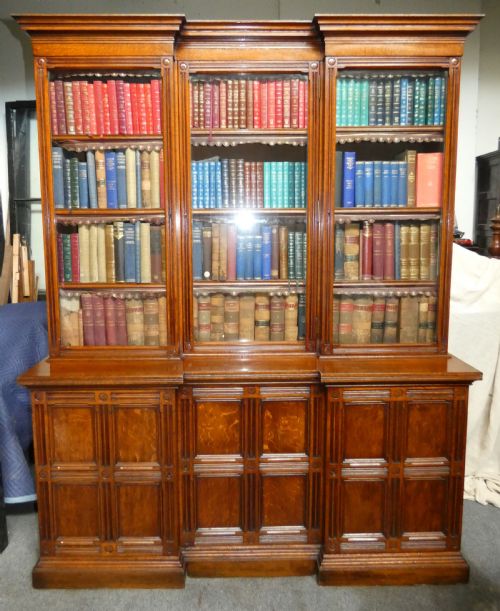
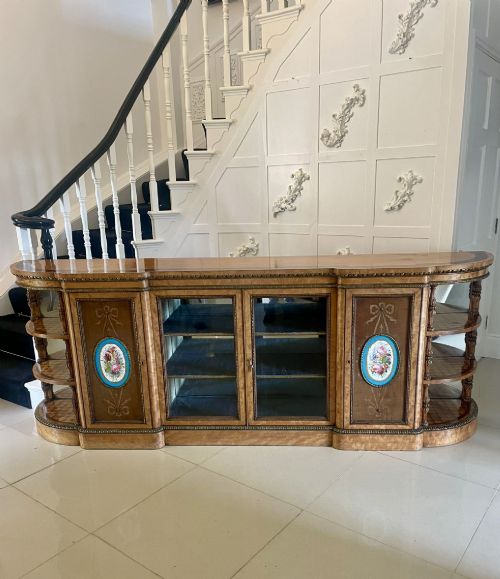
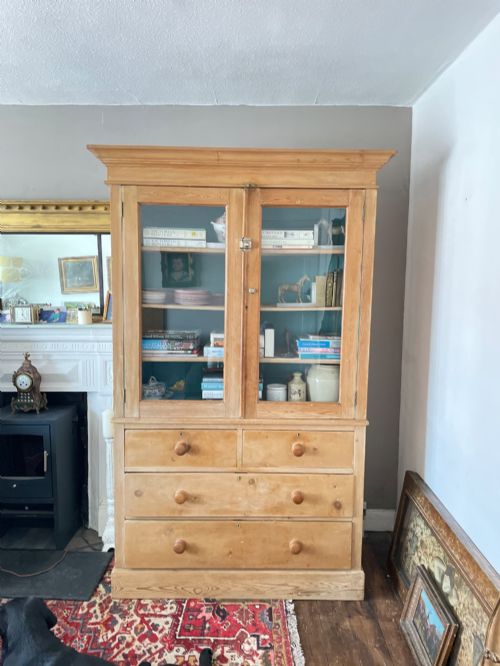
A victorian glazed display case encompasses a wide variety of domestic furniture designed to protect and exhibit valued items. The selection on this page includes large library bookcases, slim pier cabinets, sideboards, and tabletop entomology or taxidermy boxes.
Mahogany and walnut dominate the formal examples, often enhanced with marquetry or brass mounts, while utilitarian pine and oak versions serve more functional storage roles. Dating predominantly from the nineteenth century, these pieces range from compact single-door pier units to monumental breakfront bookcases intended for grand rooms.
How they were made
Cabinet makers utilised solid and veneered timbers, selecting burr walnut, flamed mahogany, and satinwood for visible exterior surfaces. Frames incorporate glass panes secured with wooden glazing bars or astragals, alongside brass hardware and velvet linings for interior shelving.
Construction techniques include hand-cut dovetails for drawer boxes and mortise and tenon joints for the main carcass. Many larger bookcases separate into two distinct parts for transport, combining a glazed upper section with a lower cupboard or chest of drawers.
Victorian households loved miniature furniture, leading cabinet makers to build tiny display cases and bookcases to showcase their joinery skills.
What varies in quality
The standard of timber selection and decorative inlay dictates the tier of the piece. Elaborate marquetry, ormolu mounts, and finely figured burr walnut veneers denote workshop items produced for affluent Victorian households, contrasting with plain pine intended for utility.
Proportion and the intricacy of the woodwork also divide ordinary storage from exceptional cabinet work. Carved astragal bars, adjustable shelving mechanisms, and panelled plinths reveal the hand of skilled makers who prioritized architectural harmony alongside utility.
Lamb of Manchester·William Bazeley And Sons·James Winter
The Victorian Glazed Display Case Glossary
- Astragal
- Moulding attached to the edge of a door to seal the gap between meeting pairs. In glazed cabinets, it refers to the slender wooden bars dividing the glass panes.
- Pier cabinet
- A low freestanding cabinet designed to fit against the wall space between windows. These are frequently veneered in walnut and embellished with marquetry.
- Ormolu
- Gilded bronze used for decorative mounts on nineteenth-century furniture. It accentuates the corners and cornices of high-status display cases.
- Marquetry
- Decorative veneer work arranged in pictorial or geometric patterns. Makers used contrasting woods like boxwood and satinwood to create detailed floral motifs.
- Breakfront
- A cabinet front where the central section projects forward from the flanking wings. This configuration adds architectural depth to large bookcases and credenzas.
Victorian Glazed Display Case: Frequently Asked Questions
How do I clean the glass?
Use a soft cloth and a mild glass cleaner sprayed onto the cloth rather than directly onto the wood. This prevents moisture from damaging antique polishes and delicate timber surrounds.
Take care around old glazing putty or delicate astragal bars, as vintage timber can be brittle and sensitive to excessive pressure during cleaning.
Are the shelves adjustable?
Many bookcases and display cabinets feature adjustable wooden or glass shelves supported by brass studs or rack-and-pinion strips. This allows you to alter the interior layout for different book heights or display items.
Simpler or earlier pieces may have fixed wooden shelves secured directly into the carcass walls during original construction.
Can I use these for modern collections?
These cabinets provide secure, dust-free environments that suit books, ceramics, and small curiosities. The enclosed glass design keeps delicate items protected while offering clear visibility.
Consider the depth of the shelves and the weight capacity before loading them with heavy objects, particularly in smaller pier cabinets.
How do I date a cabinet?
Examine the timber, construction methods, and secondary woods visible on the backboards and drawer linings. Late-nineteenth-century pieces often display machine-sawn elements and revival styles such as Sheraton or French Rococo.
Earlier examples from the mid-nineteenth century frequently employ denser hand-prepared timbers, simpler joinery marks, and distinct regional cabinet-making traits.