



Victorian Walnut Music Cabinet
When you search for a victorian walnut music cabinet, you discover refined 19th-century drawing room furniture built to store sheet music with considerable elegance.
Victorian Walnut Music Cabinet
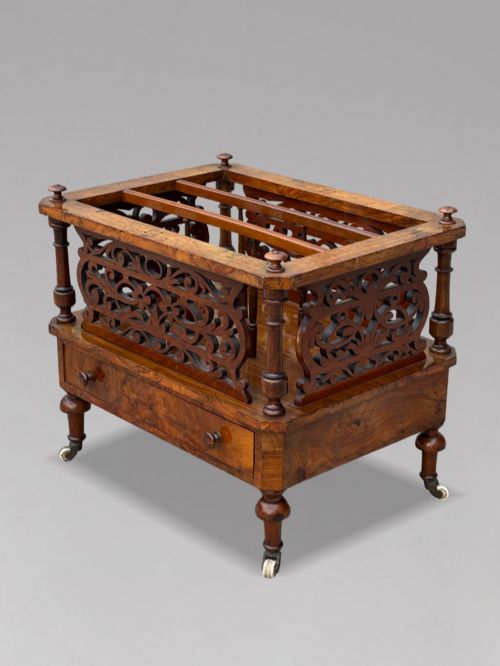
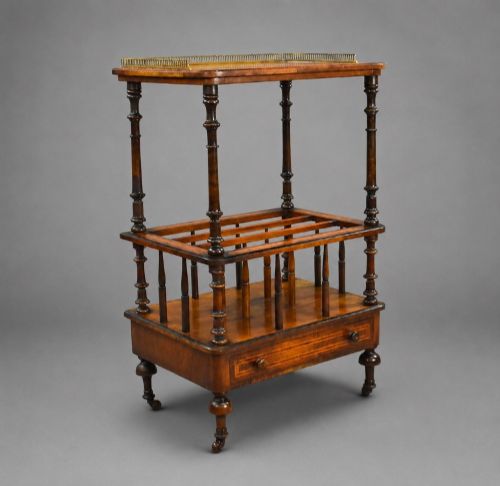
A victorian walnut music cabinet represents specialised 19th-century salon furniture designed specifically for the organisation of sheet music and folios. The pieces appearing here span the Victorian period, including examples from the 1850s, 1860s, 1870s, 1880s, and 1910.
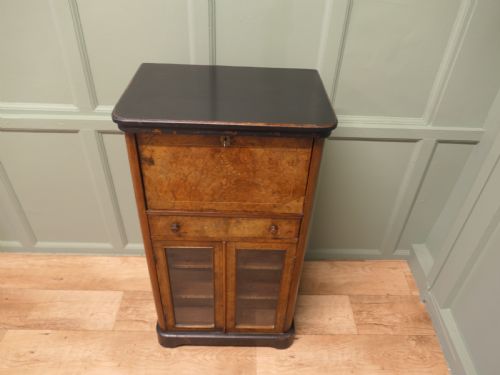
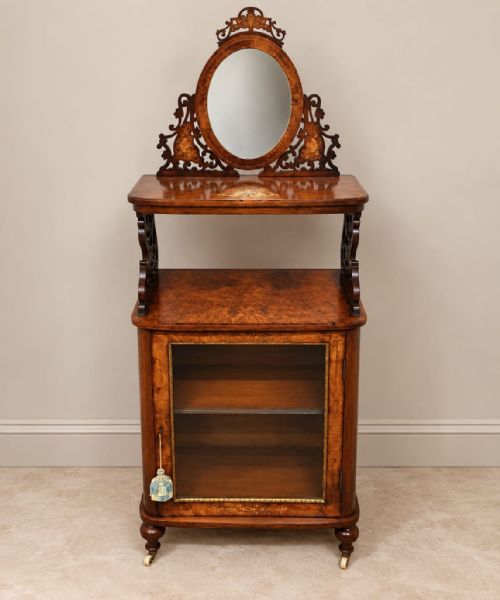
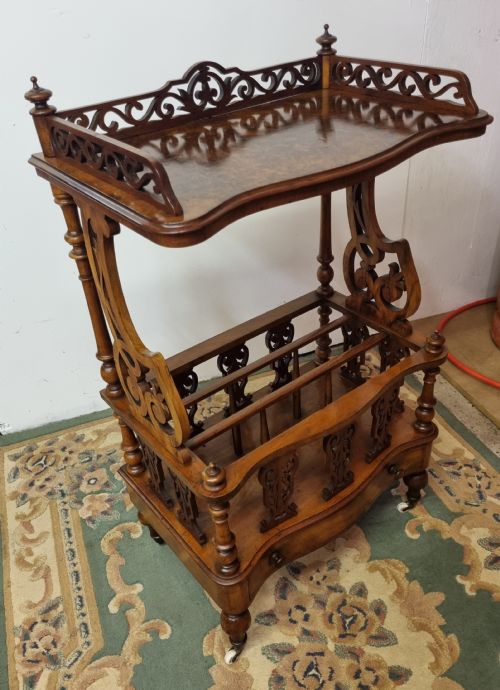
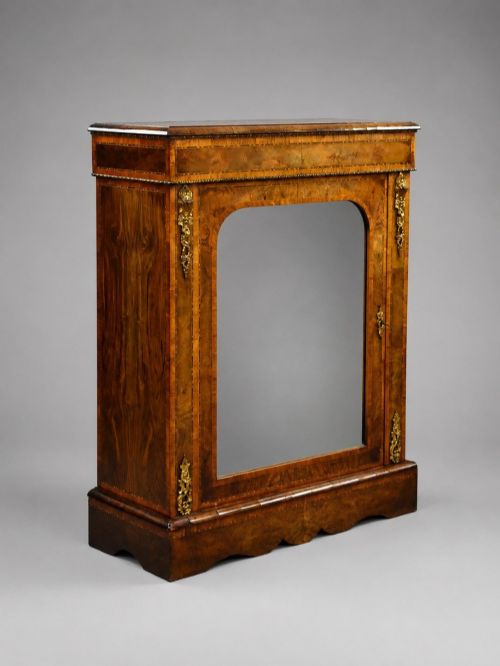
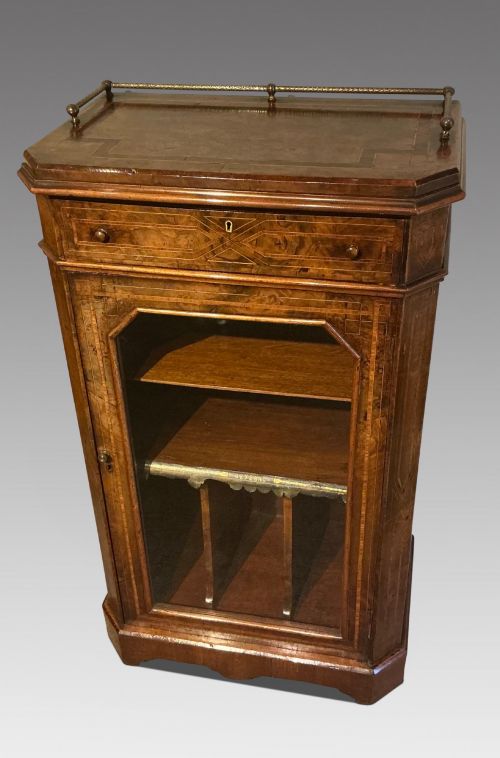
Buyers will encounter various forms fulfilling this storage function, ranging from dedicated music cabinets and canterburys to pier cabinets, display cabinets, side cabinets, and etageres. Many feature specialised internal compartments alongside glazed doors, mirrors, or drop-front drawers suited for domestic music rooms.
How they were made
Cabinet makers utilised solid walnut and decorative burr walnut veneers over secondary timbers, often accentuating the figured grain with boxwood marquetry and ebony stringing. These surfaces frequently incorporate contrasting brass hardware, ormolu mounts, and ceramic details.
Construction techniques combine traditional joinery with glazed display panels, mirrored backs, and internal shelving specifically proportioned for storing paper folios. Craftspeople integrated specialised drawers and fall-front mechanisms to secure delicate scores.
Listings feature walnut, burr walnut, and ebony, enhanced with boxwood marquetry, brass hardware, and ceramic details.
What varies in quality
The distinction between ordinary and exceptional pieces lies in the choice of wood veneers, where highly figured burr walnut displays superior visual depth compared to plain timber. The intricacy of boxwood marquetry and the precision of inlaid details further separate standard workshop production from finer examples.
Structural refinement also defines the tier of a piece, evident in the harmony of proportion, the quality of cast brass mounts, and the preservation of original glazed doors or internal folio dividers.
Gabriel Viardot·Lochmanns
The Victorian Walnut Music Cabinet Glossary
- Burr walnut
- A veneer taken from the knotted growths of walnut trees, prized for its swirling, highly figured grain patterns. It creates a decorative, highly patterned surface on cabinet doors and tops.
- Canterbury
- A low stand featuring partitioned vertical sections designed originally to hold sheet music or folios. Many examples incorporate a small drawer beneath the main rack.
- Marquetry
- The art of applying decorative pieces of veneer to a structure to form intricate pictorial designs. Craftsmen frequently used boxwood and ebony for this contrasting work.
- Pier cabinet
- A slender cabinet designed to stand against the narrow wall space between windows. These pieces often feature glass doors for displaying collected objects.
- Etagere
- A piece of furniture consisting of a set of open shelves for displaying small ornaments. They appear frequently in combination with music storage compartments.
Victorian Walnut Music Cabinet: Frequently Asked Questions
What is a music cabinet?
A music cabinet is a dedicated 19th-century piece of furniture built to house sheet music, scores, and musical accessories within a domestic drawing room.
These pieces typically incorporate internal shelves, drop-front drawers, or vertical partitions designed to keep fragile paper folios organised and protected.
How do you use one today?
Modern owners utilise these cabinets to store vinyl records, art folios, stationery, or contemporary sheet music while adding period character to a living space.
The enclosed shelving and compartmentalised drawers provide practical storage for various collections alongside their traditional display function.
How do I tell periods apart?
Distinguishing between periods involves observing the evolution of decorative styles, from the simpler mid-19th-century forms to the more ornate marquetry of the 1870s and 1880s. Later pieces may exhibit Japonisme influences or different proportions characteristic of the turn of the century.
Construction methods and secondary timbers also offer clues, as earlier Victorian workshops employed distinct joinery techniques compared to late 19th-century production.
What is burr walnut?
Burr walnut is a decorative wood veneer sourced from the deformed growths or burls on walnut trees. It produces a dense, swirling grain pattern highly favored by Victorian cabinet makers.
This material was routinely applied to the front panels and top surfaces of high-status furniture to create striking visual contrast.