
Victorian Glass Kerosene Lamp
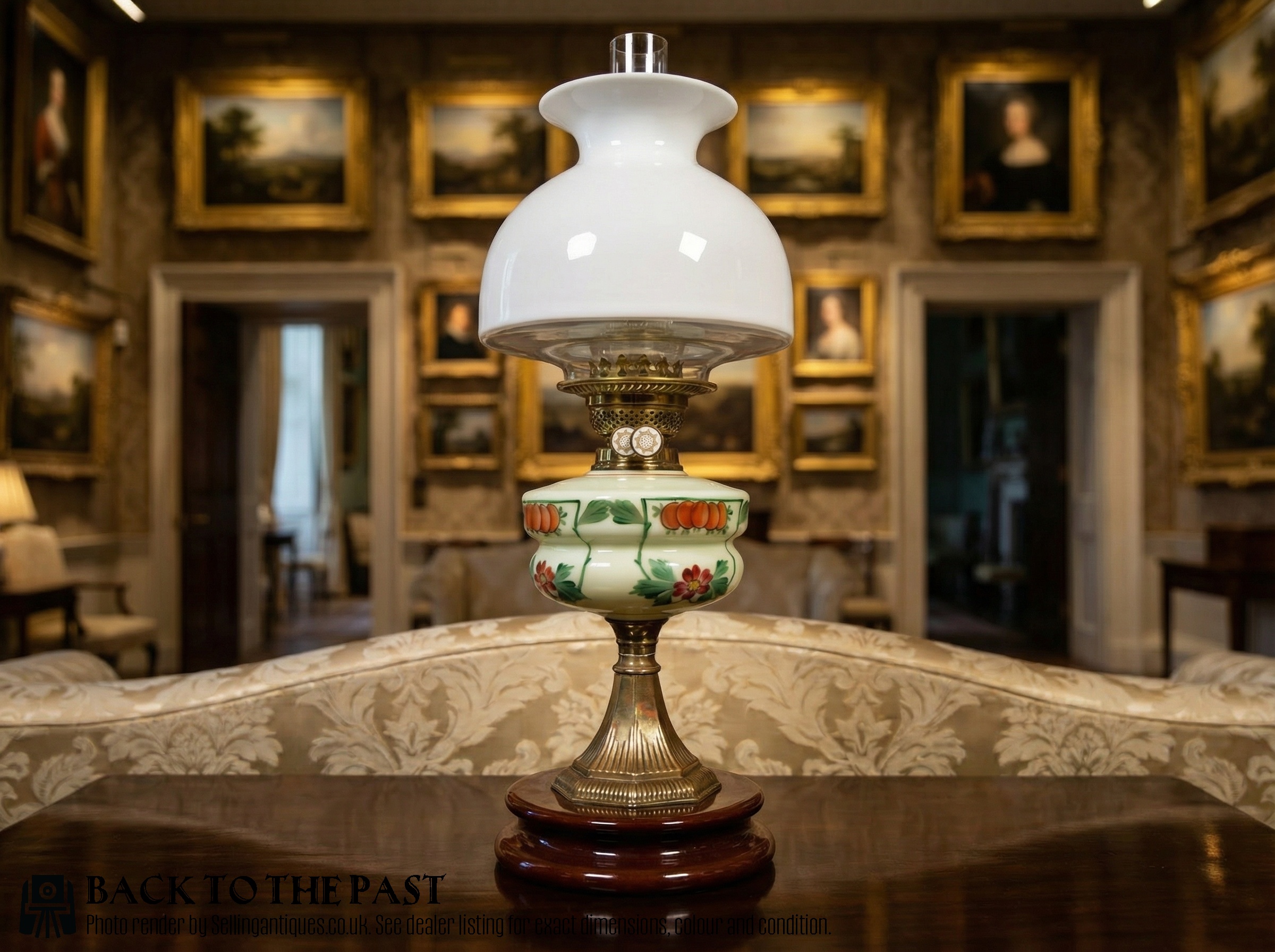
These a Victorian glass kerosene lamp illuminate domestic interiors through period fuel combustion, combining sculptural bases with decorative coloured reservoirs.
Victorian Glass Kerosene Lamp
A Victorian glass kerosene lamp brings together decorative lighting and period utility, typically taking the form of a table-standing reservoir paired with a matching glass shade. When you search for a victorian glass kerosene lamp, you encounter pieces designed to burn paraffin or kerosene, resting upon weighted bases.
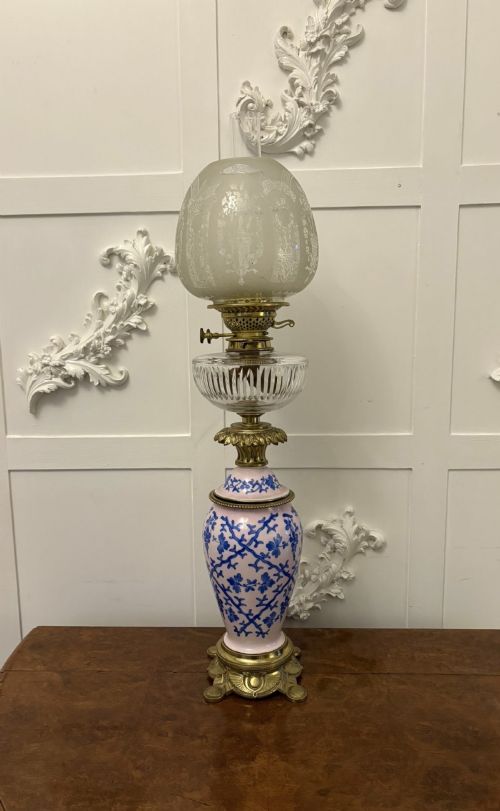
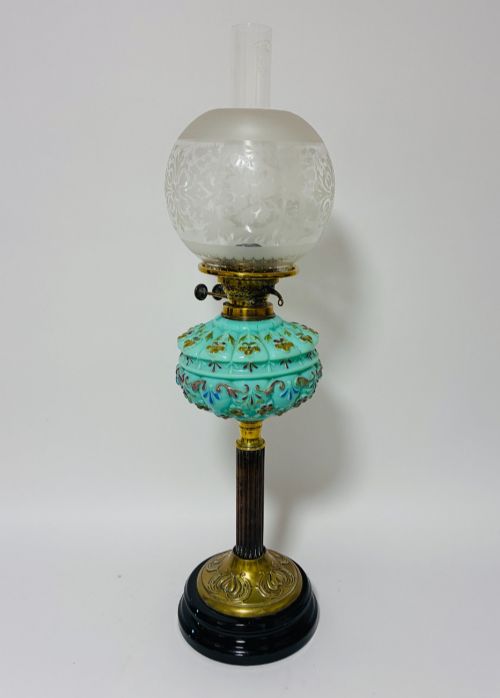
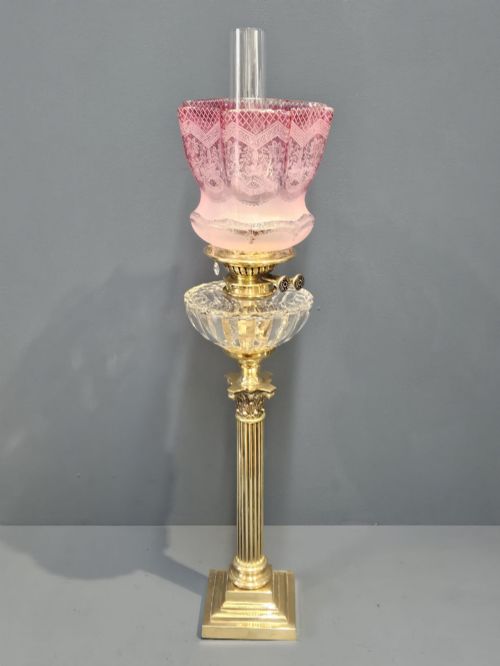
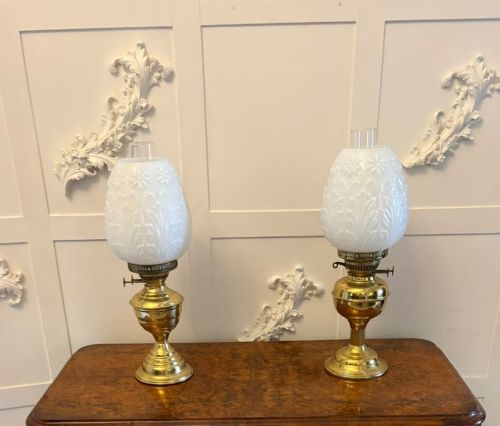
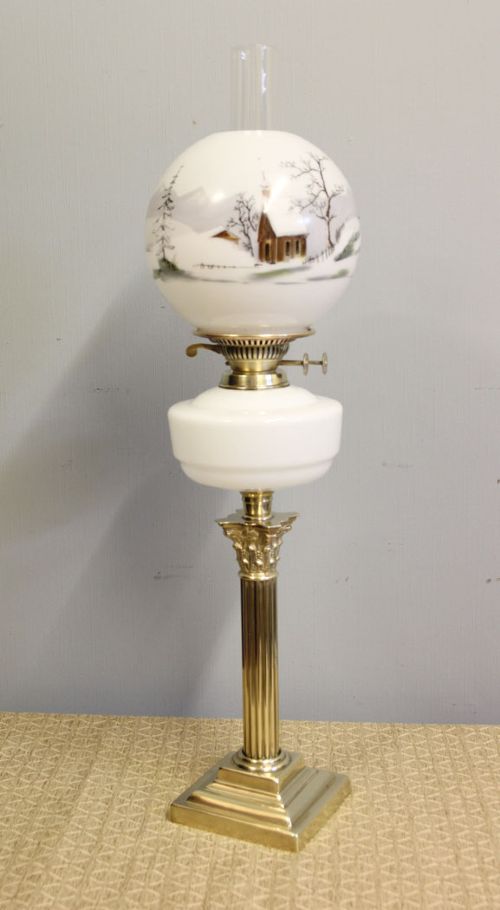
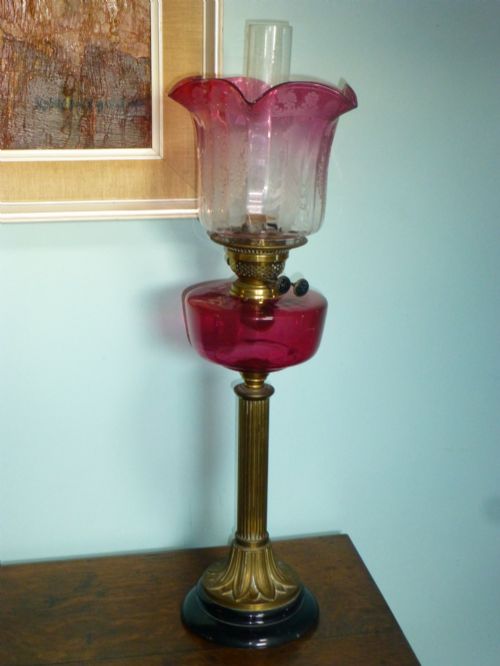
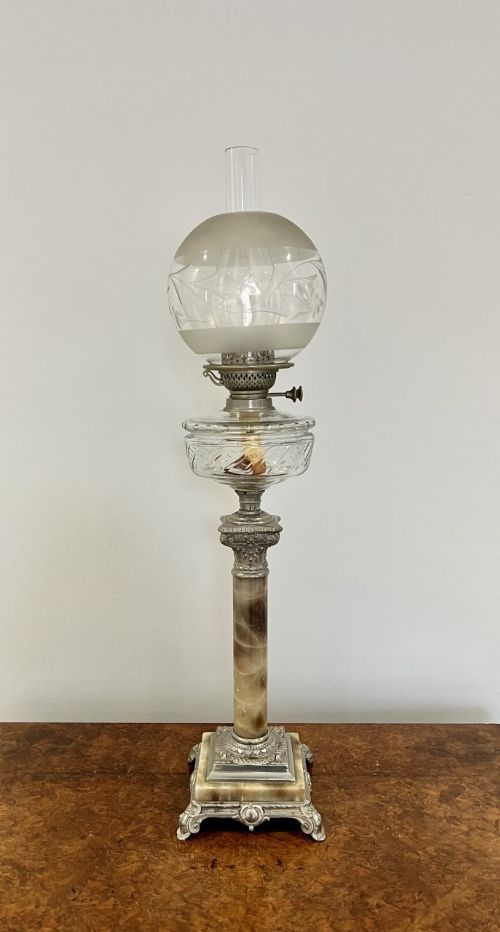
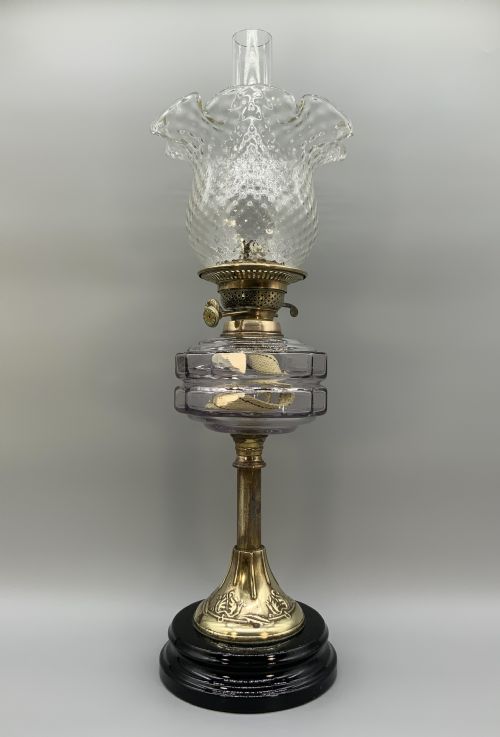
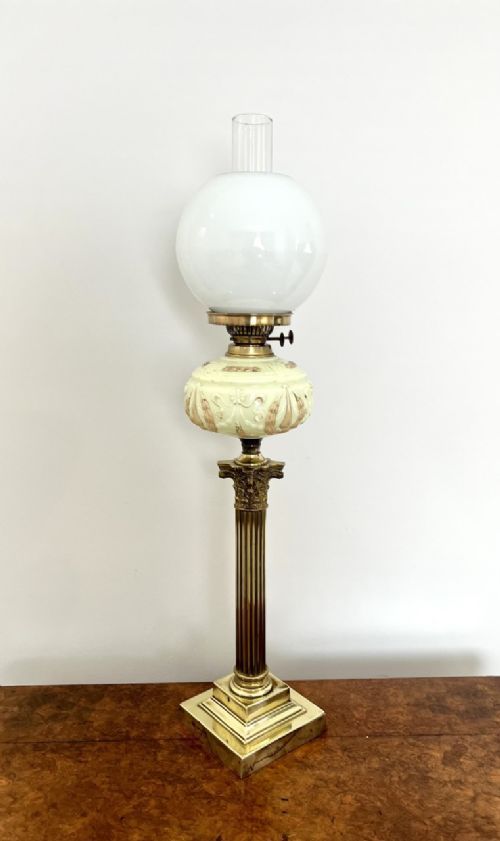
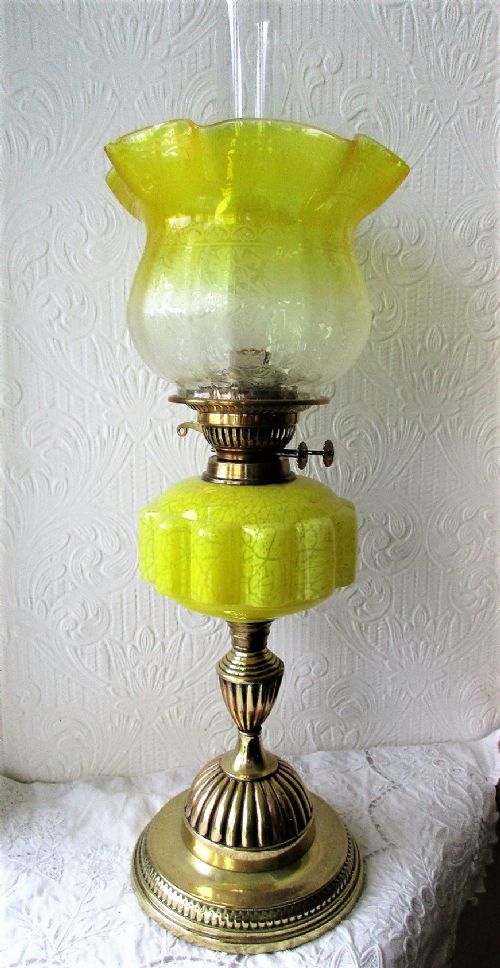
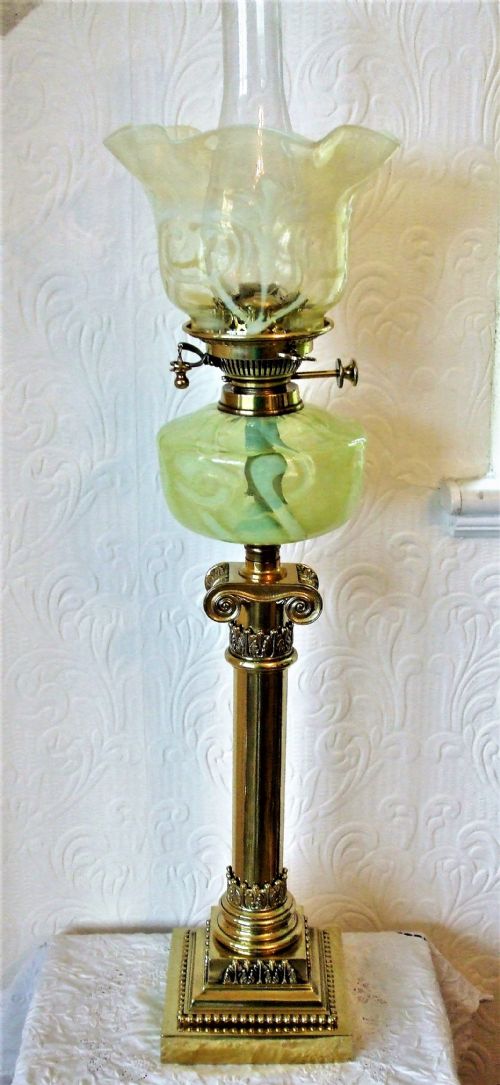
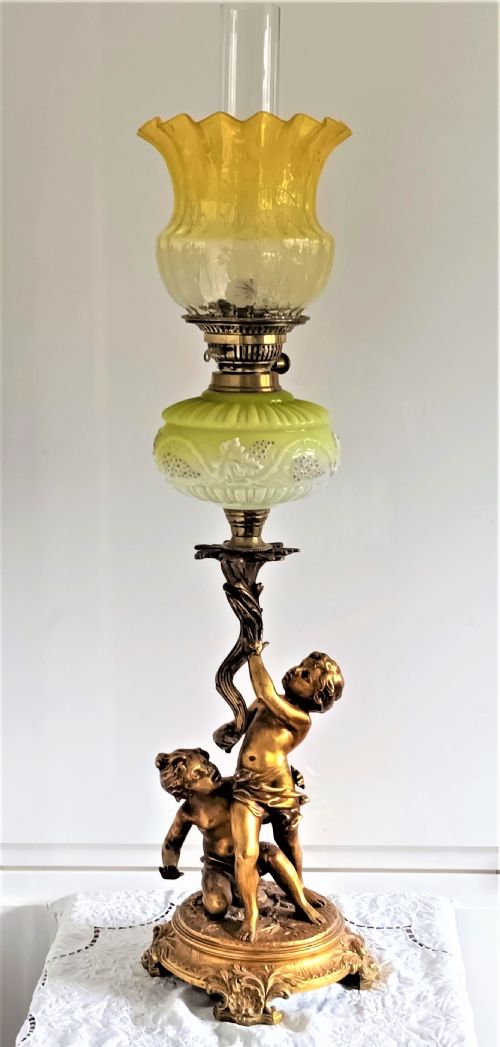
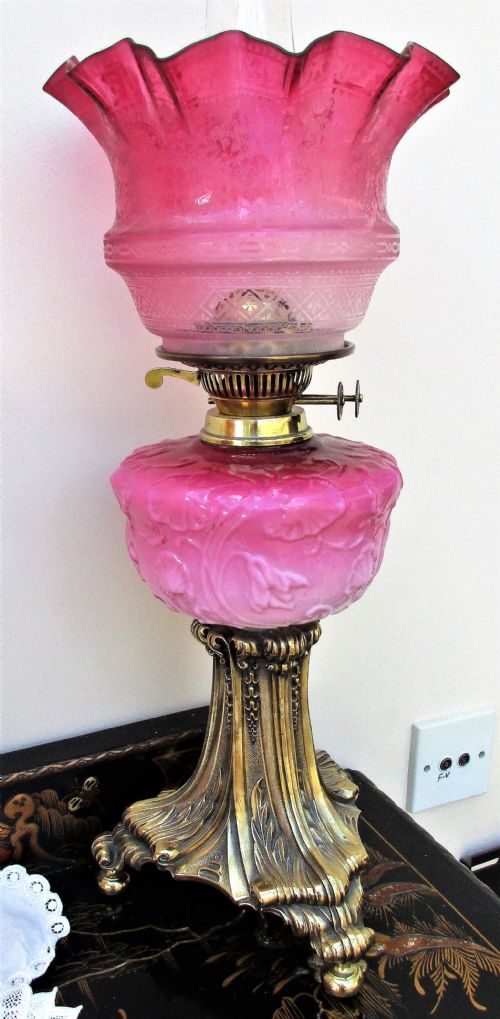
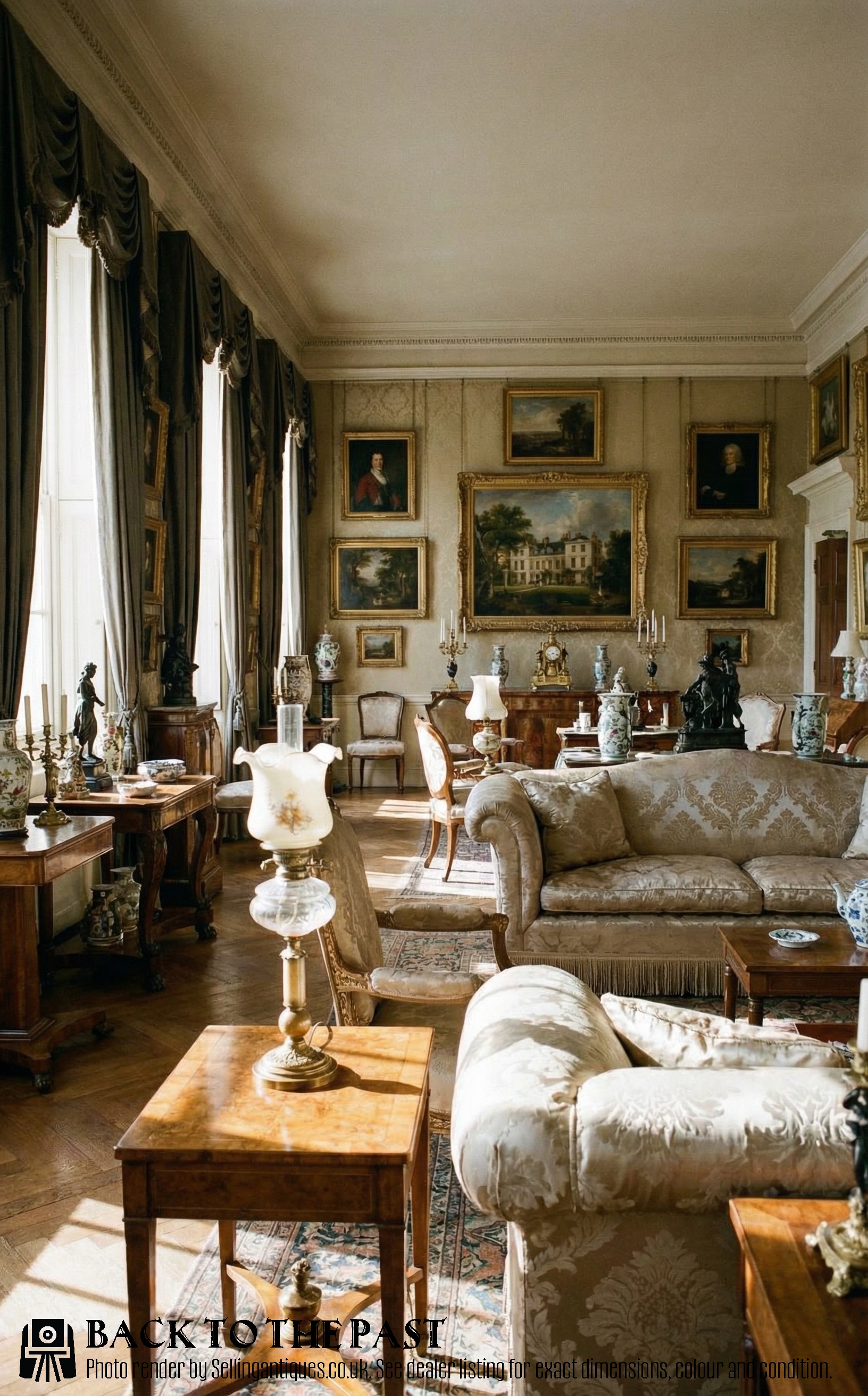
The materials you find on this page range from clear glass and cut glass to richly coloured cranberry glass and opaline glass. Many examples pair these glass fonts with brass columns or ceramic bodies, creating varied silhouettes from simple domestic designs to elaborate Corinthian column forms.
Materials and construction
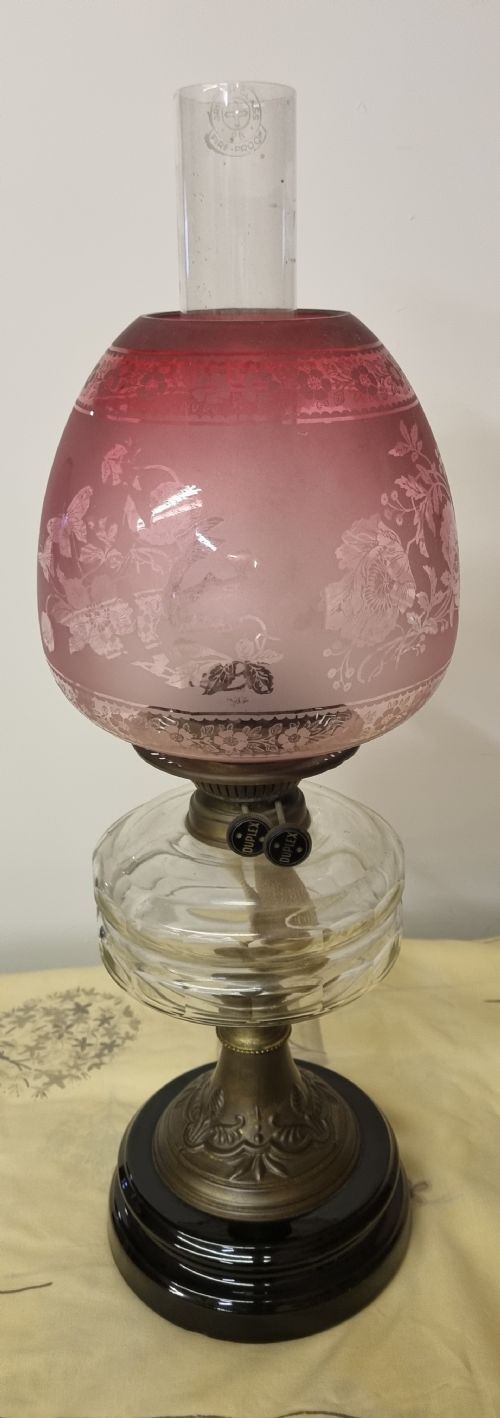
Makers constructed these lamps using brass for the structural burner mechanisms and columns, whilst glassmakers blew and moulded the fonts and shades. Cranberry glass and opaline glass were shaped hot, often incorporating hand-painted botanical motifs or etched surface patterns.
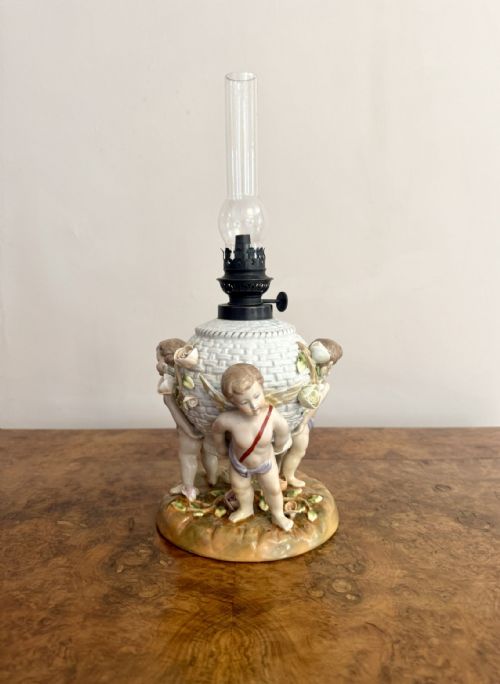
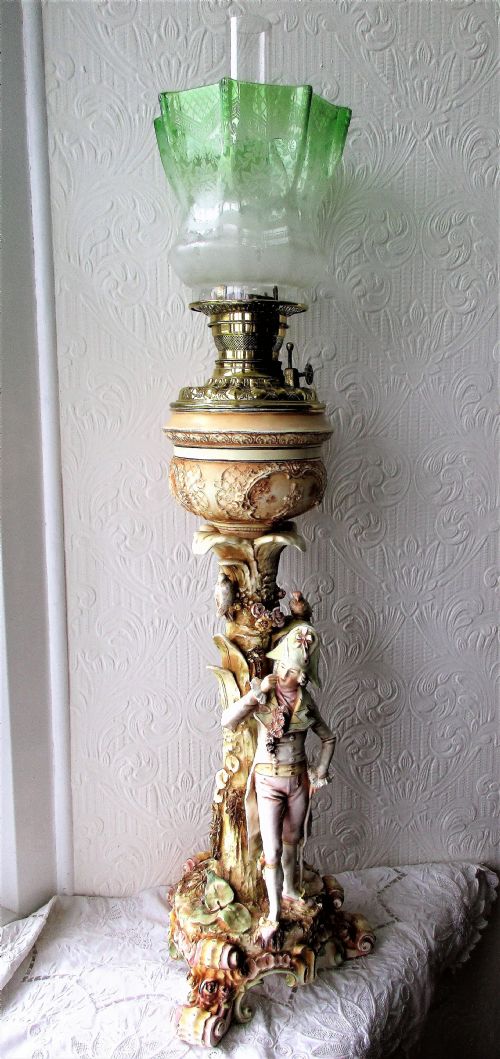
Ceramic and porcelain elements, sometimes sourced from factories like Sitzendorf, were glazed and gilded before being integrated with metal collars. Heavy cast brass bases provided stability for the tall, upright columns and twin-burning duplex burner systems.
One determined Victorian household illuminated their winter evenings beneath the watchful gaze of a hand-painted porcelain owl lamp.
Judging the work
The distinction between standard domestic lighting and finer pieces rests in the weight of the brass castings, the crispness of Corinthian fluting, and the depth of colour in the glass. Hand-painted botanical details on fonts and shades show the individual hand of the decorator rather than mass-produced transfer printing.
Proportion and scale dictate the visual success of the piece, particularly where tall columns meet substantial glass reservoirs and matching etched tulip shades. Intact original burners, especially duplex mechanisms bearing maker names, elevate the integrity of the lamp.
Hinks of Birmingham·Sitzendorf·Goldsmiths and Silversmiths Company
The Victorian Glass Kerosene Lamp Glossary
- Font
- The oil reservoir of the lamp, typically formed from coloured, cut, or clear glass.
- Duplex burner
- A double-wick burner mechanism designed to produce a brighter flame than standard single-wick fittings.
- Opaline glass
- An opaque, milky-white glass often tinted in soft pastel shades and utilised for lamp shades.
- Corinthian column
- A classical architectural column form frequently cast in brass to support the lamp reservoir.
- Tulip shade
- A flared glass shade resembling an open flower, frequently etched or hand-painted to diffuse the light.
Victorian Glass Kerosene Lamp: Frequently Asked Questions
How do these lamps work?
A woven cotton wick draws kerosene upward from the glass font to the metal burner, where an adjustable thumbwheel controls the flame height beneath a glass chimney.
The matching outer shade diffuses the light outward while protecting the flame from draughts in a Victorian room.
Can I burn oil in them today?
Many of these lamps retain their original burner mechanisms and can be utilised with modern lamp oil, provided the wick and collar remain sound.
Alternatively, collectors frequently display them unlit as decorative sculptural objects or convert them carefully for electricity without altering the antique metalwork.
How do I date a brass and glass lamp?
Stylistic clues such as Corinthian columns, Art Nouveau curves, or late Victorian aesthetic movement motifs help narrow the manufacturing decade.
Maker stamps on the metal burner thumbwheels and registration diamond marks on the glass components also provide precise production years.
What is cranberry glass?
Cranberry glass is a rich pinkish-red transparent glass produced by adding gold chloride to the molten batch during manufacturing.
It appears frequently in Victorian lamp fonts and shades, often contrasted against polished brass columns or opaline glass.