


Victorian Fluted Leg Table
These robust victorian fluted leg table pieces bring substantial timber and careful turning into daily rooms, offering solid surfaces built for dining, writing and gathering.
Victorian Fluted Leg Table
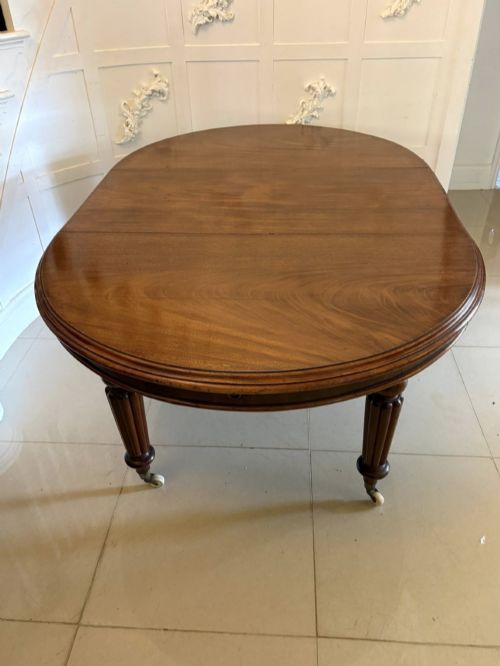
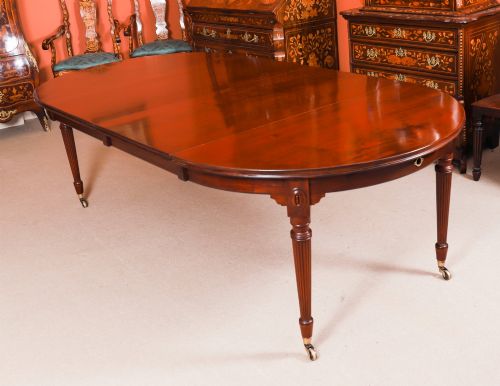
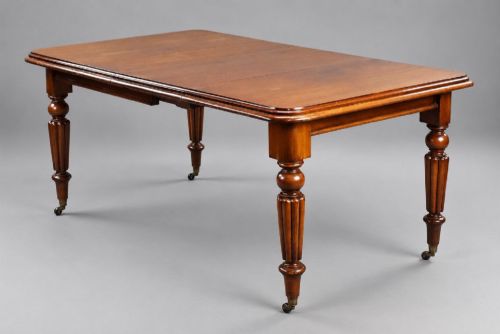
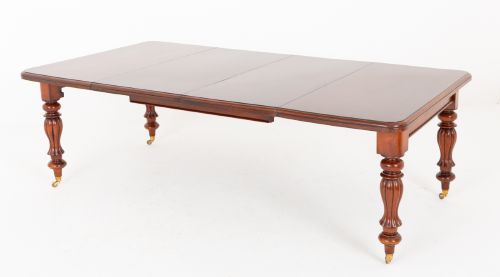
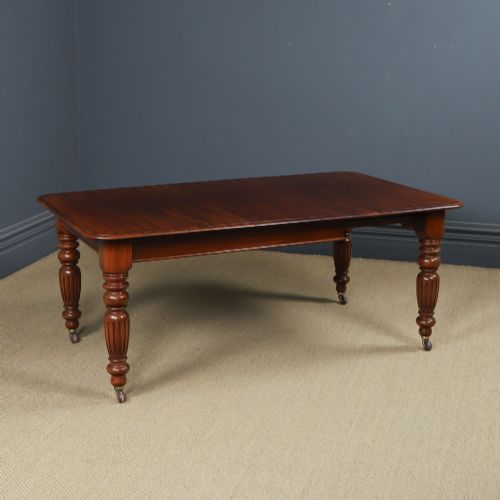
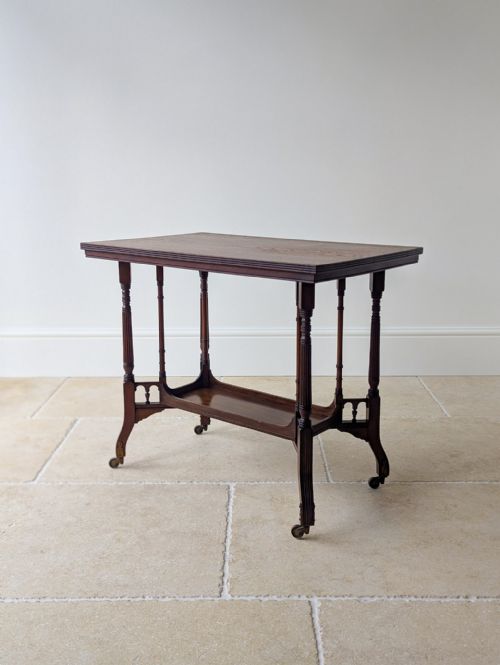
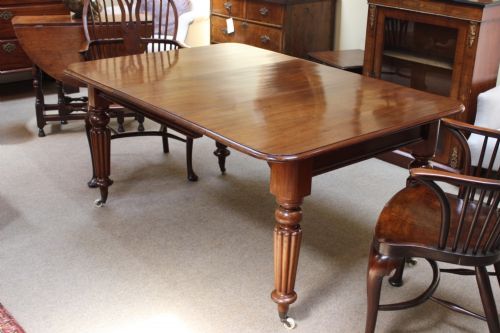
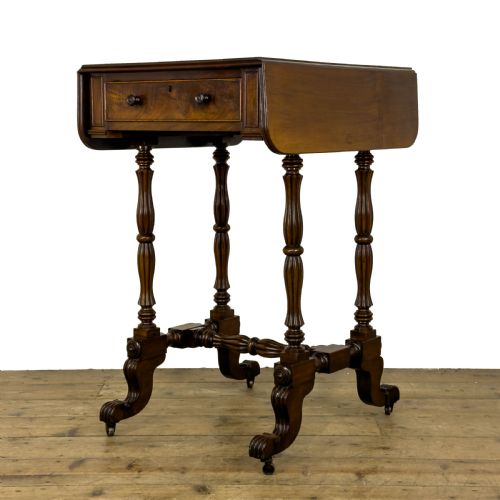
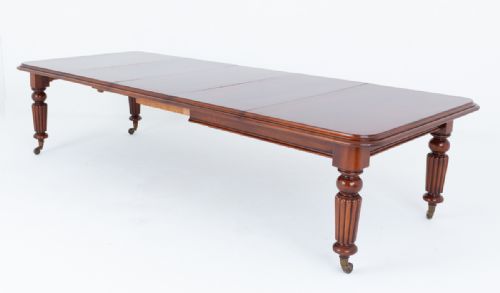
A victorian fluted leg table typically presents as an extending dining table, a writing desk or a side table shaped from dense timbers during the nineteenth century. The form spans various regional workshops and major London makers, often featuring vertical carved channels down the upper supports.
Most examples encountered here date from the Victorian era and mid-to-late nineteenth century, leaning heavily towards mahogany, oak and walnut constructions. These items served formal dining rooms, libraries and country house drawing rooms where domestic hospitality and administrative tasks took place.
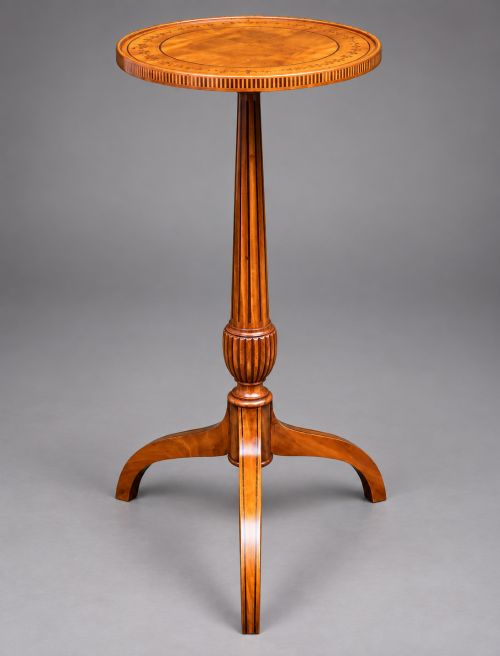
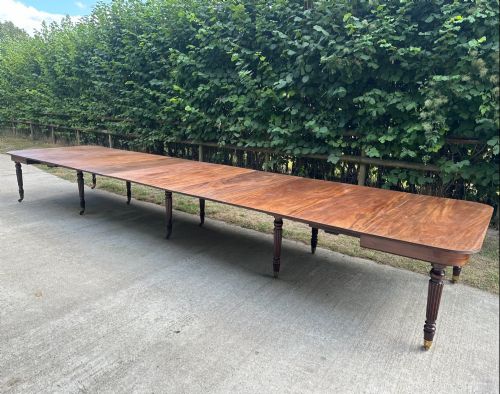
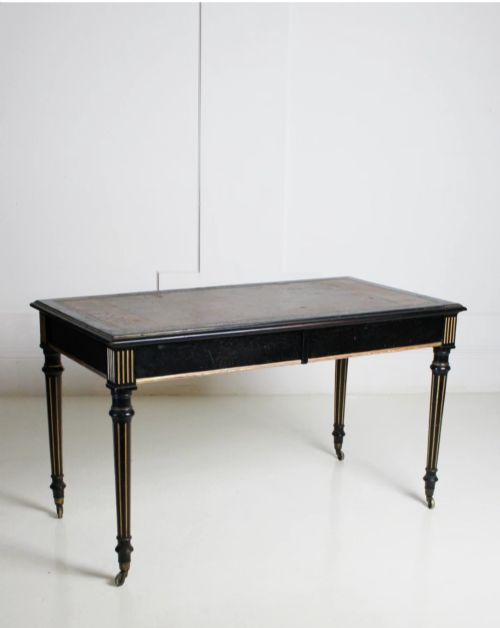
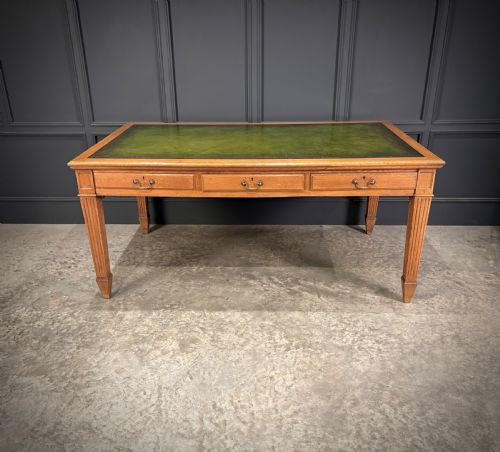
Buyers will find domestic formats ranging from compact lamp tables and drop-leaf work tables to monumental dining tables seating over a dozen people. Side tables and library desks frequently incorporate drawers, leather inserts or marble tops alongside their characteristic columnar leg decoration.
Materials and construction
Makers relied primarily on solid mahogany, oak and walnut for the structural frames and table tops, frequently selecting figured timber veneers to create richly patterned surfaces. Secondary woods provided internal framing for drawers and wind-out extension mechanisms.
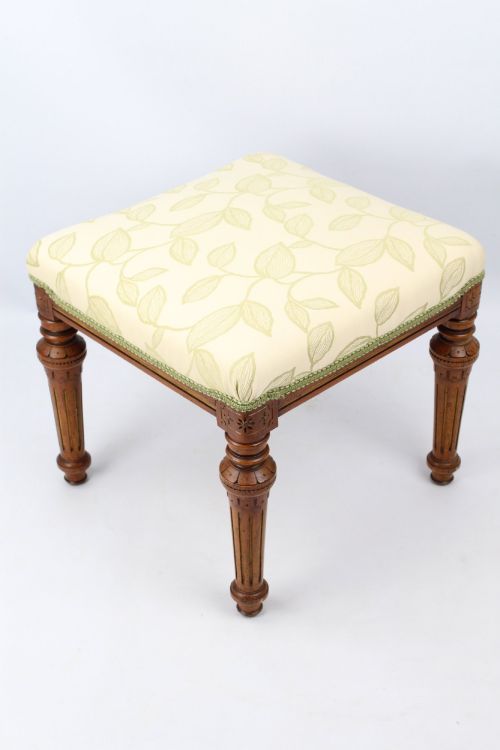
The distinctive flutes on the legs were hand-carved or turned on lathes, sometimes topped with carved capitals or paired with brass castors to ease movement across heavy carpets. Leather inserts, marble slabs and brass hardware completed the functional surfaces of writing and library desks.
Several tables roll smoothly on original brass castors designed to protect thick carpets from heavy Victorian furniture.
Assessing quality
Quality reveals itself in the crispness of the timber carving, particularly along the fluted channels of the legs and any secondary leaf mouldings. Superior examples display dense, well-figured grain matching across extension leaves and smooth operation in winding mechanisms or drawer runners.
The distinction between standard domestic production and workshop-marked pieces often rests in the weight of the brass castors, the thickness of the mahogany or oak, and the integration of secondary materials like inset leather or carved Corinthian capitals.
Gillows·Gregory & Co·Holland & Sons·Johnstone Jeanes & Co·Frank Giles
The Victorian Fluted Leg Table Glossary
- Fluted leg
- A vertical post carved with shallow, parallel concave grooves running down its length. This classical decorative detail lightens the appearance of heavy timber supports.
- Wind out
- A mechanical extending system operated by a crank handle that separates table sections to insert extra leaves. It allowed large dining tables to adjust for varying numbers of guests.
- Castor
- A small swivelling wheel attached to the base of a table leg to permit easy rolling. Brass fittings were common on nineteenth-century dining and writing tables.
- Campaign table
- A portable folding table designed for military officers to transport easily during travel. These pieces feature clever dismantling joints and robust construction.
- Marquetry
- Decorative patterns formed by fitting contrasting wood veneers into a prepared surface. It appears on select nineteenth-century centre and library tables.
Victorian Fluted Leg Table: Frequently Asked Questions
How do I care for a mahogany dining table?
Keep the timber away from direct heat sources and sudden humidity shifts to prevent the wood from splitting or warping.
Apply natural beeswax periodically to nourish the polished surface and protect against minor spills during daily use.
How do extension leaves work?
Extension leaves drop into the centre of a table frame after the top is expanded using an internal wooden runner system.
A metal winding handle typically operates the mechanism, pulling the main sections apart to accommodate the additional timber boards.
Where were writing tables placed?
Writing tables stood in libraries, studies and morning rooms where correspondence and household accounts were managed.
Larger partners desks sat centrally in rooms to allow two people to work opposite one another.
What is a library table?
A library table is a substantial nineteenth-century freestanding desk designed for reading and reference work rather than storage.
These pieces usually feature finished backs and generous top surfaces covered in leather or plain timber.