
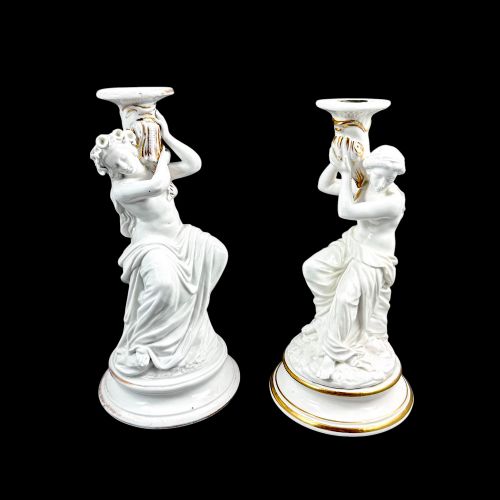


Victorian Figural Candle Holders
Victorian figural candle holders bring sculptural form and period drama to a room, cast in bronze, brass, and porcelain.
Victorian Figural Candle Holders
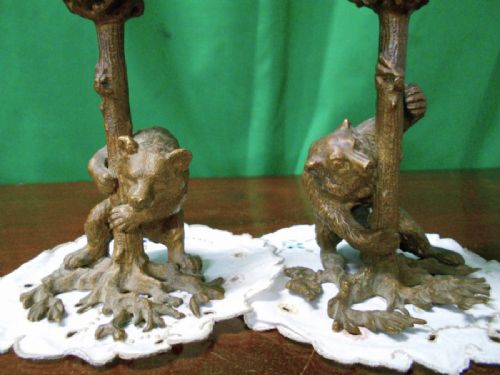
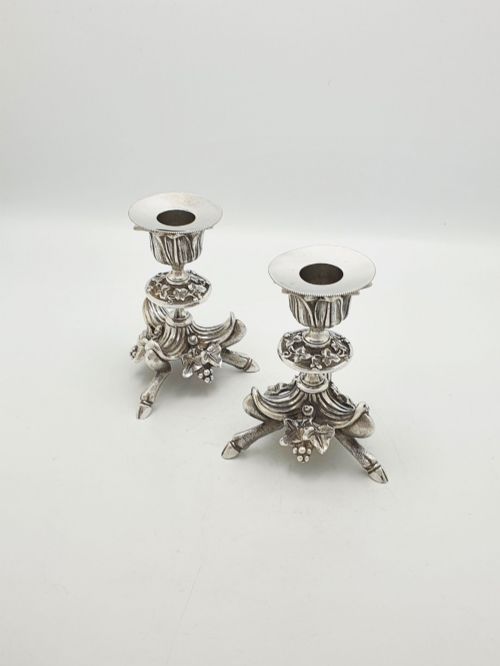
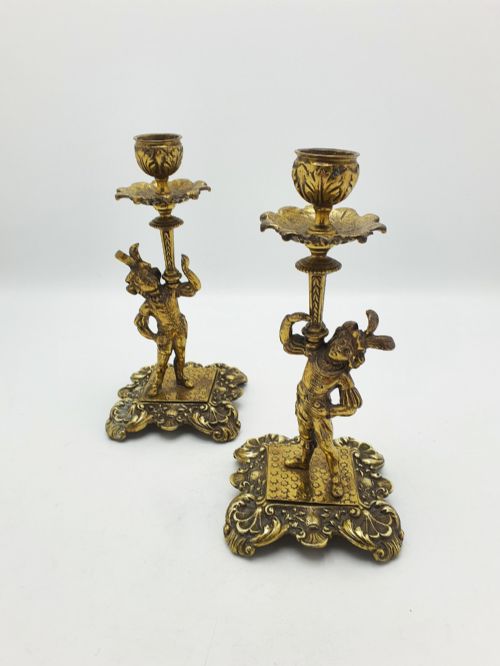
Victorian figural candle holders combine functional lighting with sculptural art, depicting animals, human figures, and allegorical scenes. These pieces emerge primarily from the nineteenth century, showcasing the period's fascination with narrative forms.
The selection ranges widely across materials and origins, including German porcelain factories, French foundries, and English potteries. Buyers encounter pairs modelled as cavaliers, shepherds, animals, and mythological subjects.
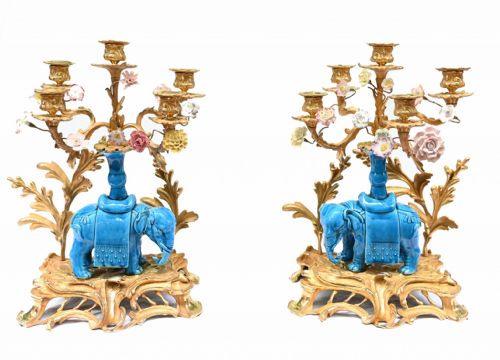
Forms span simple single candlesticks to multi-arm candelabra, often reflecting historical revival styles like Rococo, Renaissance, and Egyptian. Each piece serves as both a light source and a mantel centrepiece.
How they were made
Ceramic pieces rely on porcelain, blanc de chine, and enamel, shaped by notable potteries and decorated with hand-painting and gilding. Artisans fired these figures at high temperatures to achieve durable glazes and vibrant allegorical details.
Dancing cherubs and stoic storks hold candles alongside cavaliers.
What varies in quality
Surface finish and hand-painting execution distinguish standard production from finer studio output. Well-preserved gilding, enamel work, and original patination on the bronze or brass elevate the piece.
Royal Worcester·Sitzendorf·Volkstedt·Minton·WMF
The Victorian Figural Candle Holders Glossary
- Candelabra
- A branched candlestick holding multiple candles. These larger lighting pieces often feature central figural columns.
- Spelter
- A zinc alloy commonly utilised as a less costly substitute for bronze in nineteenth-century sculptural castings. It often received a bronze-coloured finish to mimic heavier metal.
- Ormolu
- Finely ground high-carat gold applied to a bronze base through a mercury-gilding process. This technique creates a rich, lasting metallic lustre.
Victorian Figural Candle Holders: Frequently Asked Questions
How do I clean antique porcelain candle holders?
Use a soft, dry brush to remove dust from the crevices of the porcelain figure. Avoid harsh chemical cleaners that can damage delicate hand-painted enamel and gilding.
Keep them away from direct moisture to protect any exposed clay bodies beneath unglazed bases. Gentle care preserves the original surface finish for years to come.
Were these candlesticks meant for daily use?
Nineteenth-century households utilised these figural holders in principal rooms for evening illumination. They sat on mantelpieces, sideboards, and dining tables to catch and reflect light.
Their decorative qualities meant they served as sculptural ornaments even when unlit. Many surviving pairs show minimal wax residue, indicating they functioned primarily as display pieces.
What is the difference between spelter and bronze?
Bronze is a heavy alloy of copper and tin that takes fine detail and develops a deep natural patina over time. Spelter is a zinc-based metal that is lighter and softer to the touch.
Foundries often painted spelter to resemble bronze, but it generally feels lighter and shows more wear on high points. Examining the underside often reveals the lighter grey metal beneath the surface finish.
How can I identify the maker?
Look underneath the base for factory stamps, painted marks, or impressed ciphers. Porcelain pieces frequently carry blue underglaze crossed swords or factory-specific initials.
Metal items may bear maker's stamps or retailer marks near the rim or base edge. Cross-referencing these symbols with known factory registry dates helps confirm the period of manufacture.