


Antique Porcelain Sconce Pair
An antique porcelain sconce pair brings sculptural presence and soft candle illumination to a wall, combining moulded ceramics with gilt metal mounts.
Antique Porcelain Sconce Pair
An antique porcelain sconce pair comprises matching wall-mounted brackets and candlesticks designed to hold candles and reflect light within a room. When you search for an antique porcelain sconce pair, you encounter wall lights, figural wall brackets, and candelabra alongside candleholders adapted for wall display.
The selections span from the eighteenth century into the twentieth century, with nineteenth-century examples and Victorian interpretations appearing frequently. Styles range from French Rococo Revival and Victorian Neoclassical to Georgian creations featuring elaborate bocage backgrounds and figural subjects.
Materials and construction
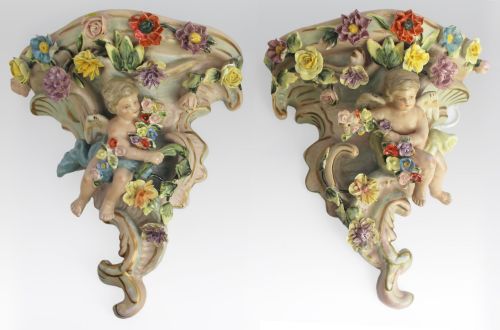
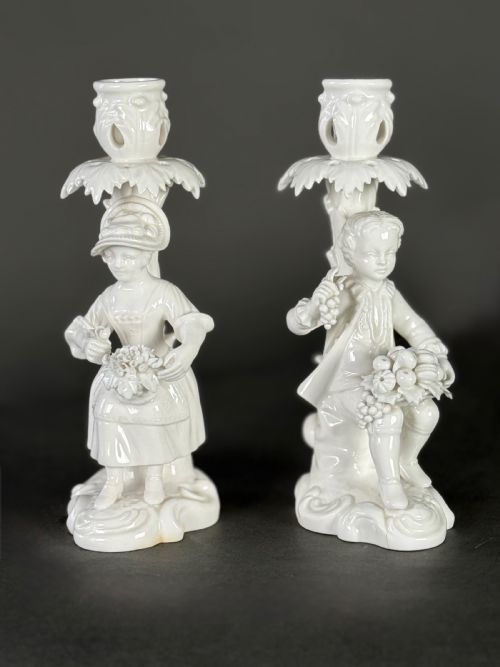
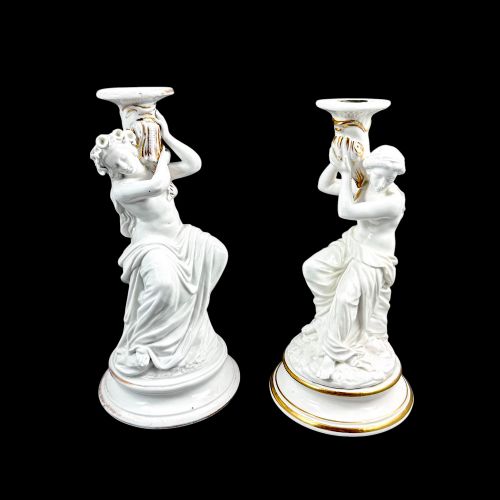
Potters utilised hard-paste porcelain, blanc de chine, and glazed ceramic to form the figures and scrolling branches, often finishing surfaces with enamel colours. Artisans then combined these ceramic elements with ormolu, gilt mounts, and gold leaf to secure the structural wall brackets and candle nozzles.
Firing techniques produced both plain white glazed bodies and heavily painted figural groups set upon floral bases. Metal mounts were cast and gilded to frame the porcelain portraits and support the candle branches.
Listings feature hard-paste porcelain, ormolu, and gold leaf applied across eighteenth and nineteenth-century periods.
Judging the execution
Quality rests in the crispness of the porcelain moulding and the delicacy of hand-painted enamel details upon the figures. Superior examples show intricate hand-modelled flowers, precise facial expressions, and finely chased ormolu mounts rather than mass-produced uniformity.
The integration between the ceramic body and the metal framework dictates the overall cohesion of the piece. Stronger examples maintain balanced proportions across both halves of the pair without clumsy joins or mismatched components.
Meissen·Derby·Royal Worcester·Sitzendorf·Minton·Samson
The Antique Porcelain Sconce Pair Glossary
- Bocage
- A background of applied porcelain leaves and flowers that surrounds figural groups. This leafy screen originates in eighteenth-century factory designs.
- Blanc de chine
- A pure white Chinese porcelain imitated by European factories. The term denotes unpainted glazed white ceramic wares.
- Ormolu
- Gilded bronze used for mounts, decorative frames, and candle branches. This metalwork provides structural support alongside the porcelain.
- Hard-paste porcelain
- A durable ceramic composition fired at high temperatures using kaolin and petuntse. This material resists scratching and accepts bright enamel colours.
- Corbel
- A wall bracket designed to support a heavy upper weight. In lighting, it serves as the architectural base for a sconce.
Antique Porcelain Sconce Pair: Frequently Asked Questions
How were antique porcelain sconces mounted?
These pieces were fixed to interior walls using integrated metal brackets, backplates, or screw holes designed to bear the combined weight of porcelain and metal.
Positioning them near mirrors allowed the candle flames to double the illumination in eighteenth and nineteenth-century drawing rooms.
Can these sconces hold modern candles?
Many historical wall sconces and candlesticks feature standard nozzle diameters intended for taper candles of the period. Checking the exact cup dimension ensures proper fit for contemporary candle widths.
Careful placement away from heavy draughts protects the surrounding wall and prevents uneven burning.
How do I distinguish eighteenth-century pieces from later revivals?
Eighteenth-century examples display softer paste variations, hand-mixed pigments, and spontaneous modelling in the bocage foliage. Nineteenth-century revival pieces often exhibit heavier glaze pooling and more rigid symmetry.
Factory marks, where present, help confirm the period of manufacture through specific blue underglaze stamps or impressed ciphers.
Where should I hang a porcelain sconce pair?
Mounting them at eye level flanking a fireplace, doorway, or large mirror provides the traditional visual balance intended by the maker. Ensuring the wall anchors are secure protects the delicate porcelain and ormolu structure.
Keeping them out of high-traffic walkways prevents accidental knocks to protruding branches and figures.