


Antique Ceramic Candle Stands
Antique ceramic candle stands bring sculptural elegance and vivid palettes to a table, uniting functional lighting with centuries of decorative artistry.
Antique Ceramic Candle Stands
When you search for antique ceramic candle stands, you encounter sculptural domestic lighting designed to hold taper candles securely aloft. These pieces encompass both single candlesticks and multi-branch candelabra.
The selections available here span from the robust forms of the Georgian and Victorian eras through to the lighter aesthetics of the early twentieth century. Pairs dominate the listings, offering balanced symmetry for mantelpieces and dining tables.
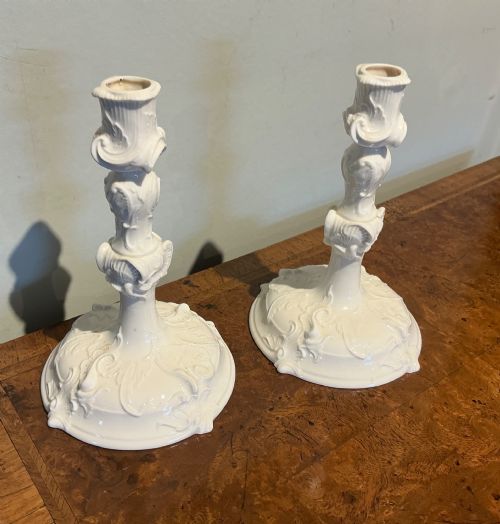
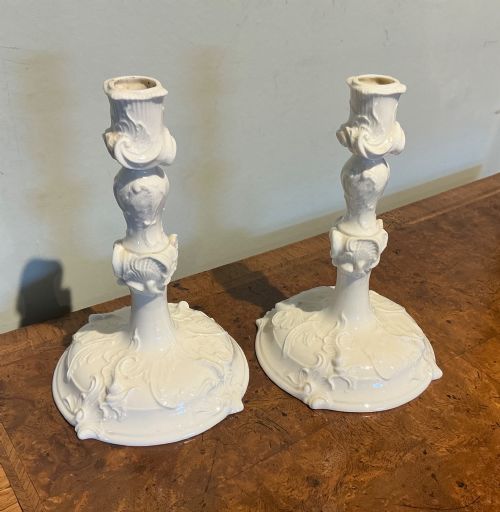
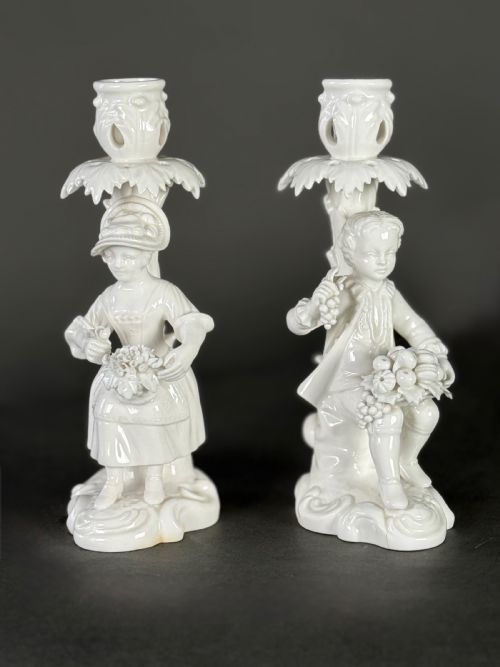
Originating largely from English potteries and continental European manufactories, these objects combine utilitarian purpose with ornate figural or floral modelling. They serve as tactile reminders of historical interior illumination.
How they were made
The foundation of these items lies in hard paste porcelain, ironstone, and jasperware, shaped through skilled moulding and throwing techniques. Makers applied detailed glazes to seal the ceramic body and create smooth, lustrous surfaces.
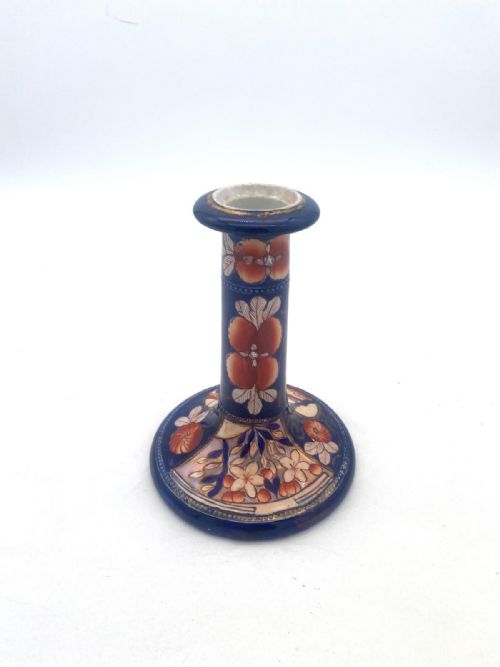
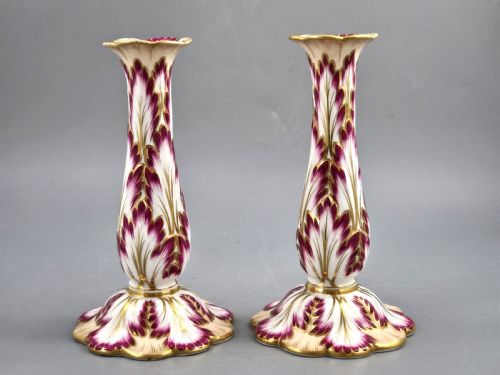
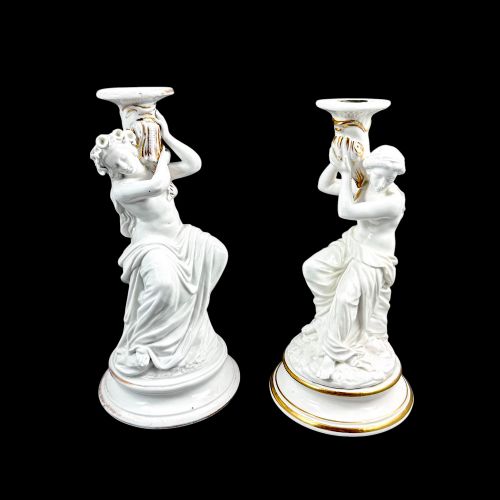
Decoration relied heavily on hand painting, gilding with gold leaf, and applied enamel work to bring depth to floral and figural motifs. Brass mounts were occasionally integrated to add structural support and contrasting metallic tones.
Expect cherubs holding lights, gardeners balancing baskets, and allegorical figures standing guard over your dinner table.
What varies in quality
Quality rests upon the crispness of the modelling and the precision of the hand painting, where finer pieces display intricate facial expressions and delicate petal work. The depth and sophistication of the glaze, alongside the preservation of original gilding, elevate the distinction of a pair.
The reputation of the manufactory also shapes the standing of an item, with established European and English works achieving greater sculptural refinement. Furthermore, the integrity of the ceramic body and the absence of clumsy restoration determine the overall standard.
Nymphenburg·Masons Ironstone·Ridgway·Derby·Royal Worcester Hadley·Wedgwood·Chelsea·Sitzendorf·Dresden·Helena Wolfsohn·Triebner ENS and Eckert Volkstedt·Minton·Decoro England
The Antique Ceramic Candle Stands Glossary
- Jasperware
- A type of fine stoneware developed by Wedgwood, famous for its matte surface and contrasting applied white reliefs. It often appears in shades like yellow and blue.
- Ironstone
- A heavy, durable ceramic perfected in nineteenth-century England to rival Chinese porcelain. It provides a sturdy base for dense enamel patterns.
- Blanc de Chine
- A French term for white Chinese porcelain, later adopted in Europe to describe unpainted white glazed figures. It highlights the pure form of the modeller's work.
- Candelabra
- A branched candlestick holding multiple tapers from a single base. These pieces provide grander illumination than simple single sticks.
Antique Ceramic Candle Stands: Frequently Asked Questions
How do I clean antique ceramic candle stands?
Dust gently with a soft, dry brush to prevent accumulation in recessed modelling and crevices. Avoid harsh chemical cleaners that might strip delicate enamel colours or antique gilding.
Keep them away from direct heat sources and open flames that could deposit soot onto porous surfaces. Spot cleaning should be done sparingly with a damp cloth if absolutely necessary.
Are these candle stands safe to use?
Most antique pieces function perfectly well with standard taper candles, provided the sockets are measured carefully. Care must be taken to extinguish flames before they burn down near the ceramic rim.
Due to their age and delicate appendages, many collectors prefer to use them for display rather than active lighting. Metal inserts can sometimes protect vintage sockets from dripping wax.
How do I identify different periods?
Georgian and Regency examples often feature neoclassical motifs, classical urns, and restrained figural groupings. Victorian pieces lean towards elaborate florals, figural story scenes, and Aesthetic Movement influences.
Twentieth-century items frequently show simplified forms or revivals of earlier Rococo styles. Maker marks, paste types, and glaze textures offer further clues for dating.
Why do they usually come in pairs?
Symmetry governed historical interior design, particularly on mantelpieces, sideboards, and formal dining tables. Workshops produced matching pairs to satisfy this demand for balanced room decoration.
Finding a complete, matching pair adds significantly to the historical and visual integrity of the pieces. Single survivors do occur, but matched sets remain the preference for display.