


Victorian White Glazed Porcelain
Victorian white glazed porcelain comprises figures, animals and vessels shaped from clay and finished with a luminous vitreous coating.
Victorian White Glazed Porcelain
Victorian white glazed porcelain encompasses domestic objects, animal figures and sculptural groups produced during the nineteenth century. These pieces rely on a pale, reflective surface finish to define their contours rather than relying on heavy polychrome decoration.
Figurines, spill vases and lamps dominate the forms encountered when searching for this material. Many derive from English potteries in Staffordshire or continental European factories adhering to Victorian aesthetic standards.
The aesthetic prioritises crisp monochrome surfaces that highlight the underlying modelling of the clay. Collectors encounter both utilitarian items and purely decorative mantel ornaments from this era.
Materials and production methods
Makers shaped these objects using refined ceramic pastes fired at high temperatures to achieve a vitreous body. A liquid glaze was applied before a secondary firing to seal the porous surface and provide a smooth sheen.
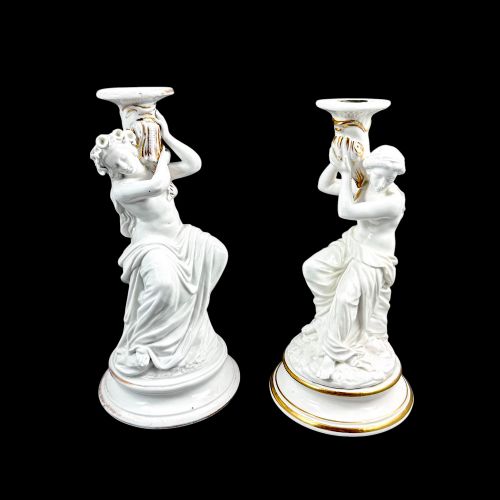
Many sculptural works utilised mould-casting techniques to ensure consistent proportions across pairs of mantel ornaments. Artisans then refined the raw seams by hand before applying the final white glaze coat.
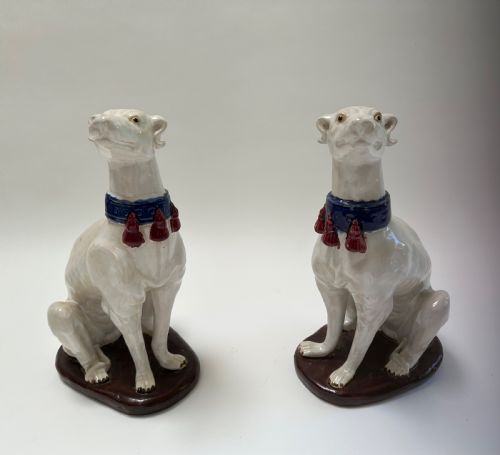
Spitz dogs and seated spaniels appear regularly in these records, watching over Victorian mantelpieces with unflagging ceramic loyalty.
Assessing quality and craftsmanship
The stability of the fired body and the subtlety of hand-finished adjustments separate standard factory output from exceptional sculptural pieces. Purity of the white surface without excessive pitting indicates superior kiln control.
Mintons·Royal Worcester·Sitzendorf·Thomas Parr·Vion et Baury
The Victorian White Glazed Porcelain Glossary
- Glaze
- A glassy layer fused to a ceramic body through firing. It renders the porous clay impervious to liquid and gives the piece its characteristic shine.
- Spill vase
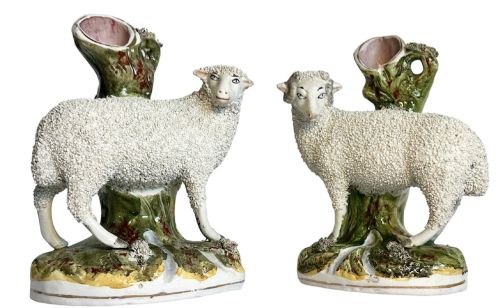
- A small hollow receptacle designed to hold wooden tapers used for lighting candles or fires. These vessels frequently took the form of tree trunks beside animal figures.
- Biscuit
- Unglazed fired porcelain or ceramic material. It possesses a matte, porous texture resembling unpolished marble.
- Flatback
- A Staffordshire figurine moulded with a flat, unpainted reverse side intended to stand against a wall on a mantelpiece.
- Vitreous
- Having the physical characteristics of glass. This describes a ceramic body that has been fired until dense and non-porous.
Victorian White Glazed Porcelain: Frequently Asked Questions
Are these items waterproof?
Most pieces possess a fully vitrified body and a sealed glaze that safely holds water for cut flowers. Spill vases and decorative urns function adequately for ordinary floral displays.
Inspect the interior for hairline cracks before filling older ceramics with water. Unglazed base rings can absorb moisture over time if left on damp surfaces.
How do I spot reproduction pieces?
Examine the base of the object for kiln marks, crazing patterns and wear consistent with age. Genuine nineteenth-century porcelain often shows dry footing where it rested in the kiln.
Modern reproductions frequently exhibit uniform surfaces lacking the subtle irregularities of hand-finished ceramics. Weight and translucency under strong light also help distinguish period items from recent copies.
Where should I display white porcelain?
Place objects in well-lit locations where natural light accentuates the modelled contours of the white glaze. Mantelpieces, enclosed cabinets and dedicated shelving provide stable environments away from heavy foot traffic.
Keep pieces away from direct heat sources such as active radiators to prevent thermal shock. Ensure supporting surfaces are level to prevent tipping among tall figures and candlesticks.